
Leanne Lieberman
Author of Gravity (Young Adult Novels)
Works by Leanne Lieberman
Tagged
Common Knowledge
- Gender
- female
- Education
- McGill University
Queen's University
University of Windsor - Nationality
- Canada
- Birthplace
- Vancouver, British Columbia, Canada
- Places of residence
- Vancouver, British Columbia, Canada
Kingston, Ontario, Canada - Associated Place (for map)
- Canada
Members
Reviews
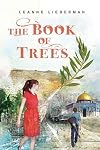
I found this book disappointing because it shows a young woman going through a lot of changes in her life to get back to exactly where she started from. When we meet Mia, from living a shallow life of sex, drugs, and drinking in Toronto, she has had a religious epiphany of sorts and come to Jerusalem on a scholarship to study her Jewish heritage. Once there, however, she finds the yeshiva a little more confining than she expected and opts for a morning of study and an afternoon of volunteer show more work. As she learns more about the history of Israel and begins to see the land not as a tabula rasa made beautiful by the Zionist settlers but as a palimpsest where Israeli pine trees have replaced ancient Palestinian olive groves, I felt deeply moved and got very excited about where the story was going.
Had someone absconded with the book and left me to write a review at that point, I would have given it 5 stars. But as the story progresses, Mia's religious conversion turns out to be as shallow as her former life; she begins lying, cutting classes, neglecting her volunteer work (let's hope the seniors weren't counting on her); admittedly spending one afternoon doing some heavy physical work in aid of dispossessed Palestinians, but mostly obsessing over her new crush Andrew, a non-Jewish Canadian. By the end of the story, she's dropped out of the yeshiva, moved in with Andrew (whom she's known for a matter of several weeks) and is back to sex, drugs and planning to do (not yet doing) some vaguely defined work for peace.
During the course of the story Mia never meets anyone Jewish who is capable of giving a good reason for the practice of Judaism or a balanced view of the Palestinian conflict, so the cast of characters is rather lacking; come to think of it, it also lacks well-defined Palestinian characters. Mia gives no thought to perhaps coming to a way of life that incorporates justice and religion; no thought to the possible value of morality; no thought to questioning the sex-and-drugs lifestyle she once tried and found wanting; she simply gives up on Judaism as a bad job and she's back in her old ways. With all the wonderful background on Judaism and Israel, the sense of place in Jerusalem, this book had a lot going for it. Too bad it didn't go very far. show less
Had someone absconded with the book and left me to write a review at that point, I would have given it 5 stars. But as the story progresses, Mia's religious conversion turns out to be as shallow as her former life; she begins lying, cutting classes, neglecting her volunteer work (let's hope the seniors weren't counting on her); admittedly spending one afternoon doing some heavy physical work in aid of dispossessed Palestinians, but mostly obsessing over her new crush Andrew, a non-Jewish Canadian. By the end of the story, she's dropped out of the yeshiva, moved in with Andrew (whom she's known for a matter of several weeks) and is back to sex, drugs and planning to do (not yet doing) some vaguely defined work for peace.
During the course of the story Mia never meets anyone Jewish who is capable of giving a good reason for the practice of Judaism or a balanced view of the Palestinian conflict, so the cast of characters is rather lacking; come to think of it, it also lacks well-defined Palestinian characters. Mia gives no thought to perhaps coming to a way of life that incorporates justice and religion; no thought to the possible value of morality; no thought to questioning the sex-and-drugs lifestyle she once tried and found wanting; she simply gives up on Judaism as a bad job and she's back in her old ways. With all the wonderful background on Judaism and Israel, the sense of place in Jerusalem, this book had a lot going for it. Too bad it didn't go very far. show less
 This review was written for LibraryThing Early Reviewers.
Mia is a Jewish teenager from Toronto searching for her life to make sense. She decides at the last minute to spend the summer studying at a girl’s yeshiva in Jerusalem. It is there she expects to bond with the land, the Israeli people and her religion. Mia believes that becoming more religious will put her life at peace. Only things don’t go as she expects and she learns more about the land of Israel from the Palestinian perspective and becomes angry at Israel. This is a story that show more touches upon some of the truths and non-truths of the Palestinian/ Israeli conflict. But things change when Mia meets Andrew, who isn’t Jewish. Andrew talks to her about the Israeli occupation of the Palestinian land and Mia starts to question it. She is not only disturbed by Israel’s decisions to kick out the Palestinians but also realizes that maybe becoming a peace activist is much more important than becoming a religious Jew. The author uses trees as a major symbol in the story. Mia learns from Andrew that the Israel’s pine trees replace the Palestinians olive trees. The symbol of these trees mean settling down new roots, but whose roots are they?
The Book of Trees is written more from the perspective of a non-Israeli and is also a great coming of age story that really speaks to the teenager. This is recommended reading for grades 7th and up. The author includes a glossary of terms in the back of the book with an authors note explaining why she wrote the story and her personal thoughts on the Palestinian/Israeli conflict. show less
The Book of Trees is written more from the perspective of a non-Israeli and is also a great coming of age story that really speaks to the teenager. This is recommended reading for grades 7th and up. The author includes a glossary of terms in the back of the book with an authors note explaining why she wrote the story and her personal thoughts on the Palestinian/Israeli conflict. show less
This review was written for LibraryThing Early Reviewers.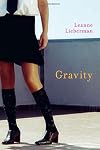
Ellie Gold is spending the summer with her Grandmother, her Bubbie, just the two of them at the cottage she rents every year by a lake. Ellie's parents are off to Israel for the summer and her sister, Nashama is a counselor at an all girls camp. Ellie's parents are Orthodox Jews but weren't always. Her Bubbie, her mother's mother, is not really observant but Ellie promises to say her daily prayers and keep Shabbat while at the cottage.
For the first few weeks it's just the two of them but one show more day Ellie meets Lindsay whose mother has a house on the other side of the lake. They begin to hang out...two totally different girls, one Jewish the other not, one serious the other not. For Ellie at least, there is a physical attraction that Lindsay seems to reciprocate. However, this goes against all the Jewish laws that Ellie has been taught. Neshama has always been the rebel in the family, spurning the rituals. Ellie has always been the good girl. However the more she tries to rid her mind of Lindsay, the more she thinks about her.
Gravity deals with a serious topic among the Orthodox Jewish community. Homosexuality is a sin and many Orthodox Jews mourn anyone who spurns the teachings and becomes more secular, let alone coming out as a lesbian. And while the book does a good job of explaining the feelings of a 15 year old child torn between the girl she thinks she loves and the rules and laws that have been indoctrinated into her head, the ending may not be realistic and that's why this book gets only 3 1/2 stars. show less
For the first few weeks it's just the two of them but one show more day Ellie meets Lindsay whose mother has a house on the other side of the lake. They begin to hang out...two totally different girls, one Jewish the other not, one serious the other not. For Ellie at least, there is a physical attraction that Lindsay seems to reciprocate. However, this goes against all the Jewish laws that Ellie has been taught. Neshama has always been the rebel in the family, spurning the rituals. Ellie has always been the good girl. However the more she tries to rid her mind of Lindsay, the more she thinks about her.
Gravity deals with a serious topic among the Orthodox Jewish community. Homosexuality is a sin and many Orthodox Jews mourn anyone who spurns the teachings and becomes more secular, let alone coming out as a lesbian. And while the book does a good job of explaining the feelings of a 15 year old child torn between the girl she thinks she loves and the rules and laws that have been indoctrinated into her head, the ending may not be realistic and that's why this book gets only 3 1/2 stars. show less

AJewish teen who has decided to become “un-Jewish” experiences a soul-searching junior year.
Lauren found herself with a newly formed nonreligious identity after questioning her Jewish education, her father’s profession as a Holocaust historian and her discomfort with Judaism’s commemoration of centuries-old persecution. After eight years of Jewish day school, Lauren convinced her parents to let her attend public high school, where she has strengthened friendships with some of the show more gentile kids from her neighborhood. But these kids are changing too, and some of their new interests (Bible study group and the smokers’ crowd) leave Lauren lost in a teen world in which she is unwilling to participate. When she comes across a group of her male peers playing war games as Nazis, Lauren’s discomfort with her own reaction creates powerful psychological turmoil, which is complicated when she dates one of the boys. Lauren’s Judaic background includes her grandmother’s Holocaust past, in which 11 family members perished. Lieberman, known for her edgy, provocative Jewish-themed novels, Book of Trees (2010) and Gravity (2008), creates another strong female protagonist, whose characterization of Judaism as a religion “about loss, grief and persecution” will raise eyebrows with both Jewish and non-Jewish readers.
A thought-provoking exploration of a teen’s evolving ideals. (Fiction. 13 & up)
-Kirkus Review show less
Lauren found herself with a newly formed nonreligious identity after questioning her Jewish education, her father’s profession as a Holocaust historian and her discomfort with Judaism’s commemoration of centuries-old persecution. After eight years of Jewish day school, Lauren convinced her parents to let her attend public high school, where she has strengthened friendships with some of the show more gentile kids from her neighborhood. But these kids are changing too, and some of their new interests (Bible study group and the smokers’ crowd) leave Lauren lost in a teen world in which she is unwilling to participate. When she comes across a group of her male peers playing war games as Nazis, Lauren’s discomfort with her own reaction creates powerful psychological turmoil, which is complicated when she dates one of the boys. Lauren’s Judaic background includes her grandmother’s Holocaust past, in which 11 family members perished. Lieberman, known for her edgy, provocative Jewish-themed novels, Book of Trees (2010) and Gravity (2008), creates another strong female protagonist, whose characterization of Judaism as a religion “about loss, grief and persecution” will raise eyebrows with both Jewish and non-Jewish readers.
A thought-provoking exploration of a teen’s evolving ideals. (Fiction. 13 & up)
-Kirkus Review show less
Lists
Awards


You May Also Like


Statistics
- Works
- 7
- Members
- 262
- Popularity
- #87,813
- Rating
- 3.5
- Reviews
- 43
- ISBNs
- 29
