
Neil Faulkner (1) (1958–2022)
Author of Lawrence of Arabia's War: The Arabs, the British and the Remaking of the Middle East in WWI
For other authors named Neil Faulkner, see the disambiguation page.
About the Author
Neil Faulkner is a Research Fellow at the University of Bristol and author of numerous books including A Visitor's Guide to the Ancient Olympics (2012) and Rome: Empire of the Eagles (2008). He was a leading contributor to Sky Atlantic's TV series The British.
Works by Neil Faulkner
Associated Works
Tagged
Common Knowledge
- Legal name
- Faulkner, Neil Martin
- Birthdate
- 1958-01-22
- Date of death
- 2022-02-04
- Gender
- male
- Education
- Skinners' School, Tunbridge Wells, Kent
King's College, Cambridge
Institute of Archaeology, University College London - Occupations
- teacher
archaeologist
writer
journal editor
political activist - Organizations
- Great Arab Revolt Project
Sedgeford Historical and Archaeological Research Project
Brick Lane Debates
Stop the War coalition - Cause of death
- cancer (lymphoma)
- Nationality
- England
- Birthplace
- Walthamstow, London, England, UK
- Places of residence
- St Albans, Hertfordshire, England, UK
- Associated Place (for map)
- England, UK
Members
Reviews
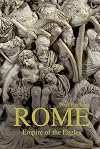
This excellent book is a must for anyone who wants to read a history of ancient Rome which takes the side of the exploited and oppressed mass of slaves and poor peasants, rather than looking at the "grandeur" of Rome from the point of view of emperors and senators. For Faulkner, "Rome was, in its very essence, a system of robbery with violence."
Faulkner shows that Rome's power was threatened by three types of conflict. Firstly, there were the conflicts within the Roman ruling class, which show more periodically erupted into civil war when the constant jockeying for power within the elite turned violent. Secondly, there was the anti-imperialist resistance to Rome at the boundaries of the empire. Thirdly, there was class conflict between the different social groups inside the empire. The three main classes were the slave-owning, land-owning ruling class at the top; the slaves at the bottom; and the mass of small producers (peasants, craftspeople and traders) in between. (Many of the poorest of this last group were probably not much better off than slaves.)
Faulkner also shows that Rome reached the limits of its expansion when it came up against Parthia in the East and non-fertile wilderness (which it was not cost-effective to expand into) everywhere else. The end of expansion, exemplified by the building of Hadrian's Wall, meant the end of new sources of slaves and plunder, resulting in Rome's rulers having to squeeze more out of the "middling sort", and leading in the long run to the collapse of the empire.
It is interesting to compare Faulkner with two other Marxist books on Rome: Michael Parenti's "The Assassination of Julius Caesar" and G.E.M. de Ste. Croix's scholarly masterpiece, "The Class Struggle in the Ancient Greek World". All three take a similar view overall, but there are interesting differences.
For example, Faulkner sees the masses in the city of Rome itself as a fickle mob who have been bought off by the proceeds of imperialism, whereas Parenti sees them as a much-maligned group. The main weakness in Parenti's analysis is that he is too uncritical of Julius Caesar. He sees Caesar as a genuine representative of the masses, whereas Faulkner and Ste. Croix argue that Caesar used a populist approach mainly to further his own ambitions. (Faulkner also reminds us that Caesar was a ruthless and bloody imperialist.)
There is one issue on which I personally disagree with Faulkner and agree with Ste. Croix. Faulkner describes himself as an unorthodox Marxist in that he rejects the traditional Marxist view that Roman society was based on the "slave mode of production". He instead describes it as being a system of "military imperialism". (He has argued elsewhere that slaves were too diverse to be described as a class.) I am more convinced by Ste. Croix's view that Rome should indeed be described as a slave society, albeit one which of course relied on imperial expansion to provide the slaves.
Ste. Croix says that even though slaves were not the majority of the population, their labour, especially on the big rural estates, provided most of the rulers' wealth. Faulkner on the other hand thinks that most of this wealth came from imperial plunder. I suspect that Faulkner's emphasis leads him to see the anti-imperialist struggles as being of more significance than the class struggles inside Rome and Italy, although in his discussion of the Spartacus revolt he does describe slaves as a "potentially revolutionary class."
Finally, in relation to Spartacus, I realise that Faulkner has a thousand years of Rome's history to cover, but I would have liked to see more than three pages on the great slave revolt led by the man Marx described as "the most capital fellow in the whole history of antiquity". But you can always read Theresa Urbainczyk's book, "Spartacus", to fill in the gap. show less
Faulkner shows that Rome's power was threatened by three types of conflict. Firstly, there were the conflicts within the Roman ruling class, which show more periodically erupted into civil war when the constant jockeying for power within the elite turned violent. Secondly, there was the anti-imperialist resistance to Rome at the boundaries of the empire. Thirdly, there was class conflict between the different social groups inside the empire. The three main classes were the slave-owning, land-owning ruling class at the top; the slaves at the bottom; and the mass of small producers (peasants, craftspeople and traders) in between. (Many of the poorest of this last group were probably not much better off than slaves.)
Faulkner also shows that Rome reached the limits of its expansion when it came up against Parthia in the East and non-fertile wilderness (which it was not cost-effective to expand into) everywhere else. The end of expansion, exemplified by the building of Hadrian's Wall, meant the end of new sources of slaves and plunder, resulting in Rome's rulers having to squeeze more out of the "middling sort", and leading in the long run to the collapse of the empire.
It is interesting to compare Faulkner with two other Marxist books on Rome: Michael Parenti's "The Assassination of Julius Caesar" and G.E.M. de Ste. Croix's scholarly masterpiece, "The Class Struggle in the Ancient Greek World". All three take a similar view overall, but there are interesting differences.
For example, Faulkner sees the masses in the city of Rome itself as a fickle mob who have been bought off by the proceeds of imperialism, whereas Parenti sees them as a much-maligned group. The main weakness in Parenti's analysis is that he is too uncritical of Julius Caesar. He sees Caesar as a genuine representative of the masses, whereas Faulkner and Ste. Croix argue that Caesar used a populist approach mainly to further his own ambitions. (Faulkner also reminds us that Caesar was a ruthless and bloody imperialist.)
There is one issue on which I personally disagree with Faulkner and agree with Ste. Croix. Faulkner describes himself as an unorthodox Marxist in that he rejects the traditional Marxist view that Roman society was based on the "slave mode of production". He instead describes it as being a system of "military imperialism". (He has argued elsewhere that slaves were too diverse to be described as a class.) I am more convinced by Ste. Croix's view that Rome should indeed be described as a slave society, albeit one which of course relied on imperial expansion to provide the slaves.
Ste. Croix says that even though slaves were not the majority of the population, their labour, especially on the big rural estates, provided most of the rulers' wealth. Faulkner on the other hand thinks that most of this wealth came from imperial plunder. I suspect that Faulkner's emphasis leads him to see the anti-imperialist struggles as being of more significance than the class struggles inside Rome and Italy, although in his discussion of the Spartacus revolt he does describe slaves as a "potentially revolutionary class."
Finally, in relation to Spartacus, I realise that Faulkner has a thousand years of Rome's history to cover, but I would have liked to see more than three pages on the great slave revolt led by the man Marx described as "the most capital fellow in the whole history of antiquity". But you can always read Theresa Urbainczyk's book, "Spartacus", to fill in the gap. show less
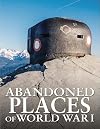
This is an incredible book! High-res photographs from around the world bring unique insight into WWI; it was truly fascinating, seeing how remnants of the war live on to this day and have been reconstructed/maintained or left to the natural elements. Comparing how each country fought, defended itself, and worked to heal its soldiers proved insightful, poignant, and somber.
I read this at about the same time as Kate Breslin's _As Dawn Breaks_, also set during WWI; that lent gravitas and quite show more the mental picture for her novel. It also reminded me of many a childhood day trip up to Fort Casey on Whidbey Island, one of three strategic fortifications at Puget Sound's entrance that saw most of its activity during WWI and WWII. Of course, as a child, grasping the magnitude of events that happened at that time is naturally a challenge! So revisiting in this book revived the magnitude of history and set my own memories in the context of world events.
The emphasis within the book is more on the pictures, with captions providing "history in a nutshell." For me, that was perfect and just enough information to whet the appetite, should I want to pursue other reads for more detail.
I think my favorite pictures were of Chapelle des Chasseurs Alpins (in Confrecourt, Aisne); I love to visit (and photograph) chapels and churches when I travel, and these photos stirred all the feels--especially since travel isn't quite the same right now (as I write this mid-pandemic). A picture of a German gun in Belleau Wood, Aisne, was also particularly powerful: set smack dab in the middle of a forest, with more leaves on the ground than on the trees, it literally paints a jarring image of war's devastation. And finally, the ossuary at Haute Chevauchee (Argonne, Meuse) was perhaps the ultimate tomb of unknown solders. Again ... sobering and moving.
5/5 stars.
I received an eARC of the book from the publisher via NetGalley. All opinions are my own. show less
I read this at about the same time as Kate Breslin's _As Dawn Breaks_, also set during WWI; that lent gravitas and quite show more the mental picture for her novel. It also reminded me of many a childhood day trip up to Fort Casey on Whidbey Island, one of three strategic fortifications at Puget Sound's entrance that saw most of its activity during WWI and WWII. Of course, as a child, grasping the magnitude of events that happened at that time is naturally a challenge! So revisiting in this book revived the magnitude of history and set my own memories in the context of world events.
The emphasis within the book is more on the pictures, with captions providing "history in a nutshell." For me, that was perfect and just enough information to whet the appetite, should I want to pursue other reads for more detail.
I think my favorite pictures were of Chapelle des Chasseurs Alpins (in Confrecourt, Aisne); I love to visit (and photograph) chapels and churches when I travel, and these photos stirred all the feels--especially since travel isn't quite the same right now (as I write this mid-pandemic). A picture of a German gun in Belleau Wood, Aisne, was also particularly powerful: set smack dab in the middle of a forest, with more leaves on the ground than on the trees, it literally paints a jarring image of war's devastation. And finally, the ossuary at Haute Chevauchee (Argonne, Meuse) was perhaps the ultimate tomb of unknown solders. Again ... sobering and moving.
5/5 stars.
I received an eARC of the book from the publisher via NetGalley. All opinions are my own. show less
Good description of Russian Revolution. Although much better than the hostile depictions, it remains tainted with a social-democratic conception of classless "democracy," overemphasizing this concept in his depiction. The preface and final chapter oversimplify the degeneration of the Russian Revolution, suggesting that a restoration of capitalism accompanied the consolidation of power in the hands of the state bureaucracy, with the state bureaucrats becoming "capitalists." This theory arose show more as social-democrats sought to distance themselves from the Soviet Union, but it does not accurately explain the economic and social relations within the Soviet Union. Otherwise, the description of the role of the Bolshevik Party and the leading figures is accurate and vividly presented. show less
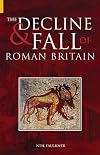
Populist TV series, such as the BBC's What the Romans Did For Us, were repeated endlessly on British digital history channels to emphasise the heritage of the Roman Empire in its farflung outposts such as Britannia. It's true that Britons are indebted to them for a lot of technology and for the cultural legacy left to us in history, literature, religion, the law and so on.
But freelance historian and archaeology journalist Neil Faulkner argues that the Roman Empire was "a system of robbery show more with violence, that it was inherently exploitative and oppressive, and that it was crisis-prone, unstable and doomed to collapse". Furthermore its main use is as an Awful Lesson to us in the modern world, "dominated as it is by corporate capital and imperialist war," just as in Late Antiquity. His polemic is powerful and cumulative if, as he says, "essentially negative".
There is a lot of weight hanging on a title that pays homage to Gibbons' great multi-volume work (which, incidentally, also inspired Isaac Asimov's sequence of SF books in the Foundation series). The 2004 paperback edition reinforces his political views and includes an additional final chapter on Dark Age Britain entitled 'From Commune to Kingdom' which seems to put the final nail in the coffin of Roman Britain. show less
But freelance historian and archaeology journalist Neil Faulkner argues that the Roman Empire was "a system of robbery show more with violence, that it was inherently exploitative and oppressive, and that it was crisis-prone, unstable and doomed to collapse". Furthermore its main use is as an Awful Lesson to us in the modern world, "dominated as it is by corporate capital and imperialist war," just as in Late Antiquity. His polemic is powerful and cumulative if, as he says, "essentially negative".
There is a lot of weight hanging on a title that pays homage to Gibbons' great multi-volume work (which, incidentally, also inspired Isaac Asimov's sequence of SF books in the Foundation series). The 2004 paperback edition reinforces his political views and includes an additional final chapter on Dark Age Britain entitled 'From Commune to Kingdom' which seems to put the final nail in the coffin of Roman Britain. show less
Lists
Mitski! (1)
Awards

You May Also Like


Associated Authors
Statistics
- Works
- 19
- Also by
- 1
- Members
- 584
- Popularity
- #42,937
- Rating
- 3.7
- Reviews
- 9
- ISBNs
- 60
- Languages
- 5