
Simon Leys (1935–2014)
Author of The Death of Napoleon
About the Author
Pierre Ryckmans was born on September 28, 1935 in Brussels, Belgian. He studied law and art history at the Catholic University of Louvain. At the age of 19, he was one of a delegation of young Belgians invited to China on a trip that included a meeting with Zhou Enlai, the premier under Mao. He show more spent 12 years in the Far East, where he became an expert on Chinese painting, calligraphy and poetry. In Hong Kong, he monitored the Chinese press on behalf of Belgian diplomats. He taught at the Australian National University in Canberra in 1970. He primarily wrote under the pen name Simon Leys. He criticized Mao's cultural revolution in his first two books, Les Habits Neufs du Président Mao (The Chairman's New Clothes) and Ombres Chinoises (Chinese Shadows). His other works included The Death of Napoleon and The Wreck of the Batavia. He died of cancer on August 11, 2014 at the age of 78. (Bowker Author Biography) show less
Works by Simon Leys
Associated Works
On the Abolition of All Political Parties (1940) — Translator, some editions — 352 copies, 5 reviews
The Execution of Mayor Yin, and Other Stories from the Great Proletarian Cultural Revolution (Chinese Literature in Translation) (1978) — Introduction, some editions — 133 copies, 1 review
Madame Chiang Kai-Shek : Un siècle d'histoire de la Chine (2010) — Preface, some editions — 14 copies
National Geographic World Cultures and Geograph (Australia, The Pacific Realm & Antarctica) Teacher's Edition (2016) — Contributor — 1 copy
Tagged
Common Knowledge
- Legal name
- Ryckmans, Pierre
- Birthdate
- 1935-09-28
- Date of death
- 2014-08-11
- Gender
- male
- Education
- Katholieke Universiteit Leuven, Belgium
National Taiwan University - Occupations
- sinologist
university professor
translator
art historian - Organizations
- Australian National University
University of Sydney - Awards and honors
- Prix mondial Cino Del Duca (2005)
Fellow, Australian Academy of Humanities
Member, Academie Royale de Literature Francaise - Relationships
- Ryckmans, Han-fang Chang (wife)
- Cause of death
- cancer
- Nationality
- Belgium (birth)
Australia (naturalized) - Birthplace
- Brussels, Belgium
- Places of residence
- Sydney, New South Wales, Australia
Taiwan
Belgium
Canberra, Australian Capital Territory, Australia - Place of death
- Canberra, Australian Capital Territory, Australia
Members
Reviews
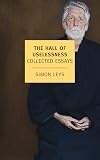
She goes forward admirably, she does not go backwards successfully — Gertrude Stein, Autobiography of Alice
On Adventures in Fixity
Gertrude Stein, who is driving, quite excellently, one of the first Fords imported to France in the so-called "interwar period," often remarks on how certain young male artistic types, though they drive forward well enough in Aix-en-Provence, don't develop the skills for movement in reverse. In a certain sense, this kind of limitation might be a good thing; show more forcing creative energies to move in a single direction. Simon Leys's description of Chinese calligraphy exemplifies this relationship, in which a certain fixity is found to be productive: Not only is [the calligrapher] not allowed to create new graphic structures, but this limited material is itself strictly predetermined: each character must be written with a specific number of brushstrokes that are arranged in a precise pattern, and follow each other in preordained sequence. [...] The resources of invention and creation are exclusively channeled into expression (282). Knowing Leys for a sinologist, we are perhaps not surprised to find his style consistent with the "good taste" which is finding new expression in the oldies and goodies. In one Leys's exemplary essays in this collection (the one on Revel) he references the fable from Archilochus: "The fox knows many things but the hedgehog knows one big thing". Yet, the more he writes about Revel, heaping praise upon praise, the subject somehow gains all the advantages of both. The fox in Revel, who knows many things, comes to learn one big thing, and the hedgehog in Revel, who knows one big thing, comes to learn many things as well. In this sense, by going beyond Archilochus in superlative praise, he has accomplished the feat of Cratylus, who, in his attempt to improve upon Heraclitus, asserted that, "No man ever can step into the same river even once."
Sometimes people talk about Scholarship as if it were a large meal served in a house of ill repute (if we're not already tired of mixed metaphors). One might venture to partake with caution, expecting a provisional nutritional value, but also possibly a bad taste. (The absence of the former is more forgiving than the presence of the latter.) Simon Leys, like Susan Sontag's "husbandly" writers, is often critical of such repasts, particularly when cooked up by certain "western visitors." "They were much impressed by the austerity of the monks who subsisted on a 'bowl of tea,' for their evening meal. These visitors, however, were quite naïve. If they had had the curiosity actually to look into the bowls of the monks, they would have found that what was served under the name of 'tea' was in fact a fairly nourishing rice congee (271)." In a certain sense, Leys is producing a comparatively more nutritive scholarship, especially in his essays on calligraphy and Chinese writing, which happen to corroborate much of Derrida's discourse on writing and speech in Of Grammatology. (i.e. Chinese speech cannot be said to have preceded Chinese writing.) Other successes: Leys's perspective on Chinese history. The sense that historical treasures are always being destroyed with remarkable frequency allows him to place the Cultural Revolution in context. (Whereas the "western visitor" has often portrayed it as a unique holocaust (burning).) His essay on Mao is perhaps the best in the collection, and is worth quoting at length for its analysis of Chinese wordplay (unfortunately absent from many other essays), his limpid perspective on the Chairman aside.
Some misunderstandings acquire historical dimensions. In the celebrated interview he granted Edgar Snow, Mao Zedong allegedly described himself as “a lonely monk walking in the rain under a leaking umbrella.” With its mixture of humorous humility and exoticism, this utterance had a tremendous impact on the Western imagination. Snow failed to recognize in this “monk under an umbrella” evoked by the chairman a most popular Chinese joke. The expression, in the form of a riddle, calls for the conventional answer “no hair” (since monks keep their heads shaven), “no sky” (it being hidden by the umbrella)—which in turn means by homophony (wu-fa wu-tian) “I know no law, I hold nothing sacred.” The blunt cynicism shown by Mao in referring to such a saying to define his basic attitude was as typical of his bold disregard for diplomatic niceties as its mistaken and sentimental English adaptation by Snow is revealing of the compulsion for myth-making (347).
In one of the last public appearances before his death in 2014, Leys delivered a lecture at the Wheeler Centre in Melbourne in which he reiterates many of his thoughts on literature found in this collection. (The speech is also notable for an Australian English still surprisingly spoken with a strong Belgian accent.) Yet this lecture, in which our author grips the lectern at such a low angle that he appears to be standing with arms akimbo, concludes with a notable display of (bad) taste in the form of a quotation from Normon Mailer: "I would never dream of not reading reviews of my books. it would be like not looking at a naked woman if she happens to be standing in front of an open window." The inclusion of this prurient quotation from our practicing Catholic author suggests that, perhaps for a long while, Leys has been wanting to have it both ways — both universal esteem and lighthearted chauvinism. (Notably, of the seventeen essays on Literature in this collection, none feature women.)
Roland Barthes is quoted in one of the essays in this collection (the one on Barthes), in which he presents a perspective on a style of writing: “[literature that is] neither affirmative, nor negative, nor yet neutral — the desire for silence as a special form of discourse” (341). As we may recall, the Tel Quel group, of which Barthes was a member, has made some perhaps lamentable statements in support of Maoism. This, I suspect, is driving Leys, whose position on Mao is certainly not equivocal, to produce an exemplary misreading of R.B. When Barthes, as part of Tel Quel's visit to China, reserves his invective for the poor quality of his in-flight sandwich on Air France, Leys subsequently remarks, tongue-in-cheek, that perhaps it would've been just as good if R.B. hadn't written anything at all. This is particularly provocative coming from the author who has begun this collection with a maxim from Zuang Zi: "Everyone knows the usefulness of what is useful, but few know the usefulness of what is useless" (9). Letting resentment cloud his judgment — why doesn't Leys recognize the similarity between R.B. and Zuang Zi — perhaps he's limited by thought which can only think in one direction. Yet, had he been able to take Barthes to heart (i.e. writing as a reservation of judgment when you know you might be in the wrong), one might hope that our author wouldn't have written those unsuccessful backwards-moving ventures in praise of smoking (and against Edward Said’s Orientalism), which ended for him in embarrassment.
'Does Heaven speak?' I have certainly spoken too much (298). — Simon Leysshow less
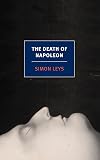
“For the first time, he began to see himself as he really was, naked and defenseless at the center of a universal debacle, buffeted this way and that by events, threatened on every side by an all-pervasive decay, sinking slowly into the quicksands of failed resolutions, and finally disappearing into the ultimate morass against which no honor could prevail.”
― Simon Leys, The Death of Napoleon
Such lyrical, precise language, a cross between extended prose poem and novelistic meditation show more on the nature of identity, glory and history, both whimsically light and philosophically deep. Such graceful fiction from scholar/essayist/sinologist/quirky renaissance man Simon Leys (1935-2014).
"What a pleasure to read a real writer. The Death of Napoleon is utterly satisfying sentence by sentence and scene by scene, but it is also compulsively readable." These are the words of renowned literary critic Gabriel Josipovici, words with which I wholeheartedly agree. And to underscore my agreement, I’ll serve up a few slices of Leys poetic, that is, three quotes from scenes in Chapter One that chronicle Napoleon’s voyage on board a ship carrying the world-famous emperor from St. Helena back to his beloved France. And, yes, of course, this is imaginative alternate history.
A snippet of the author’s description of the ship’s cook: “He was tall, but a good half century spend over stoves in low-ceilinged galleys had broken him up into several angular segments, like a half-folded pocket rule. Without really being fat, his body swelled out arbitrarily in places, giving him the shape of a semi-deflated balloon. His face was split by a huge gaping mouth; in this grotto, as black and dirty as the maw of his stove, there emerged one or two teeth, like slimy rocks protruding at low tide. The ruined state of his teeth made his speech, already bizarre, all the harder to understand, endowing his rare utterances with a kind of oracular force – as befits a black cook on a sailing ship who, to be true to type, must naturally have a smattering of occult sciences.” Wow! I mean, Super-Wow! -- exquisite visual images; expressive vivid metaphors.
“Every evening, crushed by the fatigue of the day’s work, Napoleon would escape for a moment from the stuffy atmosphere of the forecastle and lean against the bulwark in the bows to watch the first stars come out. The softness of the tropical azure giving way slowly to the velvet of night, and the glittering of the lonely stars which seem so close to us when they begin to shine in the dusk, left him perfectly cold.” If you have never had an opportunity to stand on the deck of a ship at sea and watch tropical azure give way slowly to the velvet of night, here is your opportunity to not only experience via your imagination but to join Napoleon in doing so.
Napoleon assumes the identity of a cabin boy by the name of Eugène in order to escape from St. Helena. At one point we read of Napoleon’s self-reflection: “During this time in limbo, and until the day when Napoleon’s sun would rise again, he had to survive by relying upon wretched Eugène's purely physical existence. Only the slenderest thread was leading him back toward the hypothetical dawn of his future. So far, at every stage of his journey, a new, unknown messenger had emerged from the shadows to show him the route to follow.” Again, on one level Simon Leys’ slim novel is a meditation on the nature of time and identity. And what an identity! After all, he is Napoleon.
Thank you, New York Review Books (NYRB) for reprinting this slim classic. And thanks to Patricia Clancy for joining Mr. Leys in translating from the French into English. 130 pages of large font – this novella can be read in three hours. Treat yourself to a day of literary ecstasy. I have four times over and counting, but then again, when it comes to ecstasy I admit that I have never observed moderation. show less
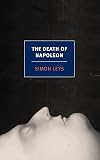
A novella set in an alternate past, where Napoleon escapes St Helena, leaving a body double in his place and returning disguised to Europe in the hopes of regaining his throne. His plans go awry, and Napoleon gets a bit of a comeuppance since he cannot assert his identity without being thought mad. This is a wryly melancholic piece that plays with idea of celebrity, humanity, and identity: Napoleon, who really is Napoleon, is nevertheless delusional in thinking he could be Napoleon once show more more. Simon Leys' prose is mostly pleasurable, but I wish the translator had made a different choice in how to render the names of one of the characters into English—"Nègre-Nicolas" could have been translated in a less uncomfortable way or a more uncomfortable way, and the translator opted for the second way even though I don't think it added anything to the narrative or even made for more verisimilitude. show less
Simon Leys is a carefully kept secret by anyone who loves contradictory people, people who are averse to fashionable or politically correct thinking, just go their own way and are not ashamed to row against the tide. This Belgian writer, - with his real name Pierre Ryckmans (1935-2014) -, was an eminent sinologist, one of the best connoisseurs of China in the 20th century. He was among the first to uncover and denounce the cruel excesses of Mao's ideological campaigns, but he was not taken show more seriously by the predominant, especially Sartre-controlled omertà of the sixties and seventies. That he was a professing Catholic probably didn't help either. His analyses of China and Chinese culture were not appreciated until the 1980s, but his influence always stayed limited, partly due to a form of charming unworldliness.
This bundle of essays naturally includes several excellent articles on China and Chinese culture, but the main emphasis is nevertheless on his literary criticism. Because it appears that Leys was enormously well-read, and also expressed opinions about the "monstres sacrés" of Western literature that regularly went against prevailing opinions. It is no coincidence that this book opens with an ode to Don Quixote, who is not a "loser" at all for Leys, but someone who in all simplicity has set a goal and consistently adheres to it. It’s odd, but when I look at images of Leys at a later age, I can see a certain physical similarity between him and the classic representations that have been made of the Spanish anachronistic knight. Or is that my imagination?
If I have to ascertain 2 attractive qualities in Leys, then these are his authenticity and his humanism. To a large degree both are old-fashioned these days. This is foremost a characteristic of his literary criticism: writers such as Chesterton, Orwell and Simenon are lauded for their astute authenticity, others such as André Malraux and Roland Barthes are ruthlessly cracked for their mythomania and ideological conformity.
Reading these essays, one is impressed by Leys’ erudition and lucidity. But I have the impression that in the course of time he has started to somewhat cultivate his own obstinacy. He regularly – in an ironic way of course – refers to his lack of knowledge and insight, which he invariably blames on laziness (in my opinion rather a form of complacency), but he uses this weapon to deal mercilessly with people of another opinion. And apparently, he knows all too well how his blatant Catholicism deviated from the spirit of the times: just look at his sharp, provocative polemic with Christopher Hitchens about the latter’s critical book on Mother Teresa.
Oh well, perhaps these are just the petty traits of a brilliant genius. I am pleased that thanks to this collection of essays I have been able to become acquainted with the valuable, be it somewhat old-fashioned universe of Simon Leys. show less
This bundle of essays naturally includes several excellent articles on China and Chinese culture, but the main emphasis is nevertheless on his literary criticism. Because it appears that Leys was enormously well-read, and also expressed opinions about the "monstres sacrés" of Western literature that regularly went against prevailing opinions. It is no coincidence that this book opens with an ode to Don Quixote, who is not a "loser" at all for Leys, but someone who in all simplicity has set a goal and consistently adheres to it. It’s odd, but when I look at images of Leys at a later age, I can see a certain physical similarity between him and the classic representations that have been made of the Spanish anachronistic knight. Or is that my imagination?
If I have to ascertain 2 attractive qualities in Leys, then these are his authenticity and his humanism. To a large degree both are old-fashioned these days. This is foremost a characteristic of his literary criticism: writers such as Chesterton, Orwell and Simenon are lauded for their astute authenticity, others such as André Malraux and Roland Barthes are ruthlessly cracked for their mythomania and ideological conformity.
Reading these essays, one is impressed by Leys’ erudition and lucidity. But I have the impression that in the course of time he has started to somewhat cultivate his own obstinacy. He regularly – in an ironic way of course – refers to his lack of knowledge and insight, which he invariably blames on laziness (in my opinion rather a form of complacency), but he uses this weapon to deal mercilessly with people of another opinion. And apparently, he knows all too well how his blatant Catholicism deviated from the spirit of the times: just look at his sharp, provocative polemic with Christopher Hitchens about the latter’s critical book on Mother Teresa.
Oh well, perhaps these are just the petty traits of a brilliant genius. I am pleased that thanks to this collection of essays I have been able to become acquainted with the valuable, be it somewhat old-fashioned universe of Simon Leys. show less
Lists
Awards


You May Also Like


Associated Authors
Statistics
- Works
- 48
- Also by
- 12
- Members
- 1,604
- Popularity
- #16,067
- Rating
- 3.7
- Reviews
- 33
- ISBNs
- 125
- Languages
- 7
- Favorited
- 6


