

Jason Heller
Author of Taft 2012
Works by Jason Heller
Associated Works
Tagged
Common Knowledge
- Birthdate
- 20th Century
- Gender
- male
- Agent
- Jennifer Jackson (Donald Maass Literary Agency)
- Nationality
- USA
- Birthplace
- Denver, Colorado, USA
- Places of residence
- Denver, Colorado, USA
- Associated Place (for map)
- Denver, Colorado, USA
Members
Reviews
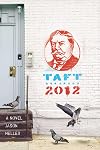
Review originally posted on my blog: Awordsworth.blogspot.com
Book provided by publisher for review.
Picture, if you will, the United States in a frenzy of politics: the 2012 elections are looming closer and closer, and everyone is trying desperately to find the right candidate to go up against the sitting President. Imagine, with me, that one day a former President, who left office 100 years ago, reappears suddenly. Like, literally reappears. Alive and well. Rip van Winkle-style, with a show more Presidential twist. Yeah. Jason Heller went there. What happens next is a story that could only happen in the American political arena - but in a good way!
What I loved about Taft 2012 is how believable it is. Er, you know, aside from the fact Taft 'woke up' 100 years after he vanished. But the climate? The society? The way things played out? Totally. Believable. All you have to do is turn on the tv or check a news site online and it's easy to imagine the novel as reality. There are a lot of fun 'insider looks' too: tweets, agendas, etc. that help flesh out the story. And the sly comments about the world Taft wakes up in? I dare you not to recognize the connections. I think the very realness of the context is what makes this so enjoyable. I thoroughly enjoyed the read, alternating between chuckling over the developing story and appreciating the masterful storytelling. show less
Book provided by publisher for review.
Picture, if you will, the United States in a frenzy of politics: the 2012 elections are looming closer and closer, and everyone is trying desperately to find the right candidate to go up against the sitting President. Imagine, with me, that one day a former President, who left office 100 years ago, reappears suddenly. Like, literally reappears. Alive and well. Rip van Winkle-style, with a show more Presidential twist. Yeah. Jason Heller went there. What happens next is a story that could only happen in the American political arena - but in a good way!
What I loved about Taft 2012 is how believable it is. Er, you know, aside from the fact Taft 'woke up' 100 years after he vanished. But the climate? The society? The way things played out? Totally. Believable. All you have to do is turn on the tv or check a news site online and it's easy to imagine the novel as reality. There are a lot of fun 'insider looks' too: tweets, agendas, etc. that help flesh out the story. And the sly comments about the world Taft wakes up in? I dare you not to recognize the connections. I think the very realness of the context is what makes this so enjoyable. I thoroughly enjoyed the read, alternating between chuckling over the developing story and appreciating the masterful storytelling. show less

Strange Stars is a study of genre in 1970s mass culture, specifically science fiction in the dialogues among various media: music and printed literature, film, and television. Mostly, the influence runs from the literature to music, often through the other media, but there are significant reversals and loops.
The book is organized chronologically, with a chapter for each year from 1970 through 1979, and bracketing chapters for the late 60s and the 80s and beyond. David Bowie's journey from show more the folksy rock of "Space Oddity" to the new-wave-infused "Ashes to Ashes" supplies something like a narrative framework, but much of the book consists of a sprawling inventory of any music or musicians engaged with science fiction. Despite "Pop Music" in the subtitle, the treatment is in no way confined to a Top-40 milieu. Prog, metal, glam, krautrock, funk, and disco were all key musical genres in the proliferation of sci-fi notions.
I read much of this book with the other hand driving the YouTube search on my computer, since it cites a fair amount of music previously obscure to me. I think that's an optimal way to read this sort of music criticism, which demands a multi-media sort of engagement for full appreciation.
Strange Stars includes frequent discussions of the sci-fi sleeve art for music records, a topic that could justify an entire book of its own, and none of the actual images are reproduced. Heller aptly observes that the most iconic sci-fi album image of the era was the guitar ships of Boston (1976), a record which had nothing at all science-fictional about its lyrics or musical style. He suggests that the fact represented a watershed moment, when sci-fi packaging became a modish selling point as opposed to a hazardous design option (137). Certainly, with the release of Star Wars shortly thereafter, the trend was consolidated.
Heller has done an impressive job of sleuthing out webs of personal association as well as artistic influence. Next to Bowie, perhaps the second most conspicuous figure in the book is science fiction author and sometime musician Michael Moorcock, whose enthusiasms and lyrics, starting in the Ladbroke Grove bohemian scene of the late 60s, were perpetuated through his collaboration with Hawkwind, Blue Öyster Cult, and others.
I'm not sure that the rigorously chronological scheme that Heller used here makes for the most compelling reading experience. It imposes a need to leap around quite widely-separated developments in different musical genres and sometimes leads to a feeling of choppiness and atomization. In his acknowledgments, Heller credits his editor Ryan Harrington for transforming this work to narrative history rather than an "encyclopedia," and traces of that original sort of reference-work composition persist in the finished book. Still, readers like me who forage for sub-cultural lore will find this book eminently satisfying. show less
The book is organized chronologically, with a chapter for each year from 1970 through 1979, and bracketing chapters for the late 60s and the 80s and beyond. David Bowie's journey from show more the folksy rock of "Space Oddity" to the new-wave-infused "Ashes to Ashes" supplies something like a narrative framework, but much of the book consists of a sprawling inventory of any music or musicians engaged with science fiction. Despite "Pop Music" in the subtitle, the treatment is in no way confined to a Top-40 milieu. Prog, metal, glam, krautrock, funk, and disco were all key musical genres in the proliferation of sci-fi notions.
I read much of this book with the other hand driving the YouTube search on my computer, since it cites a fair amount of music previously obscure to me. I think that's an optimal way to read this sort of music criticism, which demands a multi-media sort of engagement for full appreciation.
Strange Stars includes frequent discussions of the sci-fi sleeve art for music records, a topic that could justify an entire book of its own, and none of the actual images are reproduced. Heller aptly observes that the most iconic sci-fi album image of the era was the guitar ships of Boston (1976), a record which had nothing at all science-fictional about its lyrics or musical style. He suggests that the fact represented a watershed moment, when sci-fi packaging became a modish selling point as opposed to a hazardous design option (137). Certainly, with the release of Star Wars shortly thereafter, the trend was consolidated.
Heller has done an impressive job of sleuthing out webs of personal association as well as artistic influence. Next to Bowie, perhaps the second most conspicuous figure in the book is science fiction author and sometime musician Michael Moorcock, whose enthusiasms and lyrics, starting in the Ladbroke Grove bohemian scene of the late 60s, were perpetuated through his collaboration with Hawkwind, Blue Öyster Cult, and others.
I'm not sure that the rigorously chronological scheme that Heller used here makes for the most compelling reading experience. It imposes a need to leap around quite widely-separated developments in different musical genres and sometimes leads to a feeling of choppiness and atomization. In his acknowledgments, Heller credits his editor Ryan Harrington for transforming this work to narrative history rather than an "encyclopedia," and traces of that original sort of reference-work composition persist in the finished book. Still, readers like me who forage for sub-cultural lore will find this book eminently satisfying. show less
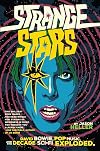
Hugo Award–winner Jason Heller traverses the realm of 1970s science fiction in his thorough cultural history that examines how the genre influenced music and musicians, from David Bowie’s 1969 “Space Oddity” to the “tipping point” in 1977, when Star Wars, Alan Parsons Project’s I, Robot, and Styx’s “Come Sail Away” were all released. Never before has anyone written a book on how sci-fi paved the way for major musical and pop culture innovations. David Bowie’s career is show more a constant thread throughout, from his “Space Oddity” song (inspired by 2001: A Space Odyssey and the Apollo 11 moon landing), which Heller establishes as the catalyst for sci-fi infiltrating 1970s music, to its sequel “Ashes to Ashes” in 1980, demonstrating the Bowie was at the forefront of musical innovation within this decade that often gets ridiculed for disco. Heller excavates sci-fi influences across genres including the influences that shapes Rush's classic album 2112; the robotic aesthetic of electronic duo Kraftwerk and their cold, mechanical, synthesizer-driven music; the dystopian lyrics of postpunk bands such as Joy Division; and the extraterrestrial liberation baked into the identity of seminal funk band Parliament. Heller concludes that, while countless bands wrote songs about science fiction, Bowie stood apart because he “was science fiction.” Heller concludes the book with a brief discussion on Bowie's last album and his elusive death. It's really all I could ever ask for in a book and possibly the most interesting music book of 2018. My only critique is that I wished he wrote an epilogue that briefly discussed the late 80s and 90s. show less
Taft 2012 is a quick, quirky, funny and surprisingly touching little book.
Jason Heller creates a world in which Taft disappeared nearly a hundred years earlier, only to reappear in the White House garden in 2011. He quickly gets up to speed on what has changed while he was away and before he knows it, becomes swept up in the 2012 presidential race.
The book maintains a light touch throughout. It is consistently humorous while also being poignant and sometimes very insightful. Taft takes you show more back to a time when presidents were held in higher regard and sometimes even had the principles that modern-day politicians only pretend to have. Taft comes from a time when presidents really were larger than life, and in his case, quite literally so. In a time where people want to be inspired, Taft is a figure who can inspire them.
Looking through the eyes of someone who hasn’t seen the gradual changes the world has gone through in the last 100 years is eye-opening for the reader. The political aspects here are accessible and designed not to offend persons of any political stripe, or at least if they do, offend persons at all points along the political spectrum equally.
Perhaps the greatest thing I can say about this book is that the fictional Taft has given me a new-found respect for the real one. The writing is clever and entertaining and often moving. I highly recommend this book for anyone who likes a little politics with their humor, or vice-versa. I was fortunate to receive an early review copy of this book. show less
Jason Heller creates a world in which Taft disappeared nearly a hundred years earlier, only to reappear in the White House garden in 2011. He quickly gets up to speed on what has changed while he was away and before he knows it, becomes swept up in the 2012 presidential race.
The book maintains a light touch throughout. It is consistently humorous while also being poignant and sometimes very insightful. Taft takes you show more back to a time when presidents were held in higher regard and sometimes even had the principles that modern-day politicians only pretend to have. Taft comes from a time when presidents really were larger than life, and in his case, quite literally so. In a time where people want to be inspired, Taft is a figure who can inspire them.
Looking through the eyes of someone who hasn’t seen the gradual changes the world has gone through in the last 100 years is eye-opening for the reader. The political aspects here are accessible and designed not to offend persons of any political stripe, or at least if they do, offend persons at all points along the political spectrum equally.
Perhaps the greatest thing I can say about this book is that the fictional Taft has given me a new-found respect for the real one. The writing is clever and entertaining and often moving. I highly recommend this book for anyone who likes a little politics with their humor, or vice-versa. I was fortunate to receive an early review copy of this book. show less
 This review was written for LibraryThing Early Reviewers.
Lists
Awards


You May Also Like


Associated Authors
Statistics
- Works
- 14
- Also by
- 20
- Members
- 451
- Popularity
- #54,391
- Rating
- 3.6
- Reviews
- 58
- ISBNs
- 17
- Languages
- 1
