

Frank Partnoy
Author of Fiasco: The Inside Story of a Wall Street Trader
About the Author
Works by Frank Partnoy
The Match King: Ivar Kreuger, the Financial Genius Behind a Century of Wall Street Scandals (2009) 209 copies, 2 reviews
Associated Works
Tagged
Common Knowledge
- Gender
- male
Members
Reviews
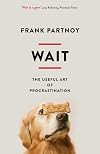
Wait is a phrase that you will often hear a parent use when dealing with a small child. I know I have used is often enough myself.
In these days of faster communications, instant messages, 24 hour email and the pressure to make instantaneous choices, Partnoy wants us to think slower, to take time to consider those choices and to make the correct decision at the right time.
He describes sports men who have the ability to stretch time and make a better choice of shot, of city traders who have show more chanced on the optimum time for trades and the art of subliminal advertising. He looks at decisions that have been made wrong in football, the correct length of time to wait until you apologise and the art of procrastination.
This book ties in with other books that I have read and like, such as Thinking Fast and Slow, and The Decisive Moment. He is a great advocate of taking time to make the right decision, and having made that decision sticking with it, and not changing your mind,something that Warren Buffett has proven over years. He also looks how taking a little more time, in conduction with checklists, has meant that surgery has become less risky for patients and how people doing the same tasks feel more pressure when the hourly rate is higher.
If you feel that time today is too precious to waste, then I would recommend reading this. Take note of the suggestions and just wait a little. show less
In these days of faster communications, instant messages, 24 hour email and the pressure to make instantaneous choices, Partnoy wants us to think slower, to take time to consider those choices and to make the correct decision at the right time.
He describes sports men who have the ability to stretch time and make a better choice of shot, of city traders who have show more chanced on the optimum time for trades and the art of subliminal advertising. He looks at decisions that have been made wrong in football, the correct length of time to wait until you apologise and the art of procrastination.
This book ties in with other books that I have read and like, such as Thinking Fast and Slow, and The Decisive Moment. He is a great advocate of taking time to make the right decision, and having made that decision sticking with it, and not changing your mind,something that Warren Buffett has proven over years. He also looks how taking a little more time, in conduction with checklists, has meant that surgery has become less risky for patients and how people doing the same tasks feel more pressure when the hourly rate is higher.
If you feel that time today is too precious to waste, then I would recommend reading this. Take note of the suggestions and just wait a little. show less
Frank Partnoy, author of this book and the very silly 'FIASCO: Blood in the Water on Wall Street', implies an illustrious career structuring and selling complex derivatives. In actual fact he worked on Wall Street for just two years in total, straight out of college. Instead of succeeding by staying the course, Partnoy made his millions by violating the Wall Street code of omerta and knocking out a sensationalist, mostly ignorant, account of the year or so he spent at Morgan Stanley. show more Infectious Greed is the follow-up, which purports to document the wreckage across the market since.
Having read FIASCO, which was valuable mostly for its unintended humour, I didn't expect much of Infectious Greed; I was rather looking forward to slating it, to be honest. It has the same air of maiden-aunt prurience as FIASCO but, almost despite himself, Partnoy's conclusions here aren't especially objectionable, and mostly undermine the tone of studied outrage he cultivates throughout the early part of the book.
The thesis of the book is that the financial markets have, of late, been corrupted by deceit and risk (hang on a minute: financial markets are *about* risk. Is it meaningful to say they can they be corrupted by it?). Yet at least half the book recounts events which took place ten or more years ago, in the primordial soup of the derivatives market. If a week is a long time in politics, a decade is an aeon on Wall Street: in 2004, the exploits of Bankers Trust and CS First Boston in 1993 aren't exactly current. The nascent derivatives market is now a mature trillion dollar industry. I dare say Professor Partnoy wouldn't recognise it.
Partnoy's explanations of the transactions are, however, lucid: so much so that they undo his conclusions. At one point he describes in two paragraphs the 'whipsaw' risk of an 'Inverse IO' instrument. It's a very clear explanation, which completely undermines his concluding observation that 'it was unclear whether any mutual-fund mangers [the investors] understood all of this'. Here's the thing: to put not too fine a point on it, a professional fund manager who doesn't understand what can be lucidly explained in eight sentences, yet still invests in it, should be shot. So should his employer. And neither deserves the respect (for which, read, money) of the public. It might seem a harsh lesson, but it wouldn't take too many collapses to shake the mums and dads in Ohio out of their complacent stupor and shift their funds to a manager who was prepared to employ qualified managers and supervise them properly. The market has a way of teaching people valuable lessons that market regulation and government bail-outs really don't.
The funny thing is, Partnoy does continually stumble over this axiom, but doesn't recognise it. He quotes a Peat Marwick partner who derides ignorant fund managers thus: 'if you don't understand, you might as well place it all on red at Atlantic City or Las Vegas, because at least there you get free drinks.' Though Partnoy doesn't think so, the analogy is a good one: the very monied nature of Wall Street is the most graphic illustration of the fact that, unless you really know your onions, you are NOT going to end up a winner. The house is; which is why most of them can afford to pay their 20,000+ employees salaries which average out at half a million dollars each (it's all in the annual report - do the sums!). Like Casinos, Wall Street trading desks have a motive ulterior to realising some poor schmuck's American dream: the object is to make, not lose, money, and this is exactly what they do and a statistically constant basis.
Partnoy repeatedly calls for regulation of the derivatives market without ever making a case for how this might be done or how it would prevent the losses he documents in the book: criminal statutes don't stop people committing murder, after all. All the regulation in the world won't stop fraudsters (if they're committing fraud, then by definition the regulations are already there, and they're breaking them). On the other hand, exploring the idiosyncrasies of rules *without* breaking them is the prerogative of every citizen, not just Wall Street banks. After all, regulatory arbitrage is only possible because of prescribed regulatory rules tend not to precisely reflect economic reality. If rules have irrational boundaries, then it is economically rational to exploit them.
Eventually, Partnoy acknowledges this. He cannot ultimately muster much venom for the perpetrators of the Enron debacle, and by the epilogue, where he sets out his recommendations (full marks to him for putting his money where is mouth is, by the way: it's one thing to criticise; quite another to suggest a solution) his proposals don't include regulation of the wholesale derivatives market ("some derivatives markets might appropriately have been left unregulated" he concedes) but simply equivalent accounting treatment with comparable financial instruments, and most of his fire is reserved not for Wall Street traders or greedy executives, but the credit rating agencies which operate under the umbrella of a government-sponsored oligopoly (only Moody's, Fitch and S&P are recognised for regulatory purposes). And you'll never guess what his solution is for dealing with the rating agencies: Without a hint of irony, he suggests they be deregulated!
By the final sentence of the book, it seems the most elementary elements of market theory may have finally slipped through: Partnoy asks his readers whether they have taken any prudent steps to properly evaluate their investments before putting up any money: 'If you answered 'no,' you have one more person to blame in addition to the accountants, bankers, lawyers, credit raters, corporate executives, directors and regulators who failed to spot the various financial schemes of recent years. You.'
Not, in the final analysis, quite the damning indictment it cracked up to be, then. show less
Having read FIASCO, which was valuable mostly for its unintended humour, I didn't expect much of Infectious Greed; I was rather looking forward to slating it, to be honest. It has the same air of maiden-aunt prurience as FIASCO but, almost despite himself, Partnoy's conclusions here aren't especially objectionable, and mostly undermine the tone of studied outrage he cultivates throughout the early part of the book.
The thesis of the book is that the financial markets have, of late, been corrupted by deceit and risk (hang on a minute: financial markets are *about* risk. Is it meaningful to say they can they be corrupted by it?). Yet at least half the book recounts events which took place ten or more years ago, in the primordial soup of the derivatives market. If a week is a long time in politics, a decade is an aeon on Wall Street: in 2004, the exploits of Bankers Trust and CS First Boston in 1993 aren't exactly current. The nascent derivatives market is now a mature trillion dollar industry. I dare say Professor Partnoy wouldn't recognise it.
Partnoy's explanations of the transactions are, however, lucid: so much so that they undo his conclusions. At one point he describes in two paragraphs the 'whipsaw' risk of an 'Inverse IO' instrument. It's a very clear explanation, which completely undermines his concluding observation that 'it was unclear whether any mutual-fund mangers [the investors] understood all of this'. Here's the thing: to put not too fine a point on it, a professional fund manager who doesn't understand what can be lucidly explained in eight sentences, yet still invests in it, should be shot. So should his employer. And neither deserves the respect (for which, read, money) of the public. It might seem a harsh lesson, but it wouldn't take too many collapses to shake the mums and dads in Ohio out of their complacent stupor and shift their funds to a manager who was prepared to employ qualified managers and supervise them properly. The market has a way of teaching people valuable lessons that market regulation and government bail-outs really don't.
The funny thing is, Partnoy does continually stumble over this axiom, but doesn't recognise it. He quotes a Peat Marwick partner who derides ignorant fund managers thus: 'if you don't understand, you might as well place it all on red at Atlantic City or Las Vegas, because at least there you get free drinks.' Though Partnoy doesn't think so, the analogy is a good one: the very monied nature of Wall Street is the most graphic illustration of the fact that, unless you really know your onions, you are NOT going to end up a winner. The house is; which is why most of them can afford to pay their 20,000+ employees salaries which average out at half a million dollars each (it's all in the annual report - do the sums!). Like Casinos, Wall Street trading desks have a motive ulterior to realising some poor schmuck's American dream: the object is to make, not lose, money, and this is exactly what they do and a statistically constant basis.
Partnoy repeatedly calls for regulation of the derivatives market without ever making a case for how this might be done or how it would prevent the losses he documents in the book: criminal statutes don't stop people committing murder, after all. All the regulation in the world won't stop fraudsters (if they're committing fraud, then by definition the regulations are already there, and they're breaking them). On the other hand, exploring the idiosyncrasies of rules *without* breaking them is the prerogative of every citizen, not just Wall Street banks. After all, regulatory arbitrage is only possible because of prescribed regulatory rules tend not to precisely reflect economic reality. If rules have irrational boundaries, then it is economically rational to exploit them.
Eventually, Partnoy acknowledges this. He cannot ultimately muster much venom for the perpetrators of the Enron debacle, and by the epilogue, where he sets out his recommendations (full marks to him for putting his money where is mouth is, by the way: it's one thing to criticise; quite another to suggest a solution) his proposals don't include regulation of the wholesale derivatives market ("some derivatives markets might appropriately have been left unregulated" he concedes) but simply equivalent accounting treatment with comparable financial instruments, and most of his fire is reserved not for Wall Street traders or greedy executives, but the credit rating agencies which operate under the umbrella of a government-sponsored oligopoly (only Moody's, Fitch and S&P are recognised for regulatory purposes). And you'll never guess what his solution is for dealing with the rating agencies: Without a hint of irony, he suggests they be deregulated!
By the final sentence of the book, it seems the most elementary elements of market theory may have finally slipped through: Partnoy asks his readers whether they have taken any prudent steps to properly evaluate their investments before putting up any money: 'If you answered 'no,' you have one more person to blame in addition to the accountants, bankers, lawyers, credit raters, corporate executives, directors and regulators who failed to spot the various financial schemes of recent years. You.'
Not, in the final analysis, quite the damning indictment it cracked up to be, then. show less
The Match King: Ivar Kreuger, The Financial Genius Behind a Century of Wall Street Scandals by Frank Partnoy

The missing link between Ponzi and Madoff, Kreuger shoed that simple falsehoods wrapped in bravado and complexity can be highly rewarding. Of course such hubris proves lethal but their is enough mystery here to be fodder for the imagination.
At least as far as the science goes, it seems solid enough--so a much better book than some of Gladwell's and Iyengar's The Art of Choosing. Partnoy really is a Renaissance man in that he's a lawyer who was a trader for Morgan Stanley, now a professor of some sort and graceful writer. You'd never guess he was a lawyer or former corporate drone from the writing.
The problems arise when he goes on and on with examples based on the thinnest findings. Notably apologies in the wake of sex scandals show more involving US politicians. No doubt when you flub big-time, you might want to wait a day or two to make your apology sound really sincere. But it's absurd to compare these various men's escapades for a start because their transgressions were so different (Spitzer was tracked to a prostitute because law enforcement thought bank withdrawals suggested he was being blackmailed; a southern governor, having an overseas affair wasn't breaking any law, just worrying a lot of people; some may have/were been breaking laws. Some told public lies before discovery; some didn't. Etc.)
*most of whose names Americans will have forgotten already and foreigners won't know; otherwise, people beyond the US won't be bothered by the other chapters.
That's just the start of my objections to that chapter (What is timing, after all?). But there are better chapters. I liked how views of procrastination have changed through the ages.Often we're going through a cost-benefit process and there's something to be gained by putting off a task. And even when you're not going project A that doesn't mean you're doing *nothing*.
And inevitably we always return to Kahnmann and Tversky and the way people weigh risks and rewards--that people aren't the rational men (and women) or classic economic models. I'd rather take the $1 extra today then wait a month or two for $5. That of course does not mean that I wouldn't wait a month for $5,000 in lieu of $1,000 today. show less
The problems arise when he goes on and on with examples based on the thinnest findings. Notably apologies in the wake of sex scandals show more involving US politicians. No doubt when you flub big-time, you might want to wait a day or two to make your apology sound really sincere. But it's absurd to compare these various men's escapades for a start because their transgressions were so different (Spitzer was tracked to a prostitute because law enforcement thought bank withdrawals suggested he was being blackmailed; a southern governor, having an overseas affair wasn't breaking any law, just worrying a lot of people; some may have/were been breaking laws. Some told public lies before discovery; some didn't. Etc.)
*most of whose names Americans will have forgotten already and foreigners won't know; otherwise, people beyond the US won't be bothered by the other chapters.
That's just the start of my objections to that chapter (What is timing, after all?). But there are better chapters. I liked how views of procrastination have changed through the ages.Often we're going through a cost-benefit process and there's something to be gained by putting off a task. And even when you're not going project A that doesn't mean you're doing *nothing*.
And inevitably we always return to Kahnmann and Tversky and the way people weigh risks and rewards--that people aren't the rational men (and women) or classic economic models. I'd rather take the $1 extra today then wait a month or two for $5. That of course does not mean that I wouldn't wait a month for $5,000 in lieu of $1,000 today. show less
Lists
Awards


You May Also Like


Associated Authors
Statistics
- Works
- 7
- Also by
- 1
- Members
- 979
- Popularity
- #26,315
- Rating
- 3.6
- Reviews
- 12
- ISBNs
- 52
- Languages
- 6