
Tracy Newman (1)
Author of Itzhak: A Boy Who Loved the Violin
For other authors named Tracy Newman, see the disambiguation page.
About the Author
Image credit: Tracy Newman
Series
Works by Tracy Newman
Tagged
Common Knowledge
- Gender
- female
- Occupations
- children's book author
- Agent
- Laura Biagi (Jean V. Naggar Literary Agency)
Members
Reviews
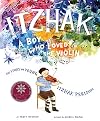
This book tells the true story of young Itzhak Perlman, who had to overcome several physical challenges after contracting polio. He followed his passion for music with determination and joy, letting it motivate him. The book specifically speaks on how his love for the violin perseverance helped him grow into one of the world’s most celebrated musicians. This book would be great for Kinder-2nd grade. An activity that could be done with this book would be having students listen to or watch a show more video of Itzhak playing the violin and then drawing how the music makes them feel, similar to how he describes music making him feel in the book. show less
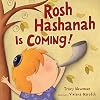
Two young members of an extended family get ready for the Jewish New Year.
In single-page scenes, these white youngsters, one with short, blond hair topped with a yarmulke and the other sporting brunette pigtails, make traditional round challah bread, blow a shofar, prepare apples to dip in honey, and don brand-new clothes. The preparations culminate in a candlelit family meal and the children’s joyous greeting of the New Year at sundown with the exultation “Shana Tovah!” Newman’s show more simple, rhymed couplets describe each scene with economy and are punctuated with the repeated refrain, “Rosh Hashanah is coming.” Garofoli’s jewel-toned art, which looks as though she created it using a computer, is pleasingly animated and accessible.
A simple and joyous introduction to an important holiday. (Board book. 18 mos.-4)
-Kirkus Review show less
In single-page scenes, these white youngsters, one with short, blond hair topped with a yarmulke and the other sporting brunette pigtails, make traditional round challah bread, blow a shofar, prepare apples to dip in honey, and don brand-new clothes. The preparations culminate in a candlelit family meal and the children’s joyous greeting of the New Year at sundown with the exultation “Shana Tovah!” Newman’s show more simple, rhymed couplets describe each scene with economy and are punctuated with the repeated refrain, “Rosh Hashanah is coming.” Garofoli’s jewel-toned art, which looks as though she created it using a computer, is pleasingly animated and accessible.
A simple and joyous introduction to an important holiday. (Board book. 18 mos.-4)
-Kirkus Review show less
What a wonderful story about young Itzhak who loved music! He begged his parents for a violin. This was a luxury for a poor immigrant family, but he pestered them so much that they bought him a toy violin when he was four. He was disappointed that the instrument did not make the clear sounds he heard on the radio. Polio had no mercy on Israel and Itzhak fought for his life. He survived, but needed leg braces and crutches for the remainder of his life. Music was still a passion for Itzhak so show more his parents bought him a new violin. He practiced many hours every day and by the time he was six years old, he was performing with orchestras in Israel. When he was ten, he gave solo performances. He wrote to the Israel Philharmonic but never heard a reply. It was then that the Ed Sullivan show came to Israel and Itzhak played on the show in the US. His life was never the same. show less
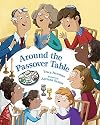
As a group gathers for Passover, Newman and Santos walk readers through a joyful evening. After everyone admires “fresh springtime flowers and once-a-year dishes,” the seder gets underway. There are roles for all, including the pets, who join in the singing of “Dayenu.” The authors don’t elucidate the steps in their exact order—the four glasses of wine (here, grape juice) are checked off on a single spread. But the overall arc of the ritual service and dinner is conveyed in show more succinct rhymes (“Dip karpas, swish, swish/ Take turns, pass the dish”). Santos emphasizes the sense of a shared experience by including the entire table in most of the cartooned compositions, keeping the visuals fresh by slightly shifting perspectives. While not the most galvanizing depiction, the book does positively model proper seder behavior, with nary a complaint of “When do we eat?” Ages 3–5. show less
Lists
Youth: Holidays (1)
Awards


You May Also Like


Associated Authors
Statistics
- Works
- 13
- Members
- 731
- Popularity
- #34,740
- Rating
- 3.9
- Reviews
- 20
- ISBNs
- 54