
Patricia Carlon (1927–2002)
Author of The Whispering Wall
About the Author
Works by Patricia Carlon
Tagged
Common Knowledge
- Birthdate
- 1927-01-09
- Date of death
- 2002-07-29
- Gender
- female
- Occupations
- novelist
short story writer - Short biography
- Patricia Carlon was born on a farm in Wagga Wagga, Australia, and lived most of her life with, or next door to, her parents in a suburb of Sydney. She began writing in her teens and had her first story published at age 17. She produced articles, magazine serials, and romance novels, often under the pseudonyms Patricia Bernard and Barbara Christie. She also had several stories in Ellery Queen's Mystery Magazine. Her most notable works were 14 psychological mystery novels published between 1961 and 1970. Then her books went out of print. She became known as the cat lady in her neighborhood because of all her feline companions. She never traveled or gave interviews. Some of her eccentric behavior was explained after her death, when it became known that she had been profoundly deaf since age 11. Some 40 years after first publishing these novels, Miss Carlon had the satisfaction of seeing them "rediscovered." Most of them now have been reissued in Australia and the UK and USA.
- Nationality
- Australia
- Birthplace
- Wagga Wagga, New South Wales, Australia
- Places of residence
- Bexley, New South Wales, Australia
- Place of death
- Sydney, New South Wales, Australia
- Associated Place (for map)
- New South Wales, Australia
Members
Reviews

The Whispering Wall by Australian author, Patricia Carlon was originally published in 1969. This is a clever, claustrophobic mystery where the main character, Sarah Oatland has been paralyzed by a stroke. She lies in her bed, unable to move or speak or even convince her nurse or her greedy niece that she can understand what they are saying. Her niece, Gwenyth, appears to have ideas on how Sarah’s estate should be handled and appears to resent spending money Sarah’s care. She arranges to show more divide the house into three flats, renting out one to a single woman and her young daughter, Rose, and the other to Murray and Valma Phipps.
Sarah finds herself able to listen in on the downstairs tenants through the wall and hears Murray and Valma plot to lure her step-father to visit and then do away with him. When young Rose lets it slip that Sarah can understand what is being said, and the Phipps discover that she knows of their plans, Sarah hears that not only the step father is going to be murdered, they are planning to do away with her as well.
This is a slow burner of a mystery, the tension and suspense build and the author skilfully shows the frustration and terror that Sarah is going through in not being able to communicate. This is the second Patricia Carlon mystery that I have read and I find her work reminds me somewhat of early Ruth Rendell mysteries. The Whispering Wall was a mystery that I found very hard to put down once I started it. show less
Sarah finds herself able to listen in on the downstairs tenants through the wall and hears Murray and Valma plot to lure her step-father to visit and then do away with him. When young Rose lets it slip that Sarah can understand what is being said, and the Phipps discover that she knows of their plans, Sarah hears that not only the step father is going to be murdered, they are planning to do away with her as well.
This is a slow burner of a mystery, the tension and suspense build and the author skilfully shows the frustration and terror that Sarah is going through in not being able to communicate. This is the second Patricia Carlon mystery that I have read and I find her work reminds me somewhat of early Ruth Rendell mysteries. The Whispering Wall was a mystery that I found very hard to put down once I started it. show less
Written in the 1960s, The Whispering Wall has the feel of a Hitchcock movie. Sarah has had a stroke, which has left her able to think and hear, but unable to communicate. She's been moved back home and is under the care of a nurse, but her niece is eager to gain control of Sarah's house and money. She divides up the ground floor into two flats and lets one out to a tired single mother and her awkward daughter, the other is let to a shady couple. Due to a closed up fireplace, Sarah can hear show more people talking in a room downstairs. She hears the couple arguing about how to best kill an aging relative, but what can she do to prevent a murder?
The story is told entirely from Sarah's point of view, trapped in her own head and desperate to communicate. It's a nail-biter of a tale and while it is clearly written fifty years ago, it has aged well. I'll be looking for Carlon's other books. show less
The story is told entirely from Sarah's point of view, trapped in her own head and desperate to communicate. It's a nail-biter of a tale and while it is clearly written fifty years ago, it has aged well. I'll be looking for Carlon's other books. show less

Sarah Oatland is 61 and has had a stroke. She cannot walk, talk or move. She can see, hear and think but no one knows these things about her, at least at first. She is being cared for at home thanks to her wealth.During the day her bed is wheeled to the window of her large room where, due to an acoustic eccentricity of the house, she is able to hear everything said in one of the downstairs rooms. When her husband was alive they once spent the night listening to guests talk disparagingly of show more them but now she only hears the doctors discussing her dispiriting prognosis with her nurse. Until her parsimonious niece fills the house with paying lodgers and Sarah listens to Valma and Murray Phipps plot the death of Valma’s stepfather so they can inherit his money. Sarah’s growing terror at being able to do nothing, literally, in the face of the seemingly inevitable murder is palpable.
Of course there’s a noticeable lack of technology and twitter has only one meaning but these small details aside there is nothing much to place this tale in any specific time. Equally, no location external to the house gains any foothold in the reader’s imagination. This novel is all about what happens inside the house. It seems impossible that such a richly drawn story progresses forward almost entirely based on what an immobile woman hears but it is a testament to Carlon’s writing skill that such a narrow perspective provides a more thoroughly gripping read than many of today’s much-hyped blockbusters. This is a genuinely suspenseful domestic setting and seemed to me to be as scary today as it would have been on publication.
One of the reasons I think the book is so successful is that the characters are all very ordinary. Even the would-be killers are not knife-wielding psychopaths or of a similar ‘outlier’ personality that would make it possible to believe such sinister behaviour only goes on in books. They are just greedy and impatient and not very nice (obviously given they are plotting the murder of a harmless old man) but they are quite normal. Sarah’s frustrations and limitations are depicted realistically too – she cries and gets upset as you would in such circumstances – but her innate intelligence shines through and the reader can enjoy being inside Sarah’s head even while being increasingly worried for her health and well-being. There are, eventually, couple of characters who cotton on to the fact Sarah knows what is going on and try to help her communicate and the way everyone reacts to Sarah’s changing circumstances – the realisation that she is not just a fish on a slab – is another subtly drawn standout feature of the novel.
If you are looking for a timeless tale of how an insular environment can create a truly suspense-filled experience THE WHISPERING WALL is highly recommended. In fact my only gripe is how little is known about this author in her home country. Given the quality of this book and the fact that it stands up so well nearly 50 years after being released it is galling to realise that Patricia Carlon is virtually unknown here and that most of her novels have still never been published in this country. Shame on us. show less
Of course there’s a noticeable lack of technology and twitter has only one meaning but these small details aside there is nothing much to place this tale in any specific time. Equally, no location external to the house gains any foothold in the reader’s imagination. This novel is all about what happens inside the house. It seems impossible that such a richly drawn story progresses forward almost entirely based on what an immobile woman hears but it is a testament to Carlon’s writing skill that such a narrow perspective provides a more thoroughly gripping read than many of today’s much-hyped blockbusters. This is a genuinely suspenseful domestic setting and seemed to me to be as scary today as it would have been on publication.
One of the reasons I think the book is so successful is that the characters are all very ordinary. Even the would-be killers are not knife-wielding psychopaths or of a similar ‘outlier’ personality that would make it possible to believe such sinister behaviour only goes on in books. They are just greedy and impatient and not very nice (obviously given they are plotting the murder of a harmless old man) but they are quite normal. Sarah’s frustrations and limitations are depicted realistically too – she cries and gets upset as you would in such circumstances – but her innate intelligence shines through and the reader can enjoy being inside Sarah’s head even while being increasingly worried for her health and well-being. There are, eventually, couple of characters who cotton on to the fact Sarah knows what is going on and try to help her communicate and the way everyone reacts to Sarah’s changing circumstances – the realisation that she is not just a fish on a slab – is another subtly drawn standout feature of the novel.
If you are looking for a timeless tale of how an insular environment can create a truly suspense-filled experience THE WHISPERING WALL is highly recommended. In fact my only gripe is how little is known about this author in her home country. Given the quality of this book and the fact that it stands up so well nearly 50 years after being released it is galling to realise that Patricia Carlon is virtually unknown here and that most of her novels have still never been published in this country. Shame on us. show less
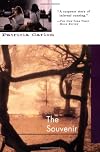
The Souvenir by Australian author, Patricia Carlon was originally published in 1970, yet for me the story felt very fresh and current. Two teenage girls meet on a summer hitch-hiking trip. One of them, stabs a young man to death. Each girl accused the other of the crime and the police could prove neither girl guilty. Four years go by and the sister of the victim hires a very unique private eye to find out which girl actually murdered her brother.
This psychological twister unfolds backwards show more and forward in time as we learn of the uneasy friendship that develops and the stolen mementos that cause the final argument between the girls. The author, perhaps a little too cleverly writes from an angle that makes one of the girls appear more likely to have committed the crime. I thought the story lost a little steam when it started to include both girls families but over all I found this to be a unique puzzler and quite a gripping read. show less
This psychological twister unfolds backwards show more and forward in time as we learn of the uneasy friendship that develops and the stolen mementos that cause the final argument between the girls. The author, perhaps a little too cleverly writes from an angle that makes one of the girls appear more likely to have committed the crime. I thought the story lost a little steam when it started to include both girls families but over all I found this to be a unique puzzler and quite a gripping read. show less
Awards

You May Also Like


Associated Authors
Statistics
- Works
- 15
- Members
- 461
- Popularity
- #53,307
- Rating
- 3.4
- Reviews
- 16
- ISBNs
- 42
- Languages
- 4