
Helen Constantine (1)
Author of Paris Tales
For other authors named Helen Constantine, see the disambiguation page.
Series
Works by Helen Constantine
Associated Works
Tagged
Common Knowledge
- Birthdate
- 20th century
- Gender
- female
- Education
- University of Oxford (French and Latin)
- Occupations
- teacher
translator
editor - Organizations
- Modern Poetry in Translation
Translators Association - Relationships
- Constantine, David (husband)
- Nationality
- UK
- Places of residence
- Oxford, Oxfordshire, England, UK
- Associated Place (for map)
- England, UK
Members
Reviews
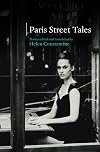
The completion of Paris Street Tales marked my completion of exactly one dozen short story compilations in 2016, allowing me to reach what, coming into the year, I figured would be one of the more unachievable goals I had set for myself. Needless to say, I enjoy short fiction as much as anything I read today, and this Oxford University Press publication reminds me why that is.
Short story collections can be pulled together in many different ways, including: best stories of the year; complete show more short works of a given author; an author’s work during a particular period; by literary genre (science fiction, crime, sport, etc.); geographic setting (country, city, etc.); or by theme. Paris Street Tales, though, is the first compilation I have run across that is based upon the stories all being centered around one city’s streets.
Helen Constantine, editor and translator of the stories, is fascinated by the development and history of Paris streets, and she carefully chose nineteen stories for the compilation that illustrate the time-machine experience that can often be had by reading descriptive fiction from the past. There are stories here from, as she puts it, “different centuries, different areas of Paris, with different subjects and tones of voice; some stories are serious, some amusing.” But what the stories all have in common is the Paris streets they use so effectively for their settings.
There are writers here who will be very familiar to American readers, and there are writers who will be completely unfamiliar to them. Among the more familiar are Guy de Maupassant, Émile Zola, Colette, Marcel Aymé, and Georges Simenon – and among those more likely to be pleasant surprises are Didier Daeninckx and Arnaud Baignot. Among my favorite two or three stories from the entire collection, in fact, is the Daeninckx story that opens the collection.
“Rue des Degrés” is a twenty-eight-page police procedural in which police Lieutenant Mattéo is tasked with finding the killer of a young man whose body was discovered on the street early one morning by a cleaning lady. As the ingenious Mattéo begins pull all the clues and loose ends together, it becomes clear that if he doesn’t solve the case, it is not going to happen. (“Rue des Degrés” was also included in the 2008 short story compilation Paris Noir but, though I wish I had, I have not discovered other short stories using the Mattéo character.)
But as it turns out, my two collection favorites were written by Maupassant and Aymé: “The Rendez-vous” and “Rue Saint-Supice,” respectively. “The Rendez-vous” tells of a wealthy nineteenth-century Paris woman who has grown so bored with her weekly assignation with a lover that she searches for reasons to be late even as she is in the process of making her way to the tryst. It has gotten so bad for the woman that she is particularly overjoyed one day when, while on her way to the old, boring lover, a new man approaches her on the street.
In “Rue Saint-Supice,” a photographic studio specializing in “religious images” is desperate to find new faces to portray Jesus and Saint John the Baptist on the cards it produces for resale by churches and street vendors. The catalog has grown so stale that only fresh faces can possibly reverse the studio’s badly slumping sales. And then, right off the street comes the perfect face of Jesus – but what happens if the model becomes convinced that he really is Jesus?
Paris Street Tales is the fourth book in Helen Constantine’s series of French short story translations. Paris Tales, French Tales, and Paris Metro Tales preceded it. show less
Short story collections can be pulled together in many different ways, including: best stories of the year; complete show more short works of a given author; an author’s work during a particular period; by literary genre (science fiction, crime, sport, etc.); geographic setting (country, city, etc.); or by theme. Paris Street Tales, though, is the first compilation I have run across that is based upon the stories all being centered around one city’s streets.
Helen Constantine, editor and translator of the stories, is fascinated by the development and history of Paris streets, and she carefully chose nineteen stories for the compilation that illustrate the time-machine experience that can often be had by reading descriptive fiction from the past. There are stories here from, as she puts it, “different centuries, different areas of Paris, with different subjects and tones of voice; some stories are serious, some amusing.” But what the stories all have in common is the Paris streets they use so effectively for their settings.
There are writers here who will be very familiar to American readers, and there are writers who will be completely unfamiliar to them. Among the more familiar are Guy de Maupassant, Émile Zola, Colette, Marcel Aymé, and Georges Simenon – and among those more likely to be pleasant surprises are Didier Daeninckx and Arnaud Baignot. Among my favorite two or three stories from the entire collection, in fact, is the Daeninckx story that opens the collection.
“Rue des Degrés” is a twenty-eight-page police procedural in which police Lieutenant Mattéo is tasked with finding the killer of a young man whose body was discovered on the street early one morning by a cleaning lady. As the ingenious Mattéo begins pull all the clues and loose ends together, it becomes clear that if he doesn’t solve the case, it is not going to happen. (“Rue des Degrés” was also included in the 2008 short story compilation Paris Noir but, though I wish I had, I have not discovered other short stories using the Mattéo character.)
But as it turns out, my two collection favorites were written by Maupassant and Aymé: “The Rendez-vous” and “Rue Saint-Supice,” respectively. “The Rendez-vous” tells of a wealthy nineteenth-century Paris woman who has grown so bored with her weekly assignation with a lover that she searches for reasons to be late even as she is in the process of making her way to the tryst. It has gotten so bad for the woman that she is particularly overjoyed one day when, while on her way to the old, boring lover, a new man approaches her on the street.
In “Rue Saint-Supice,” a photographic studio specializing in “religious images” is desperate to find new faces to portray Jesus and Saint John the Baptist on the cards it produces for resale by churches and street vendors. The catalog has grown so stale that only fresh faces can possibly reverse the studio’s badly slumping sales. And then, right off the street comes the perfect face of Jesus – but what happens if the model becomes convinced that he really is Jesus?
Paris Street Tales is the fourth book in Helen Constantine’s series of French short story translations. Paris Tales, French Tales, and Paris Metro Tales preceded it. show less
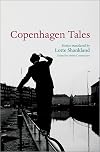
I received this book in a Good reads First reads draw. It is a collection of short stories set in Copenhagen written by its inhabitants from the 1800's to the present day. The writings range from two less well-known stories from Denmark's most famous author Hans Christian Anderson to another from the existential philosopher Søren Kierkegaard, through to more locally known contemporary writers. The books stated intention is to "allow the reader to experience the city from the inside".
Does it show more do what it says?
I thought that the diffuse collection of stories were very well chosen and left me with a feel of sights, sounds, smells and flavors of Copenhagen over the last three hundred years like a photo montage providing a range of snapshots that piece together to form the hint of another larger picture. The writing is fluid, lyrical and easy to read, suggestive to me of excellent translation. I get a sense of culture that in many ways is not too far from my own English, northern european culture but with very distinctive differences.
Do I have a feel for Copenhagen?
I have never visited the city but have always been interested in experiencing it. Having read these stories I now have a feel for something, and this feeling fits for me with cities such as Amsterdam and Budapest that I do have direct experience of. There are also differences that I believe to be uniquely Copenhagen. So I have no definite frame of reference. I do not think that matters. Visiting a city for a weekend gives me a feel for something but I am only scratching the surface. It is only when I live somewhere else that I get a deeper feel for the place. This book gives me an insight in a different way to the city and I feel richer for the experience.
I like to travel and get to know different places. I have not done so much travelling in the last few years. What this book has given me is a chance to 'visit' another city. it is a part of a series of books that has studied different cities in a similar way. Vienna, Moscow, Madrid and Rome.
I thoroughly enjoyed it and highly recommend it. show less
Does it show more do what it says?
I thought that the diffuse collection of stories were very well chosen and left me with a feel of sights, sounds, smells and flavors of Copenhagen over the last three hundred years like a photo montage providing a range of snapshots that piece together to form the hint of another larger picture. The writing is fluid, lyrical and easy to read, suggestive to me of excellent translation. I get a sense of culture that in many ways is not too far from my own English, northern european culture but with very distinctive differences.
Do I have a feel for Copenhagen?
I have never visited the city but have always been interested in experiencing it. Having read these stories I now have a feel for something, and this feeling fits for me with cities such as Amsterdam and Budapest that I do have direct experience of. There are also differences that I believe to be uniquely Copenhagen. So I have no definite frame of reference. I do not think that matters. Visiting a city for a weekend gives me a feel for something but I am only scratching the surface. It is only when I live somewhere else that I get a deeper feel for the place. This book gives me an insight in a different way to the city and I feel richer for the experience.
I like to travel and get to know different places. I have not done so much travelling in the last few years. What this book has given me is a chance to 'visit' another city. it is a part of a series of books that has studied different cities in a similar way. Vienna, Moscow, Madrid and Rome.
I thoroughly enjoyed it and highly recommend it. show less
3.5*
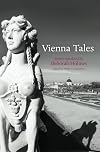
This volume of short stories inspired by Vienna is part of a series of OUP publications themed around European capital cities. "Vienna Tales" comprises pieces ranging from the 19th century to the present day, each of which gives us a glimpse of the Austrian city. The selection - by Deborah Holmes, who also provides the idiomatic translations - tends to favour stories of a rather experimental bent. Just to the give an example, there are a number of works by Joseph Roth in which "travel show more writing" is combined with a dash of magical realism. This makes the collection interesting but, at times, something of a challenging (and slower) read.
My favourite stories are the more contemporary ones: "Spas Sleeps" by Dimitre' Dinev, a portrayal of the plight of illegal immigrants, emotionally devastating in its artful simplicity; "Envy" by Eva Manasse, in which a funeral "wake" becomes a subject of a wry tragicomedy; "Six-nine-six-six-nine-nine" by Doron Rabinovici a ghost story of sorts with an erotic undercurrent.
The volume includes notes on each author, bibliographical details and suggestions for further reading. show less
This volume of short stories inspired by Vienna is part of a series of OUP publications themed around European capital cities. "Vienna Tales" comprises pieces ranging from the 19th century to the present day, each of which gives us a glimpse of the Austrian city. The selection - by Deborah Holmes, who also provides the idiomatic translations - tends to favour stories of a rather experimental bent. Just to the give an example, there are a number of works by Joseph Roth in which "travel show more writing" is combined with a dash of magical realism. This makes the collection interesting but, at times, something of a challenging (and slower) read.
My favourite stories are the more contemporary ones: "Spas Sleeps" by Dimitre' Dinev, a portrayal of the plight of illegal immigrants, emotionally devastating in its artful simplicity; "Envy" by Eva Manasse, in which a funeral "wake" becomes a subject of a wry tragicomedy; "Six-nine-six-six-nine-nine" by Doron Rabinovici a ghost story of sorts with an erotic undercurrent.
The volume includes notes on each author, bibliographical details and suggestions for further reading. show less
This book is poorly conceived and produced. The editor selected stories associated geographically with the periphery of Vienna rather than Vienna proper. To justify the choice, the editor must truly have believed that the periphery of Vienna conveys something distinct and worth the reader's time; it doesn't. Editorially, the book is a mess. The stories are from over ca. 150 years, but the date of their first publication is not listed with the story, or in the table of contents, and can only show more sometimes be inferred from the bibliography at the back. So the reader is not always given the date of the story. Nor, for that matter, the original title of the story. And who's responsible for all this? The stories are 'selected and translated' by Deborah Holmes, and 'edited' by Helen Constantine (who also edits other volumes in the series). But the General Introduction, the Introduction, and all of the back matter (brief bios, further reading) are unsigned. But maybe the reader doesn't mind, because the book doesn't tell us who these people are anyway. Throughout the book are artsy 'detail' photos that don't show anything, and at the end is included an unreadable 1800 map of Vienna (but since 1800 is outside the date of any of the stories, no one's likely to mind). The stories by Joseph Roth, Arthur Schnitzler, and Ingeborg Bachmann are good (the last named contributes the best one), but the modern stories are uneven, and the longest piece in the book, Eva Menasse's 'Envy' (Neid), is dull and overwritten, and was perhaps included only because it takes place entirely in the 'periphery of Vienna', making the whole effort a cautionary tale against bad literary conceits. show less
Lists
Awards

You May Also Like


Associated Authors
Statistics
- Works
- 13
- Also by
- 4
- Members
- 366
- Popularity
- #65,729
- Rating
- 3.7
- Reviews
- 9
- ISBNs
- 39
- Languages
- 1