
René Daumal (1908–1944)
Author of Mount Analogue
About the Author
Works by René Daumal
Bharata. L'origine du théâtre. La poésie et la musique en Inde. Traduction de textes sacrés et proganes. (1970) 5 copies
René Daumal ou le Retour à soi : Textes inédits de René Daumal, études sur son oeuvre (1981) 4 copies, 1 review
Poésie noire et poésie blanche : Proses et poèmes publiés dans les revues Le Grand Jeu, Fontaine, Port-des-Singes (2015) 3 copies
I poteri della parola 2 copies
Écrits Pataphysiques 2 copies
Der Analog 1 copy
DAU El monte análogo 1 copy
Cahiers Daumal n°8 1 copy
Ode a Dio e all'uomo 1 copy
Correspondance, 1927-1942 1 copy
Cahiers Daumal, N 7 1 copy
Écrits de la bête noire 1 copy
René Daumal 1 copy
El contrapelo 1 copy
Le Contre-Ciel 1 copy
A grande bebedeira 1 copy
RASA or knowledge of the self: Essays on Indian Aesthetics and Selected Sanskrit Studies (2021) 1 copy
Memorables 1 copy
Associated Works
Tagged
Common Knowledge
- Canonical name
- Daumal, René
- Birthdate
- 1908-03-16
- Date of death
- 1944-05-21
- Gender
- male
- Occupations
- poet
philosopher - Relationships
- Dietrich, Luc (friend)
Dumal, Véra (wife) - Cause of death
- tuberculosis
- Nationality
- France
- Places of residence
- Paris, France
- Associated Place (for map)
- Paris, France
Members
Reviews
Mount Analogue: A Novel of Symbolically Authentic Non-Euclidian Adventures in Mountain Climbing (The Penguin metaphysical library) by René Daumal

It's a miracle that this book even exists. A book we were never meant to have, existing only in myth. A fever of a dream, but with all the details intact, specific, and so real. Like ending up in a dream without leaving the real world behind, both in terms of the trivialities of living as well as the logic that never approaches dream logic. An amalgamation of science, philosophy, myth, humor, and clear thinking, yes with the translucent, almost invisible, clarity of a 'paradam' that suddenly show more bends your thinking around its curvature. A 'paradam' shift. This book was already written from another world, no wonder Daumal died mid-sentence. No wonder! He was a dead man when he began, only gracing us with a few words from the other side. And how fitting! This story of a journey to the other side, a journey that never reaches its destination because its author, having reached it, cannot come back to tell us but a few details that might lead us there. An impossible journey. (Mount Analogue is analogous of itself, without ever being self-reflexive, without even knowing its antecedent). The unknown, like a dagger in the known, is deceptively accessible. Nevertheless, Daumal prepares the way, like the campers before him. In Daumal's world, the mystery of the unknown is more real than the reality of the world, so that our reality is but a dream within it. It's a transcendence into specificity. When we look back from the other world, we'll see but a vagueness reminiscent of lives half-lived in the fog that hovers in the foothills.
PS - reading some of the other reviews, I was a little annoyed that a few people had mentioned that this was surrealism. No it's not! People like to repeat what other people say without really evaluating it. Why would Daumal delve into surrealism when he can end up in the ideal territory of surrealism without ever leaving the real? That is what Daumal does, and that is why it is brilliant beyond anything I've ever imagined could be written. One logical step at a time, is how Daumal leads us up the mountain. show less
PS - reading some of the other reviews, I was a little annoyed that a few people had mentioned that this was surrealism. No it's not! People like to repeat what other people say without really evaluating it. Why would Daumal delve into surrealism when he can end up in the ideal territory of surrealism without ever leaving the real? That is what Daumal does, and that is why it is brilliant beyond anything I've ever imagined could be written. One logical step at a time, is how Daumal leads us up the mountain. show less

“Philosophy teaches how man thinks he thinks; but drinking shows how he really thinks.”
Most of the way through this I kept it in my mental bookcase alongside Flann O’Brien’s The Third Policeman and Karel Čapek’s War With the Newts, as another artful late-1930s satire of European modernism. In a tradition going back at least to Rabelais, A Night of Serious Drinking skewers religion and education, propaganda and science, mathematics and poetry, ideology, philosophy, and art—but show more with a nod to the early-20th c. Dada and Surrealist avant-gardes. (The book jacket on my copy calls Daumal an ex-Surrealist, which probably means that he pissed off André Breton somehow.) What made the 1930s such a rich context for satire was the realization that the European Era was over; for Daumal, the prevailing between-the-wars pessimism evaded nihilism only by embracing the absurd—which he transforms into a kind of optimism in the end. I didn’t see it coming.
Part One, entitled “A labored dialogue on the power of words and the frailty of thought," finds the narrator among a group of drinkers in the front salon of an unfamiliar residence. A voice from behind the mantle insists on pontificating on the uses of language (‘If only you knew how much I’d like to stop talking, you wouldn’t be so thirsty’) and the narrator relates his encounters with a number of eccentric characters.
On the last syllable, the guitar exploded in Gonzague’s hand. One of the strings caught him on the upper lip. He allowed a few drops of blood to fall onto the back of his hand. Then he drained his glass. Then he jotted down in his notebook the rudiments of an extraordinary poem which would be plagiarized the following day and betrayed in every language by two hundred and twelve minor poets; from it sprang the same number of avant-garde artistic movements, twenty-seven historic brawls, three political revolutions on a Mexican farm, seven bloody wars on the Paropamisus, a famine in Gibraltar, a volcano in Gabon, a dictator in Monaco, and not quite lasting glory for the half-baked.
In Part Two, having stumbled up a staircase, the narrator is startled to discover ‘the universe in a garret.’ He is given a guided tour, and we get Daumal’s dark-comic disquisition on all manner of human foibles. Up here, excellence in all endeavors aims at uselessness, whether of household objects, new colors, scientific theorems, 'numbers which cannot be expressed, spaces shaped like espaliers or corkscrews, stretches of nothing with holes and bumps in it.' Thanks to picture books, 'children take no time at all to learn everything about art without ever having to create anything, everything about science without having to think, everything about religion without having to live.' People may turn into thermometers, bookworms, or pianos. The narrator encounters a heretic writing a book called A Night of Serious Drinking, which depicts the nightmares of lost souls, drunken and stupefied, stuck in a delusion of paradises until the cold harsh light of day and its unexpected revelations. Some people speak a language designed so that fallacy and imprecision cannot be expressed.
Some of them live in houses made entirely of glass which they call ivory towers; some in concrete boxes which they call glass houses; large numbers in photographic dark rooms which they call Nature; and many more in dog-headed baboon cages, vampire caves, penguin parks, performing-flea circuses, and puppet theatres that they call the world or society: and they all dote on and pamper one of their internal bodily organs, usually one with something wrong with it, such as intestine, liver, lung, thyroid, or brain, stroking it fondly, embellishing it with flowers and jewels, stuffing it with the choicest morsels, calling it “my soul,” “my life,” “my truth,” and they are always ready to launder in blood the most trifling insult to the object of their inner devotions. They call this “living in the world of ideas.”
The narrator’s ascension culminates with a scrum of gods, hunched over a trapdoor, lustily inhaling vaporous fumes and gestures of adulation from below. It’s Dante inside out at the Cabaret Voltaire with absinthe and Alfred Jarry.
In the final section, the narrator queries the reader as to the best method of extricating himself from his baffled condition. What has happened? Should he awake, as from a dream? Daumal refuses the neat dénouement. Having described the seemingly familiar from a perspective impossible to occupy in what we think of as the ‘real world,’ Daumal turns the tables on us. Is the narrator to be trusted? By the end, the reader is just as likely to question her own interpretation of the narration as to doubt the reliability of the narrator. We arrive full circle at the question of language and intention. The last few pages change the way we understand what we have been reading. The sensation is of falling up, as from a drunken stupor, into a bemusement that is oddly reassuring. show less
Most of the way through this I kept it in my mental bookcase alongside Flann O’Brien’s The Third Policeman and Karel Čapek’s War With the Newts, as another artful late-1930s satire of European modernism. In a tradition going back at least to Rabelais, A Night of Serious Drinking skewers religion and education, propaganda and science, mathematics and poetry, ideology, philosophy, and art—but show more with a nod to the early-20th c. Dada and Surrealist avant-gardes. (The book jacket on my copy calls Daumal an ex-Surrealist, which probably means that he pissed off André Breton somehow.) What made the 1930s such a rich context for satire was the realization that the European Era was over; for Daumal, the prevailing between-the-wars pessimism evaded nihilism only by embracing the absurd—which he transforms into a kind of optimism in the end. I didn’t see it coming.
Part One, entitled “A labored dialogue on the power of words and the frailty of thought," finds the narrator among a group of drinkers in the front salon of an unfamiliar residence. A voice from behind the mantle insists on pontificating on the uses of language (‘If only you knew how much I’d like to stop talking, you wouldn’t be so thirsty’) and the narrator relates his encounters with a number of eccentric characters.
On the last syllable, the guitar exploded in Gonzague’s hand. One of the strings caught him on the upper lip. He allowed a few drops of blood to fall onto the back of his hand. Then he drained his glass. Then he jotted down in his notebook the rudiments of an extraordinary poem which would be plagiarized the following day and betrayed in every language by two hundred and twelve minor poets; from it sprang the same number of avant-garde artistic movements, twenty-seven historic brawls, three political revolutions on a Mexican farm, seven bloody wars on the Paropamisus, a famine in Gibraltar, a volcano in Gabon, a dictator in Monaco, and not quite lasting glory for the half-baked.
In Part Two, having stumbled up a staircase, the narrator is startled to discover ‘the universe in a garret.’ He is given a guided tour, and we get Daumal’s dark-comic disquisition on all manner of human foibles. Up here, excellence in all endeavors aims at uselessness, whether of household objects, new colors, scientific theorems, 'numbers which cannot be expressed, spaces shaped like espaliers or corkscrews, stretches of nothing with holes and bumps in it.' Thanks to picture books, 'children take no time at all to learn everything about art without ever having to create anything, everything about science without having to think, everything about religion without having to live.' People may turn into thermometers, bookworms, or pianos. The narrator encounters a heretic writing a book called A Night of Serious Drinking, which depicts the nightmares of lost souls, drunken and stupefied, stuck in a delusion of paradises until the cold harsh light of day and its unexpected revelations. Some people speak a language designed so that fallacy and imprecision cannot be expressed.
Some of them live in houses made entirely of glass which they call ivory towers; some in concrete boxes which they call glass houses; large numbers in photographic dark rooms which they call Nature; and many more in dog-headed baboon cages, vampire caves, penguin parks, performing-flea circuses, and puppet theatres that they call the world or society: and they all dote on and pamper one of their internal bodily organs, usually one with something wrong with it, such as intestine, liver, lung, thyroid, or brain, stroking it fondly, embellishing it with flowers and jewels, stuffing it with the choicest morsels, calling it “my soul,” “my life,” “my truth,” and they are always ready to launder in blood the most trifling insult to the object of their inner devotions. They call this “living in the world of ideas.”
The narrator’s ascension culminates with a scrum of gods, hunched over a trapdoor, lustily inhaling vaporous fumes and gestures of adulation from below. It’s Dante inside out at the Cabaret Voltaire with absinthe and Alfred Jarry.
In the final section, the narrator queries the reader as to the best method of extricating himself from his baffled condition. What has happened? Should he awake, as from a dream? Daumal refuses the neat dénouement. Having described the seemingly familiar from a perspective impossible to occupy in what we think of as the ‘real world,’ Daumal turns the tables on us. Is the narrator to be trusted? By the end, the reader is just as likely to question her own interpretation of the narration as to doubt the reliability of the narrator. We arrive full circle at the question of language and intention. The last few pages change the way we understand what we have been reading. The sensation is of falling up, as from a drunken stupor, into a bemusement that is oddly reassuring. show less
Mount Analogue: A Tale of Non-Euclidean and Symbolically Authentic Mountaineering Adventures by René Daumal

From a note I sent to a friend:
"[Friend], I’ve just finished reading Mount Analogue and been extremely moved - however, it’s midnight, so I’ll write my thoughts here and send them your way at a more appropriate time.
"I feel somewhat daunted to describe the work, and somewhat fearful that if I say I’m daunted, I’ll seem a weak thing that can therefore have been moved only by a weak work.
"Well, I don’t think that’s the case. Without commenting on how weak I might be, I think show more that Daumal is probably the most mature writer I’ve yet encountered. He apparently led a brief and extremely dense life in the early twentieth century. But I’ll let the translator’s introduction do better justice to this topic than I can, should you choose to read the book.
"Mount Analogue is a mountain and an analogue/analogy/allegory/myth. Thought that I’ve set out (though only rudimentarily, and I don’t think I’ve shared it with you) regarding a division between the “heaven” of abstract and philosophic thought - vice the “earth” of menial and animal existence to which we are all subject - has clearly been trod before by Daumal, and I am inclined to study his footprints. Mount Analogue is the structure connecting the “heaven” and “earth,” a structure which I failed to consider in any allegoric sense as a “structure” but left, instead, always as a process within the minds of individuals.
"When I started reading the book, I told you that it reminded me of Piranesi. That held true all the way through. It wasn’t a mystery novel or even a direct description of some beautiful hidden world, but it was written by someone with serious academic and philosophic ambitions, someone who was or who had been an occultist, a student of sacred Sanskrit texts, and someone who had played with poison and with suicide. He wasn't exactly Piranesi, and he wasn't exactly Arne-Sayles, but he makes me fear to become like Ketterly, rooting around in the dust for some transcendence I can’t understand." show less
"[Friend], I’ve just finished reading Mount Analogue and been extremely moved - however, it’s midnight, so I’ll write my thoughts here and send them your way at a more appropriate time.
"I feel somewhat daunted to describe the work, and somewhat fearful that if I say I’m daunted, I’ll seem a weak thing that can therefore have been moved only by a weak work.
"Well, I don’t think that’s the case. Without commenting on how weak I might be, I think show more that Daumal is probably the most mature writer I’ve yet encountered. He apparently led a brief and extremely dense life in the early twentieth century. But I’ll let the translator’s introduction do better justice to this topic than I can, should you choose to read the book.
"Mount Analogue is a mountain and an analogue/analogy/allegory/myth. Thought that I’ve set out (though only rudimentarily, and I don’t think I’ve shared it with you) regarding a division between the “heaven” of abstract and philosophic thought - vice the “earth” of menial and animal existence to which we are all subject - has clearly been trod before by Daumal, and I am inclined to study his footprints. Mount Analogue is the structure connecting the “heaven” and “earth,” a structure which I failed to consider in any allegoric sense as a “structure” but left, instead, always as a process within the minds of individuals.
"When I started reading the book, I told you that it reminded me of Piranesi. That held true all the way through. It wasn’t a mystery novel or even a direct description of some beautiful hidden world, but it was written by someone with serious academic and philosophic ambitions, someone who was or who had been an occultist, a student of sacred Sanskrit texts, and someone who had played with poison and with suicide. He wasn't exactly Piranesi, and he wasn't exactly Arne-Sayles, but he makes me fear to become like Ketterly, rooting around in the dust for some transcendence I can’t understand." show less
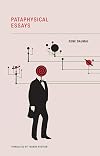
I found this to be somewhat demystifying of the whole "pataphysics" movement, which is what I hoped for it. I think I see now that the playful form very seriously critiques the follies of an increasingly ossified and self-obsessed academia. Additionally, though, there is a definite connection to absurdism - the idea of "pataphysical laughter," central to these essays, rings to me very much like the feeling of simultaneous grandeur/smallness, meaning/hopelessness, etc. that I will often show more experience and have tended to attribute to absurdist thinking. show less
Lists
Awards


You May Also Like


Associated Authors
Statistics
- Works
- 73
- Also by
- 3
- Members
- 1,532
- Popularity
- #16,794
- Rating
- 3.9
- Reviews
- 27
- ISBNs
- 128
- Languages
- 13
- Favorited
- 16
