
Peter Weissman
Author of I Think, Therefore Who Am I?
About the Author
Works by Peter Weissman
Club Manhattan 2 copies
Tagged
Common Knowledge
- Gender
- male
- Education
- Queens College (N.Y.), Boston University, San Francisco State
- Occupations
- copy editor
proofreader
ghost writer
reporter
gardener
mail carrier - Nationality
- USA
- Birthplace
- Brooklyn, New York, USA
- Places of residence
- Woodstock, New York, USA
Brooklyn, New York, USA
East Village, New York, USA
Berkeley, California, USA
Westport, Connecticut, USA
Boston, Massachusetts, USA - Associated Place (for map)
- USA
Members
Reviews
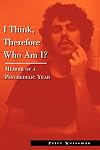
My LibraryThing auto-recs for I Think, Therefore Who Am I? come up with a bunch of the most obvious books you'd think of if all you knew about Weissman's memoir was that it was set in the sixties and "about drugs". Naked Lunch, Steal This Urine Test, Timothy Leary's book, and so on (no Tom Wolfe, thankfully). But that shit is so surface, and really doesn't do justice to this insightful and (subtly) unusual little book. It's not a "drug memoir" by any means--it's the evocation of a time and show more place, the weird, unforeseeable agglomeration of a certain group of people in New York in 1967, and the way it felt to be there, and some of the shit that went down, and an attempt to recover and preserve and explore it all through words.
It's tentative, that is to say, and in a cool way. I get lost in Weissman's prose, sentences like octopodes, a million little wriggling comma-offset clauses that meander their way less to a conclusion than to a stopping point, to a "this sentence, this weird beast, is what it is" (in case you're wondering, this is a good thing). It's like tearing open a bag of marbles in a Bowery flophouse sometimes, and watching them spill out and hit the floor with a crash and roll under the couch (I guess "sofa", given our milieu? Is that the usual American word?) and the radiator, and you go chasing after the ones that interest you, but seven chapters later you find another one while scrounging change to buy lunch or weed--Arnie Glickmarble or the unfulfilled promise of that real indepth investigation of the Bhagavad Gita that you always wanted to get tomarble turn up and you remember that day you took acid and spilled the bag in the first place. In that sense, I liked the final postscripty "how much we've changed, how little we've learned"-y postscript chapter--those vivid unsynthesizable moments of a beautiful human youth, to mention nothing of a killer hip human youth at the counterculture's moment of infinite speed, Ground Zero 1967, and how they recur and recur and recur like friendly ghosts for the rest of your life.
Which isn't to romanticize this hippie era that I never actually experienced, or to suggest that Weissman does. (I seem not to be giving myself space to do the necessary here, so this seems like a good opportunity to shoehorn in the needful disclosure that the author is a friend of mine, more or less[?], or at least somebody that I have had some laffs with on the internet.) Au contraire, to the degree that there's a unifying mood here (and how often does real-life history have a unifying mood, a narrative thrust?), it's neither druggy nor sexy (and I'll cop that my own personal idealized imaginary sixties gives a more prominent place than the real sixties--perhaps--and certainly Weissman's psychedelic year, do to the FREE LOVE) nor rock/rolly nor even expand-your-mind-blow-open-the-doors-op-perceptiony. In fact, it's kind of attenuated and awkward, bourgeois-shy, a bunch of basically decent middle-class kids from places like Long Island jumping headlong, with the American optimism of a generation that had it all, into a pseudo-criminal, petty-countercultural world that grew up overnight like a bamboo forest full of new freaky delights. That's the hidden story here, and it's super interesting--those moments of total noncomprehension, misapprehension, the slow but sure recognition that every man is in one sense an island, and that no awakening pharmaceutical or astrological or whatever will blow away our hangups and defense mechanisms, because that's what a human is. I mean, that's what I see here, anyway--a young man coming to terms with the limits, as well as the potential, of human sympathy--and that's a pretty decent return for the investment of a psychedelic year.
In that sense I'll leave you with perhaps a less expected touchstone for I Think, Therefore Who Am I?: Irvine Welsh's Trainspotting. An American Trainspotting, of course, which means that instead of a bunch of working-class wasters with zero conception that there might be a way out of Leith and the stifling grasp of family and criminality and the harder-edged heroin culture you grew up with, you have a bunch of young Americans making their personal pilgrimages to NYC or Haight-Ashbury and experimenting with possible futures, discovering their limits, figuring out--indeed--"Who am I?", what works for me, what feels right, where am I going. And there's a dark night and a grey dawn, but they're not the junk-sick endless emptiness of Welsh's skagboys--more the sad-tinged recognition that reality can't underwrite the promise of infinite transformation; the inexorable return to the real after a singular historical moment of radical, but as it turns out not boundless, optimism. show less
It's tentative, that is to say, and in a cool way. I get lost in Weissman's prose, sentences like octopodes, a million little wriggling comma-offset clauses that meander their way less to a conclusion than to a stopping point, to a "this sentence, this weird beast, is what it is" (in case you're wondering, this is a good thing). It's like tearing open a bag of marbles in a Bowery flophouse sometimes, and watching them spill out and hit the floor with a crash and roll under the couch (I guess "sofa", given our milieu? Is that the usual American word?) and the radiator, and you go chasing after the ones that interest you, but seven chapters later you find another one while scrounging change to buy lunch or weed--Arnie Glickmarble or the unfulfilled promise of that real indepth investigation of the Bhagavad Gita that you always wanted to get tomarble turn up and you remember that day you took acid and spilled the bag in the first place. In that sense, I liked the final postscripty "how much we've changed, how little we've learned"-y postscript chapter--those vivid unsynthesizable moments of a beautiful human youth, to mention nothing of a killer hip human youth at the counterculture's moment of infinite speed, Ground Zero 1967, and how they recur and recur and recur like friendly ghosts for the rest of your life.
Which isn't to romanticize this hippie era that I never actually experienced, or to suggest that Weissman does. (I seem not to be giving myself space to do the necessary here, so this seems like a good opportunity to shoehorn in the needful disclosure that the author is a friend of mine, more or less[?], or at least somebody that I have had some laffs with on the internet.) Au contraire, to the degree that there's a unifying mood here (and how often does real-life history have a unifying mood, a narrative thrust?), it's neither druggy nor sexy (and I'll cop that my own personal idealized imaginary sixties gives a more prominent place than the real sixties--perhaps--and certainly Weissman's psychedelic year, do to the FREE LOVE) nor rock/rolly nor even expand-your-mind-blow-open-the-doors-op-perceptiony. In fact, it's kind of attenuated and awkward, bourgeois-shy, a bunch of basically decent middle-class kids from places like Long Island jumping headlong, with the American optimism of a generation that had it all, into a pseudo-criminal, petty-countercultural world that grew up overnight like a bamboo forest full of new freaky delights. That's the hidden story here, and it's super interesting--those moments of total noncomprehension, misapprehension, the slow but sure recognition that every man is in one sense an island, and that no awakening pharmaceutical or astrological or whatever will blow away our hangups and defense mechanisms, because that's what a human is. I mean, that's what I see here, anyway--a young man coming to terms with the limits, as well as the potential, of human sympathy--and that's a pretty decent return for the investment of a psychedelic year.
In that sense I'll leave you with perhaps a less expected touchstone for I Think, Therefore Who Am I?: Irvine Welsh's Trainspotting. An American Trainspotting, of course, which means that instead of a bunch of working-class wasters with zero conception that there might be a way out of Leith and the stifling grasp of family and criminality and the harder-edged heroin culture you grew up with, you have a bunch of young Americans making their personal pilgrimages to NYC or Haight-Ashbury and experimenting with possible futures, discovering their limits, figuring out--indeed--"Who am I?", what works for me, what feels right, where am I going. And there's a dark night and a grey dawn, but they're not the junk-sick endless emptiness of Welsh's skagboys--more the sad-tinged recognition that reality can't underwrite the promise of infinite transformation; the inexorable return to the real after a singular historical moment of radical, but as it turns out not boundless, optimism. show less
This book seems to make reviewers write something about their own lives - it's such a relentless exploration of the author's own experience, that it somehow requires at least a token attempt from the reader to do the same, both while we read it, and afterwards.
Almost everything in this book is about things completely outside of my experience. I am a child of the 1980s, and came of age around the turn of the century. I'm the unadventurous, somewhat naive daughter of working class parents, and show more grew up in suburban and semi-rural Australia. I've never been wealthy, but nor have I ever gone hungry. I haven't even been drunk, let alone stoned. I've had normal problems, a normal tertiary education, and have now, only a few years older than the Peter Weissman of 1967, settled into a relatively normal job. Apart from our ages, it's difficult for me to find any external similarities between my life and that of the young Peter Weissman, in his dirty, desperate, hopeful, reckless back-street city life; teetering on the edge of losing everything and at the same time, that close to gaining nirvana.
The all-pervading sense I got from this memoir, and thus from the era it's about, is that everyone, Peter and all his widely varying hippy acquaintances, all have this sense of desperately trying to find... something. I'm not sure exactly what; probably they weren't either. To me, an outsider, it seems to characterise the hippie era - this belief in something vast and wonderful: peace, or something like it - and the desperate, hopeful, despairing effort to attain it.
The book itself seems to be a continuation of that quest for something. Meaning, I guess. Truth. Identity. The detailed accuracy and relentless exploration, not only of what happened, but for what it meant; or failing that, exactly what it felt like, gives the book a sort of contemplative feeling of immediacy. We're right there in young Peter's head - confused, dazzled, inspired, and always at least partially lost. The young Peter stumbles through his psychedelic year with no idea of where he's going, or why. His interactions with others are usually confused - everyone he meets is, to young Peter, a mystery... but the older Peter writing the book brings an insight to this, revealing among other things that most of these people were just as confused as he was. And as the book goes on, there's a subtle shift generated by the way other people seem to perceive the young Peter. They take his cautious and often baffled silence for contemplative wisdom, and we get a sense that Peter is beginning to build his identity out of that perception.
There's a feeling of disconnect that's very strong in the book. Most of the people in it seem to believe in that hippie ideal of everything belonging to everyone, sharing the love, etc - and they put it into practice. And yet nowhere in the book is a genuine connection with another person. Love for the vast humankind there may be, especially when on a high, but love for individuals simply doesn't happen. People who have seemed close, maybe even trustworthy, at some point in the book just get up and walk away. Peter does it himself. I found it alienating, and a strange paradox to the hippie ideal.
Both structure and language of this book are beautifully crafted. It has depth beyond a mere description of past events. It's in-your-face honest, and through our discovery of the Weissman of 1967, we can't help seeing something of ourselves - our vulnerability, our confusion, our forging of identity in an alienating world.
A good memoir needs to be about either something unique, or something universal. This one is about both. I recommend it. show less
Almost everything in this book is about things completely outside of my experience. I am a child of the 1980s, and came of age around the turn of the century. I'm the unadventurous, somewhat naive daughter of working class parents, and show more grew up in suburban and semi-rural Australia. I've never been wealthy, but nor have I ever gone hungry. I haven't even been drunk, let alone stoned. I've had normal problems, a normal tertiary education, and have now, only a few years older than the Peter Weissman of 1967, settled into a relatively normal job. Apart from our ages, it's difficult for me to find any external similarities between my life and that of the young Peter Weissman, in his dirty, desperate, hopeful, reckless back-street city life; teetering on the edge of losing everything and at the same time, that close to gaining nirvana.
The all-pervading sense I got from this memoir, and thus from the era it's about, is that everyone, Peter and all his widely varying hippy acquaintances, all have this sense of desperately trying to find... something. I'm not sure exactly what; probably they weren't either. To me, an outsider, it seems to characterise the hippie era - this belief in something vast and wonderful: peace, or something like it - and the desperate, hopeful, despairing effort to attain it.
The book itself seems to be a continuation of that quest for something. Meaning, I guess. Truth. Identity. The detailed accuracy and relentless exploration, not only of what happened, but for what it meant; or failing that, exactly what it felt like, gives the book a sort of contemplative feeling of immediacy. We're right there in young Peter's head - confused, dazzled, inspired, and always at least partially lost. The young Peter stumbles through his psychedelic year with no idea of where he's going, or why. His interactions with others are usually confused - everyone he meets is, to young Peter, a mystery... but the older Peter writing the book brings an insight to this, revealing among other things that most of these people were just as confused as he was. And as the book goes on, there's a subtle shift generated by the way other people seem to perceive the young Peter. They take his cautious and often baffled silence for contemplative wisdom, and we get a sense that Peter is beginning to build his identity out of that perception.
There's a feeling of disconnect that's very strong in the book. Most of the people in it seem to believe in that hippie ideal of everything belonging to everyone, sharing the love, etc - and they put it into practice. And yet nowhere in the book is a genuine connection with another person. Love for the vast humankind there may be, especially when on a high, but love for individuals simply doesn't happen. People who have seemed close, maybe even trustworthy, at some point in the book just get up and walk away. Peter does it himself. I found it alienating, and a strange paradox to the hippie ideal.
Both structure and language of this book are beautifully crafted. It has depth beyond a mere description of past events. It's in-your-face honest, and through our discovery of the Weissman of 1967, we can't help seeing something of ourselves - our vulnerability, our confusion, our forging of identity in an alienating world.
A good memoir needs to be about either something unique, or something universal. This one is about both. I recommend it. show less

What does rehabilitation for a young Brooklyn native, Peter Weissman, who had dropped acid almost every day for a year, and yet somehow avoided Syd Barrett’s fate, look like? Like the kind of pathetically maudlin rehab witnessed on Celebrity Rehab, or like the in-your-face, confrontational rehab of Intervention? Neither, turns out. Sometimes, rehab isn't about going to rehab. Take Digging Deeper's opening chapter, “Rehabilitation,” as proof. Rehabilitation for Weissman didn't mean show more cutting out drugs completely (though he did quit LSD) insomuch as it meant making a decision to reenter ordinary life. A decision to reconnect with people rather than remain that starving, sometimes homeless, romantic easy rider without a ride.
Meet the flat-affected, socially awkward (and “awkward” is putting it mildly), and unkempt, Peter Weissman -- or Weissman’s narrator, I should specify -- his younger, alter-egoish, or quasi-doppelgangerish, or whomever or whatever you’d prefer calling the speaker of Weissman's meta-memoir, Digging Deeper, since Weissman, at times, is actually a character and not the narrator in Digging Deeper; a character who is writing a novel about the aftermath and recovery of a certain young man's psychedelic year, a year not dissimilar to that which was chronicled in Weissman's brilliant first autobiography, I Think, Therefore Who Am I?.
Readers who enjoy Raymond Carver or Denis Johnson, if they're like me, will like Peter Weissman. His pared-down, precise, photographic style is reminiscent of theirs. As is his philosophy and spirituality, the latter, especially of Johnson. I happen to like Peter Weissman a lot -- and not just because he's a friend, but a writer who's writing speaks to me like the voice of a friend, a confidante, and would, I suspect, even if I hadn't known him all these years on the web.
Digging Deeper proves that Weissman survived the Sixties with his mind intact. He survived, yes. And he survived the Seventies, too, but did he really live them? Seemed like he mostly lived his life through Noreen, who had a seizure disorder, and suffered from various resultant anxieties. Peter was a good man who temporarily sacrificed his life -- his dreams of being a full time writer -- so that his wife, with her own problems that made her ill-equipped for the nine-to-five world, could pursue her dreams of being an artiste. I say "artiste" because she wasn't very good at it, though believed she was. Noreen took advantage of Peter's magnanimity, and rarely, if ever, reciprocated his self-sacrifice. An irony in the relationship is that the real artist in the doomed marriage was always Peter; Noreen was more of a con-artist. Maybe not at first in their early days together, maybe not always, but by the end, hell yes she was. Peter eventually realized this. In the meantime, however, he put food on the table for the two of them, working as a postal carrier.
Can't you just see an ex-hippie being a successful and happy postal carrier? But he did it -- and did it his way, a maverick mail carrier -- returning undelivered mail to the post office because he was fed up getting screwed by spineless supervisors who schlepped extra mail bundles off on him (half of it literally junk) when the regular carriers went out "sick". Returning undelivered mail was a cardinal sin among carriers, and if he hadn't been such an efficent postal worker otherwise, would've been enough to get him automatically canned. His own personal credo was that he would not work more than ten hours in a day, no matter what. Didn't exactly endear him to his supervisors, or make him a hero among his fellow mail carriers, whom, I should mention, at this particular Oakland post office, were predominately non-Caucasians, but it was a deal Weissman had made with himself -- and that on top of the raw deal that brought him to the post office in the first place -- and he would not renege on himself. Weissman cleverly identified his colleagues' cultural backgrounds through the spot-on colloquialisms of their spicy, streetwise dialogue. The passages here are some of my favorite scenes in the book. Not to mention the obsessive, hysterical hyper-analysis of odds and betting in "Racetrack Meditations" -- a chapter so funny and philosophical its worthy of its own review.
Over time, after a trip through Europe left them broke -- broke emotionally as well as fiscally, close to broke with love for one another, they landed at Noreen's father's palatial compound, in a cottage out by the gardens. Noreen's father worked for a manufacturer that was the very antithesis of what made Peter Weissman tick-- the man made napalm for a living. Made a living in killing. I hope Weissman will someday return to this section at the cottage on the compound, in his last days with Noreen (though the two by then rarely spent time together) and describe in greater detail his interactions -- I won't call it a "relationship" -- with his father-in-law, because whether ice-cold or raging hurricane, the disdain the two men felt for one another was obvious, and I would've enjoyed seeing more of their conflict fleshed out. Takes a skilled writer to leave a reader wanting more. Fact is, too, I just didn't want the experience of reading Peter Weissman's second memoir, Digging Deeper, to ever end. show less
Meet the flat-affected, socially awkward (and “awkward” is putting it mildly), and unkempt, Peter Weissman -- or Weissman’s narrator, I should specify -- his younger, alter-egoish, or quasi-doppelgangerish, or whomever or whatever you’d prefer calling the speaker of Weissman's meta-memoir, Digging Deeper, since Weissman, at times, is actually a character and not the narrator in Digging Deeper; a character who is writing a novel about the aftermath and recovery of a certain young man's psychedelic year, a year not dissimilar to that which was chronicled in Weissman's brilliant first autobiography, I Think, Therefore Who Am I?.
Readers who enjoy Raymond Carver or Denis Johnson, if they're like me, will like Peter Weissman. His pared-down, precise, photographic style is reminiscent of theirs. As is his philosophy and spirituality, the latter, especially of Johnson. I happen to like Peter Weissman a lot -- and not just because he's a friend, but a writer who's writing speaks to me like the voice of a friend, a confidante, and would, I suspect, even if I hadn't known him all these years on the web.
Digging Deeper proves that Weissman survived the Sixties with his mind intact. He survived, yes. And he survived the Seventies, too, but did he really live them? Seemed like he mostly lived his life through Noreen, who had a seizure disorder, and suffered from various resultant anxieties. Peter was a good man who temporarily sacrificed his life -- his dreams of being a full time writer -- so that his wife, with her own problems that made her ill-equipped for the nine-to-five world, could pursue her dreams of being an artiste. I say "artiste" because she wasn't very good at it, though believed she was. Noreen took advantage of Peter's magnanimity, and rarely, if ever, reciprocated his self-sacrifice. An irony in the relationship is that the real artist in the doomed marriage was always Peter; Noreen was more of a con-artist. Maybe not at first in their early days together, maybe not always, but by the end, hell yes she was. Peter eventually realized this. In the meantime, however, he put food on the table for the two of them, working as a postal carrier.
Can't you just see an ex-hippie being a successful and happy postal carrier? But he did it -- and did it his way, a maverick mail carrier -- returning undelivered mail to the post office because he was fed up getting screwed by spineless supervisors who schlepped extra mail bundles off on him (half of it literally junk) when the regular carriers went out "sick". Returning undelivered mail was a cardinal sin among carriers, and if he hadn't been such an efficent postal worker otherwise, would've been enough to get him automatically canned. His own personal credo was that he would not work more than ten hours in a day, no matter what. Didn't exactly endear him to his supervisors, or make him a hero among his fellow mail carriers, whom, I should mention, at this particular Oakland post office, were predominately non-Caucasians, but it was a deal Weissman had made with himself -- and that on top of the raw deal that brought him to the post office in the first place -- and he would not renege on himself. Weissman cleverly identified his colleagues' cultural backgrounds through the spot-on colloquialisms of their spicy, streetwise dialogue. The passages here are some of my favorite scenes in the book. Not to mention the obsessive, hysterical hyper-analysis of odds and betting in "Racetrack Meditations" -- a chapter so funny and philosophical its worthy of its own review.
Over time, after a trip through Europe left them broke -- broke emotionally as well as fiscally, close to broke with love for one another, they landed at Noreen's father's palatial compound, in a cottage out by the gardens. Noreen's father worked for a manufacturer that was the very antithesis of what made Peter Weissman tick-- the man made napalm for a living. Made a living in killing. I hope Weissman will someday return to this section at the cottage on the compound, in his last days with Noreen (though the two by then rarely spent time together) and describe in greater detail his interactions -- I won't call it a "relationship" -- with his father-in-law, because whether ice-cold or raging hurricane, the disdain the two men felt for one another was obvious, and I would've enjoyed seeing more of their conflict fleshed out. Takes a skilled writer to leave a reader wanting more. Fact is, too, I just didn't want the experience of reading Peter Weissman's second memoir, Digging Deeper, to ever end. show less
There is a lot of nonsense written and stated regarding the drug culture of the sixties and seventies. It is portrayed through a Gaussian blur of nostalgia and wish fulfillment. It is rare to find it portrayed as I remember it. Thus I was most pleasantly surprised to read “I Think, Therefore Who Am I” by Peter Weissman.
Mr. Weissman describes life on the streets of New York with a brief journey to The Haight. He perfectly captures the era of poverty and homelessness as a political show more statement that marked the true heart of psychedelic drug use.
The book is well written in a series of connected vignettes revolving about the authors experiences with psychedelic drugs. It contains as best a description of the effects of LSD that I think it is possible to give in print. Mr. Weissman does for LSD what Burroughs did for smack and Hunter Thompson did for speed.
However, the most striking aspect of the work was the description of the sheer down and out aspect of drug culture. The flow of the homeless flower children into a crash pad until you can literally loose your sleeping place if you go to the bathroom. What a miserable light source candles really are when the electricity is absent. How important food can become when you have none.
This is the book I intend to recommend to the next teenager who tells me how lucky I was to have traveled the country during the late sixties. This is a book that tells it just like it was. I recommend it most highly
A copy of this book was provided free by for the purposes of this review. show less
Mr. Weissman describes life on the streets of New York with a brief journey to The Haight. He perfectly captures the era of poverty and homelessness as a political show more statement that marked the true heart of psychedelic drug use.
The book is well written in a series of connected vignettes revolving about the authors experiences with psychedelic drugs. It contains as best a description of the effects of LSD that I think it is possible to give in print. Mr. Weissman does for LSD what Burroughs did for smack and Hunter Thompson did for speed.
However, the most striking aspect of the work was the description of the sheer down and out aspect of drug culture. The flow of the homeless flower children into a crash pad until you can literally loose your sleeping place if you go to the bathroom. What a miserable light source candles really are when the electricity is absent. How important food can become when you have none.
This is the book I intend to recommend to the next teenager who tells me how lucky I was to have traveled the country during the late sixties. This is a book that tells it just like it was. I recommend it most highly
A copy of this book was provided free by for the purposes of this review. show less
This review was written for LibraryThing Member Giveaways.
Lists
You May Also Like


Statistics
- Works
- 4
- Members
- 151
- Popularity
- #137,934
- Rating
- 4.5
- Reviews
- 43
- ISBNs
- 5
- Languages
- 1
- Favorited
- 8


