
About the Author
Series
Works by Rick Harsch
The Driftless Zone; Or, a Novel Concerning the Selective Outmigration from Small Cities (1997) 52 copies, 4 reviews
The Periplus of Spur Tank Road 2 copies
Associated Works
Iz jezik v jezik — Contributor — 1 copy
Tagged
Common Knowledge
- Canonical name
- Harsch, Rick
- Birthdate
- 1959-05-17
- Gender
- male
- Awards and honors
- Michener-Copernicus Society of American Award
- Agent
- Bill Offen (Offen ∙ Lye ∙ and Fleesham)
- Nationality
- Slovenia
USA - Birthplace
- Denver, Colorado, USA
- Places of residence
- Izola, Slovenia
- Map Location
- Slovenia
Members
Reviews

[Skulls of Istria] churns in a fever pitch, soaked in liquor and crusted in dusty grit kicked up by the Slovene burja swirling through the pages. Rick Harsch, himself an American ex-pat residing in the regions highlighted in the book, has created a jolting contemplation on history and culture and violence. Sometimes it is bloody, genocidal violence but, more often in this frenzied, confessional tirade, the self-immolating variety.
As the book opens, we find an unidentified American, on the show more lam for sins not yet revealed, plying a local bar sot with endless buckets of local swill as he decompensates through his own checkered history. His story is accompanied by a burja – a feral wind roiling through the region that matches our man’s own discord. Early in his account, the mysterious narrator tells the story of Marjan, whose Greek fishing cap was lifted from his head by a similar burja to be blown away to a faraway inland landing spot. The hat’s improbable journey is an omen for the Odyssian voyage about to be described.
Like all epic journeys, [Skulls of Istria] is dissonant and abrasive at the outset, defying understanding; like a discordant jazz piece. But there are secret melodies to which the nattering storyteller returns, until the dissonance is synchrony.
As the harmony begins to resolve, the narrator announces a singular distaste for his home – America:
“Anyway in America the formative vary from one to one with little degree of significance. … America is the great fusion of classes by culture, the fusion of very little into nothing, a clear refutation of the more important laws of thermodynamics: there are many classes but a single caste, and money simply describes specific modalities of inertia.”
The declaration gives the reader some of the first clues about the speaker’s reliability. For, in the explanation, he sheds light on the origins of his exile, and they are self-driven.
The reader is left to wonder – and wander – with him, whether his undoing will have anything to do with a woman. Will it be Rosa? Will it be Maja? Rosa lazily fades into his life during his days in American academia. But she just as lazily fades out of it when he decamps. Maja, the schemer, blows into his life like the burja from which he is constantly on the run. Manipulating him out of his passport, she appears the likely seed of his destruction. But as he accounts for himself, he ultimately blames Kronos, his history professor mentor. Here, the narrator’s earlier disdain for American mediocrity and homogeneity begins to make sense. Kronos was unable to ever write the historical treatise which would deliver on his promise. When Kronos dies, our unidentified Ulysses finds several chapters his mentor’s writing. He takes it for his own, rewrites and completes it, and has it published. When the plagiarism is discovered, he flees. Though he isn’t able to write his own book, he still mocks and derides his mentor’s failings. All the while, he uses his mentor’s unfinished book to complete a task he isn’t capable of himself. The incongruity sets him on a journey worthy of Homer.
In the last chapters – the tale is unclear enough even to the teller that he can’t decide on the chapter’s numbering – he follows a map in search of a subject for an original work; Giordano Viezzoli a Piranian soldier from the Spanish Civil War. With the map folded into his kit, it’s uncertain whether he can actually read the map and readers are wandering (wondering) again. Is redemption the quarry rather than Viezzoli? Redemption in the spiritual since, for his sins? Or intellectual redemption? During this odyssey, he falls into a pit of skulls. And, with all his knowledge, he isn’t even able to distinguish the origin of the remains – which historical genocide produced the mass grave. All the historical violence is indistinguishable, just as his own plight’s origins are indistinguishable to him.
Within site of the saga’s end, the narrator crawls from the pit of skulls as the burja blows its last exhale. Does this mark a self-realization? An understanding? Harsch puckishly refuses to engage in that sort of ending, resolving the tale with a coin flip that always comes up heads.
This is not a book to be nibbled at, but to be swallowed whole, chewed and mashed through. The poetic word-play and sardonic humor throughout will alone keep you busy. But the real value is in the constantly shifting flavors as you masticate long after the final bite.
Bottom Line: A feverish account of one man’s odyssey through the Balkans, and through the detritus of his own life.
5 bones!!!!! show less
As the book opens, we find an unidentified American, on the show more lam for sins not yet revealed, plying a local bar sot with endless buckets of local swill as he decompensates through his own checkered history. His story is accompanied by a burja – a feral wind roiling through the region that matches our man’s own discord. Early in his account, the mysterious narrator tells the story of Marjan, whose Greek fishing cap was lifted from his head by a similar burja to be blown away to a faraway inland landing spot. The hat’s improbable journey is an omen for the Odyssian voyage about to be described.
Like all epic journeys, [Skulls of Istria] is dissonant and abrasive at the outset, defying understanding; like a discordant jazz piece. But there are secret melodies to which the nattering storyteller returns, until the dissonance is synchrony.
As the harmony begins to resolve, the narrator announces a singular distaste for his home – America:
“Anyway in America the formative vary from one to one with little degree of significance. … America is the great fusion of classes by culture, the fusion of very little into nothing, a clear refutation of the more important laws of thermodynamics: there are many classes but a single caste, and money simply describes specific modalities of inertia.”
The declaration gives the reader some of the first clues about the speaker’s reliability. For, in the explanation, he sheds light on the origins of his exile, and they are self-driven.
The reader is left to wonder – and wander – with him, whether his undoing will have anything to do with a woman. Will it be Rosa? Will it be Maja? Rosa lazily fades into his life during his days in American academia. But she just as lazily fades out of it when he decamps. Maja, the schemer, blows into his life like the burja from which he is constantly on the run. Manipulating him out of his passport, she appears the likely seed of his destruction. But as he accounts for himself, he ultimately blames Kronos, his history professor mentor. Here, the narrator’s earlier disdain for American mediocrity and homogeneity begins to make sense. Kronos was unable to ever write the historical treatise which would deliver on his promise. When Kronos dies, our unidentified Ulysses finds several chapters his mentor’s writing. He takes it for his own, rewrites and completes it, and has it published. When the plagiarism is discovered, he flees. Though he isn’t able to write his own book, he still mocks and derides his mentor’s failings. All the while, he uses his mentor’s unfinished book to complete a task he isn’t capable of himself. The incongruity sets him on a journey worthy of Homer.
In the last chapters – the tale is unclear enough even to the teller that he can’t decide on the chapter’s numbering – he follows a map in search of a subject for an original work; Giordano Viezzoli a Piranian soldier from the Spanish Civil War. With the map folded into his kit, it’s uncertain whether he can actually read the map and readers are wandering (wondering) again. Is redemption the quarry rather than Viezzoli? Redemption in the spiritual since, for his sins? Or intellectual redemption? During this odyssey, he falls into a pit of skulls. And, with all his knowledge, he isn’t even able to distinguish the origin of the remains – which historical genocide produced the mass grave. All the historical violence is indistinguishable, just as his own plight’s origins are indistinguishable to him.
Within site of the saga’s end, the narrator crawls from the pit of skulls as the burja blows its last exhale. Does this mark a self-realization? An understanding? Harsch puckishly refuses to engage in that sort of ending, resolving the tale with a coin flip that always comes up heads.
This is not a book to be nibbled at, but to be swallowed whole, chewed and mashed through. The poetic word-play and sardonic humor throughout will alone keep you busy. But the real value is in the constantly shifting flavors as you masticate long after the final bite.
Bottom Line: A feverish account of one man’s odyssey through the Balkans, and through the detritus of his own life.
5 bones!!!!! show less
Arjun and the Good Snake: Being an Ophidiological Account of Six Weeks in India without Alcohol by Rick Harsch
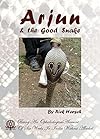
First of all, let me get the following out of the way: yes, I count the writer Rick Harsch among “real-life” friends (i.e., not one of those you only “talk” to via one of the antisocial networking sites), so my review of his first e-book (but hardly Rick’s first book – he has previously published a heap of those… what were they… oh, paper artefacts!) might not be entirely objective (as if any review is). The thing is, Rick’s relentlessly critical outlook but nevertheless show more remarkably positive opinion of my own debut novel was what I desperately needed at a time when my confidence in my scribbling ability was faltering on a daily basis, and he has also been invaluable in his efforts to help me polish my own books and get them in front of readers. This was, as far as my own previous experience had indicated, rather unusual for “old-school” writers such as Rick.
As it happens, Harsch is not (yet?) a member of the modern, agreeable, happy-go-lucky gang of “indie authors”: he hails from the “olden” days when the stereotypical image of writers was still – with good reason, I suppose – that of obstinate, loopy, unsociable, disgruntled old geezers who most likely hate all other writers, but especially any who might materialise in their vicinity. After all, Rick was, once upon a time, on his way to becoming quite renowned for his traditionally-published and widely acclaimed “Driftless Trilogy” (The Driftless Zone, Billy Verite, and The Sleep of Aborigines), which has also been translated into French and made its way into the curriculum of the somewhat obscure University of Tasmania (as Rick defines it in Snake, “the intellectual center of the only block of land to exterminate all its aboriginals“). However – rather unsurprisingly, if you know what an onerous conundrum of uncalled-for incidents tends to surround Rick most of the time – due to an extremely unfortunate sequence of events, including but not limited to the vastly premature death of his Hollywood agent, a bitter though hilarious (to an external observer) dispute with his subsequent literary agent, the bankruptcy of his French publisher and other similarly torturous circumstances, Rick Harsch’s tenacious infiltration of the world literary canon has been on a rather involuntary and undeserved hiatus of late. The infamous downward spiral of the traditional publishing industry that has got out of control after the advent of e-readers has only further complicated Rick’s theretofore cunning world-domination scheme.
In light of all of the above (as well as because I practically forced him to), Rick has recently decided to join the indie author tribe. Arjun and the Good Snake is the first book of his to be re-released as an e-book, hopefully in a series of others that should follow. I’ve had the honour of formatting it for e-readers, and it should look good – I certainly hope so, and if it doesn’t, feel free to complain to me and hold me personally responsible, and I mean that! This I did most happily, for Snake has been, to date, my favourite book of Rick’s (with the possible exception of an upcoming “paper” one, which is still in the works); though I, unfortunately, haven’t yet had the pleasure of reading the Driftless Trilogy, because it is, sadly, out of print. (Rick is currently looking at the possibility of resurrecting it, but the fact that he doesn’t have the manuscripts in the electronic form will make this “project” difficult and, above all, long-winded.)
Reading Arjun and the Good Snake for the first time a few years back was the perfect way of getting to know Rick better, along with all of his numerous remarkable qualities as well as considerable faults. As he puts it himself in the introduction to Snake, “No character, especially that of the author, is safe” (from assassination, I guess). The (sort of) journal supposedly focuses on the six weeks in India (without alcohol, woe was Rick!) that the author spent on a quest to track down a cobra and hopefully also a Russell’s viper, the ophidian preference of his son. However, the “diary” is interspersed with the author’s intimate musings and ruminations: on his own failings, particularly the harrowing alcohol addiction (paradoxically, simultaneously soul-sucking and soul-giving, as anyone who has ever struggled with their share of problems with alcoholism will surely know); on his family, especially his relationship with his wife Sasikala and son Arjun; on India and all her unknowable depths; on philosophical, existentialist, even suicidal enigmas; as well as on the various goings-on back at the Slovenian coast, where the author had emigrated from the United States, primarily, as far as I know, to escape oppressive idiocy… Only to witness, to his dismay, the quickening of rabid, unhinged capitalism in a former socialist country, with all the savagery that has entailed.
Arjun and the Good Snake is not an “easy” book. If you’re an ardent believer in the magnificent contemporary Western world and appreciate the constant pursuit of instant gratification, ravenous consumption as well as instantaneous excretion – then this might not be a book for you. However, if you’re willing to put a bit of effort in a literary work rather than just be “entertained” by it, you’ll doubtlessly unearth and come to appreciate many a touching contemplative passage such as, for example, the following:
“We arrived to the sea – and this is where if I were ever to commit suicide, the time would be as appropriate as it would get, a wretched man standing apart from the alienated cluster representing all he’s got, unable to enjoy himself alone, alienated even from a circumstance too familiar to generate true despair; the waves relentlessly formed and reformed with their concealed force, spent themselves falsely, the sea sucking in with greed: There is much to be learned standing with pants rolled above the knees and feet planted on damp sand as the lace of water passes ankle high, and then the sand around the feet is stripped away with a surprising, even sinister, force that badly wants to take me under, too…“ show less
As it happens, Harsch is not (yet?) a member of the modern, agreeable, happy-go-lucky gang of “indie authors”: he hails from the “olden” days when the stereotypical image of writers was still – with good reason, I suppose – that of obstinate, loopy, unsociable, disgruntled old geezers who most likely hate all other writers, but especially any who might materialise in their vicinity. After all, Rick was, once upon a time, on his way to becoming quite renowned for his traditionally-published and widely acclaimed “Driftless Trilogy” (The Driftless Zone, Billy Verite, and The Sleep of Aborigines), which has also been translated into French and made its way into the curriculum of the somewhat obscure University of Tasmania (as Rick defines it in Snake, “the intellectual center of the only block of land to exterminate all its aboriginals“). However – rather unsurprisingly, if you know what an onerous conundrum of uncalled-for incidents tends to surround Rick most of the time – due to an extremely unfortunate sequence of events, including but not limited to the vastly premature death of his Hollywood agent, a bitter though hilarious (to an external observer) dispute with his subsequent literary agent, the bankruptcy of his French publisher and other similarly torturous circumstances, Rick Harsch’s tenacious infiltration of the world literary canon has been on a rather involuntary and undeserved hiatus of late. The infamous downward spiral of the traditional publishing industry that has got out of control after the advent of e-readers has only further complicated Rick’s theretofore cunning world-domination scheme.
In light of all of the above (as well as because I practically forced him to), Rick has recently decided to join the indie author tribe. Arjun and the Good Snake is the first book of his to be re-released as an e-book, hopefully in a series of others that should follow. I’ve had the honour of formatting it for e-readers, and it should look good – I certainly hope so, and if it doesn’t, feel free to complain to me and hold me personally responsible, and I mean that! This I did most happily, for Snake has been, to date, my favourite book of Rick’s (with the possible exception of an upcoming “paper” one, which is still in the works); though I, unfortunately, haven’t yet had the pleasure of reading the Driftless Trilogy, because it is, sadly, out of print. (Rick is currently looking at the possibility of resurrecting it, but the fact that he doesn’t have the manuscripts in the electronic form will make this “project” difficult and, above all, long-winded.)
Reading Arjun and the Good Snake for the first time a few years back was the perfect way of getting to know Rick better, along with all of his numerous remarkable qualities as well as considerable faults. As he puts it himself in the introduction to Snake, “No character, especially that of the author, is safe” (from assassination, I guess). The (sort of) journal supposedly focuses on the six weeks in India (without alcohol, woe was Rick!) that the author spent on a quest to track down a cobra and hopefully also a Russell’s viper, the ophidian preference of his son. However, the “diary” is interspersed with the author’s intimate musings and ruminations: on his own failings, particularly the harrowing alcohol addiction (paradoxically, simultaneously soul-sucking and soul-giving, as anyone who has ever struggled with their share of problems with alcoholism will surely know); on his family, especially his relationship with his wife Sasikala and son Arjun; on India and all her unknowable depths; on philosophical, existentialist, even suicidal enigmas; as well as on the various goings-on back at the Slovenian coast, where the author had emigrated from the United States, primarily, as far as I know, to escape oppressive idiocy… Only to witness, to his dismay, the quickening of rabid, unhinged capitalism in a former socialist country, with all the savagery that has entailed.
Arjun and the Good Snake is not an “easy” book. If you’re an ardent believer in the magnificent contemporary Western world and appreciate the constant pursuit of instant gratification, ravenous consumption as well as instantaneous excretion – then this might not be a book for you. However, if you’re willing to put a bit of effort in a literary work rather than just be “entertained” by it, you’ll doubtlessly unearth and come to appreciate many a touching contemplative passage such as, for example, the following:
“We arrived to the sea – and this is where if I were ever to commit suicide, the time would be as appropriate as it would get, a wretched man standing apart from the alienated cluster representing all he’s got, unable to enjoy himself alone, alienated even from a circumstance too familiar to generate true despair; the waves relentlessly formed and reformed with their concealed force, spent themselves falsely, the sea sucking in with greed: There is much to be learned standing with pants rolled above the knees and feet planted on damp sand as the lace of water passes ankle high, and then the sand around the feet is stripped away with a surprising, even sinister, force that badly wants to take me under, too…“ show less
Arjun and the good snake; being an ophidiological account of six weeks in India without alcohol by Rick Harsch

This frenzied, loving, wisdom-filled book demands a serious Review from me, but conscience whip-saws me now. I don't have the time or tranquility to do it justice, nor yet the rudeness to ignore it, lest somebody miss the chance to discover it through my efforts.
Mercifully, several other reviews have done appeared here, covering most of the important aspects of the work. For now, let me astonish its Author by paraphrasing Melville, and calling this a grand ungodly god-like work. Find it, show more read it, but don't blame me if you find yourself whip-sawed in another sense: the desire to gulp it down in great self-indulgent swallows versus the intensity which sometimes makes it tough to chew more than a few pages at a time. Of-course, this is a good kind of problem to have. Serious readers (on the one hand), and wimps (on the other) should consider themselves duly warned.
Only reason I deny it the full five stars is my restlessness with the Author's habit of throwing in non-English (mostly Tamil) words with no explanation. This works, I suppose, with readers who have the book in one hand and a laptop in the other. That ain't me; the other hand generally has a cooling beverage. And then too there is the hidden-in-plain-sight question of just who, or what, is the Good Snake. I have suggested to the Author that he himself is that being. He says that he'd not thought of it that way, but doesn't object. Let him wrap his coils around you, and you decide. This is an astonishing achievement, and one which bears visiting and re-visiting.
Post-scripts a couple days after original posting. As a student and practitioner of the classical art of rhetorical ekphrasis, I stand in awe of some of his well-wrought, but seemingly effortless sentences about the monumental South Indian sculptural masterwork "The Birth of the Ganges". Also, congrats to publishers Amalietti & Amalietti for issuing an attractive and durable volume far above the dingy and flimsy stuff which is the unfortunate norm in North America. show less
Mercifully, several other reviews have done appeared here, covering most of the important aspects of the work. For now, let me astonish its Author by paraphrasing Melville, and calling this a grand ungodly god-like work. Find it, show more read it, but don't blame me if you find yourself whip-sawed in another sense: the desire to gulp it down in great self-indulgent swallows versus the intensity which sometimes makes it tough to chew more than a few pages at a time. Of-course, this is a good kind of problem to have. Serious readers (on the one hand), and wimps (on the other) should consider themselves duly warned.
Only reason I deny it the full five stars is my restlessness with the Author's habit of throwing in non-English (mostly Tamil) words with no explanation. This works, I suppose, with readers who have the book in one hand and a laptop in the other. That ain't me; the other hand generally has a cooling beverage. And then too there is the hidden-in-plain-sight question of just who, or what, is the Good Snake. I have suggested to the Author that he himself is that being. He says that he'd not thought of it that way, but doesn't object. Let him wrap his coils around you, and you decide. This is an astonishing achievement, and one which bears visiting and re-visiting.
Post-scripts a couple days after original posting. As a student and practitioner of the classical art of rhetorical ekphrasis, I stand in awe of some of his well-wrought, but seemingly effortless sentences about the monumental South Indian sculptural masterwork "The Birth of the Ganges". Also, congrats to publishers Amalietti & Amalietti for issuing an attractive and durable volume far above the dingy and flimsy stuff which is the unfortunate norm in North America. show less
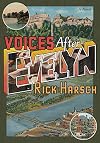
Twain’s quip that truth is stranger than fiction reverberates through Rick Harsch’s new novel [Voice’s After Evelyn]. It’s about possibilities – truth is not constrained to stick to possibilities. And neither is Harsch. But dip into any of his work, and you’ll realize Harsch exists in other stratospheres.
Because truth is so often stranger, the true crime genre has exploded in today’s world of podcasts, and movies, and podcasts made into movies. But, in [Voices After Evelyn], show more Harsch engages in something subtler than scatter-gunning lurid violence and over-the-top, hard-to-believe-even-though-they’re-really-real personalities. This book is about the very possibilities that cannot constrain truth. Evelyn Hartley’s body is missing; still missing, some 65 years later. She disappeared one humid autumn night, from the Midwestern home where she was babysitting. A blood smear here, some panties there – none dispositively belonging to the enigmatically vanished girl. Rivers and swamps are plumbed, houses scoured. All that remains of her, as Harsch’s chorus floridly recounts, are possibilities.
The town is small enough to be changed by the vacuum left by Hartley’s disappearance, and the vacuum left without an explanation for the disappearance. Usually these are voids felt personally, individually. But in a sleepy heartland burg like this one, frozen in 1950’s Pyrex provinciality, the empty shell is a collective experience. And Harsch claws his way over that vast landscape through the eyes of those who felt it deepest – the addicts and criminals and drifters; the fringe, the usual suspects; a Denis Johnsonian cast, even if Harsch might not appreciate the comparison.
The set-up – again, all the real facts of Evelyn’s abduction? Murder? Escape? – is straight noir. And much of the book feels like a noir vamp, not Spillane or Hammett noir, but the noir of a Thomas Wolfe love child with Spillane or Hammett. Expansive and baroque on one page, like Wolfe; claustrophobic on the next, maybe like whatever resting place Evelyn’s body inhabits now. It’s confusing and complex, like a real abduction/murder investigation, replete with false leads, or voices here, and red herrings. Without a body, everything’s possible – that’s the truth, and it is strange. And wonderful.
Bottom Line: A noir vamp through a real mystery that engages the possibilities so vividly it’s hard to put down.
5 bones!!!!! show less
Because truth is so often stranger, the true crime genre has exploded in today’s world of podcasts, and movies, and podcasts made into movies. But, in [Voices After Evelyn], show more Harsch engages in something subtler than scatter-gunning lurid violence and over-the-top, hard-to-believe-even-though-they’re-really-real personalities. This book is about the very possibilities that cannot constrain truth. Evelyn Hartley’s body is missing; still missing, some 65 years later. She disappeared one humid autumn night, from the Midwestern home where she was babysitting. A blood smear here, some panties there – none dispositively belonging to the enigmatically vanished girl. Rivers and swamps are plumbed, houses scoured. All that remains of her, as Harsch’s chorus floridly recounts, are possibilities.
The town is small enough to be changed by the vacuum left by Hartley’s disappearance, and the vacuum left without an explanation for the disappearance. Usually these are voids felt personally, individually. But in a sleepy heartland burg like this one, frozen in 1950’s Pyrex provinciality, the empty shell is a collective experience. And Harsch claws his way over that vast landscape through the eyes of those who felt it deepest – the addicts and criminals and drifters; the fringe, the usual suspects; a Denis Johnsonian cast, even if Harsch might not appreciate the comparison.
The set-up – again, all the real facts of Evelyn’s abduction? Murder? Escape? – is straight noir. And much of the book feels like a noir vamp, not Spillane or Hammett noir, but the noir of a Thomas Wolfe love child with Spillane or Hammett. Expansive and baroque on one page, like Wolfe; claustrophobic on the next, maybe like whatever resting place Evelyn’s body inhabits now. It’s confusing and complex, like a real abduction/murder investigation, replete with false leads, or voices here, and red herrings. Without a body, everything’s possible – that’s the truth, and it is strange. And wonderful.
Bottom Line: A noir vamp through a real mystery that engages the possibilities so vividly it’s hard to put down.
5 bones!!!!! show less
Awards
You May Also Like


Associated Authors
Statistics
- Works
- 20
- Also by
- 3
- Members
- 221
- Popularity
- #101,334
- Rating
- 4.5
- Reviews
- 37
- ISBNs
- 22
- Languages
- 2
- Favorited
- 4


