
Sam Eastland (1)
Author of Eye of the Red Tsar
For other authors named Sam Eastland, see the disambiguation page.
About the Author
Series
Works by Sam Eastland
Tagged
Common Knowledge
- Legal name
- Watkins, Paul
- Gender
- male
- Birthplace
- California, USA
- Map Location
- USA
Members
Reviews
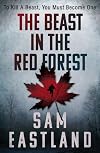
Sam Eastland's Inspector Pekkala series set in Stalinist Russia is another of my favorites, but I read it very slowly. Why? Because life in Russia during that time was so gray and grim and awful. But no matter how gray, grim, and awful it was, Eastland's stories are compelling. The Beast in the Red Forest is no exception.
From past books in the series, Inspector Pekkala has shown that he has an uncanny ability to stay alive. The character has almost mythical status. Who else could be Tsar show more Nicholas II's top investigator and survive to do the same job for Joseph Stalin? Pekkala's absolute honesty and relentlessness are two major reasons for his longevity, and throughout the series, Major Kirov has been learning from the master.
People aren't who they appear to be. Stalin, who has a love-hate relationship with regard to Pekkala, has more than one agenda. Others are trying to circumvent Stalin to ensure Pekkala's safety... there's a lot going on, and it makes for an engrossing story that's hard to put down.
There's also more than one narrative. The main action of the book takes place in 1944, but The Beast in the Red Forest begins with a letter from an American who's taking his family to Russia in the mid-1930s to work in a Ford Motor plant. The letters continue to break sporadically into the action in 1944. There are letters from Russian officials, from American ambassadors, from the American's wife, and as each one appears, readers wonder what in the world they have to do with the story in 1944. Then it all clicks into place and ratchets up the tension even more.
A compelling story peopled with strong characters in a vivid setting. I feel as though I'm living in Stalinist Russia as I read these books. Eastland adds humorous lines from time to time to lighten the mood, and he also describes the landscape in beautiful, poetic language, one of my favorites being the origin of the "Red Forest." There was also a surprise for me at the conclusion. I felt a bit sorry for Joseph Stalin at the very end of The Beast in the Red Forest, but before you think I've lost my mind, let me tell you something. I'd also feel sorry for a rabid skunk, but I wouldn't come anywhere near it, and I'd never turn my back on it.
This is a superb historical mystery series that I highly recommend. Give it a try! show less
From past books in the series, Inspector Pekkala has shown that he has an uncanny ability to stay alive. The character has almost mythical status. Who else could be Tsar show more Nicholas II's top investigator and survive to do the same job for Joseph Stalin? Pekkala's absolute honesty and relentlessness are two major reasons for his longevity, and throughout the series, Major Kirov has been learning from the master.
People aren't who they appear to be. Stalin, who has a love-hate relationship with regard to Pekkala, has more than one agenda. Others are trying to circumvent Stalin to ensure Pekkala's safety... there's a lot going on, and it makes for an engrossing story that's hard to put down.
There's also more than one narrative. The main action of the book takes place in 1944, but The Beast in the Red Forest begins with a letter from an American who's taking his family to Russia in the mid-1930s to work in a Ford Motor plant. The letters continue to break sporadically into the action in 1944. There are letters from Russian officials, from American ambassadors, from the American's wife, and as each one appears, readers wonder what in the world they have to do with the story in 1944. Then it all clicks into place and ratchets up the tension even more.
A compelling story peopled with strong characters in a vivid setting. I feel as though I'm living in Stalinist Russia as I read these books. Eastland adds humorous lines from time to time to lighten the mood, and he also describes the landscape in beautiful, poetic language, one of my favorites being the origin of the "Red Forest." There was also a surprise for me at the conclusion. I felt a bit sorry for Joseph Stalin at the very end of The Beast in the Red Forest, but before you think I've lost my mind, let me tell you something. I'd also feel sorry for a rabid skunk, but I wouldn't come anywhere near it, and I'd never turn my back on it.
This is a superb historical mystery series that I highly recommend. Give it a try! show less
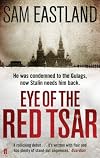
I was rather disappointed by this. As a basic thriller, it was a good page turner. However, the basic premise and plot were just too implausible. Pekkala as a kind of Tsarist version of some untouchable superhero, just because he happens to have a supposedly infallible memory, was in my view a ridiculous concept. How was he fooled about the mistaken identity of Grodek near the end? And just why would he (or anyone) believe that Stalin would really grant an amnesty to a member of the Romanov show more family who had turned out to have survived? There were also some basic historical errors, ignoring some of the facts about the killing of the Romanovs (no-one disputes that a number of people must have been involved in the murders, yet here one lone killer carries them out) and lesser examples, such as a reference to the Bolsheviks not having yet changed the currency, while at the time in question (the late spring/summer of 1917), they were not even in Government; and a reference to the great famine, mainly in the early 30s, that followed collectivisation, though the main action of the novel is set in 1929. These things jarred, as did, for me at least, the constant flitting back and forth between 1917 and 1929. show less
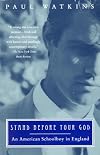
I read Paul Watkins memoir, STAND BEFORE YOUR GOD, based on a recommendation from a Canadian author, Brian Payton. I had read a couple of Watkins novels years ago, but had not heard of this memoir. It was a riveting, beautifully written account of Watkins' years at two famous English boys' schools. Watkins was the son of a Welsh-born, well-known geophysicist, Norman David Watkins. The family lived in Rhode Island when Paul, at seven years old, was packed off to the Dragon School in England, show more where he was a boarding student to the age of thirteen, after which he attended the very prestigious Eton prep school. Watkins' story covers a whole spectrum of experiences and feelings. Imagine being sent away from home and everything you know at age seven, plunged suddenly into a strange foreign culture and environment. Homesickness, culture shock, the casual cruelty of fellow students and harsh punishments from house masters and teachers, sexual awakening in an all-male cloistered type of environment where homosexuality was not uncommon, and the early urges to write, as a way of escape - all these things are in here. And Watkins' father died of cancer during his first year at Eton, a terrible loss which nearly scuttled his chances at the school. But Paul Watkins persevered and finished his studies at Eton, which is where the narrative stops. From there, I have learned, he went on to Yale and began publishing his well-received novels at a very early age.
I found this book to be absolutely fascinating. It has been compared to A SEPARATE PEACE, but I was reminded of another more obscure book, a memoir by Englishman John Cornwell called SEMINARY BOY. I also thought of a literary memoir by another alumnus of the Dragon School, Pico Iyer, and his book about a life-long fascination with author Graham Greene, THE MAN WITHIN MY HEAD. And I thought again of those two Watkins novels - NIGHT OVER DAY OVER NIGHT and CALM AT SUNSET CALM AT DAWN - and remembered enjoying both very much. Watkins is simply a born storyteller, and he tells his own story with eloquence and style. I loved this book. Thanks again to writer Brian Payton for telling me about it. HIGHLY recommended. show less
I found this book to be absolutely fascinating. It has been compared to A SEPARATE PEACE, but I was reminded of another more obscure book, a memoir by Englishman John Cornwell called SEMINARY BOY. I also thought of a literary memoir by another alumnus of the Dragon School, Pico Iyer, and his book about a life-long fascination with author Graham Greene, THE MAN WITHIN MY HEAD. And I thought again of those two Watkins novels - NIGHT OVER DAY OVER NIGHT and CALM AT SUNSET CALM AT DAWN - and remembered enjoying both very much. Watkins is simply a born storyteller, and he tells his own story with eloquence and style. I loved this book. Thanks again to writer Brian Payton for telling me about it. HIGHLY recommended. show less

I stumbled across Paul Watkins perhaps 20 years ago and I am always amazed at how many different types of novels he writes and how amazingly real they all feel. I enjoyed this one, even as I was unsure about where it was going. The clash of the Norse traditional religion with Christianity was one theme but there was the rivalry that destroys a friendship and the deep hurt inflicted on lves and how they play out. Just a really fascinating read from one of my very favorite authors.
Lists
Awards


You May Also Like


Associated Authors
Statistics
- Works
- 18
- Members
- 2,336
- Popularity
- #10,982
- Rating
- 3.7
- Reviews
- 243
- ISBNs
- 193
- Languages
- 7

