
Alfredo Bryce Echenique (1939–2026)
Author of A World for Julius
About the Author
Alfredo Bryce Echenique was born in 1939 in Lima, Peru. He is the author of thirteen previous works of fiction & nonfiction, including the novel "A World for Julius". He divides his time between France & Peru. (Bowker Author Biography)
Image credit: Alfredo Bryce Echenique, à Bogota, le 16 avril 2004
Series
Works by Alfredo Bryce Echenique
Associated Works
A Thousand Forests in One Acorn: An Anthology of Spanish-Language Fiction (2014) — Contributor — 51 copies
The Faber Book of Contemporary Latin American Short Stories (1989) — Contributor — 27 copies, 1 review
Hebbes 2 — Contributor — 4 copies
Tagged
Common Knowledge
- Canonical name
- Bryce Echenique, Alfredo
- Legal name
- Bryce Echenique, Alfredo Marcelo
- Birthdate
- 1939-02-19
- Date of death
- 2026-03-10
- Gender
- male
- Education
- National University of San Marcos
- Occupations
- Avocat
- Organizations
- Université Paris-Nanterre
- Awards and honors
- Université nationale principale de San Marcos (Docteur honoris causa)
- Relationships
- Vargas Llosa, Mario (Ami)
- Nationality
- Peru
- Birthplace
- Lima, Peru
- Places of residence
- Lima, Peru
Paris, France - Map Location
- Spain
Members
Reviews

When we think of Peruvian authors, we think of Nobelist Mario Vargas Llosa. Having read this novel, I hope more people will become acquainted with Peruvian author Alfredo Bryce Echenique.
A World for Julius won Peru's National Book Award for the year it was written, and it is also the winner of the Outstanding Translation Award of the American Literary Translator's Association and the Columbia University Translation Center Award.
How do I describe this book? Well, it is the story of Julius show more from age 2 to age 12. Julius is the youngest child of an oligarchic Peruvian family. The time is the 1950's, and as the novel begins Julius's father has just died. Within a short time his mother remarries. His stepfather and older brothers exude Latin American machismo. (When one of his older brothers attempts to rape Julius's nanny, the stepfather's solution is to fire the nanny and buy the son a car). Julius's beautiful, distant and ephemeral mother is never present for Julius (or her other children for that matter). Her vocabulary is rife with words like "divine" and "Darling!" Her concerns are parties, clothes, golf, and whether Don Juan Lucas, her husband, is faithful.
Julius is mostly left in the company of the household staff--the cook, the laundress, the nanny, the maid, the chauffer, the gardener, all of whom are either Indian, Mestizo, or Mulatto. They create a rich life for him. In certain ways, the book could be looked at as a Peruvian "Upstairs, Downstairs," although a version that is not so forgiving of the "upstairs" people.
While the story is Julius's, and large parts are narrated from his point of view, the novel shifts seamlessly from the point of view of one character to another. We are in everyone's mind (except, curiously Don Juan Lucas--we see him only from the outside). Sometimes the writing slips into an almost hallucinatory stream of conciousness. Mostly, however, the writing style, while unique and unusual, is never hard to read or dense.
Here's the first paragraph of the book:
"Julius was born in a mansion on Salaverry Avenue, directly across from the old San Felipe Hippodrome. The mansion had carriage houses, gardens, a swimming pool, and a small orchard into which two year old Julius would wander and then be found later, his back turned, perhaps bending over a flower. The mansion had servant's quarters that were like a blemish on the most beautiful face. There was even a carriage that your great-grandfather used, Julius, when he was President of the Republic, be careful, don't touch! it's covered with cobwebs, and turning away from his mother, who was lovely, Julius tried to reach the door handle. The carriage and the servants' quarters always held a strange fascination for Julius...."
I loved this book, and highly recommend it. show less
A World for Julius won Peru's National Book Award for the year it was written, and it is also the winner of the Outstanding Translation Award of the American Literary Translator's Association and the Columbia University Translation Center Award.
How do I describe this book? Well, it is the story of Julius show more from age 2 to age 12. Julius is the youngest child of an oligarchic Peruvian family. The time is the 1950's, and as the novel begins Julius's father has just died. Within a short time his mother remarries. His stepfather and older brothers exude Latin American machismo. (When one of his older brothers attempts to rape Julius's nanny, the stepfather's solution is to fire the nanny and buy the son a car). Julius's beautiful, distant and ephemeral mother is never present for Julius (or her other children for that matter). Her vocabulary is rife with words like "divine" and "Darling!" Her concerns are parties, clothes, golf, and whether Don Juan Lucas, her husband, is faithful.
Julius is mostly left in the company of the household staff--the cook, the laundress, the nanny, the maid, the chauffer, the gardener, all of whom are either Indian, Mestizo, or Mulatto. They create a rich life for him. In certain ways, the book could be looked at as a Peruvian "Upstairs, Downstairs," although a version that is not so forgiving of the "upstairs" people.
While the story is Julius's, and large parts are narrated from his point of view, the novel shifts seamlessly from the point of view of one character to another. We are in everyone's mind (except, curiously Don Juan Lucas--we see him only from the outside). Sometimes the writing slips into an almost hallucinatory stream of conciousness. Mostly, however, the writing style, while unique and unusual, is never hard to read or dense.
Here's the first paragraph of the book:
"Julius was born in a mansion on Salaverry Avenue, directly across from the old San Felipe Hippodrome. The mansion had carriage houses, gardens, a swimming pool, and a small orchard into which two year old Julius would wander and then be found later, his back turned, perhaps bending over a flower. The mansion had servant's quarters that were like a blemish on the most beautiful face. There was even a carriage that your great-grandfather used, Julius, when he was President of the Republic, be careful, don't touch! it's covered with cobwebs, and turning away from his mother, who was lovely, Julius tried to reach the door handle. The carriage and the servants' quarters always held a strange fascination for Julius...."
I loved this book, and highly recommend it. show less

"Prossegui minha vida errante por diferentes cidades, albergues e ocupações, deixando em todo lugar espirais de fumaça e bitucas esmagadas, até que fui parar novamente em Paris, num apartamento de três cômodos, onde pude reunir uma coleção de sessenta cinzeiros. Não por mania de colecionador, mas para ter sempre à mão algo onde jogar bitucas e cinzas. Tinha adotado então o Marlboro, pois essa marca, que não era melhor nem pior do que as muitas que já tinha provado, sugeriu-me show more uma brincadeira gramatical que praticava assiduamente. Quantas palavras podiam ser formadas com as oito letras de Marlboro? Mar, lobo, mal, lambo, bar, lombo, amor, bolor, rombo, orar, bolo etc. Tornei-me invencível no jogo, que impus entre meus colegas da Agência France Presse, onde trabalhava na época. Essa agência, vou dizer de passagem, era não só uma fábrica de notícias, mas também o empório do tabagismo. Por meio de estatísticas, eu sabia que a profissão mais dada ao tabaco era a de jornalista. E pude verificá-lo mais tarde, já que as salas de redação, a qualquer hora do dia ou da noite, eram antros espaçosos onde dezenas de homens teclavam desesperadamente em suas máquinas de escrever, sugando sem descanso charutos, cachimbos e cigarros de todas as marcas, em meio a uma espessa bruma nicotínica, a ponto de eu me perguntar se estavam reunidos ali para redigir as notícias ou para fumar." show less

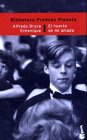
El huerto de mi amada
Alfredo Bryce Echenique
Publicado: 2002 | 198 páginas
Novela Otros Romántico
Carlitos Alegre se decide a aparecer por la fiesta que su distinguida familia da en el jardín de la casa, donde se siente inmediatamente atraído por Natalia de Larrea, una bella y acaudalada mujer que es el centro de atención de las miradas masculinas. Los celos que despierta el aparatoso baile de Carlitos y Natalia desencadenan una delirante pelea de la que se zafan los dos amantes, que se show more van a vivir a la casa de campo de ella. Sin embargo, el idilio entre el chico y la aristócrata ha escandalizado tanto a sus familiares y amigos, que el padre de él llega a demandar a Natalia por corrupción de menores. Esto les obliga a adoptar nuevas estrategias para poner a salvo su pasión, que tampoco es ajena al aprendizaje vital del muchacho y a la vida cosmopolita a la que está acostumbrada la mujer. Con este relato, a ratos hilarante, a ratos tierno, Alfredo Bryce Echenique consigue deslumbrarnos primero y conmovernos a continuación, gracias a su capacidad para describir los estados de ánimo y para reproducir los guiños de un grupo social y de una época. La pluma irreverente y tierna a la vez, y el desatado sentido del humor de Alfredo Bryce Echenique convierten esta historia inolvidable en un hito de la literatura actual. show less
Alfredo Bryce Echenique
Publicado: 2002 | 198 páginas
Novela Otros Romántico
Carlitos Alegre se decide a aparecer por la fiesta que su distinguida familia da en el jardín de la casa, donde se siente inmediatamente atraído por Natalia de Larrea, una bella y acaudalada mujer que es el centro de atención de las miradas masculinas. Los celos que despierta el aparatoso baile de Carlitos y Natalia desencadenan una delirante pelea de la que se zafan los dos amantes, que se show more van a vivir a la casa de campo de ella. Sin embargo, el idilio entre el chico y la aristócrata ha escandalizado tanto a sus familiares y amigos, que el padre de él llega a demandar a Natalia por corrupción de menores. Esto les obliga a adoptar nuevas estrategias para poner a salvo su pasión, que tampoco es ajena al aprendizaje vital del muchacho y a la vida cosmopolita a la que está acostumbrada la mujer. Con este relato, a ratos hilarante, a ratos tierno, Alfredo Bryce Echenique consigue deslumbrarnos primero y conmovernos a continuación, gracias a su capacidad para describir los estados de ánimo y para reproducir los guiños de un grupo social y de una época. La pluma irreverente y tierna a la vez, y el desatado sentido del humor de Alfredo Bryce Echenique convierten esta historia inolvidable en un hito de la literatura actual. show less
Liked it a lot! True to Echenique's style is dizzying at times, but funny and engaging.
Lists
Awards


You May Also Like


Associated Authors
Statistics
- Works
- 56
- Also by
- 6
- Members
- 1,914
- Popularity
- #13,442
- Rating
- 3.7
- Reviews
- 52
- ISBNs
- 218
- Languages
- 8
- Favorited
- 5

