
Lynn Abbey
Author of Thieves' World
About the Author
Series
Works by Lynn Abbey
Thieves' World® Volume One: Thieves' World, Tales from the Vulgar Unicorn, and Shadows of Sanctuary (2020) — Editor — 52 copies, 4 reviews
Filha da Lua brilhante - II 3 copies
A chama negra - vol II 2 copies
The Face of Chaos [short story] 2 copies
It's About Squirrels 2 copies
JerLayne: The Short Story 2 copies
The God-chosen 1 copy
War Wounds 1 copy
The Fruit of Enlibar 1 copy
Then Azyuna Danced 1 copy
Steel 1 copy
Gyskouras 1 copy
Good Neighbors 1 copy
Web Weavers 1 copy
Introduction 1 copy
A chama negra - vol I 1 copy
A chama negra 1 copy
Filha da Lua Brilhante I 1 copy
Children Of All Ages 1 copy
Associated Works
The Further Adventures of Beowulf: Champion of Middle Earth (2006) — Contributor — 9 copies, 1 review
Tagged
Common Knowledge
- Legal name
- Abbey, Marilyn Lorraine
- Birthdate
- 1948-09-18
- Gender
- female
- Education
- University of Rochester (A.B.) (European History) (1969)
University of Rochester (M.A.) (European History) (1971) - Occupations
- computer programmer
- Relationships
- Asprin, Robert (husband|divorced)
- Nationality
- USA
- Birthplace
- Peekskill, New York, USA
- Places of residence
- Peekskill, New York, USA (birth)
Ann Arbor, Michigan, USA
Oklahoma City, Oklahoma, USA
Leesburg, Florida, USA - Associated Place (for map)
- USA
Members
Reviews
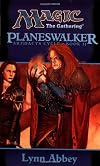
My rating is so high because of how much this book scratched me in all the right places.
I do not recommend this book who is not deep into magic lore or who haven't read Brother's War first. You will likely find this book inferior compared to it, but as to me I could re-read it 1000 times.
Simply put if you want more insight on Urza, the Phyrexians and how they work, and more details about the Multiverse before The Mending, you must give this a shot. I couldn't put it down. I was with Xantcha, show more feeling every moment of panic, fear, curiosity, frustration, and awe.
Xantcha will forever be one of my favorite characters in magic who gets so little attention. Yes she is not everyone's cup of tea, but she was certainly mine. I forever wait the day she finally gets an official card (not just one with art of her) in a supplementary format. show less
I do not recommend this book who is not deep into magic lore or who haven't read Brother's War first. You will likely find this book inferior compared to it, but as to me I could re-read it 1000 times.
Simply put if you want more insight on Urza, the Phyrexians and how they work, and more details about the Multiverse before The Mending, you must give this a shot. I couldn't put it down. I was with Xantcha, show more feeling every moment of panic, fear, curiosity, frustration, and awe.
Xantcha will forever be one of my favorite characters in magic who gets so little attention. Yes she is not everyone's cup of tea, but she was certainly mine. I forever wait the day she finally gets an official card (not just one with art of her) in a supplementary format. show less

Set in the world of Walensor, shepherdess Berika seeks escape from a forced marriage by invoking the goddess Weycha. Her prayer summons Dart, a champion trapped in a tree for twenty years, who must protect her from a sorcerer while navigating a world where magic is tied to belief.
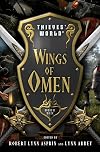
This is the sixth Thieves World anthology set in Sanctuary and the first that I didn’t read thirty odd years ago. To best appreciate this, you definitely need to have read the previous stories, as characters from earlier stories are met in passing, adding to the depth and enjoyment of the tales. Indeed, the the feeling of these being further adventures, developing existing characters greatly added to the stories. (I have read novels about individual characters out of sequence, and this show more anthology “filled in” the return of the authentic Stepsons from Wizardwall, the arrival of members of the Rankan 3rd Commandos and Shadowspawn’s adventures).
Much is happening, with changes in Ranke impacting upon Sanctuary, as well as further resistance to the Beysib invaders. As others have commented, these stories stand out from other fantasy stories that I have read in that they collectively form a sense of a greater life (world building) than that glimpsed in the individual stories. As also noted, they are not of the greatest literary style, but they work for me, and are all the more impressive for creating a generally coherent narrative whilst being written by different authors from different characters’ points of view.
There is no contents page in my Kindle copy, so for completeness, this anthology includes:
Introduction by Robert Lynn Asprin
"What Women Do Best" by Chris and Janet Morris
"Daughter of the Sun" by Robin W. Bailey
"A Breath of Power" by Diana L. Paxson
"The Hand That Feeds You" by Diane Duane - without heading and starts on page 515 of Kindle anthology
"Witching Hour" by C. J. Cherryh
"Rebels Aren't Born in Palaces" by Andrew J. Offutt
"Gyskouras" by Lynn Abbey
"A Fish With Feathers is Out of His Depth" by Robert Lynn Asprin show less
Much is happening, with changes in Ranke impacting upon Sanctuary, as well as further resistance to the Beysib invaders. As others have commented, these stories stand out from other fantasy stories that I have read in that they collectively form a sense of a greater life (world building) than that glimpsed in the individual stories. As also noted, they are not of the greatest literary style, but they work for me, and are all the more impressive for creating a generally coherent narrative whilst being written by different authors from different characters’ points of view.
There is no contents page in my Kindle copy, so for completeness, this anthology includes:
Introduction by Robert Lynn Asprin
"What Women Do Best" by Chris and Janet Morris
"Daughter of the Sun" by Robin W. Bailey
"A Breath of Power" by Diana L. Paxson
"The Hand That Feeds You" by Diane Duane - without heading and starts on page 515 of Kindle anthology
"Witching Hour" by C. J. Cherryh
"Rebels Aren't Born in Palaces" by Andrew J. Offutt
"Gyskouras" by Lynn Abbey
"A Fish With Feathers is Out of His Depth" by Robert Lynn Asprin show less

I was pleasantly surprised at the quality of historical accuracy that went into this book: everything from the embroidery on the garments to the bathing to the construction of a Saxon castle. The characters are flawed in ways that only someone who has written fearlessly for a while can describe them, and the insight into the many conflicts of this time is also good.
The action takes place in the winter of 1065, months before the Norman invasion of England. The rightful King lies dying without show more an heir, and his sons and daughters have made outlaws of one another. In Wessex, a landholder, his sister-in-law, his daughter, and his foster daughter live in relative safe comfort until the arrival of a wounded stranger makes real to them the outlaws living in the forest on the ridge. These same outlaws are the followers of one of the sons of King Edwards who are in exile from their Northumbrian lands, and they pillage and rape both homesteads and monasteries. The household and manor are saved, perhaps, by the Norman liege lord who brings both more swords but also a new way of life.
The conflicts are numerous during this time period, and perhaps that is why she chose a time just before 1066: the conflicts between the sisters fit in well with a household conflicted in its loyalties and the reality of inheritance, and the conflict between the old ways of the Goddess and the Christianity of the priests are also in good balance.
My one drawback to totally loving this book is the editorial one: sometimes the she" or the action is unclear in a paragraph, and I found myself more than once returning to re-read a page just to be clear on the actions or motivations it described." show less
The action takes place in the winter of 1065, months before the Norman invasion of England. The rightful King lies dying without show more an heir, and his sons and daughters have made outlaws of one another. In Wessex, a landholder, his sister-in-law, his daughter, and his foster daughter live in relative safe comfort until the arrival of a wounded stranger makes real to them the outlaws living in the forest on the ridge. These same outlaws are the followers of one of the sons of King Edwards who are in exile from their Northumbrian lands, and they pillage and rape both homesteads and monasteries. The household and manor are saved, perhaps, by the Norman liege lord who brings both more swords but also a new way of life.
The conflicts are numerous during this time period, and perhaps that is why she chose a time just before 1066: the conflicts between the sisters fit in well with a household conflicted in its loyalties and the reality of inheritance, and the conflict between the old ways of the Goddess and the Christianity of the priests are also in good balance.
My one drawback to totally loving this book is the editorial one: sometimes the she" or the action is unclear in a paragraph, and I found myself more than once returning to re-read a page just to be clear on the actions or motivations it described." show less
Lists
Awards


You May Also Like


Associated Authors
Statistics
- Works
- 71
- Also by
- 22
- Members
- 12,104
- Popularity
- #1,938
- Rating
- 3.7
- Reviews
- 113
- ISBNs
- 142
- Languages
- 9
- Favorited
- 1
