

Donald S. Lopez, Jr.
Author of Buddhist Scriptures
About the Author
Donald S. Lopez Jr. is the Arthur E. Link Distinguished University Professor of Buddhist and Tibetan Studies in the Department of Asian Languages and Cultures at the University of Michigan. He is the author of Buddhism and Science and Hyecho's Journey: The World of Buddhism, both also published by show more the University of Chicago Press. show less
Image credit: via Shambhala Publications
Works by Donald S. Lopez, Jr.
In Search of the Christian Buddha: How an Asian Sage Became a Medieval Saint (2014) 60 copies, 2 reviews
The Madman's Middle Way: Reflections on Reality of the Tibetan Monk Gendun Chopel (2006) 54 copies, 2 reviews
Seeing the Sacred in Samsara: An Illustrated Guide to the Eighty-Four Mahasiddhas (2019) 15 copies, 1 review
Strange Tales of an Oriental Idol: An Anthology of Early European Portrayals of the Buddha (Buddhism and Modernity) (2016) 15 copies
The Norton Anthology of World Religions, Volume 1: Hinduism, Buddhism, Daoism (2014) — Editor. — 10 copies
Assembly of the Exalted: The Tibetan Shrine Room from the Alice S. Kandell Collection (2018) 3 copies
A Modern Buddhist Bible 1 copy
Che cos'è il Buddhismo 1 copy
A MODERN BUDDHIST BIBLE 1 copy
Associated Works
Tibetan Book of the Dead: Or, The After-Death Experiences on the Bardo Plane, according to Lama Kazi Dawa-Samdup's English Rendering (1927) — Foreword, some editions — 1,318 copies, 9 reviews
The Life of Milarepa: A New Translation from the Tibetan (Compass) (1977) — Introduction, some editions — 574 copies, 5 reviews
Awakening the Mind, Lightening the Heart : Core Teachings of Tibetan Buddhism (1995) — Editor, some editions — 247 copies
Treasures of Tibetan Art: The Collections of the Jacques Marchais Museum of Tibetan Art (1996) — Contributor — 32 copies
In the Mirror of Memory: Reflections on Mindfulness and Remembrance in Indian and Tibetan Buddhism (SUNY Series in Buddhist Studies) (1992) — Contributor, some editions — 22 copies, 1 review
Tagged
Common Knowledge
- Canonical name
- Lopez, Donald S., Jr.
- Legal name
- Lopez, Donald Sewell, Jr.
- Birthdate
- 1952-06-01
- Gender
- male
- Occupations
- scholar of Buddhist Studies
university professor - Organizations
- University of Michigan
- Relationships
- Lopez, Donald S., Sr. (father)
- Nationality
- USA
- Birthplace
- Washington, D.C., USA
- Associated Place (for map)
- D.C., USA
Members
Reviews
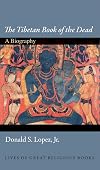
Strangely, this is an antagonistic biography. Lopez only agreed to write it if Princeton would let him write another Buddhist entry for the series as well. (This he admits in the introduction to The Lotus Sutra: A Biography.) His animus stems from the fact that the Evans-Wentz translation, which first appeared in in 1927 and has been the most influential edition of the text in English, is "something of a sham." (Sutra, p. 3.) The text is obscure in Tibet, being part of a greater cycle of show more Buddhist literature. It only came to light in the West because Evans-Wentz came across a copy of it while touring India. He had it translated, calling the translator his "guru," despite not having studied under him nor even speaking Tibetan. Instead, Evans-Wentz added layers of introductions and notes to the texts explaining the deeper secret meaning of the text. While not labeling it as such, his secrets were straight-up Theosophy. Subsequent readers thought they were getting actual Tibetan Buddhist insight, when in fact, they were getting H.P. Blavatsky's romanticizations and inventions.
The irony, in the event that another was needed, is that Evans-Wentz selected two texts for [living Tantra practitioners] and called them the Book of the Dead. . . . [He] selected the wrong texts for translation, and then he dwarfed the translations with various introductions, forwards, commentaries, appendices, and footnotes. The translation became a code to be broken, using the ciphers of another text that is somehow more authentic. For Evans-Wentz, the ur-text is Madame Blavatsky's The Secret Doctrine, itself her decoding of the The Stanzas of Dzyan in the secret Senzar language, a work she claimed to have received from the mahatmas in Tibet.
(Book of the Dead, pp. 117-18.)
Lopez muses that if Evan-Wentz had stumbled across some other text, whether Indian, Tamil, or Pali, it would have revealed similar "secrets."
He does, however, recommend the 2005 Penguin edition of the Tibetan Book of the Dead. It is more an anthology of the cycle of texts than a single work. Also, it is introduced by Lhamo Dondrub, the Fourteenth Dalai Lama, who accurately outlines the theory and practice of the texts. Unfortunately, as Lopez points out, the Dalai Lama does this not because of the importance of the text to Tibetan Buddhist canon, but rather due to the popularity and influence of the Evans-Wentz version in the West.
For Lopez's part, his introduction could use editing. There were several typographical errors one might expect in a galley copy, and one factual error, albeit outside Lopez's field of study. ("...while Freud wrote Thoughts for the Times on War and Death in 1915 as two of his sons served in the German army.")
Finally, the reader is surprised that Lopez spends approximately a quarter of the text discussing the origins of Mormonism and other American new religious movements of the early nineteenth century. As the reader progresses, it becomes clear that Lopez seeks to draw an unfavorable analogy to the Tibetan practice of terma, the tradition that ancient Buddhists (in the case of the Tibetan Book of the Dead, Padmasambhava) hid textual treasures in mountains, caves, and temples to be discovered through dreams or meditation in the distant future when they would be needed. (Unlike the "pious fraud" of Deuteronomy, where the holy book was "discovered" in the recently renovated Temple at Jerusalem, the idea of terma is similar to Joseph Smith unearthing the plates Moroni buried in upstate New York, except Moroni was unknown before Joseph Smith, unless one refers back to the Nephites, whom Smith also (re)introduced to the world.) This treatment of the terma tradition may betoken an academician's rationalist anti-mystic bias toward primary sources (at the best) or a Mahayana Buddhist's anti-Tibetan leanings (at the worst). show less
The irony, in the event that another was needed, is that Evans-Wentz selected two texts for [living Tantra practitioners] and called them the Book of the Dead. . . . [He] selected the wrong texts for translation, and then he dwarfed the translations with various introductions, forwards, commentaries, appendices, and footnotes. The translation became a code to be broken, using the ciphers of another text that is somehow more authentic. For Evans-Wentz, the ur-text is Madame Blavatsky's The Secret Doctrine, itself her decoding of the The Stanzas of Dzyan in the secret Senzar language, a work she claimed to have received from the mahatmas in Tibet.
(Book of the Dead, pp. 117-18.)
Lopez muses that if Evan-Wentz had stumbled across some other text, whether Indian, Tamil, or Pali, it would have revealed similar "secrets."
He does, however, recommend the 2005 Penguin edition of the Tibetan Book of the Dead. It is more an anthology of the cycle of texts than a single work. Also, it is introduced by Lhamo Dondrub, the Fourteenth Dalai Lama, who accurately outlines the theory and practice of the texts. Unfortunately, as Lopez points out, the Dalai Lama does this not because of the importance of the text to Tibetan Buddhist canon, but rather due to the popularity and influence of the Evans-Wentz version in the West.
For Lopez's part, his introduction could use editing. There were several typographical errors one might expect in a galley copy, and one factual error, albeit outside Lopez's field of study. ("...while Freud wrote Thoughts for the Times on War and Death in 1915 as two of his sons served in the German army.")
Finally, the reader is surprised that Lopez spends approximately a quarter of the text discussing the origins of Mormonism and other American new religious movements of the early nineteenth century. As the reader progresses, it becomes clear that Lopez seeks to draw an unfavorable analogy to the Tibetan practice of terma, the tradition that ancient Buddhists (in the case of the Tibetan Book of the Dead, Padmasambhava) hid textual treasures in mountains, caves, and temples to be discovered through dreams or meditation in the distant future when they would be needed. (Unlike the "pious fraud" of Deuteronomy, where the holy book was "discovered" in the recently renovated Temple at Jerusalem, the idea of terma is similar to Joseph Smith unearthing the plates Moroni buried in upstate New York, except Moroni was unknown before Joseph Smith, unless one refers back to the Nephites, whom Smith also (re)introduced to the world.) This treatment of the terma tradition may betoken an academician's rationalist anti-mystic bias toward primary sources (at the best) or a Mahayana Buddhist's anti-Tibetan leanings (at the worst). show less
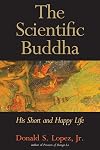
This book tells the story of the Scientific Buddha, "born" in Europe in the 1800s but commonly confused with the Buddha born in India 2,500 years ago. The Scientific Buddha was sent into battle against Christian missionaries, who were proclaiming across Asia that Buddhism was a form of superstition. He proved the missionaries wrong, teaching a dharma that was in harmony with modern science. And his influence continues. Today his teaching of "mindfulness" is heralded as the cure for all show more manner of maladies, from depression to high blood pressure.
In this potent critique, a well-known chronicler of the West's encounter with Buddhism demonstrates how the Scientific Buddha's teachings deviate in crucial ways from those of the far older Buddha of ancient India. Donald Lopez shows that the Western focus on the Scientific Buddha threatens to bleach Buddhism of its vibrancy, complexity, and power, even as the superficial focus on "mindfulness" turns Buddhism into merely the latest self-help movement. The Scientific Buddha has served his purpose, Lopez argues. It is now time for him to pass into nirvana. This is not to say, however, that the teachings of the ancient Buddha must be dismissed as mere cultural artifacts. They continue to present a potent challenge, even to our modern world. show less
In this potent critique, a well-known chronicler of the West's encounter with Buddhism demonstrates how the Scientific Buddha's teachings deviate in crucial ways from those of the far older Buddha of ancient India. Donald Lopez shows that the Western focus on the Scientific Buddha threatens to bleach Buddhism of its vibrancy, complexity, and power, even as the superficial focus on "mindfulness" turns Buddhism into merely the latest self-help movement. The Scientific Buddha has served his purpose, Lopez argues. It is now time for him to pass into nirvana. This is not to say, however, that the teachings of the ancient Buddha must be dismissed as mere cultural artifacts. They continue to present a potent challenge, even to our modern world. show less
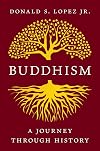
Early on in this masterful account of Buddhism’s emergence and spread throughout the world, Donald S. Lopez cautions his readers that the very existence of a historical Buddha remains subject to debate. The first references to him do not appear until the era of the Indian emperor Ashoka, in the mid-third century BC. This is two centuries after the period in which the Buddha is generally believed to have lived, around the fifth century BC, though there is wild variation in these estimates, show more with some Tibetan sources suggesting that the Buddha died in 2420 BC. Lopez tells us that, in deference to Buddhist belief, he will assume the existence of the Buddha. Readers should, however, ‘bear in mind what an ephemeral, even phantasmagoric, figure he sometimes seems to be’.
What follows in Buddhism: A Journey Through History bears this out. Readers hoping for a deeper and more scholarly telling of a story whose outlines they already know – an Indian prince embarks on a mission to understand suffering and discovers a practical path to enlightenment – will find themselves challenged to rethink. That story, we discover, is a blend of ancient events, legends, and teachings ascribed to the Buddha with newer elements designed to answer the spiritual needs of modern westerners. Most lay Buddhists, across most of history, would not have meditated. Nor would they have been aware of the Four Noble Truths, regarded in our own time as Buddhism’s philosophical core. It would have been news to them that Buddhism is atheistic. And their hope, in practising Buddhism, was not for a permanent end to death and rebirth but rather happiness in a heavenly hereafter.
Read the rest of the review at https://www.historytoday.com/archive/review/buddhism-donald-s-lopez-jr-review
Christopher Harding’s most recent book is The Light of Asia: A History of Western Fascination with the East (Allen Lane, 2024). show less
What follows in Buddhism: A Journey Through History bears this out. Readers hoping for a deeper and more scholarly telling of a story whose outlines they already know – an Indian prince embarks on a mission to understand suffering and discovers a practical path to enlightenment – will find themselves challenged to rethink. That story, we discover, is a blend of ancient events, legends, and teachings ascribed to the Buddha with newer elements designed to answer the spiritual needs of modern westerners. Most lay Buddhists, across most of history, would not have meditated. Nor would they have been aware of the Four Noble Truths, regarded in our own time as Buddhism’s philosophical core. It would have been news to them that Buddhism is atheistic. And their hope, in practising Buddhism, was not for a permanent end to death and rebirth but rather happiness in a heavenly hereafter.
Read the rest of the review at https://www.historytoday.com/archive/review/buddhism-donald-s-lopez-jr-review
Christopher Harding’s most recent book is The Light of Asia: A History of Western Fascination with the East (Allen Lane, 2024). show less
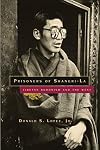
This is an excellent guide to fallacies regarding Tibet made by Western writers and travelers. Occasionally, Lopez lapses into the laxness of Foucaultian irony; however, these languors are made up for in bursts of startling original thinking. I relished his meditation on how authority to speak for foreign cultures is granted to some writers and not to others. This topic has been discussed elsewhere, but here Lopez provides a context in which an obviously fictional "true story," The Third Eye show more by Lobsang Rampa (actually Cyril Hoskin from Devon), became an inspiration for a generation of Tibetologists. In another interesting chapter, the author describes the distortions applied to Tibetan Buddhism as it became disseminated in the West, changing monastic practice to suit a laity of individual worshipers steeped in Christian tradition. He also shows how the political and social needs of the Tibetan diaspora have driven further misconceptions. show less
Awards


You May Also Like


Associated Authors
Statistics
- Works
- 50
- Also by
- 8
- Members
- 2,584
- Popularity
- #9,937
- Rating
- 3.8
- Reviews
- 27
- ISBNs
- 114
- Languages
- 6
- Favorited
- 1