
Jaclyn Friedman
Author of Yes Means Yes!: Visions of Female Sexual Power and A World Without Rape
About the Author
Image credit: Jaclyn Friedman
Works by Jaclyn Friedman
Yes Means Yes!: Visions of Female Sexual Power and A World Without Rape (2008) — Editor — 638 copies, 12 reviews
What You Really Really Want: The Smart Girl's Shame-Free Guide to Sex and Safety (2011) 109 copies, 1 review
Unscrewed: Women, Sex, Power, and How to Stop Letting the System Screw Us All (2017) 47 copies, 3 reviews
Associated Works
Bitch Magazine: Feminist Response to Pop Culture #39: The Wired Issue — Contributor — 6 copies
Tagged
Common Knowledge
- Canonical name
- Friedman, Jaclyn
- Legal name
- Friedman, Jaclyn
- Birthdate
- 1971
- Gender
- female
- Occupations
- writer
speaker
podcaster
sex educator - Short biography
- “JACLYN FRIEDMAN'S work has redefined the concept of “healthy sexuality” and popularized the “yes means yes” standard of sexual consent that is quickly becoming law on many US campuses. She is a popular speaker and opinion writer and the author of three books. Friedman hosts Unscrewed, a podcast exploring paths to sexual liberation, named a Best Sex Podcast by both Marie Claire and Esquire.”
Excerpt From: “Believe Me” - Nationality
- USA
- Associated Place (for map)
- USA
Members
Reviews
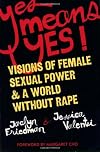
It’s not an easy thing to fit my thoughts and reactions to Yes Means Yes into a review. This is an incredibly provoking collection of essays that takes an honest look at views of sexuality in America and proposes ways to change those views for the better. My reactions to this book come from a few perspectives. That of a criminal justice major, a social scientist, but most importantly, a woman.
Several of the topics discussed throughout Yes Means Yes are topics that I am familiar with – show more sexual assault is a huge topic in my classes. The ability to see the issues surrounding sexuality and sexual assault through different viewpoints is something I consider to be a huge benefit of this book.
The idea behind this book was to confront the view of sexuality in America and how it feeds the rape culture that surrounds us, and further, how we can change the negative ideas surrounding sexuality, especially female sexuality, by promoting and valuing female sexual pleasure. Ideally, achieving that goal, whopper though it may be, will lead to a decrease in the occurence of rape and take away the power from the systems that give rape the influence it has over women’s sexual power.
These are essays based in personal and professional experience. The contributors are women who have felt that their bodies were not their own, who have seen firsthand the painful effects of sexual trauma on survivors, and even a few men who realized that their education, or lack thereof, in regards to respecting women, and how to treat them, was missing something essential.
There is a huge range of topics that are discussed here… the influence of media on beliefs regarding sexuality, the discussion of what consent is – saying yes! as opposed to not saying no, those first explorations into your sexuality, the part the male sexuality plays and the fact that it’s not just women who need to rethink the way they relate to their sexual power, that sexuality does not come in one form (male/female) and that we need to fight for those who identify as gay, lesbian, bisexual, transgender, or who are still trying to find their sexuality because their desires are not shameful – sexuality in general should never be shamed.
There are a few essays that really either hit home or made a deep impression on me while reading them. One of these essays is The Fantasy of Acceptable “Non-Consent”: Why the Female Sexual Submissive Scares Us (and Why She Shouldn’t) by Stacey May Fowles. Fowles touches on a very important point in her essay. Many people look at the BDSM culture as a taboo, as disgusting, or dirty, or whatever other label you want to put on it, but those who are a part of this culture have something that many other sexual partners don’t… A completely open and honest line of communication. Because BDSM encompasses such a wide range of activities the partners have to discuss what is and is not okay. There is a safe-word, so if one partners is taking things too far, the other can let them know. I know far too many people willing to talk to close friends about sex, about what they do or don’t like, but when you ask, “Did you tell him/her that?” they respond with, “Well, no. It’s too soon,” or, “No, I’m not comfortable discussing this with them.” A whole other conversation could be had about that (you know, if you can’t discuss your sexual likes/dislikes with someone you probably should not be having sex with them), but the important thing is that most of us could use a lesson from the BDSM community.
Another essay that hits home is Sex Worth Fighting For by Anastasia Higginbotham. Part of this essay is Higginbotham speaking of her training in a self-defense class and feeling physically empowered and going on to teach the class, but the part that got to me was the internal battle she waged with herself. Finding the ability to revel in her body, her wants and desires, and learning to fight the anger she felt in herself for wanting sex because she shouldn’t be angry about it. Higginbotham makes a statement in the essay that, “Until we demand this education for ourselves and for girls, we’re all still floating in the same boats together, up the same creeks, generation after generation. Our minds are not free and our bodies are not safe.” She has a point, how can we fight for ourselves and our desires when we are never taught how to defend ourselves physically, and when we live in a society where women who embrace their sexuality are stigmatized?
The last piece I’m going to speak specifically about is Hooking Up with Healthy Sexuality by Brad Perry. In one section he speaks about abstinence only until marriage education, something Perry refers to as a “goddamned travesty,” and I am entirely in agreement. Millions of dollars each year go to abstinence only education programs, programs that generally only cover your post-marriage, to make a baby only, woman only gets an orgasm by accident, vanilla sex. And really, what good is this education doing us, especially when somewhere in the neighborhood of 80-some-odd percent of high schoolers who make a vow of abstinence end up having premartial sex anyways. These programs shame those who decide to have sex before marriage and there’s no point in even discussing when happens when someone ignores a “no.”
As I read Yes Means Yes I found myself nodding in agreement, laughing, and getting teary-eyed because some internal string was plucked. I know what it is like to be stigmatized for my choices, and while I try to keep myself above that level of ignorance, it still hurts to be the recipient of that hatred and judgment. I’ve always been very open about my life and my choices. I don’t believe in hiding who I am as a person, even if I might not be so proud of some of those past choices. When discussions of sexuality arise I have no problems saying, “Heck yeah, I’ve done that!” or “No, that’s never really appealed to me.” I have no problems asking another person about their experiences, sexual or otherwise, but I always listen with an open-mind. I’m not looking to shame and blame, which are two things, of many, at the root of societies issues with women’s sexuality.
No one should have to live in a culture where you cannot be yourself, where you are shamed for embracing your body, for satiating sexual desires, for wanting to try new things. Sex should happen only with an enthusiastic ‘YES!’ from all parties. Sex should be about pleasure. Sex should be one of life’s feel goods, not just because its a physiological response, but because you want it and you’re enjoying it. Here’s to embracing sexuality and creating a sex-positive culture for the next generation, and on! show less
Several of the topics discussed throughout Yes Means Yes are topics that I am familiar with – show more sexual assault is a huge topic in my classes. The ability to see the issues surrounding sexuality and sexual assault through different viewpoints is something I consider to be a huge benefit of this book.
The idea behind this book was to confront the view of sexuality in America and how it feeds the rape culture that surrounds us, and further, how we can change the negative ideas surrounding sexuality, especially female sexuality, by promoting and valuing female sexual pleasure. Ideally, achieving that goal, whopper though it may be, will lead to a decrease in the occurence of rape and take away the power from the systems that give rape the influence it has over women’s sexual power.
These are essays based in personal and professional experience. The contributors are women who have felt that their bodies were not their own, who have seen firsthand the painful effects of sexual trauma on survivors, and even a few men who realized that their education, or lack thereof, in regards to respecting women, and how to treat them, was missing something essential.
There is a huge range of topics that are discussed here… the influence of media on beliefs regarding sexuality, the discussion of what consent is – saying yes! as opposed to not saying no, those first explorations into your sexuality, the part the male sexuality plays and the fact that it’s not just women who need to rethink the way they relate to their sexual power, that sexuality does not come in one form (male/female) and that we need to fight for those who identify as gay, lesbian, bisexual, transgender, or who are still trying to find their sexuality because their desires are not shameful – sexuality in general should never be shamed.
There are a few essays that really either hit home or made a deep impression on me while reading them. One of these essays is The Fantasy of Acceptable “Non-Consent”: Why the Female Sexual Submissive Scares Us (and Why She Shouldn’t) by Stacey May Fowles. Fowles touches on a very important point in her essay. Many people look at the BDSM culture as a taboo, as disgusting, or dirty, or whatever other label you want to put on it, but those who are a part of this culture have something that many other sexual partners don’t… A completely open and honest line of communication. Because BDSM encompasses such a wide range of activities the partners have to discuss what is and is not okay. There is a safe-word, so if one partners is taking things too far, the other can let them know. I know far too many people willing to talk to close friends about sex, about what they do or don’t like, but when you ask, “Did you tell him/her that?” they respond with, “Well, no. It’s too soon,” or, “No, I’m not comfortable discussing this with them.” A whole other conversation could be had about that (you know, if you can’t discuss your sexual likes/dislikes with someone you probably should not be having sex with them), but the important thing is that most of us could use a lesson from the BDSM community.
Another essay that hits home is Sex Worth Fighting For by Anastasia Higginbotham. Part of this essay is Higginbotham speaking of her training in a self-defense class and feeling physically empowered and going on to teach the class, but the part that got to me was the internal battle she waged with herself. Finding the ability to revel in her body, her wants and desires, and learning to fight the anger she felt in herself for wanting sex because she shouldn’t be angry about it. Higginbotham makes a statement in the essay that, “Until we demand this education for ourselves and for girls, we’re all still floating in the same boats together, up the same creeks, generation after generation. Our minds are not free and our bodies are not safe.” She has a point, how can we fight for ourselves and our desires when we are never taught how to defend ourselves physically, and when we live in a society where women who embrace their sexuality are stigmatized?
The last piece I’m going to speak specifically about is Hooking Up with Healthy Sexuality by Brad Perry. In one section he speaks about abstinence only until marriage education, something Perry refers to as a “goddamned travesty,” and I am entirely in agreement. Millions of dollars each year go to abstinence only education programs, programs that generally only cover your post-marriage, to make a baby only, woman only gets an orgasm by accident, vanilla sex. And really, what good is this education doing us, especially when somewhere in the neighborhood of 80-some-odd percent of high schoolers who make a vow of abstinence end up having premartial sex anyways. These programs shame those who decide to have sex before marriage and there’s no point in even discussing when happens when someone ignores a “no.”
As I read Yes Means Yes I found myself nodding in agreement, laughing, and getting teary-eyed because some internal string was plucked. I know what it is like to be stigmatized for my choices, and while I try to keep myself above that level of ignorance, it still hurts to be the recipient of that hatred and judgment. I’ve always been very open about my life and my choices. I don’t believe in hiding who I am as a person, even if I might not be so proud of some of those past choices. When discussions of sexuality arise I have no problems saying, “Heck yeah, I’ve done that!” or “No, that’s never really appealed to me.” I have no problems asking another person about their experiences, sexual or otherwise, but I always listen with an open-mind. I’m not looking to shame and blame, which are two things, of many, at the root of societies issues with women’s sexuality.
No one should have to live in a culture where you cannot be yourself, where you are shamed for embracing your body, for satiating sexual desires, for wanting to try new things. Sex should happen only with an enthusiastic ‘YES!’ from all parties. Sex should be about pleasure. Sex should be one of life’s feel goods, not just because its a physiological response, but because you want it and you’re enjoying it. Here’s to embracing sexuality and creating a sex-positive culture for the next generation, and on! show less
as is true with most collections, there is a range of quality here. i wanted to like all these essays, but some of them just didn't work for me. a few really stood out but so many of them were either preaching to the choir (there is value in this because it can be affirming) without providing a new perspective or new information, or making incredible leaps of logic without connecting the dots for the reader, alienating (i can only assume) anyone not in the aforementioned choir.
the book show more unfortunately starts out with a number of the essays on this end of the spectrum, and i doubt if anyone who isn't already convinced of what this book is proposing (basically that healthy sex education should consist not just of what it looks like when someone says 'no,' but also what enthusiastic consent looks like, and how to promote a positive view of healthy sex, especially for girls, whose sexuality in particular has been demonized) could get past these essays to the much better ones further along in the book.
i consider myself a radical feminist but still had trouble with many of these essays. when someone (tiloma jayasinghe) writes, "Legislation proposed in several states would make pregnancy a crime," i really need there to be some citation. someone who is not already on board with feminism or understanding rape culture or who you should be focusing your energy on explaining/convincing is just going to walk away when they read something like that. and personally, that makes me kind of angry, because if you drive away the very people you need on your side, then how do things change?
if someone read that and put the book down, they would never have gotten to jaclyn friedman's great piece, or the really interesting ideas presented by hanne blank and cara kulwicki.
so that bothered me quite a bit.
that said, there were a few essays that spoke to the choir (and probably everyone) with a number of 'yes, of course!' moments. essays that didn't take for granted that the reader was already convinced, and so made some fantastic arguments for their feminist positions, often in ways that were new to me or that added something different to the conversation. i especially appreciated essays by brad perry and julia serano for this, and stacey may fowles for making me test (but ultimately mostly uphold) a long-held belief that i hadn't revisited in a while. show less
the book show more unfortunately starts out with a number of the essays on this end of the spectrum, and i doubt if anyone who isn't already convinced of what this book is proposing (basically that healthy sex education should consist not just of what it looks like when someone says 'no,' but also what enthusiastic consent looks like, and how to promote a positive view of healthy sex, especially for girls, whose sexuality in particular has been demonized) could get past these essays to the much better ones further along in the book.
i consider myself a radical feminist but still had trouble with many of these essays. when someone (tiloma jayasinghe) writes, "Legislation proposed in several states would make pregnancy a crime," i really need there to be some citation. someone who is not already on board with feminism or understanding rape culture or who you should be focusing your energy on explaining/convincing is just going to walk away when they read something like that. and personally, that makes me kind of angry, because if you drive away the very people you need on your side, then how do things change?
if someone read that and put the book down, they would never have gotten to jaclyn friedman's great piece, or the really interesting ideas presented by hanne blank and cara kulwicki.
so that bothered me quite a bit.
that said, there were a few essays that spoke to the choir (and probably everyone) with a number of 'yes, of course!' moments. essays that didn't take for granted that the reader was already convinced, and so made some fantastic arguments for their feminist positions, often in ways that were new to me or that added something different to the conversation. i especially appreciated essays by brad perry and julia serano for this, and stacey may fowles for making me test (but ultimately mostly uphold) a long-held belief that i hadn't revisited in a while. show less
It's rare that a feminist book not only confirms what I believe, not only gives me new insight into what I do believe, but gives me entirely new ideas to think about. For me the essay on body sovereignty in particular was very profound, and it'll have implications not only in my feminist thought but in the way I act.
My biggest problem with this book is that a lot of the essays don't really push into the visions promised by the title - they're to a large extent descriptions of what the authors have experienced. This is obviously valuable, but I guess I expected a bit more given the title and the wide availability of many different people's experiences on the internet that this to a certain extent replicates. Also, only a few essays linked the problems described to causes past a nebulous "culture" and to show more things like capitalism. This isn't to say the book is bad. The vast majority of essays are good and a couple are great. I think this would be an excellent introduction to the topic and I do think it's worth a read - some of the stuff here made me think more even though I've been engaging with these ideas for a while.
I'll mention one of the early essays though that stood out as particularly bad. It talks about women in jobs where they're treated pretty much as sexual objects. Yet it didn't mention the economic conditions that force them there and even though it quoted a model who talked about the ways in which her job was "empowering" - or at least less degrading than assumed - it didn't engage at all. Her final conclusion, as a self described "young professional in New York", was that all these people should quit their jobs. Incredible.
The stand out essay of the collection is "The Not Rape Epidemic" by Latoya Peterson. I read it on the internet before I found the book and it's an absolutely harrowing, deeply affecting essay that actually made me sit up and take note of how incredibly fucked up our rape culture is. I was numb for several hours. I recommend reading it if you can deal with it. It's incredible.
http://www.racialicious.com/2008/12/21/original-essay-the-not-rape-epidemic/ show less
I'll mention one of the early essays though that stood out as particularly bad. It talks about women in jobs where they're treated pretty much as sexual objects. Yet it didn't mention the economic conditions that force them there and even though it quoted a model who talked about the ways in which her job was "empowering" - or at least less degrading than assumed - it didn't engage at all. Her final conclusion, as a self described "young professional in New York", was that all these people should quit their jobs. Incredible.
The stand out essay of the collection is "The Not Rape Epidemic" by Latoya Peterson. I read it on the internet before I found the book and it's an absolutely harrowing, deeply affecting essay that actually made me sit up and take note of how incredibly fucked up our rape culture is. I was numb for several hours. I recommend reading it if you can deal with it. It's incredible.
http://www.racialicious.com/2008/12/21/original-essay-the-not-rape-epidemic/ show less
Lists
Seal Press (1)
Awards


You May Also Like


Associated Authors
Statistics
- Works
- 4
- Also by
- 2
- Members
- 851
- Popularity
- #30,066
- Rating
- 4.0
- Reviews
- 18
- ISBNs
- 20