
Kate Harding
Author of Asking for It: The Alarming Rise of Rape Culture and What We Can Do About It
About the Author
Kate Harding is the coauthor of Lessons from the Fat-o-Sphere and a contributor to The Book of Jezebel. A columnist for DAME Magazine, she lives in Minnesota.
Image credit: Kate Harding
Works by Kate Harding
Asking for It: The Alarming Rise of Rape Culture and What We Can Do About It (2015) 327 copies, 14 reviews
Nasty Women: Feminism, Resistance, and Revolution in Trump's America (2017) — Editor — 250 copies, 10 reviews
Lessons from the Fat-o-sphere: Quit Dieting and Declare a Truce with Your Body (2009) 217 copies, 9 reviews
The Book of Jezebel: An Illustrated Encyclopedia of Lady Things (2013) — Author — 84 copies, 2 reviews
Associated Works
Yes Means Yes!: Visions of Female Sexual Power and A World Without Rape (2008) — Contributor — 636 copies, 12 reviews
Pretty Bitches: On Being Called Crazy, Angry, Bossy, Frumpy, Feisty, and All the Other Words That Are Used to Undermine Women (2020) — Contributor — 82 copies, 2 reviews
Tagged
Common Knowledge
Members
Reviews
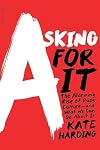
So this is a book about rape. I just want to make that clear as a trigger warning and if people are not interested in reading a book about rape or a review of a book about rape they know right away.
Anyway, this is a very good book about rape and consent. I tend to follow this kind of stuff pretty closely so there wasn’t anything too new or mindblowing to me, but it was still a joy to read (kind of a weird thing to say about a book about rape,I know). I am excited about people compiling all show more this information and talking about it, as I have never seen this info all together like this. I am especially excited about it being written by Kate Harding because she is a great writer who has a clear, easy to understand style that is also funny. I think this is a good book for anyone who wouldn’t be traumatized by reading it and it is quite up to date for a book (it was published earlier this year - Harding acknowledges that that has been an issue while writing this book).
Basically the book is non-fiction somewhat journalistic activist account of where rape and consent stand at this moment in time. It covers things like toxic masculinity, and the extreme rarity of false rape allegations. Highly recommended for people new to this topic or old hats. It’s extremely readable which is a great compliment to a non-fiction book about rape! I hope Harding writes a million more books and I still miss her old blog every day! show less
Anyway, this is a very good book about rape and consent. I tend to follow this kind of stuff pretty closely so there wasn’t anything too new or mindblowing to me, but it was still a joy to read (kind of a weird thing to say about a book about rape,I know). I am excited about people compiling all show more this information and talking about it, as I have never seen this info all together like this. I am especially excited about it being written by Kate Harding because she is a great writer who has a clear, easy to understand style that is also funny. I think this is a good book for anyone who wouldn’t be traumatized by reading it and it is quite up to date for a book (it was published earlier this year - Harding acknowledges that that has been an issue while writing this book).
Basically the book is non-fiction somewhat journalistic activist account of where rape and consent stand at this moment in time. It covers things like toxic masculinity, and the extreme rarity of false rape allegations. Highly recommended for people new to this topic or old hats. It’s extremely readable which is a great compliment to a non-fiction book about rape! I hope Harding writes a million more books and I still miss her old blog every day! show less
Asking For It from Kate Harding is, for rational people, a disturbing book. There is not a lot of new information here but the stories we have all heard are here brought together and the common threads that contribute to a rape culture become much more evident.
Rape culture is not just about the numbers, though they are staggering. It isn't just about repeat rapists, though there are more of them than we will likely ever know. Rape culture includes the acceptance of ideas like "I was just a show more little assertive, I didn't rape her" when in fact she never said yes and never stopped trying to stop him. It is the unwillingness, displayed repeatedly and all across the United States (the country I am most familiar with), on the part of law enforcement and the judicial system to treat rapists as "real criminals." This is done often by claiming a lenient sentence is only fair because the rapist has a potentially bright future, even though he raped a fellow human being and that human being will serve a life sentence as a result. It is evident in the kinds of jokes that will be accepted and the fact that an admitted sexual predator can be elected President. This is now a rape culture from the top down.
I would recommend this book to everyone. Even those who disagree with the idea. If you disagree then read this and refute in your mind every bit of evidence that is presented. I know you won't be able to do so honestly and hopefully at some point the information you learned here will resurface in your life and you will see that there is a lot we all need to do so that every person can feel safe in their own society.
Reviewed from a copy made available by the publisher via Edelweiss. show less
Rape culture is not just about the numbers, though they are staggering. It isn't just about repeat rapists, though there are more of them than we will likely ever know. Rape culture includes the acceptance of ideas like "I was just a show more little assertive, I didn't rape her" when in fact she never said yes and never stopped trying to stop him. It is the unwillingness, displayed repeatedly and all across the United States (the country I am most familiar with), on the part of law enforcement and the judicial system to treat rapists as "real criminals." This is done often by claiming a lenient sentence is only fair because the rapist has a potentially bright future, even though he raped a fellow human being and that human being will serve a life sentence as a result. It is evident in the kinds of jokes that will be accepted and the fact that an admitted sexual predator can be elected President. This is now a rape culture from the top down.
I would recommend this book to everyone. Even those who disagree with the idea. If you disagree then read this and refute in your mind every bit of evidence that is presented. I know you won't be able to do so honestly and hopefully at some point the information you learned here will resurface in your life and you will see that there is a lot we all need to do so that every person can feel safe in their own society.
Reviewed from a copy made available by the publisher via Edelweiss. show less
An Insightful, Sometimes-Snarky, Surprisingly Readable Interrogation of Rape Culture
(Full disclosure: I received a free electronic ARC for review through Edelweiss. Obvious trigger warning for rape.)
I've been a fan of Kate Harding's ever since her days blogging at Shakespeare's Sister (now Shakesville). I think I first caught wind of her latest project, Asking for It: The Alarming Rise of Rape Culture--and What We Can Do about It, more than a year ago, and have spent the interim occasionally show more checking the book's Amazon listing, where the publication date seemed to creep further and further away. And it's no wonder: every month brings with it a new development in the national conversation about rape and rape culture.
As Harding explains in the Author's Note:
"When I sold the proposal for this book in 2012, I foolishly agreed to finish the manuscript in six months, because my agent, editor, and I agreed that rape culture was having a moment, as it were. News of the Steubenville, Ohio, gang rape case was picking up steam, and the memory of Missouri Representative Todd Akin's "legitimate rape" gaffe was fresh in all our minds. Sexual violence was suddenly a popular topic, but - based on national conversations about rape in the 1970s and 1990s that started strong and dissipated quickly - we feared that if we waited too long, this book might be released to a public that was already over it.
"The bad news is that it took me way longer than six months to finish the manuscript. The good news - amazingly, wonderful, really sort of mind-blowing news actually - is that years later, Americans are still walking seriously about rape and rape culture."
Asking for It is a welcome addition to the conversation: smart, witty, and surprisingly enjoyable. Well, not enjoyable, exactly - that's not quite right - but Harding's sometimes-snarky tone and penchant for calling bullshit as needed make for a slightly less depressing read.
And there's so much to feel disheartened about. Normally this is where, in a nonfiction book review, I might insert choice excerpts to represent the overall content and tone of the book. In this case: statistics concerning the prevalence of rape (at some point in their lives 1 in 5 women and 1 in 71 men will be raped; 98% of offenders are men; 64% of rapes are never reported, while only 12% lead to arrest); an especially egregious case of victim-blaming (the eleven-year-old Jane Doe from Cleveland, Texas, who was gang-raped and then likened by a defense attorney to a spider, luring his client the fly to certain doom); anti-rape campaigns gone horribly wrong (a 2006 ditty from the British Home Office features a prison rape "joke"!); or scientific studies of law enforcement officers' acceptance of rape culture myths (in one study, 28.8% of participants estimated that 50% or more of rape allegations were false - with some respondents putting the figure at 100%).
But I don't really want to do that here. Even choosing the examples cited above proved an exercise in indecision.
My reluctance isn't just because the book's filled to bursting with surprising (or not, unless you're an off-the-grid hermit) facts and eminently-quotable passages. Rather, the whole is so much greater than the sum of its parts, and I'd be doing it - and you - a disservice by pretending otherwise. In Asking for It, Harding masterfully dissects and interrogates rape culture, critiquing its various components and manifestations, sometimes even identifying unexpected connections. For example, abortion, online trolling, Gamergate, and revenge porn might not seem (at least to the casual observer) to have much - if anything - to do with sexual assault. Yet Harding shows how anti-abortion activists and politicians - and rapists themselves - use reproductive rights as a cudgel to control women and their bodies. Likewise, those who harass women from the comfort and anonymity of the internet often invoke the threat of rape to silence women, removing them - and their voices - from the public sphere.
Though I no longer read feminist blogs with the same religious fervor as my early days on the 'net (I slowly cycled from anger to depression to burnout), I still keep up with the news on social media, and I like to think I'm fairly well-informed with it comes to "women's issues" like rape. (Scare quotes because labeling rape a women's problem a) places the onus on women to stop it and b) helps to remove men from the conversation, when they should be at the epicenter, as Harding astutely notes. The way rape is reported, you'd think it's a perpetratorless crime!) And while I did indeed recognize a number of cases cited by Harding - Steubenville, Bill Cosby, Emma Sulkowicz, Roman Polanski, Julian Assange*, the Central Park Five - a rather surprising minority proved news to me. (How did I manage to miss the whole Ben Roethlisberger catastrofuck?) Likewise, while we've all heard the statistics about rape, the psychological/sociological research presented here is as informative as it is chilling.
I also appreciate the light Harding shines on potential solutions, as promised in the second half of the book's subtitle: "What We Can Do about It". Among these are successful education campaigns, undertaken by organizations, yet Harding also emphasizes the many ways that individuals can have an impact in their own lives, from taking to social media to shame companies, institutions, and artists into doing better, to challenging rape culture within your own social circles. (Dudes, we're looking at you.)
For younger readers, or those new to the topic, Asking for It is an accessible introduction to rape culture. In particular, I think it could be an excellent resource for parents who'd like to broach the subject with their teens, or for intro-level college courses (women's studies, psychology, criminology). Academics and journalists may also find something new and stimulating here; like I said, Harding makes some exciting connections and observations. If nothing else, it may challenge you to see one or more aspects of rape culture from a different angle.
Naturally, there are a few areas I wish Harding has spent more (or some) time on. While Harding approaches the topic with an intersectional focus - teasing out the ways that race, class, sexual orientation, sexual identity, and disability interact with misogyny vis-à-vis rape culture (for the accused as well as victims) - a discussion of the unique challenges faced by, say, trans women would have been welcome. Likewise, a dedicated section on campus rape by college athletes could have helped tease out the many threads that make up the vom-worthy tapestry that is rape culture, sitting as it does on the nexus of campus rape and celebrity. (It's worth noting that journalist Andrea Grimes announced a book deal to address this very topic last August.) And while revenge porn and upskirt photos are mentioned in passing, both are forms of sexual assault that are slowly being recognized as the serious violations that they are (18 states now have laws on the books re: revenge porn) - making them ripe for discussion.
* I cannot thank Harding enough for the (relatively) lengthy look at the Assange case. Liberal dudebros, c'mon! If the CIA really wanted to lock him up, why fabricate charges for the most under-reported, under-prosecuted, under-punished crime of, like, ever? Better to frame him for embezzling donations or a killing a pedestrian in a hit-and-run. Refusing to stop once a consensual sexual encounter became non-consensual? Yeesh. Most people don't even consider that rape. Sad but true.
http://www.easyvegan.info/2015/08/28/asking-for-it-by-kate-harding/ show less
(Full disclosure: I received a free electronic ARC for review through Edelweiss. Obvious trigger warning for rape.)
I've been a fan of Kate Harding's ever since her days blogging at Shakespeare's Sister (now Shakesville). I think I first caught wind of her latest project, Asking for It: The Alarming Rise of Rape Culture--and What We Can Do about It, more than a year ago, and have spent the interim occasionally show more checking the book's Amazon listing, where the publication date seemed to creep further and further away. And it's no wonder: every month brings with it a new development in the national conversation about rape and rape culture.
As Harding explains in the Author's Note:
"When I sold the proposal for this book in 2012, I foolishly agreed to finish the manuscript in six months, because my agent, editor, and I agreed that rape culture was having a moment, as it were. News of the Steubenville, Ohio, gang rape case was picking up steam, and the memory of Missouri Representative Todd Akin's "legitimate rape" gaffe was fresh in all our minds. Sexual violence was suddenly a popular topic, but - based on national conversations about rape in the 1970s and 1990s that started strong and dissipated quickly - we feared that if we waited too long, this book might be released to a public that was already over it.
"The bad news is that it took me way longer than six months to finish the manuscript. The good news - amazingly, wonderful, really sort of mind-blowing news actually - is that years later, Americans are still walking seriously about rape and rape culture."
Asking for It is a welcome addition to the conversation: smart, witty, and surprisingly enjoyable. Well, not enjoyable, exactly - that's not quite right - but Harding's sometimes-snarky tone and penchant for calling bullshit as needed make for a slightly less depressing read.
And there's so much to feel disheartened about. Normally this is where, in a nonfiction book review, I might insert choice excerpts to represent the overall content and tone of the book. In this case: statistics concerning the prevalence of rape (at some point in their lives 1 in 5 women and 1 in 71 men will be raped; 98% of offenders are men; 64% of rapes are never reported, while only 12% lead to arrest); an especially egregious case of victim-blaming (the eleven-year-old Jane Doe from Cleveland, Texas, who was gang-raped and then likened by a defense attorney to a spider, luring his client the fly to certain doom); anti-rape campaigns gone horribly wrong (a 2006 ditty from the British Home Office features a prison rape "joke"!); or scientific studies of law enforcement officers' acceptance of rape culture myths (in one study, 28.8% of participants estimated that 50% or more of rape allegations were false - with some respondents putting the figure at 100%).
But I don't really want to do that here. Even choosing the examples cited above proved an exercise in indecision.
My reluctance isn't just because the book's filled to bursting with surprising (or not, unless you're an off-the-grid hermit) facts and eminently-quotable passages. Rather, the whole is so much greater than the sum of its parts, and I'd be doing it - and you - a disservice by pretending otherwise. In Asking for It, Harding masterfully dissects and interrogates rape culture, critiquing its various components and manifestations, sometimes even identifying unexpected connections. For example, abortion, online trolling, Gamergate, and revenge porn might not seem (at least to the casual observer) to have much - if anything - to do with sexual assault. Yet Harding shows how anti-abortion activists and politicians - and rapists themselves - use reproductive rights as a cudgel to control women and their bodies. Likewise, those who harass women from the comfort and anonymity of the internet often invoke the threat of rape to silence women, removing them - and their voices - from the public sphere.
Though I no longer read feminist blogs with the same religious fervor as my early days on the 'net (I slowly cycled from anger to depression to burnout), I still keep up with the news on social media, and I like to think I'm fairly well-informed with it comes to "women's issues" like rape. (Scare quotes because labeling rape a women's problem a) places the onus on women to stop it and b) helps to remove men from the conversation, when they should be at the epicenter, as Harding astutely notes. The way rape is reported, you'd think it's a perpetratorless crime!) And while I did indeed recognize a number of cases cited by Harding - Steubenville, Bill Cosby, Emma Sulkowicz, Roman Polanski, Julian Assange*, the Central Park Five - a rather surprising minority proved news to me. (How did I manage to miss the whole Ben Roethlisberger catastrofuck?) Likewise, while we've all heard the statistics about rape, the psychological/sociological research presented here is as informative as it is chilling.
I also appreciate the light Harding shines on potential solutions, as promised in the second half of the book's subtitle: "What We Can Do about It". Among these are successful education campaigns, undertaken by organizations, yet Harding also emphasizes the many ways that individuals can have an impact in their own lives, from taking to social media to shame companies, institutions, and artists into doing better, to challenging rape culture within your own social circles. (Dudes, we're looking at you.)
For younger readers, or those new to the topic, Asking for It is an accessible introduction to rape culture. In particular, I think it could be an excellent resource for parents who'd like to broach the subject with their teens, or for intro-level college courses (women's studies, psychology, criminology). Academics and journalists may also find something new and stimulating here; like I said, Harding makes some exciting connections and observations. If nothing else, it may challenge you to see one or more aspects of rape culture from a different angle.
Naturally, there are a few areas I wish Harding has spent more (or some) time on. While Harding approaches the topic with an intersectional focus - teasing out the ways that race, class, sexual orientation, sexual identity, and disability interact with misogyny vis-à-vis rape culture (for the accused as well as victims) - a discussion of the unique challenges faced by, say, trans women would have been welcome. Likewise, a dedicated section on campus rape by college athletes could have helped tease out the many threads that make up the vom-worthy tapestry that is rape culture, sitting as it does on the nexus of campus rape and celebrity. (It's worth noting that journalist Andrea Grimes announced a book deal to address this very topic last August.) And while revenge porn and upskirt photos are mentioned in passing, both are forms of sexual assault that are slowly being recognized as the serious violations that they are (18 states now have laws on the books re: revenge porn) - making them ripe for discussion.
* I cannot thank Harding enough for the (relatively) lengthy look at the Assange case. Liberal dudebros, c'mon! If the CIA really wanted to lock him up, why fabricate charges for the most under-reported, under-prosecuted, under-punished crime of, like, ever? Better to frame him for embezzling donations or a killing a pedestrian in a hit-and-run. Refusing to stop once a consensual sexual encounter became non-consensual? Yeesh. Most people don't even consider that rape. Sad but true.
http://www.easyvegan.info/2015/08/28/asking-for-it-by-kate-harding/ show less
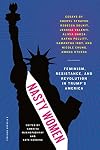
Nasty Women is a collection of 23 essays responding to the Great Betrayal that was the 2016 election. Edited by Samhita Mukhopadhyay and Kate Harding, this collection unites the voices of women with all kinds of identities in contemplation of the world we woke up to on November 9th.
For some reason, the media is far more interested in the belligerent whining of white men and white women whose feelings were hurt by black hands on the steering wheel of state and who were damn sure they didn’t show more want no woman’s hands driving next. We are supposed to have compassion for all the suffering they endure in their victory.
Meanwhile, the media has no interest in what it feels like to work for and support the candidate who won the most votes, who was the most qualified, only to see a constitutional defect to protect slavery hand the country over to an ignorant, unqualified, thuggish grifter. I don’t know about you, but I think that’s a more interesting story. After all, we won the most votes and they got the White House anyway – in large part due to structural failings that should disturb us. After all, two of the last three guys handed the keys to the national car lost the popular vote. That’s no democracy. Why isn’t the media interested in what it feels like to be robbed of America’s promise again?
Thankfully, the editors of Nasty Women are interested. With essays by women who are White, Black, Asian, Latino, Native American, straight, lesbian, transgender, citizens, immigrants, urban, rural, blue state and red state, this is a cross-section of Hillary voting women who have every right to be angry and who have something to say about it. These are voices we are not hearing from enough. These are the real stories of this election.
Nasty Women is as good as anthology like this can be. Not every essay spoke to me and a few of them made me roll my eyes when they fell into the familiar “flawed candidate” rut that prefaced every statement of support for Hillary before the election. She’s not running for anything now, so must we still follow that script? The majority of essays though were affirming, empowering, and challenging pieces that dissected the misogyny than demands we enumerate her flaws before saying anything positive. Sarah Jaffe’s essay was particularly discordant, echoing many of the familiar denunciations of Clinton, even bringing up her very short service on the Wal-Mart board and repeating Sanders’ smears on her character. But that is just one of twenty-three and many are excellent.
I was particularly moved by editor Samhita Mukhopadhyay’s defense of identity politics. It’s appalling that post-election analysis is so shoddy as to suggest abandoning the voters we have in pursuit of voters presumed more worthy because they are white and male. This is not giving up a bird in hand for two in the bush. It’s giving up a bird in hand for a myth in the bush. Rebecca Solnit’s essay was perhaps my favorite. She called out the “flawed candidate” trope in particular and took on the pathology of “progressive” men who hated Clinton. How many of us were floored during the primary by the atavistic hatred of her voiced by men we had always thought of us a liberal, smart, and feminist? Sady Doyle’s essay is important, too, in pointing out how calling Trump crazy is excusing his evil and the evil of those who voted to give him power. Carino Chocano’s essay was another that spoke to me because, to be honest, I am far more angry with those on the left who helped elect Trump by hating Clinton than with those on the right from whom I did not expect better.
Rebecca Solnit’s essay was perhaps my favorite. She called out the “flawed candidate” trope in particular and took on the pathology of “progressive” men who hated Clinton. How many of us were floored during the primary by the atavistic hatred of her voiced by men we had always thought of us a liberal, smart, and feminist? Sady Doyle’s essay is important, too, in pointing out how calling Trump crazy is excusing his evil and the evil of those who voted to give him power. Carino Chocano’s essay was another that spoke to me because, to be honest, I am far more angry with those on the left who helped elect Trump by hating Clinton than with those on the right from whom I did not expect better. Though, on the other hand, Nicole Chung’s essay makes me ask if I should have challenged the Trump voters in my family more. They voted for Trump in spite of Black and Native American family members who will be hurt by Trump’s bigotry. They voted for Trump despite gay, lesbian, and trans children and siblings. What can someone say in the face of that indifference to the human cost of their votes? Their identity as white and rural was more powerful than their identity as sister or brother, mother or father. What can anyone say in the face of that and still be family?
Nasty Women is not comforting unless the notion that other people are just as mad as you are is comforting. What it does is challenge us to not give in, not give up and to pick up the struggle and persist. If you were broken-hearted on November 9th, this won’t mend your heart, but it will pick up and set you in the direction of fixing what breaks us.
I received an e-galley of Nasty Women from Picador through NetGalley.
Nasty Women at Macmillan / Picador
Samhita Mukhopadhyay author site
Kate Harding author site
https://tonstantweaderreviews.wordpress.com/2017/10/04/9781250155504/ show less
For some reason, the media is far more interested in the belligerent whining of white men and white women whose feelings were hurt by black hands on the steering wheel of state and who were damn sure they didn’t show more want no woman’s hands driving next. We are supposed to have compassion for all the suffering they endure in their victory.
Meanwhile, the media has no interest in what it feels like to work for and support the candidate who won the most votes, who was the most qualified, only to see a constitutional defect to protect slavery hand the country over to an ignorant, unqualified, thuggish grifter. I don’t know about you, but I think that’s a more interesting story. After all, we won the most votes and they got the White House anyway – in large part due to structural failings that should disturb us. After all, two of the last three guys handed the keys to the national car lost the popular vote. That’s no democracy. Why isn’t the media interested in what it feels like to be robbed of America’s promise again?
Thankfully, the editors of Nasty Women are interested. With essays by women who are White, Black, Asian, Latino, Native American, straight, lesbian, transgender, citizens, immigrants, urban, rural, blue state and red state, this is a cross-section of Hillary voting women who have every right to be angry and who have something to say about it. These are voices we are not hearing from enough. These are the real stories of this election.
Nasty Women is as good as anthology like this can be. Not every essay spoke to me and a few of them made me roll my eyes when they fell into the familiar “flawed candidate” rut that prefaced every statement of support for Hillary before the election. She’s not running for anything now, so must we still follow that script? The majority of essays though were affirming, empowering, and challenging pieces that dissected the misogyny than demands we enumerate her flaws before saying anything positive. Sarah Jaffe’s essay was particularly discordant, echoing many of the familiar denunciations of Clinton, even bringing up her very short service on the Wal-Mart board and repeating Sanders’ smears on her character. But that is just one of twenty-three and many are excellent.
I was particularly moved by editor Samhita Mukhopadhyay’s defense of identity politics. It’s appalling that post-election analysis is so shoddy as to suggest abandoning the voters we have in pursuit of voters presumed more worthy because they are white and male. This is not giving up a bird in hand for two in the bush. It’s giving up a bird in hand for a myth in the bush. Rebecca Solnit’s essay was perhaps my favorite. She called out the “flawed candidate” trope in particular and took on the pathology of “progressive” men who hated Clinton. How many of us were floored during the primary by the atavistic hatred of her voiced by men we had always thought of us a liberal, smart, and feminist? Sady Doyle’s essay is important, too, in pointing out how calling Trump crazy is excusing his evil and the evil of those who voted to give him power. Carino Chocano’s essay was another that spoke to me because, to be honest, I am far more angry with those on the left who helped elect Trump by hating Clinton than with those on the right from whom I did not expect better.
Rebecca Solnit’s essay was perhaps my favorite. She called out the “flawed candidate” trope in particular and took on the pathology of “progressive” men who hated Clinton. How many of us were floored during the primary by the atavistic hatred of her voiced by men we had always thought of us a liberal, smart, and feminist? Sady Doyle’s essay is important, too, in pointing out how calling Trump crazy is excusing his evil and the evil of those who voted to give him power. Carino Chocano’s essay was another that spoke to me because, to be honest, I am far more angry with those on the left who helped elect Trump by hating Clinton than with those on the right from whom I did not expect better. Though, on the other hand, Nicole Chung’s essay makes me ask if I should have challenged the Trump voters in my family more. They voted for Trump in spite of Black and Native American family members who will be hurt by Trump’s bigotry. They voted for Trump despite gay, lesbian, and trans children and siblings. What can someone say in the face of that indifference to the human cost of their votes? Their identity as white and rural was more powerful than their identity as sister or brother, mother or father. What can anyone say in the face of that and still be family?
Nasty Women is not comforting unless the notion that other people are just as mad as you are is comforting. What it does is challenge us to not give in, not give up and to pick up the struggle and persist. If you were broken-hearted on November 9th, this won’t mend your heart, but it will pick up and set you in the direction of fixing what breaks us.
I received an e-galley of Nasty Women from Picador through NetGalley.
Nasty Women at Macmillan / Picador
Samhita Mukhopadhyay author site
Kate Harding author site
https://tonstantweaderreviews.wordpress.com/2017/10/04/9781250155504/ show less
Lists
Awards


You May Also Like


Associated Authors
Statistics
- Works
- 7
- Also by
- 2
- Members
- 886
- Popularity
- #28,919
- Rating
- 4.1
- Reviews
- 35
- ISBNs
- 27
- Languages
- 1
- Favorited
- 2