

Susie Orbach
Author of Fat Is a Feminist Issue
About the Author
Susie Orbach is a cofounder of the Women's Therapy Centre in London and a visiting professor at the London School of Economics. She is also a cofounder of the Women's Therapy Centre Institute in New York. Orbach lives in London with her partner and two children
Image credit: Photo by walnut whippet
Series
Works by Susie Orbach
In Therapy: How conversations with psychotherapists really work (Wellcome Collection) (2016) 30 copies, 1 review
Associated Works
Foods That Harm, Foods That Heal: An A - Z Guide to Safe and Healthy Eating (1996) — Writer, some editions — 768 copies, 3 reviews
Tagged
Common Knowledge
Members
Reviews

In this short book, renowned psychologist Susie Orbach discusses how our bodies have become a commodity, something to be altered by surgery, weight loss, make up, etc. Social media has reinforced ideas of the perfect body, and anyone who doesn’t have one (i.e., most of us) is made to feel that it is our fault and that we need to change it to be accepted. Our body is no longer somewhere to live from, but a commodity to prove our worth in the world. In Scandinavia, women who think they are show more too tall are having their femur broken and reset to make them shorter; in China, people who think they are too short can have a metal rod inserted to make them taller; women are having plastic surgery to shrink their waist and enlarge their breasts, while men are having surgery to increase the length and girth of their penis. Something has gone very askew in the way we view our own bodies.
Orbach also examines extreme cases such as Andrew, a physically healthy man who felt that he could only be happy if he had his legs amputated, and she looks at the psychology behind such stories.
It’s a short book at 145 pages and is something of an introduction to the ideas contained within, rather than a full scale investigation, but it makes for fascinating reading, talking about how the dieting industry is based on failure and plays on people’s insecurities. This is a book to make you think, it’s a book to make you angry, and it’s a book that everyone should read. Fascinating and highly recommended. show less
Orbach also examines extreme cases such as Andrew, a physically healthy man who felt that he could only be happy if he had his legs amputated, and she looks at the psychology behind such stories.
It’s a short book at 145 pages and is something of an introduction to the ideas contained within, rather than a full scale investigation, but it makes for fascinating reading, talking about how the dieting industry is based on failure and plays on people’s insecurities. This is a book to make you think, it’s a book to make you angry, and it’s a book that everyone should read. Fascinating and highly recommended. show less
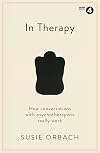
[b:In Therapy: How Conversations With Psychotherapists Really Work|32813183|In Therapy How Conversations With Psychotherapists Really Work|Susie Orbach|https://i.gr-assets.com/images/S/compressed.photo.goodreads.com/books/1477864791l/32813183._SY75_.jpg|53413605] is brief enough to read on a workday lunchbreak, as I did. It's basically a radio play script with commentary, based on a rather ingenious radio programme about psychotherapy. As it would break confidentiality to broadcast actual show more therapy sessions and sound unnatural to fully script fake ones, Orbach gave short therapy sessions to actors who improvised a patient based on a brief outline. Thus the sessions in this book are artificial, but have a naturalistic tone. Orbach interjects her thoughts and discusses her overall conclusions at the end. As a result, the book gives more of a therapist's experience of therapy than a patient's. There are five sessions, each of which goes quite differently. It's interesting to observe at what points Orbach interjects and where she stays quiet. The actors convey mental anguish convincingly, without seeming melodramatic.
The commentaries place each session in a wider context of psychoanalytic theory and practise, which I found thought-provoking:
The afterword then summarises the aim of this project: to demystify psychotherapy. Orbach writes with impressive lucidity, so I found this my favourite part of the book.
I also appreciated her acknowledgement that nonetheless it is not suited to everyone and cannot undo systemic social injustices, a strong conclusion to a thoughtful little book.
The commentaries place each session in a wider context of psychoanalytic theory and practise, which I found thought-provoking:
Psychoanalysis and psychological theories of development see the capacity to hold complexity in mind - which is to say when thinking is not arranged in banishing binaries - as a hallmark of psychological selfhood.
This is not to say that right and wrong and not useful categories but they are not uniformly useful categories. They pertain to certain situations, ethics, morality, and so on, but in the realms of emotions, and often politics, over-simplification is a detriment. It diminishes our capacity to hear another. It dilutes the richness of our inner life and opinions. It weakens our resilience and it flattens public discourse.
The afterword then summarises the aim of this project: to demystify psychotherapy. Orbach writes with impressive lucidity, so I found this my favourite part of the book.
Therapy takes so very long because the structures of mind we develop in infancy, childhood, and adolescence are quasi-material structures. They are who we are and although the human mind and brain have great plasticity, desired change can be very difficult. Psychoanalytic therapy, with its emphasis on looking behind our defence structures to the beliefs and feelings that can appear dangerous and unknown, involves the therapist serving as an external anchor (hence the caricature of being overly dependent on the analyst) while the work of deconstructing and reconstructing follows. In therapy you don't just learn a new language to add to your repertoire, you relinquish unhelpful parts of the mother tongue and weave them together with the knowledge of a new grammar. The curiosity a therapist has towards the analysand's structures designate us as anthropologists of the mind. Each individual mind embodies complex understandings of social relationships - the interplay between self - what is allowed and what is sequestered and what to do with what isn't allowed. To know an individual is to know some of their time in history, in place, in class, gender, class, race, and society and family constellation they have emerged from. An individual is the outcome of her engagement with others from birth (and some would argue, the womb) onwards.
I also appreciated her acknowledgement that nonetheless it is not suited to everyone and cannot undo systemic social injustices, a strong conclusion to a thoughtful little book.
But I haven't answered the question of whether therapy is for everyone. For me the answer is no. Therapy is one vector into that wonderful adventure, an examined life. It is an intimate and delicate route but makes little sense unless one is in psychological trouble. Yes, we can all benefit from becoming emotionally literate, and social programmes which help expectant parents, educators, doctors, nurses, and so on expand their own emotional knowledge are effective ways to enable us to know ourselves, to connect well with other(s) and to be alright in our own skin.show less
For others, art, literature, bonding through sport, political or spiritual creativity, satisfying enough work and so on, will provide meaning. But it is an arduous struggle in a time of political cruelty which wreaks extreme economic and social division, while despoiling our environment and creating divisions inside of us.
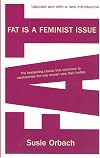
I wanted to like this book because it's often cited as a seminal text for body image issues, but while certain sections are spot on regarding women's self worth and body acceptance in misogynist society, the central premise is flawed.
The central premise states that "fat is a social disease" and if the word disease doesn't ring alarm bells, well. It takes for granted that inside every fat woman is a thin woman screaming to get out; that to be a well-adjusted woman who has dealt with her show more psychic demons is to be a thin woman. It acknowledges that fatphobia is tied to patriarchy and culture, but also reaffirms the message that it's justified because the focus is on losing the fat.
There's a lot to think about here but central to the book's flawed logic is that it doesn't unpack how fat is political. Socioeconomic factors are ignored in favour of only psychological issues. Some sections might help women dealing with overeating, but otherwise I think this book can be a trigger for many people and thus is quite dangerous in that it reinforces the fatphobia it otherwise seems to critique as a symptom of a misogynist society. In a word, bizarre. show less
The central premise states that "fat is a social disease" and if the word disease doesn't ring alarm bells, well. It takes for granted that inside every fat woman is a thin woman screaming to get out; that to be a well-adjusted woman who has dealt with her show more psychic demons is to be a thin woman. It acknowledges that fatphobia is tied to patriarchy and culture, but also reaffirms the message that it's justified because the focus is on losing the fat.
There's a lot to think about here but central to the book's flawed logic is that it doesn't unpack how fat is political. Socioeconomic factors are ignored in favour of only psychological issues. Some sections might help women dealing with overeating, but otherwise I think this book can be a trigger for many people and thus is quite dangerous in that it reinforces the fatphobia it otherwise seems to critique as a symptom of a misogynist society. In a word, bizarre. show less
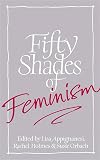
Not perfect but close, more thought provoking than thought providing it's 50 opinion pieces with other scattered snippets, quotes and some cartoons about feminism, some of them explore the elephant in the corner of 50 Shades of Grey but many of them just talk about their experience of feminism and what it is to be female in the 20th and 21st Century. Many of them are asking why it's so hard for some people to see that it's still necessary and that maybe, just maybe, we're walking into show more another series of problems instead of solutions.
The last quote: 'You can tell whether some misogynistic societal pressure is being exerted on women by calmly enquiring, "And are men doing this, as well?" If they aren't, chances are you're dealing with what we strident feminists refer to as "some total fucking bullshit".' by Caitlin Moran, resonated particularly with me. All of it opened up some thinking, some of which will take me a while to process. show less
The last quote: 'You can tell whether some misogynistic societal pressure is being exerted on women by calmly enquiring, "And are men doing this, as well?" If they aren't, chances are you're dealing with what we strident feminists refer to as "some total fucking bullshit".' by Caitlin Moran, resonated particularly with me. All of it opened up some thinking, some of which will take me a while to process. show less
Lists
Awards

You May Also Like


Associated Authors
Statistics
- Works
- 20
- Also by
- 4
- Members
- 1,856
- Popularity
- #13,864
- Rating
- 3.8
- Reviews
- 21
- ISBNs
- 129
- Languages
- 8
- Favorited
- 1
