
Kim Chernin (1940–2020)
Author of The Obsession: Reflections on the Tyranny of Slenderness
About the Author
Kim Chernin is the author of fourteen books of fiction, nonfiction, and poetry, She lives in Berkeley, California, where she has a private coaching and consultation practice
Image credit: Courtesy of Kim Chernin
Works by Kim Chernin
Associated Works
How I Learned to Cook and Other Writings on Complex Mother-Daughter Relationships (2004) — Contributor — 62 copies
Face to Face: Women Writers on Faith, Mysticism, and Awakening (2004) — Contributor — 39 copies, 1 review
In Her Own Words: Women's Memoirs from Australia, New Zealand, Canada, and the United States (1999) — Contributor — 28 copies
Tagged
Common Knowledge
- Canonical name
- Chernin, Kim
- Other names
- Kusnitz, Elaine (birth name)
- Birthdate
- 1940-05-07
- Date of death
- 2020-12-17
- Gender
- female
- Education
- University of California, Berkeley
Trinity College, Dublin - Occupations
- psychotherapist
writer
poet
memoirist - Relationships
- Stendhal, Renate (wife)
- Cause of death
- COVID-19
- Nationality
- USA
- Birthplace
- The Bronx, New York, USA
- Places of residence
- Los Angeles, California, USA
Berkeley, California, USA
Point Reyes, California, USA - Place of death
- Marin County, California, USA
- Associated Place (for map)
- California, USA
Members
Reviews
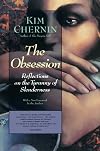
When I first read 'The Obsession', I was struggling with a severe eating disorder, and thought my problem had to do with will power and discipline. 'The Obsession' was one of three books I read that year that literally turned my life around. Each gave me a different, and crucial, perspective on my own struggles. Kim Chernin's book reminded me that the craze for skinniness is a very recent development in Western culture; that it has everything to do with the power dynamics of our society, and show more nothing to do with whether we're good or bad people based on our size; and that the most powerful female figures in history have been amply endowed, if not (by modern standards) downright fat. After reading this book, I felt like a warrior goddess for weeks. It helped me let go of a lot of self-hatred and confusion about my body. Kim Chernin is also an exquisite writer - there were passages that literally took my breath away. I give this book my highest recommendation for any woman struggling with her body image, or any reader wanting to understand women's minds at a deeper level. show less
When this book was first written, eating disorders such as Anorexia Nervosa were assumed to only strike white upper and middle class women and girls. In recent times, more men and people of different racial and socioeconomic backgrounds have come forward with eating disorders. Whether this is because there are more widespread cases then at the time of this book's publication or there was simply a lack of proper diagnosis in the past is up for debate. Modern studies of eating disorders also show more reject the idea that family life and the cultural preoccupation with slimness is the major factor causing eating disorders - though these things are still up for debate in some circles.
The reason I bring up these differences in viewing eating disorders is to excuse the fallacies that I feel this book bases it's premise on. It takes a feminist, sociological, psychodynamic view of eating disorders, which is old fashioned at best and just plain wrong at worst. Maybe I shouldn't say "wrong;" much like Freud's theories, the assumptions in this book are not even wrong because they are not falsifiable - they are philosophy, at their heart.
It was very hard for me to get through this book, even though it was well written and thought provoking, because I could not get past it's assumptions, knowing what I know about eating disorders in 2010. It is, to me, a historical and philosophical exploration and not particularly useful to sufferers or clinicians in the field of eating disorders. If the reader would like to know what the prevailing attitudes concerning eating disorders were in feminist circles in the 70's and early 80's, this book may be useful. If the reader is looking for any useful research or even case studies, look elsewhere. show less
The reason I bring up these differences in viewing eating disorders is to excuse the fallacies that I feel this book bases it's premise on. It takes a feminist, sociological, psychodynamic view of eating disorders, which is old fashioned at best and just plain wrong at worst. Maybe I shouldn't say "wrong;" much like Freud's theories, the assumptions in this book are not even wrong because they are not falsifiable - they are philosophy, at their heart.
It was very hard for me to get through this book, even though it was well written and thought provoking, because I could not get past it's assumptions, knowing what I know about eating disorders in 2010. It is, to me, a historical and philosophical exploration and not particularly useful to sufferers or clinicians in the field of eating disorders. If the reader would like to know what the prevailing attitudes concerning eating disorders were in feminist circles in the 70's and early 80's, this book may be useful. If the reader is looking for any useful research or even case studies, look elsewhere. show less
Fascinating look at why women are obsessed with losing weight...the origins of world hatred of women's bodies. It is a frightening book that hits home to any woman who diets for whatever reason she might give. I bought this book in 1982 and it is filled with passages underlined. I can't remember how many times I have reread it but here we are in 2016 and nothing has changed for women and the cult of the boyish figure. It is so sad and illuminating and should be taught in modified form to show more children in early grades to try to change how people learn to view the female form in unhealthy ways. show less
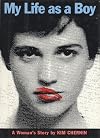
She plays with the idea of courtship. How in hetero relationships, the men court, the women are courted. When she fell in love with a woman, she fell in love with the ability to court her love. ok, maybe she took courtship a bit too far? But the concept is interesting, and strikes a true note for me.
Lists
Awards


You May Also Like


Associated Authors
Statistics
- Works
- 18
- Also by
- 4
- Members
- 1,223
- Popularity
- #20,998
- Rating
- 3.6
- Reviews
- 8
- ISBNs
- 54
- Languages
- 2
- Favorited
- 1