
C. Keith Wilbur
Author of Homebuilding and Woodworking in Colonial America
About the Author
Series
Works by C. Keith Wilbur
Tagged
Common Knowledge
Members
Reviews
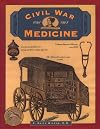
I bought this book at the Pea Ridge Civil War Battlefield near Bentonville, Arkansas, with the intent of using it as story material. Lo and behold, only a few months after purchasing it, I read it with that very goal in mind. In particular, I needed to know about Victorian battlefield practices, what a physician would carry, and other difficulties of the period. This book gave me everything I needed (and what Google could not).
The American Civil War was a time of transition in medical show more theory. It was a time when inflammation was regarded as a good thing, when illnesses were caused by bad spirits or air (mal-airia), and when abundant sweat was considered healthy (so Northern wives sent flannel hats for their men to wear during Southern summers). Cleanliness was also not considered a high priority. Florence Nightingale's nursing techniques in the Crimea were only a decade before, and the medical establishment did not readily change. The North did have an advantage in many ways: they founded a sanitation commission to increase camp morale and cleanliness, and they also had ready access to medicines like quinine. They were also more likely to develop new techniques in ambulances and hospital organizations. Confederate doctors soon realized that maggots may not be such a bad thing after all, as they only ate dead tissue.
The book includes artwork of the tools of the time. No medical volume on the Civil War could omit the use of bone saws. There are pictures of the various types of saws and the particular techniques used in cutting; it wasn't just a straight up and down cut, but was done with care so that extra muscle and tissue could cover the stump of bone. It also discusses injuries throughout the body, including fascinating excerpts on Abraham Lincoln's autopsy.
I was particularly interested in finding out more about germ theory of the time. Microscopes did exist and germs had been sighted (called zymes) but were thought to be a normal part of the healing process. It wasn't until after the war that Louis Pasteur made his great advances in Europe and Lister developed new sanitizing techniques, thus causing a dramatic drop in death rates.
One other curious thing about this book: I questioned buying it because the full 100-page book is done in an old-timey font. As I began to read, I quickly realized--it wasn't a font, it was hand-written! I soon became accustomed to the print and had no issues reading it.
CIVIL WAR MEDICINE obviously isn't a book for everyone, but I found it to be a great read and one I will keep on my shelf. show less
The American Civil War was a time of transition in medical show more theory. It was a time when inflammation was regarded as a good thing, when illnesses were caused by bad spirits or air (mal-airia), and when abundant sweat was considered healthy (so Northern wives sent flannel hats for their men to wear during Southern summers). Cleanliness was also not considered a high priority. Florence Nightingale's nursing techniques in the Crimea were only a decade before, and the medical establishment did not readily change. The North did have an advantage in many ways: they founded a sanitation commission to increase camp morale and cleanliness, and they also had ready access to medicines like quinine. They were also more likely to develop new techniques in ambulances and hospital organizations. Confederate doctors soon realized that maggots may not be such a bad thing after all, as they only ate dead tissue.
The book includes artwork of the tools of the time. No medical volume on the Civil War could omit the use of bone saws. There are pictures of the various types of saws and the particular techniques used in cutting; it wasn't just a straight up and down cut, but was done with care so that extra muscle and tissue could cover the stump of bone. It also discusses injuries throughout the body, including fascinating excerpts on Abraham Lincoln's autopsy.
I was particularly interested in finding out more about germ theory of the time. Microscopes did exist and germs had been sighted (called zymes) but were thought to be a normal part of the healing process. It wasn't until after the war that Louis Pasteur made his great advances in Europe and Lister developed new sanitizing techniques, thus causing a dramatic drop in death rates.
One other curious thing about this book: I questioned buying it because the full 100-page book is done in an old-timey font. As I began to read, I quickly realized--it wasn't a font, it was hand-written! I soon became accustomed to the print and had no issues reading it.
CIVIL WAR MEDICINE obviously isn't a book for everyone, but I found it to be a great read and one I will keep on my shelf. show less
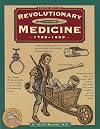
Using a script-like font, the author takes the reader through an overview of medical practices used during the American Revolution. Touching on physician education and recruitment, military organization, transportation, hospitals, diseased, tools, medicines, treatment, and aftermath, this is a comprehensive, albeit shallow, summary. Pictures of the tools and treatments augment the text.
The drawbacks are two-fold: First the font can be difficult to read and the pictures are black and white. show more
It is important to note this is NOT an in-depth compendium of colonial medicine, but serves best as an introduction or supplement to studies about the Revolutionary War. You will need to look elsewhere for deeper study.
For my purposes though, which were to augment my collection of books about Revolutionary books, this is an excellent addition. It would be particularly good for school or educational purposes, as it isn’t gory or bloody, while still being truthful about the conditions, diseases, and treatments used during the time. Altogether, a good book. show less
The drawbacks are two-fold: First the font can be difficult to read and the pictures are black and white. show more
It is important to note this is NOT an in-depth compendium of colonial medicine, but serves best as an introduction or supplement to studies about the Revolutionary War. You will need to look elsewhere for deeper study.
For my purposes though, which were to augment my collection of books about Revolutionary books, this is an excellent addition. It would be particularly good for school or educational purposes, as it isn’t gory or bloody, while still being truthful about the conditions, diseases, and treatments used during the time. Altogether, a good book. show less
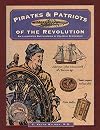
The naval war of the American Revolution was fought not by the miniscule navy, but by 1000-2000 privately bankrolled warships. The ships hunted British ships to be seized and resold for the cause, while driving up English insurance rates and making the war more costly. Crewmen had a chance at great riches in one voyage, or internment on a Royal prison ship where more people died than there were combat deaths throughout the war years. This well-illustrated book explores the world of show more privateers. Their ships, crews, food, weapons, and more. Aimed at young adults, even older readers will find some passages educational. show less

I had been waiting to read this book for years, however I could not get past the sixth page. They made the creative choice to make it look like an old handwritten document/textbook with a very unusual font which made it incredibly difficult to read. I had such a headache, I just had to stop and I *like* history and medicine. I don't know who this was supposed to be aimed for.
You May Also Like


Statistics
- Works
- 17
- Members
- 1,159
- Popularity
- #22,169
- Rating
- 3.8
- Reviews
- 13
- ISBNs
- 44