
Alison Pargeter
Author of Libya: The Rise and Fall of Qaddafi
About the Author
Alison Pargeter is a Senior Research Associate at the Centre of International Studies at the University of Cambridge, where she is also a visiting scholar at Pembroke College.
Works by Alison Pargeter
Associated Works
Tagged
Common Knowledge
Members
Reviews
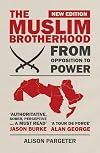
Anyone writing a book about the Middle East with any element of long term analysis within it may soon be doomed to disappointing his or her readers - things are moving fast.
Two or so years ago, pontificators were predicting the 'inevitable' fall of Assad and the desirable rise of moderate political Islam as a stabilising force in the region, citing Turkey as model.
Within the last few weeks, Assad has not merely survived but he has mobilised a major power to protect his diplomatic rear while show more the experienced troops of Hezbollah are delivering victories on the ground.
In the last week, we have also seen a major rising in the cities of Turkey against what amounts to a conservative populist regime whose 'moderate Islamism' rather looks as if it is too obscurantist and authoritarian for the tastes of many urban and educated Turks.
This updated book by Alison Pargeter, a highly experienced observer of the Muslim Brotherhood, a key but not the only player in Arab Islamist politics, is probably going to be the best that you are going to get in mid-2013.
What we see here, however, for all the risk of being overtaken by events, is a solid account of an ideologically based and strategic movement for whom any form of politics is mere tool.
She takes us (without any evident bias) through the history of the movement and its progress in Egypt, Syria and Europe and in Egypt and North Africa during the 'Arab Spring' (in this updated second edition).
She leaves us to make our own conclusions. Mine are confirmed (with one caveat) from her facts - the Muslim Brotherhood represents the worst sort of obscurantist authoritarian populism.
Those in the West who have sought to control or manage it are, ultimately, as naive as the fellow travelers of Mussolini. Its regimes will be inherently unstable and either dangerous or sclerotic.
We are seeing something of this already in Egypt where Pargeter has a solid and useful account of the Muslim seizure of power in which considerable tactical skill gained it the Presidency.
The fruits of this are a populist regime speaking in forked tongue, trying to persuade Washington and the World Bank to part with billions while sabre-rattling for the nationalist vote over the Nile.
What these movements actually are remains a bit of a mystery even after this book. My own conclusions are grim. The fundamentals of the movement and political reality have created confused creatures with unstable internal structures based on quite small ideological cliques.
The typical Muslim Brotherhood operation is now made up of a very conservative mass base filled with resentment, led by an opportunistic group of tacticians putting on a democratic face that is skin deep.
Yes, there are genuine reformers. The caveat is that these 'liberals' have a strong base in Europe, in exile and in Libya and Tunisia for different reasons but these are also areas where their base is relatively weak.
If we look at where their base is strong - in Egypt and in Syria and, by analogy, in Turkey in the AKP which has different roots - then the ressentiment of the uneducated masses creates a very different dynamic.
The West's own internal contradiction lies in its attempt to square an accommodation with the MB, on the basis of the MB's very conservative version of democracy, with the fact that the sorts of freedom that we take for granted are inimical to the ideology of our potential 'allies'.
Westerners themselves, as we have also seen in recent weeks with the half-truths and vacillations over surveillance, have many freedoms under threat in the cause of 'protecting democracy'.
We must fear that the concern to protect a particular and rather manipulative democratic constitutionalism is now in direct opposition to hard-won secular, sexual and cultural freedoms - to all intents and purposes.
The freedom agenda in the West remains reasonably robust but this new vision of a stability through democratic order under conditions where freedom is to be regarded as contingent or as a second order concern appears in its most aggressive form in the Middle East.
This brings us back to events in Turkey (and, indeed, in Egypt and Iran) where quasi-democratic forms can mobilise the disadvantaged and poorly educated rural and artisanal masses against freedom.
This reminds one of the mobilisation of conservative masses not only between the wars but by the US in defeated Europe against Communism. But, this time around, the Islamists are the Soviets 'de nos jours'.
The West's policy agenda seems to be confused about who is our enemy - a mess of misjudgments that seems to be continuing day on day - but its most dangerous misjudgment is to place democracy in poor uneducated countries ahead of freedom.
To be blunt, while all have a right to their beliefs and culture and to a private family life (and the old Arab nationalist dictatorships were sclerotic and past their sell-by date), the imposition of traditionalist values on modernising societies and economies is a serious error in the making.
It is an error because, in the long run, it will not work unless the economic conditions that permit ressentiment continues creating yet another internal contradiction - regimes that depend on their own failure for survival.
Traditionalism requires societies that are frightened by change and yet long term economic security only comes from modernisation.
Even if they are well established in power (and one guesses that military determination on stability will secure Egypt and possibly Turkey for Islamism in the end), the temptation to exclude reformers from power and drive an increasingly obscurantist agenda to maintain the voting base will be overwhelming.
The evidence in only a very few years suggests that this is so. The BBC in particular talked up the liberal young Islamists in Egypt and Syria with depressing naivete without noting that most were either excluded from power or ignored by the real power brokers.
Similarly, the actual conduct in office of Erdogan and Morsi also suggests an ability to use necessary rhetoric to comfort the naive while determining nevertheless on the absolute eventual primacy of shari'a law, in principle, over democracy.
Let us be clear about this. Shari'a law is theogenic - it derives from Iron Age texts that claim the sanction of God and tradition.
Although sophisticated and often humane in the most fundamental way (do not accept the extreme cases of cruelty as typical), it is about controlling individual aspiration and desire for the collective good. It can be demeaning to many women and to those of a different sexuality.
Some in the West may appreciate this ultimate communitarian intent but this collective good is not a democratic one but one wholly dictated by the interpreted will of a God whose existence is actually a matter of faith, where many if not most in the population do not have that faith, and which is interpreted by accultured elites speaking unto uneducated masses from above.
From our Western perspective, this has to be considered an authoritarian reversion to medieval mental maps. It is tragic that, 250 years after the Enlightenment, we have native conservative forces clearly sympathetic to it.
It is also a betrayal of Arabs themselves who have known a time when they were far more advanced than Europeans and could do so again.
Even if conditions change again in the region (and they may do so at any time), this book will provide a solid grounding on the basic facts of this powerful new kid on the block with useful sources in the notes. show less
Two or so years ago, pontificators were predicting the 'inevitable' fall of Assad and the desirable rise of moderate political Islam as a stabilising force in the region, citing Turkey as model.
Within the last few weeks, Assad has not merely survived but he has mobilised a major power to protect his diplomatic rear while show more the experienced troops of Hezbollah are delivering victories on the ground.
In the last week, we have also seen a major rising in the cities of Turkey against what amounts to a conservative populist regime whose 'moderate Islamism' rather looks as if it is too obscurantist and authoritarian for the tastes of many urban and educated Turks.
This updated book by Alison Pargeter, a highly experienced observer of the Muslim Brotherhood, a key but not the only player in Arab Islamist politics, is probably going to be the best that you are going to get in mid-2013.
What we see here, however, for all the risk of being overtaken by events, is a solid account of an ideologically based and strategic movement for whom any form of politics is mere tool.
She takes us (without any evident bias) through the history of the movement and its progress in Egypt, Syria and Europe and in Egypt and North Africa during the 'Arab Spring' (in this updated second edition).
She leaves us to make our own conclusions. Mine are confirmed (with one caveat) from her facts - the Muslim Brotherhood represents the worst sort of obscurantist authoritarian populism.
Those in the West who have sought to control or manage it are, ultimately, as naive as the fellow travelers of Mussolini. Its regimes will be inherently unstable and either dangerous or sclerotic.
We are seeing something of this already in Egypt where Pargeter has a solid and useful account of the Muslim seizure of power in which considerable tactical skill gained it the Presidency.
The fruits of this are a populist regime speaking in forked tongue, trying to persuade Washington and the World Bank to part with billions while sabre-rattling for the nationalist vote over the Nile.
What these movements actually are remains a bit of a mystery even after this book. My own conclusions are grim. The fundamentals of the movement and political reality have created confused creatures with unstable internal structures based on quite small ideological cliques.
The typical Muslim Brotherhood operation is now made up of a very conservative mass base filled with resentment, led by an opportunistic group of tacticians putting on a democratic face that is skin deep.
Yes, there are genuine reformers. The caveat is that these 'liberals' have a strong base in Europe, in exile and in Libya and Tunisia for different reasons but these are also areas where their base is relatively weak.
If we look at where their base is strong - in Egypt and in Syria and, by analogy, in Turkey in the AKP which has different roots - then the ressentiment of the uneducated masses creates a very different dynamic.
The West's own internal contradiction lies in its attempt to square an accommodation with the MB, on the basis of the MB's very conservative version of democracy, with the fact that the sorts of freedom that we take for granted are inimical to the ideology of our potential 'allies'.
Westerners themselves, as we have also seen in recent weeks with the half-truths and vacillations over surveillance, have many freedoms under threat in the cause of 'protecting democracy'.
We must fear that the concern to protect a particular and rather manipulative democratic constitutionalism is now in direct opposition to hard-won secular, sexual and cultural freedoms - to all intents and purposes.
The freedom agenda in the West remains reasonably robust but this new vision of a stability through democratic order under conditions where freedom is to be regarded as contingent or as a second order concern appears in its most aggressive form in the Middle East.
This brings us back to events in Turkey (and, indeed, in Egypt and Iran) where quasi-democratic forms can mobilise the disadvantaged and poorly educated rural and artisanal masses against freedom.
This reminds one of the mobilisation of conservative masses not only between the wars but by the US in defeated Europe against Communism. But, this time around, the Islamists are the Soviets 'de nos jours'.
The West's policy agenda seems to be confused about who is our enemy - a mess of misjudgments that seems to be continuing day on day - but its most dangerous misjudgment is to place democracy in poor uneducated countries ahead of freedom.
To be blunt, while all have a right to their beliefs and culture and to a private family life (and the old Arab nationalist dictatorships were sclerotic and past their sell-by date), the imposition of traditionalist values on modernising societies and economies is a serious error in the making.
It is an error because, in the long run, it will not work unless the economic conditions that permit ressentiment continues creating yet another internal contradiction - regimes that depend on their own failure for survival.
Traditionalism requires societies that are frightened by change and yet long term economic security only comes from modernisation.
Even if they are well established in power (and one guesses that military determination on stability will secure Egypt and possibly Turkey for Islamism in the end), the temptation to exclude reformers from power and drive an increasingly obscurantist agenda to maintain the voting base will be overwhelming.
The evidence in only a very few years suggests that this is so. The BBC in particular talked up the liberal young Islamists in Egypt and Syria with depressing naivete without noting that most were either excluded from power or ignored by the real power brokers.
Similarly, the actual conduct in office of Erdogan and Morsi also suggests an ability to use necessary rhetoric to comfort the naive while determining nevertheless on the absolute eventual primacy of shari'a law, in principle, over democracy.
Let us be clear about this. Shari'a law is theogenic - it derives from Iron Age texts that claim the sanction of God and tradition.
Although sophisticated and often humane in the most fundamental way (do not accept the extreme cases of cruelty as typical), it is about controlling individual aspiration and desire for the collective good. It can be demeaning to many women and to those of a different sexuality.
Some in the West may appreciate this ultimate communitarian intent but this collective good is not a democratic one but one wholly dictated by the interpreted will of a God whose existence is actually a matter of faith, where many if not most in the population do not have that faith, and which is interpreted by accultured elites speaking unto uneducated masses from above.
From our Western perspective, this has to be considered an authoritarian reversion to medieval mental maps. It is tragic that, 250 years after the Enlightenment, we have native conservative forces clearly sympathetic to it.
It is also a betrayal of Arabs themselves who have known a time when they were far more advanced than Europeans and could do so again.
Even if conditions change again in the region (and they may do so at any time), this book will provide a solid grounding on the basic facts of this powerful new kid on the block with useful sources in the notes. show less

A very readable account of the Qaddafi reign in Libya. The author does an admirable job trying to explain the essence of Jamahiriyah and why this notion has left these people wholly unprepared for a future without this strange strong man.
You May Also Like
Associated Authors
Statistics
- Works
- 5
- Also by
- 1
- Members
- 82
- Popularity
- #220,760
- Rating
- 4.3
- Reviews
- 2
- ISBNs
- 18