
Miriam Young (1913–1974)
Author of Miss Suzy
About the Author
Series
Works by Miriam Young
Heaven faces west 1 copy
Associated Works
Tagged
Common Knowledge
Members
Reviews
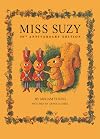
Miss Suzy is driven from her comfy little home in a tree by an invasion of bully squirrels. She takes refuge in a dollhouse in the attic of a nearby abandoned home and tries to make the best of things even while she years to return home. She's even welcoming to some kind visitors who appreciate her hospitality, unlike those greedy ruffians from earlier.
It's a simple and sort of odd fantasy, but it has a pleasing if obvious ending. Though I worry it could be read as a MAGA bedtime story.
It's a simple and sort of odd fantasy, but it has a pleasing if obvious ending. Though I worry it could be read as a MAGA bedtime story.
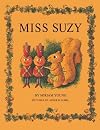
I remember this book so well from childhood. I love how cozy it is, and how it lets you imagine ways of living that are humanly inhuman; different, with the acorn cups and twig brooms that focus a kid's attention on the materiality and craftedness of everyday items and are such a tonic after the, like . . . sheer spuriousness of Slurpee cups and plastic brooms from Wal-Mart. But still the same, and this little grey squirrel is even more of a person now that I remember the squirrels in my own show more attic, once upon a time, and imagine that they were chased out of their tree by some maurading reds. I love how Miss Suzy lives alone, an independent woman in a room of her own. I love how the habits of red and grey squirrels as presented are ecologically sound--it is Miss Suzy who goes to live in the house, and the reds who outcompete her. I don't, of course, agree with the demonization of the red squirrels, who are the heroes in their struggle as much as there are any "heroes" in the nonhuman world. But hell, let's just say that these particular red squirrels were douchebags, and that Miss Suzy is a real charmer. show less

Four witches - Hecate with her narrow face and stone-cold eyes, Murka with her long nose, Ulga with her jutting chin, and round-faced Nannette - all rode together as part of a witch mobile, hanging in a toy shop. Each witch longed for the mobile to be purchased by a particular kind of customer - Hecate wished for a sailor, Murka for a wealthy lady, Ulga for an airplane pilot, and Nannette for someone she couldn't quite define - and each watched as the seeming perfect person entered the shop. show more Each time however, something went wrong, and although the other witches blamed Nannette, when Halloween night came, they exacted their revenge on the evasive, would-be buyers. All except Nannette, who used her magic to visit the poor little girl who couldn't quite afford to buy the mobile. Informed that she had done it wrong, Nannette cast a spell meant to punish the shopkeeper, but the result of her enchantment was most unexpected...
Published in 1969, The Witch Mobile is quite text-heavy for a picture-book, and features quirky artwork that alternates between black and white ink drawings and full-color panels. It is the first title I have read from author Miriam Young, who appears to have written more than forty children's books, but the fourth from illustrator Victoria Chess, whose work I have encountered before in some of Verna Aardema's folkloric retellings (This for That: A Togo Tale and Princess Gorilla and a New Kind of Water: A Mpongwe Tale), as well as in W.K. Jasner's early reader, Which Is the Witch? I didn't really enjoy the artwork in the Jasner, but here I found the visuals rather interesting, and I appreciated some of the creepier elements - the toothy grins on some of the customers! - which went well with the witchy theme. The conclusion of the story was not unexpected, but I liked the way that Young got us there, and think that young readers who enjoy witchy tales will find this one very satisfying. Because of the length, I would recommend this one to older picture-book audiences, and to more advanced beginning readers as well. show less
Published in 1969, The Witch Mobile is quite text-heavy for a picture-book, and features quirky artwork that alternates between black and white ink drawings and full-color panels. It is the first title I have read from author Miriam Young, who appears to have written more than forty children's books, but the fourth from illustrator Victoria Chess, whose work I have encountered before in some of Verna Aardema's folkloric retellings (This for That: A Togo Tale and Princess Gorilla and a New Kind of Water: A Mpongwe Tale), as well as in W.K. Jasner's early reader, Which Is the Witch? I didn't really enjoy the artwork in the Jasner, but here I found the visuals rather interesting, and I appreciated some of the creepier elements - the toothy grins on some of the customers! - which went well with the witchy theme. The conclusion of the story was not unexpected, but I liked the way that Young got us there, and think that young readers who enjoy witchy tales will find this one very satisfying. Because of the length, I would recommend this one to older picture-book audiences, and to more advanced beginning readers as well. show less
Another few years on me since I last read this book with toddler Luisa, and now reading it with toddler Emmett, I find myself slightly more rankled by the bland masculine heroism of the toy soldiers and the way Miss Suzy "mothers" them (we don't need that), but I still love her quiet heart and the textures of her world, even if they don't resonate the same way with Emmett, a car lover.
Lists
Awards


You May Also Like


Associated Authors
Statistics
- Works
- 38
- Also by
- 1
- Members
- 1,407
- Popularity
- #18,263
- Rating
- 4.4
- Reviews
- 22
- ISBNs
- 49
- Languages
- 1
- Favorited
- 1