
J. Madison Davis
Author of Novelists Essential Guide to Creating Plot
About the Author
J. Madison Davis is currently the senior professor in the Professional Writing Program of the University of Oklahoma's H.H. Herbert School of Journalism
Works by J. Madison Davis
Associated Works
Tagged
Common Knowledge
- Legal name
- Davis, James Madison, Jr.
- Birthdate
- 1951-02-10
- Gender
- male
- Education
- University of Southern Mississippi (PhD)
University of Maryland (BA)
Johns Hopkins University (MA) - Occupations
- English professor
- Nationality
- USA
- Birthplace
- Charlottesville, Virginia, USA
- Places of residence
- Norman, Oklahoma, USA
- Associated Place (for map)
- USA
Members
Reviews
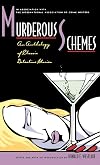
Murderous Schemes: an anthology of classic detective stories
edited and with an introduction by Donald Westlake
I enjoyed "Whodunit" enough that when I happened across this anthology the next time I was browsing the adult mystery collection, I decided to give it a try.
A brief introduction introduces the book and its organization. The collection is organized into eight categories of four stories each. Each category is introduced by a brief (1-2 page) commentary on that type of detective story, show more it's origins and famous authors, and ends with a brief commentary on the stories selected to represent it. Each story is preceded by an ever briefer (no more than 1 page) biography on the author.
The introductions and biographies added a lot to my enjoyment of the stories, and to my knowledge of the mystery genre. I also got to enjoy an encore from a few authors that I came across for the first time in "Whodunit."
I must confess that my preferred categories made up the first half of the book: the locked room, only one among you, the caper , the armchair detective, and I confess. (Most of the category names are pretty self-explanatory, so I won't bore you with descriptions.)
The second half of the book contained edgier categories, some bordering on horror: come into my parlor, hoist on their own petards, and over the edge. The former and latter of those three I considered skipping altogether, but in the end, I read all the stories but one.
A solid pick for mystery lovers--and the introductions make it easy to skip any story you think you'd rather not read, while providing a window to expand your detective horizons. show less
edited and with an introduction by Donald Westlake
I enjoyed "Whodunit" enough that when I happened across this anthology the next time I was browsing the adult mystery collection, I decided to give it a try.
A brief introduction introduces the book and its organization. The collection is organized into eight categories of four stories each. Each category is introduced by a brief (1-2 page) commentary on that type of detective story, show more it's origins and famous authors, and ends with a brief commentary on the stories selected to represent it. Each story is preceded by an ever briefer (no more than 1 page) biography on the author.
The introductions and biographies added a lot to my enjoyment of the stories, and to my knowledge of the mystery genre. I also got to enjoy an encore from a few authors that I came across for the first time in "Whodunit."
I must confess that my preferred categories made up the first half of the book: the locked room, only one among you, the caper , the armchair detective, and I confess. (Most of the category names are pretty self-explanatory, so I won't bore you with descriptions.)
The second half of the book contained edgier categories, some bordering on horror: come into my parlor, hoist on their own petards, and over the edge. The former and latter of those three I considered skipping altogether, but in the end, I read all the stories but one.
A solid pick for mystery lovers--and the introductions make it easy to skip any story you think you'd rather not read, while providing a window to expand your detective horizons. show less
Chose because included is a (gruesome) story by the talented [a:Fredric Brown|51503|Fredric Brown|https://images.gr-assets.com/authors/1234483488p2/51503.jpg]. Decided to read all the stories by names I recognized. Was impressed by several, including a memorable subtle chiller by [a:Lawrence Block|17613|Lawrence Block|https://images.gr-assets.com/authors/1498734428p2/17613.jpg]. I guess that, even though I don't like the mystery thriller genre much, I do like some detective shorts.
I show more certainly appreciated that [a:Dashiell Hammett|16927|Dashiell Hammett|https://images.gr-assets.com/authors/1287255332p2/16927.jpg] referred to an attractive female, age 24 or 25, as a 'woman' not a 'girl.' Makes me even more angry with those who have written since his time using the latter infantilizing term.
I'm tempted to give it four stars, but I didn't like the first story at all, and skipped many others, so I don't feel qualified to judge. show less
I show more certainly appreciated that [a:Dashiell Hammett|16927|Dashiell Hammett|https://images.gr-assets.com/authors/1287255332p2/16927.jpg] referred to an attractive female, age 24 or 25, as a 'woman' not a 'girl.' Makes me even more angry with those who have written since his time using the latter infantilizing term.
I'm tempted to give it four stars, but I didn't like the first story at all, and skipped many others, so I don't feel qualified to judge. show less
The dictionary's contents indicate no understanding on the part of these authors of Edward, Earl of Oxford, as the true author of works under the pen-name, "William Shake-speare"; thus, it suffers fatally from a near-total lack of the people and places which were essential in the life of the real author.
The treatment here is confined to a purely superficial view: just what is largely obvious from a reading of the plays and poems themselves. But hardly anything of use beyond this.
One more show more example, among countless others, of the sorrow and the pity of failing to get the identity of the author correct.
Edward De Vere, the real author, is not even mentioned. Of his family, only Aubrey De Vere, the eldest son of John De Vere is mentioned--along with the facts that both Aubrey and his father, John, the 12th earl of Oxford, were executed at Tower Hill: Aubrey on 20 February, 1462 and John, six days later on 26 February. The title passed to John's second eldest son, also named John. John, the thirteenth earl, having no male heir at his death in March of 1513, the title next passed to yet another John De Vere, the second and at the time the only surviving son of Sir George (De) vere, the next eldest brother to the thirteenth earl. Because the fourteenth earl had no heir, the title passed to his second cousin, John De Vere, a great-grandson of Richard De Vere, the eleventh earl of Oxford. This John being Edward Oxford's grandfather and father to Edward's father, John De Vere, sixteenth earl of Oxford.
"Bassanio," a character from The Merchant of Venice, gets a mention but Amelia Bassano (later married to a Lanier or Lanyer), the most likely person to have been the real-life "Dark Lady of the Sonnets", gets none. Likewise for Alberico Gentili, John Florio, George Turberville or Angelo Sabino and Guido Morillon--all important in the life of Edward Oxford even if, as in the case of these latter two, Sabino and Morillon, they lived and died before Edward was born.
To have any reasonable hope of gaining a proper understanding of the author and the significance of his literary work, one has to be acquainted with the history of all these and many others, never mentioned in The Shakespeare Name and Place Dictionary (1995). show less
The treatment here is confined to a purely superficial view: just what is largely obvious from a reading of the plays and poems themselves. But hardly anything of use beyond this.
One more show more example, among countless others, of the sorrow and the pity of failing to get the identity of the author correct.
Edward De Vere, the real author, is not even mentioned. Of his family, only Aubrey De Vere, the eldest son of John De Vere is mentioned--along with the facts that both Aubrey and his father, John, the 12th earl of Oxford, were executed at Tower Hill: Aubrey on 20 February, 1462 and John, six days later on 26 February. The title passed to John's second eldest son, also named John. John, the thirteenth earl, having no male heir at his death in March of 1513, the title next passed to yet another John De Vere, the second and at the time the only surviving son of Sir George (De) vere, the next eldest brother to the thirteenth earl. Because the fourteenth earl had no heir, the title passed to his second cousin, John De Vere, a great-grandson of Richard De Vere, the eleventh earl of Oxford. This John being Edward Oxford's grandfather and father to Edward's father, John De Vere, sixteenth earl of Oxford.
"Bassanio," a character from The Merchant of Venice, gets a mention but Amelia Bassano (later married to a Lanier or Lanyer), the most likely person to have been the real-life "Dark Lady of the Sonnets", gets none. Likewise for Alberico Gentili, John Florio, George Turberville or Angelo Sabino and Guido Morillon--all important in the life of Edward Oxford even if, as in the case of these latter two, Sabino and Morillon, they lived and died before Edward was born.
To have any reasonable hope of gaining a proper understanding of the author and the significance of his literary work, one has to be acquainted with the history of all these and many others, never mentioned in The Shakespeare Name and Place Dictionary (1995). show less
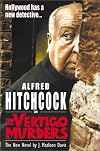
Not a bad mystery, but I didn't buy the author's portrayal of Hitchcock. I don't know why because I don't know anything about him, but this seemed off. Nice psycho killer thriller set in 1950's LA.
Awards

You May Also Like


Associated Authors
Statistics
- Works
- 18
- Also by
- 3
- Members
- 417
- Popularity
- #58,442
- Rating
- 3.5
- Reviews
- 6
- ISBNs
- 42
- Languages
- 2