
About the Author
Ross W. Greene, Ph. D., is a clinical psychologist and originator of the Collaborative Proactive Solutions (CPS) approach. Dr. Greene is the founding director of the nonprofit Lives in the Balance, which provides vast free resources on the CPS model and advocates on behalf of kids with concerning show more behaviors and their caregivers. He was on the faculty at Harvard Medical School for more than twenty years and is on the faculties at Virginia Tech and the University of Technology Sydney in Australia. He also developed and was the executive producer of the award-winning documentary The Kids We Lose. Dr. Greene works extensively with families schools, inpatient psychiatry units, residential and juvenile detention facilities, and lectures widely throughout the world. He lives in Freeport, Maine. show less
Works by Ross W. Greene
The Explosive Child: A New Approach for Understanding and Parenting Easily Frustrated, Chronically Inflexible Children (1998) 1,339 copies, 18 reviews
Lost at School: Why Our Kids with Behavioral Challenges are Falling Through the Cracks and How We Can Help Them (2008) 432 copies, 2 reviews
Raising Human Beings: Creating a Collaborative Partnership with Your Child (2016) 164 copies, 1 review
Lost and Found: Helping Behaviorally Challenging Students (and, While You're At It, All the Others) (J-B Ed: Reach and Teach) (2016) 38 copies, 1 review
The Kids Who Aren't Okay: The Urgent Case for Reimagining Support, Belonging, and Hope in Schools (2026) 5 copies
EDUCAR PARA SER PERSONAS. Una tarea compartida entre padres e hijos (Educación nº 7) (Spanish Edition) (2018) 1 copy
Tagged
Common Knowledge
- Gender
- male
Members
Reviews
Lost and Found: Helping Behaviorally Challenging Students (and, While You're At It, All the Others) (J-B Ed: Reach and Teach) by Ross W. Greene
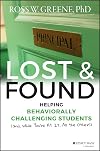
“Parents of behaviorally challenging kids know a thing or two about feeling ostracized. They know they’re blamed for their child’s challenging behavior, despite the fact that they have other children who are well behaved. They don’t want to be defensive, but feeling blamed doesn’t make that any easier. They want to trust that their child is being well treated at school, but there are many signs to the contrary. Whatever the school is doing isn’t working – their child is still show more on the receiving end of countless counseling sessions, detentions, suspensions and worse – but the parents feel powerless to do anything about it.”
This paragraph in “Lost & Found” might be the most insightful and powerful paragraph I’ve ever read. This paragraph sums up the life my husband and I are currently leading when it comes to our child. In one of the most frustrating, worrisome and stressful situations I’ve ever experienced - “Lost & Found” gave me some hope. Hope that my child’s behavior is not due to choices made, or personality issues – but because of a lack of skills to cope with or process certain situations. Dr.
Greene posits that “Kids do well if they can. …if the kid could do well, he would do well, and that if he’s not doing well, he must be lacking the skills to do well.”
He also notes that rarely, if ever, do the punitive actions taken by schools help the situation. They remove the child from the situation briefly, but when s/he comes back, the situation is still the same, if not worse.
He gives advice on using a tool called ASLUP (Assessment of Lagging Skills and Unsolved Problems) so that teachers and parents can best identify where skills need to be taught that then will help change behavior. It is very detailed and in depth and really gets to the heart of issues.
School is out for the summer (thank GOODNESS) – but when it is back in session – I hope to be able to use this advice and that tool to make my child’s school life dramatically better. show less
This paragraph in “Lost & Found” might be the most insightful and powerful paragraph I’ve ever read. This paragraph sums up the life my husband and I are currently leading when it comes to our child. In one of the most frustrating, worrisome and stressful situations I’ve ever experienced - “Lost & Found” gave me some hope. Hope that my child’s behavior is not due to choices made, or personality issues – but because of a lack of skills to cope with or process certain situations. Dr.
Greene posits that “Kids do well if they can. …if the kid could do well, he would do well, and that if he’s not doing well, he must be lacking the skills to do well.”
He also notes that rarely, if ever, do the punitive actions taken by schools help the situation. They remove the child from the situation briefly, but when s/he comes back, the situation is still the same, if not worse.
He gives advice on using a tool called ASLUP (Assessment of Lagging Skills and Unsolved Problems) so that teachers and parents can best identify where skills need to be taught that then will help change behavior. It is very detailed and in depth and really gets to the heart of issues.
School is out for the summer (thank GOODNESS) – but when it is back in session – I hope to be able to use this advice and that tool to make my child’s school life dramatically better. show less
Lost at School: Why Our Kids with Behavioral Challenges are Falling Through the Cracks and How We Can Help Them by Ross W. Greene
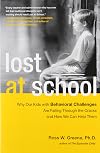
Do you believe that kids do as well as they are able or as well as they want to? Dr. Ross Greene believes that kids do as well as they are able and oftentimes, adults treat the problem as if the kids are wanting to misbehave. The truth is that kids who have the most behavioral challenges do so because they lack the skills necessary to behave appropriately and the disciplinary actions most often taken -- suspension or detention for school, or grounding, loss of privileges, etc. for home -- show more don't make a difference because while they reinforce what kids are doing wrong, they're not showing kids how to change their behavior.
That is where collaborative problem solving, or Plan B comes in. It functions to address the concerns of both adult and child, teaches children problem solving skills, and allows both adult and child to be heard.
I really like what Greene is saying and he explains everything in a way that makes sense -- I think that schools and even parents can really benefit from reading this book and taking its advice to heart. I use the collaborative problem solving strategy with many of the students that I tutor, and I've seen great results from it. If nothing else, giving them a voice in the conversation and letting them tell you why they're acting the way they are is a powerful tool for building a relationship.
Lost at School is easy to follow and pretty much covers everything, from what Plan B is and the theory behind it, to addressing all sorts of common questions that may come up. I did find the "real-life" conversations and story annoying and tedious to get through -- they were too scripted and perfect to allow me to see how the theory actually worked in a real-life situation.
But I do suggest that you take a look at this if you work with kids and have to deal with discipline. I could see it being especially helpful for school personnel and parents. show less
That is where collaborative problem solving, or Plan B comes in. It functions to address the concerns of both adult and child, teaches children problem solving skills, and allows both adult and child to be heard.
I really like what Greene is saying and he explains everything in a way that makes sense -- I think that schools and even parents can really benefit from reading this book and taking its advice to heart. I use the collaborative problem solving strategy with many of the students that I tutor, and I've seen great results from it. If nothing else, giving them a voice in the conversation and letting them tell you why they're acting the way they are is a powerful tool for building a relationship.
Lost at School is easy to follow and pretty much covers everything, from what Plan B is and the theory behind it, to addressing all sorts of common questions that may come up. I did find the "real-life" conversations and story annoying and tedious to get through -- they were too scripted and perfect to allow me to see how the theory actually worked in a real-life situation.
But I do suggest that you take a look at this if you work with kids and have to deal with discipline. I could see it being especially helpful for school personnel and parents. show less
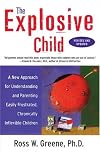
This book was loaned to me in an effort to better understand my soon-to-be stepson and to understand myself. I was extremely cynical about the methods proposed in this book, but the author raised the same issues, and addressed them with respect and without sarcasm or dismissal. Definitely worth the read. I might suggest an addition to the already long title: "and Parents"
Finally a book on *teaching* children to manage frustration and upset rather than trying to *motivate* them to do it. Some kids just need to be motivated, but some honestly don't know how. My autistic son is one of them.
Now, most of these strategies I know how to do (let some things go, de-escalate, negotiate) but the reminder was nice. Plus, I can give this book to other caregivers who don't know how to stop triggering meltdowns- it doesn't just explain how, but also WHY to react this way show more instead of just punishing a child after the fact. show less
Now, most of these strategies I know how to do (let some things go, de-escalate, negotiate) but the reminder was nice. Plus, I can give this book to other caregivers who don't know how to stop triggering meltdowns- it doesn't just explain how, but also WHY to react this way show more instead of just punishing a child after the fact. show less
Lists
You May Also Like


Statistics
- Works
- 20
- Members
- 2,074
- Popularity
- #12,395
- Rating
- 4.0
- Reviews
- 22
- ISBNs
- 61
- Languages
- 9
- Favorited
- 1