
Stuart Hample (1926–2010)
Author of Children's Letters to God
About the Author
As a young man, compiler Stuart Hample rushed up to Fred Allen at NBC & handed him a page of jokes. "Son," Allen rasped, "bringing a joke to me is like bringing a fender to Henry Ford". In "All the Sincerity in Hollywood" Hample returns Fred Allen to his rightful place in our National Collective show more Memory. He is the author of numerous bestselling books, including "Children's Letters to God", "The Silly Book" & "May Darling Man: Letters from Mothers to Their Famous Offspring". He lives in New York City. (Publisher Provided) Stuart E. Hample was born in Binghamton, New York on January 6, 1926. After serving in the Navy during World War II, he began performing as a musical cartoonist, creating drawings onstage as an accompaniment to symphony orchestras. In the late 1940s, he hosted two local television shows in Buffalo. In 1950, he received a degree in literature and drama from the University of Buffalo. During the 1950s, he appeared as Mr. Artist on the children's show Captain Kangaroo. He worked in advertising before publishing his first book, The Silly Book, in 1961. He wrote and illustrated numerous children's books using the name Stoo Hample including Children's Letters to God. He also wrote the plays The Selling of the President and All the Sincerity in Hollywood. He created a pair of syndicated comic strips, Inside Woody Allen and Rich and Famous. He died due to cancer on September 19, 2010 at the age of 84. (Bowker Author Biography) show less
Series
Works by Stuart Hample
Non-being and somethingness: Selections from the comic strip Inside Woody Allen (1978) — Illustrator — 25 copies
All the Sincerity In Hollywood: Selections from the Writings of Fred Allen (2001) 21 copies, 1 review
Het feilloze falen van Woody Allen — Illustrator — 3 copies
Woody Allen 1 1 copy
Doodles the Deer-Horse 1 copy
Associated Works
ET (Ehapa Taschenbuch) Bd. 74, WOODY ALLEN - Du bist unersetzlich Woody! (Cartoon Tb) — Illustrator, some editions — 1 copy
Tagged
Common Knowledge
- Canonical name
- Hample, Stuart
- Legal name
- Hample, Stuart Ertz
- Other names
- Hample, Stoo
- Birthdate
- 1926-01-06
- Date of death
- 2010-09-19
- Gender
- male
- Nationality
- USA
- Birthplace
- Binghamton, New York, USA
- Place of death
- New York, New York, USA
- Map Location
- USA
Members
Reviews

Curiosity value only. 'Woody Allen' as cultural figure was a dominant force in the 1960s and 1970s, first on the many live TV talk and game shows, and then through his 'early funny films'. If you want to talk about the rise of Jewish humour in everyday American discourse, about the move away from the staid and stoic view of masculinity pushed by the John Wayne set, about the brief spike of intellectual, auteur filmmakers from the late '60s to the early '80s (before the conglomerates got show more their way), Allen is pivotal to all of those discussions. So it's not too odd - it's still odd - to think that he got his own comic strip, which ran in over 60 countries at various points. Hample and a bunch of writers did the strip, although Allen was involved in the background. He's a notorious workaholic but the New York union rules were very clear, and he couldn't make movies on weekends; so among his weekend activities would be phone calls to Hample!
The thing is, of course, the syndicated stripped column is a very specific medium. Quite a few of the gags here simply don't feel funny, or feel funny in a ho-hum philosophical way. There are a few chuckles here and there. But these strips were designed to be seen as part of a varied diet of reading over one's breakfast cereal, or glimpsed at while waiting for the train, and occasionally cut out and framed for the cubicle if a particular line resonated with a particular person's vagaries. There are great strips, but this is closer to "Hagar the Horrible" than "Garfield". show less
The thing is, of course, the syndicated stripped column is a very specific medium. Quite a few of the gags here simply don't feel funny, or feel funny in a ho-hum philosophical way. There are a few chuckles here and there. But these strips were designed to be seen as part of a varied diet of reading over one's breakfast cereal, or glimpsed at while waiting for the train, and occasionally cut out and framed for the cubicle if a particular line resonated with a particular person's vagaries. There are great strips, but this is closer to "Hagar the Horrible" than "Garfield". show less
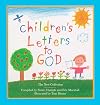
This slim book contains a number of letters from children written to their God. It’s unknown who these children are (e.g., Are they from the Sunday school? Are they from throughout the United States only? Or are they from all around the world?) It appears that this is a second collection from this project so perhaps a previous collection answers these questions.
The children’s letters are purportedly presented as they were written although the skeptic in me can’t help but wonder if some show more of the written words look perhaps a bit like a font trying to look like a small child’s handwriting. However, there are enough different handwritings to mostly nix that theory.
The content of the letters varies from questions that adults grapple with regarding religion to just sort of silly, everyday type issues. For instance, “it’s OK that you made different religions but don’t you get mixed up sometimes” and “I love you because you give us what we need to live but I wish you would tell me why you made it so we have to die.” are examples of the former; “I went to this wedding and they can kissed right in church. Is that OK?” and “Please send Dennis Clark to different camp this year.” are examples of the latter.
All in all, this is a cute collection for what it is. It’s not really a book for children, although its slim nature, colorful cover, and handful of illustrations would suggest it is a picture book. I could see this being a sweet version of a “gag gift” for adults. show less
The children’s letters are purportedly presented as they were written although the skeptic in me can’t help but wonder if some show more of the written words look perhaps a bit like a font trying to look like a small child’s handwriting. However, there are enough different handwritings to mostly nix that theory.
The content of the letters varies from questions that adults grapple with regarding religion to just sort of silly, everyday type issues. For instance, “it’s OK that you made different religions but don’t you get mixed up sometimes” and “I love you because you give us what we need to live but I wish you would tell me why you made it so we have to die.” are examples of the former; “I went to this wedding and they can kissed right in church. Is that OK?” and “Please send Dennis Clark to different camp this year.” are examples of the latter.
All in all, this is a cute collection for what it is. It’s not really a book for children, although its slim nature, colorful cover, and handful of illustrations would suggest it is a picture book. I could see this being a sweet version of a “gag gift” for adults. show less
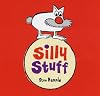
I let my 7 year old cousin read this book, expecting her to quickly put it down, but she was reading it for over an hour! Sharing everything in the book with me and her younger sister, she enjoyed and laughed at every bit of it. This would be a great book to keep on hand in the classroom to lighten up a day or a lesson with one of the silly stories, songs or jokes in the book. It is definitely a good book to keep in a classroom library or a good read for free time.
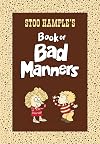
I really wanted to like this. After giving it a quick glance I really had hopes that we had a modern successor to Munro Leaf's Manners Can Be Fun with maybe a hint of Hilaire Belloc's Cautionary Tales. Were my expectations too high? Perhaps, but down climbing off my expectations I was still disappointed.
While I might have encountered The Silly Book growing up, my introduction to Stoo Hample was in the late 1970's with his work on the daily comic strip Inside Woody Allen. The strips I show more remember as being sort of illustrated stale or flat one-liners, the kind of second rate material I assumed the classic Woody Allen would have cut from his movies or books. Of course you take any of those old strips from then and put them up against some of today's dailies and they look like masterpieces of philosophy or, for a number of them, much to risque for today's modern Victorian media sensibilities.
In short bits of humorous rhyme Hample introduces us to the various owners of bad manners: The Greedy Guy, The Schloomper, The Demolition Gang, and so on. Many of the poems are merely inventories of what each of these mean, gross or thoughtless kids do with hardly a consequence in sight. Sure, books for kids can be subversive or just plain fun but when they come up against etiquette and social norms they need to reach a higher mark, they need to be deliciously subversive or devilishly clever to meet the bar. Stoo Hample's Book of Bad Manners fails in that attempt.
I would never in a million years have thought I'd come down on the hard side of a fixed meter in rhymes, especially with many fine examples out there of people who could bend that meter to it's breaking point (like John Ciardi), but at the end of the day if you're not going to make the meter it at least needs to sound natural. Especially if you're going to be silly, especially with kids. The beginning of "Blabbermouth" set my teeth to gnash:
He points at people
And says things that are mean,
Like, "She's got the BIGGEST NOSE
I've ever seen!"
At the end a cartoon Hample, who has been making comments throughout the book, essentially promises the young reader that if they are "equally awful,/Not nice or polite" then they are assured a place in his next book on manners. It sounds more like a promise, an encouragement for kids to try and outdo the near two dozen examples previously depicted.
Like I said, I really did want to like this book. show less
While I might have encountered The Silly Book growing up, my introduction to Stoo Hample was in the late 1970's with his work on the daily comic strip Inside Woody Allen. The strips I show more remember as being sort of illustrated stale or flat one-liners, the kind of second rate material I assumed the classic Woody Allen would have cut from his movies or books. Of course you take any of those old strips from then and put them up against some of today's dailies and they look like masterpieces of philosophy or, for a number of them, much to risque for today's modern Victorian media sensibilities.
In short bits of humorous rhyme Hample introduces us to the various owners of bad manners: The Greedy Guy, The Schloomper, The Demolition Gang, and so on. Many of the poems are merely inventories of what each of these mean, gross or thoughtless kids do with hardly a consequence in sight. Sure, books for kids can be subversive or just plain fun but when they come up against etiquette and social norms they need to reach a higher mark, they need to be deliciously subversive or devilishly clever to meet the bar. Stoo Hample's Book of Bad Manners fails in that attempt.
I would never in a million years have thought I'd come down on the hard side of a fixed meter in rhymes, especially with many fine examples out there of people who could bend that meter to it's breaking point (like John Ciardi), but at the end of the day if you're not going to make the meter it at least needs to sound natural. Especially if you're going to be silly, especially with kids. The beginning of "Blabbermouth" set my teeth to gnash:
He points at people
And says things that are mean,
Like, "She's got the BIGGEST NOSE
I've ever seen!"
At the end a cartoon Hample, who has been making comments throughout the book, essentially promises the young reader that if they are "equally awful,/Not nice or polite" then they are assured a place in his next book on manners. It sounds more like a promise, an encouragement for kids to try and outdo the near two dozen examples previously depicted.
Like I said, I really did want to like this book. show less
Lists
You May Also Like


Associated Authors
Statistics
- Works
- 28
- Also by
- 1
- Members
- 1,321
- Popularity
- #19,458
- Rating
- 3.7
- Reviews
- 25
- ISBNs
- 66
- Languages
- 9