
About the Author
Eric Jager is associate professor of English at the University of California, Los Angeles
Works by Eric Jager
The Last Duel: A True Story of Crime, Scandal, and Trial by Combat in Medieval France (2004) 790 copies, 27 reviews
L305 - O último Duelo 1 copy
Tagged
Common Knowledge
- Birthdate
- 1957-04-27
- Gender
- male
- Education
- Calvin College (B.A.|1979)
University of Michigan (Ph.D.|1987) - Occupations
- literary critic
professor - Organizations
- University of California, Los Angeles
Columbia University - Agent
- Glen Hartley (Writers' Representatives)
Lynn Chu (Writers' Representatives)
Katy Sprinkle (Writers' Representatives) - Short biography
- Eric Jager (born 27 April 1957) is an American literary critic and a specialist in medieval literature. He is an award winning professor in the department of English at University of California, Los Angeles, received his B.A. from Calvin College in 1979, and his Ph.D. from the University of Michigan in 1987. He has also taught at Columbia University. He has written numerous articles for acclaimed academic journals. [adapted from Wikipedia and The Last Duel (2009)]
- Nationality
- USA
- Associated Place (for map)
- USA
Members
Reviews
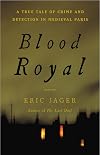
Blood Royal is that most rare thing, a medieval history full of personality and color. It's not often we get to hear the quoted words of a medieval peasant from the early 1400s, or minute by minute action scenes playing out in detail. Unlike Name of the Rose the author didn't make it up, the events were written down by a criminal investigator at the time, and recreated in this wonderful book. And unlike Martin Guerre about 150 years later, this crime had much larger importance and helps to show more put the complex Hundred Years' War in a little more context. Not just politically, but the mood of the age, how people acted and reacted. Hope to read this again sometime as it makes for a great portal to the late Middle Ages. show less
This book manages to be both accessible to all readers and to explore an incredibly turbulent period of history through a compelling narrative. Eric Jagger explores the murder of Louis of Orleans and its repercussions on fifteenth-century France. Louis was the younger brother of King Charles VI of France, and due to the king's unstable sanity, Louis often ruled France in his brother's place. His power and his own personal actions earned Louis a substantial number of enemies, but his brutal show more murder on the streets of Paris nevertheless shocked the populace. Jagger details the witness depositions, revealing countless details of ordinary medieval life alongside the surprisingly modern detective methods. Yet, the revelation of the mastermind behind the murder and the ensuing repercussions reveal much about very fifteenth century notions of nobility, warfare, and justice. show less
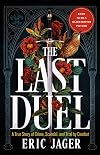
Oh my, is this really non-fiction? What a page-turner :)
This is a story of a trial by combat, a duel between Jean de Carrouges and Jacques Le Gris. The year is 1386. If the prologue doesn’t hook you, I don’t know what will.
We begin with the historical background – king this and duke that, this conquest, that war, intrigues, betrayals, marriage alliances. In unskilful hands, this sort of thing is usually text book boring, but Eric Jager writes so well that it feels like an adventure.
The show more everyday lives, the descriptions of castles, homes, clothes, weapons, feasts, legal processes are very vivid. It transports you back in time.
The rape of Marguerite, lady Carrouges, is very tough to read about. I could feel her terror and her helplessness. There was also rage. Telling the world (which meant being interrogated many times) and seeking justice took a lot of courage, too.
“Only a few medieval women had the means to raise their voices in protest against the idea that women even enjoyed being taken by force.”
“The prosecution and punishment of rape often depended on the victim’s social class and political clout.”
And it wasn’t really a question of sexual violence as a crime – it was “a property crime against her male guardian.”
Trial by combat is not the best way to obtain justice, but Marguerite and Jean had probably decided that they didn’t have a choice. I did wonder how you go about making such a decision, knowing that if your husband lost, you would die too, as someone accused of bearing false witness…
There are so many fascinating details in The Last Duel:
- Jacques de Gris’ lawyer, Jean Le Coq, kept a professional diary, and it’s one of the oldest surviving casebooks.
“Le Coq, clearly a close observer of people, also notes in his journal that the squire once asked him ‘whether I had doubts concerning him, because he saw me thinking.’ “
- Among other things not allowed during the duel were “any arms that have been forged with spells, charms, enchantments, or any other evil acts”.
And then...
“The two warriors sped toward each other, the sharp steel points of their lances flying through the air before them like deadly missiles. The combined weight of horse, man, armor, and lance put nearly a ton of galloping momentum behind each tip.”
From a contemporary chronicle:
“A feeling of great fear seized all those witnessing the battle. All mouths were stopped; people hardly breathed.”
No, I couldn’t breathe either. show less
This is a story of a trial by combat, a duel between Jean de Carrouges and Jacques Le Gris. The year is 1386. If the prologue doesn’t hook you, I don’t know what will.
We begin with the historical background – king this and duke that, this conquest, that war, intrigues, betrayals, marriage alliances. In unskilful hands, this sort of thing is usually text book boring, but Eric Jager writes so well that it feels like an adventure.
The show more everyday lives, the descriptions of castles, homes, clothes, weapons, feasts, legal processes are very vivid. It transports you back in time.
The rape of Marguerite, lady Carrouges, is very tough to read about. I could feel her terror and her helplessness. There was also rage. Telling the world (which meant being interrogated many times) and seeking justice took a lot of courage, too.
“Only a few medieval women had the means to raise their voices in protest against the idea that women even enjoyed being taken by force.”
“The prosecution and punishment of rape often depended on the victim’s social class and political clout.”
And it wasn’t really a question of sexual violence as a crime – it was “a property crime against her male guardian.”
Trial by combat is not the best way to obtain justice, but Marguerite and Jean had probably decided that they didn’t have a choice. I did wonder how you go about making such a decision, knowing that if your husband lost, you would die too, as someone accused of bearing false witness…
There are so many fascinating details in The Last Duel:
- Jacques de Gris’ lawyer, Jean Le Coq, kept a professional diary, and it’s one of the oldest surviving casebooks.
“Le Coq, clearly a close observer of people, also notes in his journal that the squire once asked him ‘whether I had doubts concerning him, because he saw me thinking.’ “
- Among other things not allowed during the duel were “any arms that have been forged with spells, charms, enchantments, or any other evil acts”.
And then...
“The two warriors sped toward each other, the sharp steel points of their lances flying through the air before them like deadly missiles. The combined weight of horse, man, armor, and lance put nearly a ton of galloping momentum behind each tip.”
From a contemporary chronicle:
“A feeling of great fear seized all those witnessing the battle. All mouths were stopped; people hardly breathed.”
No, I couldn’t breathe either. show less

I had never heard of the Carrouges-Le Gris affair before this book (unsurprising, as I have hardly made a study of late 1300s France) but I found this book on a secondhand bookshop shelf and was intrigued. It was a bit dry and slow of pace, but most definitely interesting.
The history told is well-backed-up, pieced together in the places where there is no surviving record (or there was only a mystery even at the time) and clearly shown what is known for sure, what is supposition, where there show more are gaps in the record.
Eric Jager presents a story with remarkable depth of focus, but also breadth, where appropriate - where wider history and culture come into play, he expands upon them duly and most informatively yet without wandering off topic.
The people introduced through the story are given a remarkable amount of character, some of it clearly drawn from their actions, record, and interpersonal relationships, some of it supposition, but it makes the story come to life even more. I'm glad I picked up the book, I learned many interesting things from it.
It also reflects somewhat on later, and even current, perceptions - of crimes (certain crimes), accusations, perpetrators, and particularly of women who accuse their assailants.
(I've seen people claim it was obvious what the outcome of the duel would belong before it was told; I do not feel it was, I was unsure even during the retelling of the duel itself, and even if it were . . . it's a historical examination, the outcome is a matter of record. I wouldn't necessarily condemn the book for that.) show less
The history told is well-backed-up, pieced together in the places where there is no surviving record (or there was only a mystery even at the time) and clearly shown what is known for sure, what is supposition, where there show more are gaps in the record.
Eric Jager presents a story with remarkable depth of focus, but also breadth, where appropriate - where wider history and culture come into play, he expands upon them duly and most informatively yet without wandering off topic.
The people introduced through the story are given a remarkable amount of character, some of it clearly drawn from their actions, record, and interpersonal relationships, some of it supposition, but it makes the story come to life even more. I'm glad I picked up the book, I learned many interesting things from it.
It also reflects somewhat on later, and even current, perceptions - of crimes (certain crimes), accusations, perpetrators, and particularly of women who accuse their assailants.
(I've seen people claim it was obvious what the outcome of the duel would belong before it was told; I do not feel it was, I was unsure even during the retelling of the duel itself, and even if it were . . . it's a historical examination, the outcome is a matter of record. I wouldn't necessarily condemn the book for that.) show less
Lists
Awards


You May Also Like


Associated Authors
Statistics
- Works
- 8
- Members
- 1,144
- Popularity
- #22,444
- Rating
- 3.9
- Reviews
- 41
- ISBNs
- 37
- Languages
- 9
- Favorited
- 2