
Richard Bowes (1944–2023)
Author of Minions of the Moon
About the Author
Image credit: Richard Bowes, from Wikipedia.
Series
Works by Richard Bowes
The Mask of the Rex 4 copies
Godfather Death [short story] 2 copies
Aka Saint Marks Place 2 copies
Straight to My Lover's Heart 2 copies
The Cinnamon Cavalier 2 copies
Days Red And Green [short story] 2 copies
The Ferryman's Wife 2 copies
On Death and the Deuce [short story] 2 copies
Venues 1 copy
Diana In The Spring 1 copy
I Died, Sir, In Flame, Sir 1 copy
The Shadow and the Gunman 1 copy
At Darlingtons 1 copy
Drink and the Devil 1 copy
So Many Miles 1 copy
A Huntsman Passing By 1 copy
The Wand's Boy {short story} 1 copy
The Quicksilver Kid 1 copy
City Of Chimeras 1 copy
Pining To Be Human 1 copy
Savage Design 1 copy
Knickerbocker Holiday 1 copy
On The Slide 1 copy
The Witch's House 1 copy
Associated Works
The Year's Best Fantasy and Horror: Sixth Annual Collection (1993) — Contributor — 219 copies, 1 review
The Best Science Fiction and Fantasy of the Year, Volume 3 (2009) — Contributor — 151 copies, 2 reviews
Mad Hatters and March Hares: All-New Stories from the World of Lewis Carroll's Alice in Wonderland (2017) — Contributor — 145 copies, 11 reviews
The Del Rey Book of Science Fiction and Fantasy: Sixteen Original Works by Speculative Fiction's Finest Voices (2008) — Contributor — 141 copies, 5 reviews
Fantasy Magazine, Issue 59 (December 2015) - Queers Destroy Fantasy! Special Issue (2015) — Contributor — 49 copies
New York Fantastic: Fantasy Stories from the City that Never Sleeps (2017) — Contributor — 45 copies, 1 review
In the Shadow of the Towers: Speculative Fiction in a Post-9/11 World (2015) — Contributor — 42 copies
Wilde Stories 2010: The Year's Best Gay Speculative Fiction (2010) — Contributor — 33 copies, 1 review
Heiresses of Russ 2013: The Year's Best Lesbian Speculative Fiction (2013) — Contributor — 32 copies
Wilde Stories 2011: The Year's Best Gay Speculative Fiction (2011) — Contributor — 29 copies, 1 review
Wilde Stories 2009: The Year's Best Gay Speculative Fiction (2009) — Contributor — 25 copies, 2 reviews
The Big Book of Science Fiction and Fantasy: Sixteen Great Works of Speculative Fiction (2025) — Contributor — 21 copies
The Best from Fantasy and Science Fiction: A 45th Anniversary Anthology (1994) — Contributor — 21 copies
The Magazine of Fantasy and Science Fiction July/August 2011, Vol. 121, Nos. 1 & 2 (2011) — Contributor — 16 copies, 1 review
The Magazine of Fantasy and Science Fiction November/December 2010, Vol. 119, No. 5 & 6 (2010) — Author — 13 copies, 1 review
The Magazine of Fantasy and Science Fiction August 1998, Vol. 95, No. 2 (1998) — Contributor — 11 copies, 1 review
Tagged
Common Knowledge
- Birthdate
- 1944-01-08
- Date of death
- 2023-12-24
- Gender
- male
- Organizations
- Science Fiction and Fantasy Writers of America
Altered Fluid - Agent
- Linn Prentis
- Nationality
- USA
- Associated Place (for map)
- USA
Members
Reviews
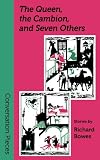
The Queen, the Cambion and Seven Others is a thoroughly delightful short collection of fairy tales and fantasies, published by the small press, Aqueduct Press.
Richard Bowes opens with “Seven Smiles and Seven Frowns,” in which a woman remembers listening to the stories told by the Witch of the Forest of Avalon when she was a girl. One particular story, ending in a typical “he carried the princess off and they lived happily ever after” fashion, displeases her twelve-year-old self. The show more witch tells her she’ll like the next night’s story better, and indeed, the alternate version of the tale from the night before, with a much different ending for prince and princess, suits her down to her toes. That is how she becomes the apprentice of the witch, and begins to formulate not only her own tales, but new versions of the old tales, including the one that made her an apprentice.
“The Cinnamon Cavalier” is about the problem of cooking for giants. Do you have any idea what it takes to make a single cookie for a giant princess? And what do you do when the cookie comes to life? These are problems we’ll never face in this world, but they’re fun to read about in Bowes’s.
“The Margay’s Children” is narrated by the godfather of a girl who really wants a cat — but her mother is allergic. Or so her mother says. But someone observes that housecats react to her mother the same way they react to wild cats, and thereby hangs a tail. Er, tale.
The wedding of the King of Winter and the Queen of Summer sets the events of “The Progress of Solstice and Chance” into motion. Solstice is the eventual child of the marriage, Fate and Folly her grandparents; Chance, their child, was Solstice’s cousin, and her first love. It seems to be a parable about climate change, told through the actions of gods and goddesses. The writing is lovely.
“The Lady of Wands” opens with the titular character drinking a pot of enchanted black tea as she does every morning. The tea is called Charile, and it erases bad memories and hangovers. It’s not that the narrator is frequently hung over; her need is much more to rid her of the bad memories she has accumulated over a few centuries of life. Her memory is not helped by the fact that she is the chief law officer of the King beneath the Hill. She toys with a viaculum, a frozen memory, that an informant has given her, as she begins the investigation of the death of a mortal in her domain. Investigation is easier because she is telepathic, as are all of her kind; secrets are rare. But the secret involved in this murder, this memory, is one that reaches deep into the heart of Faerie. It’s a fine bit of urban fantasy in short form.
One of my favorite stories in the collection, “The Bear Dresser’s Secret,” begins when Sigistrix the Bear Dresser, a Grand Master of the Animal Dressers Guild, leaves the Duchess and her castle with no warning. This is a disaster, as the Great Fair is only a month away, and no one else knows how to dress the bears. But Grismerelda, the Duchess’s young maid, volunteers to attempt the task. And Grismerelda is one smart woman. The only problem is that the Duchess has to figure out how to dress herself from here on out.
In Avalon, after King Arthur and his knights are sent to slumber away the years with only rare moments of wakefulness, waiting until England needs them again. But one individual says awake, and “Sir Morgravain Speaks of Night Dragons and Other Things” is his tale. He occasionally meets other knights when they awaken, finding them forgetful and fretful, disturbed by what Morgravain has to tell them about the two millennia they have been sleeping. Morgravain is largely making up what he tells them, trying hard to disturb their sleep; he believes it is his duty to spread unease. It is easily the oddest tale of King Arthur and the Knights of the Round Table I have ever encountered, and it is both charming and troubling because of that oddness.
“The Queen and the Cambion” is Bowes’s most wonderful tale in the collection. It tells of Queen Victoria’s relationship with Merlin — her means of summoning him, his role in her life, how he is disconnected with time, how she comes to trust him without questioning the magic that brings him to her. It would be a crime for me to tell you any more about the story than that; you should discover it for yourself. But I assure you that this tale alone is worth the price of the book. When I first reviewed this story upon its appearance in the Magazine of Fantasy & Science Fiction in the March/April 2012 issue, I said that it was “nothing more than a bonbon, but … a delicious one.” On rereading, I am more attuned to the love that shines through the story, which renders it more in the nature of a complex gourmet truffle, starting with whimsy but ending with a true understanding of duty and friendship, and containing a few dark notes of bitterness.
Perhaps this rereading has led to this reassessment because the story anchors a collection that is generally light; sometimes context really matters. But one who is willing to look for complexities layered between the levels of whipped cream and jam will find them. One theme of this collection is that women are actors, not those who are acted upon. They are not princesses who find their princes and then live happily ever after as in a Disney movie. They go out and make history, from the witch in “Seven Smiles and Seven Frowns” to Queen Victoria in “The Queen and the Cambion.” These women don’t disdain men; it’s not a competition. They are themselves, full of initiative, smart, political, willing to risk and always ready to strategize. This book would be ideal for a preteen or young teen girl who is starting to wonder what it means to be female in this country, in this time.
Originally published at http://www.fantasyliterature.com/reviews/the-queen-the-cambion-and-seven-others/ show less
Richard Bowes opens with “Seven Smiles and Seven Frowns,” in which a woman remembers listening to the stories told by the Witch of the Forest of Avalon when she was a girl. One particular story, ending in a typical “he carried the princess off and they lived happily ever after” fashion, displeases her twelve-year-old self. The show more witch tells her she’ll like the next night’s story better, and indeed, the alternate version of the tale from the night before, with a much different ending for prince and princess, suits her down to her toes. That is how she becomes the apprentice of the witch, and begins to formulate not only her own tales, but new versions of the old tales, including the one that made her an apprentice.
“The Cinnamon Cavalier” is about the problem of cooking for giants. Do you have any idea what it takes to make a single cookie for a giant princess? And what do you do when the cookie comes to life? These are problems we’ll never face in this world, but they’re fun to read about in Bowes’s.
“The Margay’s Children” is narrated by the godfather of a girl who really wants a cat — but her mother is allergic. Or so her mother says. But someone observes that housecats react to her mother the same way they react to wild cats, and thereby hangs a tail. Er, tale.
The wedding of the King of Winter and the Queen of Summer sets the events of “The Progress of Solstice and Chance” into motion. Solstice is the eventual child of the marriage, Fate and Folly her grandparents; Chance, their child, was Solstice’s cousin, and her first love. It seems to be a parable about climate change, told through the actions of gods and goddesses. The writing is lovely.
“The Lady of Wands” opens with the titular character drinking a pot of enchanted black tea as she does every morning. The tea is called Charile, and it erases bad memories and hangovers. It’s not that the narrator is frequently hung over; her need is much more to rid her of the bad memories she has accumulated over a few centuries of life. Her memory is not helped by the fact that she is the chief law officer of the King beneath the Hill. She toys with a viaculum, a frozen memory, that an informant has given her, as she begins the investigation of the death of a mortal in her domain. Investigation is easier because she is telepathic, as are all of her kind; secrets are rare. But the secret involved in this murder, this memory, is one that reaches deep into the heart of Faerie. It’s a fine bit of urban fantasy in short form.
One of my favorite stories in the collection, “The Bear Dresser’s Secret,” begins when Sigistrix the Bear Dresser, a Grand Master of the Animal Dressers Guild, leaves the Duchess and her castle with no warning. This is a disaster, as the Great Fair is only a month away, and no one else knows how to dress the bears. But Grismerelda, the Duchess’s young maid, volunteers to attempt the task. And Grismerelda is one smart woman. The only problem is that the Duchess has to figure out how to dress herself from here on out.
In Avalon, after King Arthur and his knights are sent to slumber away the years with only rare moments of wakefulness, waiting until England needs them again. But one individual says awake, and “Sir Morgravain Speaks of Night Dragons and Other Things” is his tale. He occasionally meets other knights when they awaken, finding them forgetful and fretful, disturbed by what Morgravain has to tell them about the two millennia they have been sleeping. Morgravain is largely making up what he tells them, trying hard to disturb their sleep; he believes it is his duty to spread unease. It is easily the oddest tale of King Arthur and the Knights of the Round Table I have ever encountered, and it is both charming and troubling because of that oddness.
“The Queen and the Cambion” is Bowes’s most wonderful tale in the collection. It tells of Queen Victoria’s relationship with Merlin — her means of summoning him, his role in her life, how he is disconnected with time, how she comes to trust him without questioning the magic that brings him to her. It would be a crime for me to tell you any more about the story than that; you should discover it for yourself. But I assure you that this tale alone is worth the price of the book. When I first reviewed this story upon its appearance in the Magazine of Fantasy & Science Fiction in the March/April 2012 issue, I said that it was “nothing more than a bonbon, but … a delicious one.” On rereading, I am more attuned to the love that shines through the story, which renders it more in the nature of a complex gourmet truffle, starting with whimsy but ending with a true understanding of duty and friendship, and containing a few dark notes of bitterness.
Perhaps this rereading has led to this reassessment because the story anchors a collection that is generally light; sometimes context really matters. But one who is willing to look for complexities layered between the levels of whipped cream and jam will find them. One theme of this collection is that women are actors, not those who are acted upon. They are not princesses who find their princes and then live happily ever after as in a Disney movie. They go out and make history, from the witch in “Seven Smiles and Seven Frowns” to Queen Victoria in “The Queen and the Cambion.” These women don’t disdain men; it’s not a competition. They are themselves, full of initiative, smart, political, willing to risk and always ready to strategize. This book would be ideal for a preteen or young teen girl who is starting to wonder what it means to be female in this country, in this time.
Originally published at http://www.fantasyliterature.com/reviews/the-queen-the-cambion-and-seven-others/ show less

The author describes this work as a "mosaic novel". It's lots of pieces of stories mixed together to form some kind of whole. Sometimes this works, but this time - not so much. It may have been my faulty attention span, but I lost track of everyone and couldn't figure out what was supposed to be going on. I got irritated by the whole thing by about 1/2 way through, but soldiered on to the end. Oh yeah, it was about gods and the mortals working for them (I think) trying to change timelines to show more avoid a disastrous future, or at least make sure their timeline didn't go that way. show less

The writing was much better than in the first one, although it still occasionally slipped back into the clunky style that made the first one unbearable.
The style is still needlessly slippery, however, and the characters not rich enough to support the abstractions, weirdness and ideas (all of which are almost compelling).
The style is still needlessly slippery, however, and the characters not rich enough to support the abstractions, weirdness and ideas (all of which are almost compelling).

Liked so much of it, though it's a little too navel-gazing, perhaps I'd get more from it if I had lived in Greenwich Village during the 70s? Too specific, without exploring it with us readers. However, the more modern parts were lovely, so I imagine the other parts would be wonderful for someone who'd been there, too.
Lists
Awards


You May Also Like


Associated Authors
Statistics
- Works
- 45
- Also by
- 74
- Members
- 421
- Popularity
- #57,941
- Rating
- 3.6
- Reviews
- 14
- ISBNs
- 23