
Thomas Hauser
Author of Muhammad Ali: His Life and Times
About the Author
Thomas Hauser is the winner of the Nat Fleischer Award for Career Excellence in Boxing Journalism and the author of fifty-three books, including Muhammad Ali: His Life and Times and Missing, which was adapted into an Academy Award-winning film. He was recently inducted into the International Boxing show more Hall of Fame. show less
Works by Thomas Hauser
Muhammad Ali: Životna priča 1 copy
Povera Hannah 1 copy
Tagged
Common Knowledge
- Canonical name
- Hauser, Thomas
- Birthdate
- 1946-02-27
- Gender
- male
- Education
- Columbia University
- Occupations
- lawyer
- Organizations
- Cravath, Swaine & Moore
- Nationality
- USA
- Associated Place (for map)
- USA
Members
Reviews
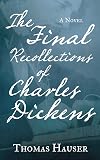
The Final Recollections of Charles Dickens is a fun little novel (coming in at only 157 pages) disguised as a Charles Dickens autobiography. The book, set in 1870 London, is narrated entirely in the voice of 58-year-old Charles Dickens who is feeling older than his years and wants to reveal one final episode of his life before it is too late to ever do so– indeed, Dickens would die in June of that very year.
The incident revealed here by Dickens occurred in 1835 shortly after he proposed show more marriage to his future wife, Catherine. When the upwardly mobile Dickens becomes acquainted with Geoffrey Wingate, one of London’s most successful and prominent financial advisors, he also meets the man’s stunningly beautiful wife, Amanda. Amanda is so beautiful, in fact, that her memory will haunt Dickens for the rest of his life. His own marriage is an unhappy one, and for decades after he has lost contact with the beautiful Amanda, Dickens fantasizes about what might have been if he had only met her before Geoffrey Wingate made her his wife.
While doing research in preparation for an article featuring Geoffrey Wingate, Dickens learns that there is more to the Wingates than meets the eye. He begins to suspect that Geoffrey Wingate may be little more than a common criminal and that his wife is hiding a sordid past of her own. But it is only after interviewing a former prostitute whose face has been brutally mutilated, that Dickens recognizes the degree of evilness he is dealing with in the person of Geoffrey Wingate. Now, in more personal danger than even he imagines, Dickens has to decide what to do about his suspicions.
By blending facts from the real life of Charles Dickens with his fictionalized, hands-on investigation of one of London’s bad guys, Thomas Hauser has created a fun ride through the very streets of London that Dickens portrayed in his own novels. Hauser has, in fact, so wonderfully captured the Dickens voice readers have grown familiar with from those nineteenth century novels that it is easy for readers to forget that they are not reading something written by Mr. Dickens himself. If a nineteenth-century man in his early twenties can still be said to be coming of age, what Hauser has written here is in reality a coming-of-age novel featuring Charles Dickens. And it is a good one. show less
The incident revealed here by Dickens occurred in 1835 shortly after he proposed show more marriage to his future wife, Catherine. When the upwardly mobile Dickens becomes acquainted with Geoffrey Wingate, one of London’s most successful and prominent financial advisors, he also meets the man’s stunningly beautiful wife, Amanda. Amanda is so beautiful, in fact, that her memory will haunt Dickens for the rest of his life. His own marriage is an unhappy one, and for decades after he has lost contact with the beautiful Amanda, Dickens fantasizes about what might have been if he had only met her before Geoffrey Wingate made her his wife.
While doing research in preparation for an article featuring Geoffrey Wingate, Dickens learns that there is more to the Wingates than meets the eye. He begins to suspect that Geoffrey Wingate may be little more than a common criminal and that his wife is hiding a sordid past of her own. But it is only after interviewing a former prostitute whose face has been brutally mutilated, that Dickens recognizes the degree of evilness he is dealing with in the person of Geoffrey Wingate. Now, in more personal danger than even he imagines, Dickens has to decide what to do about his suspicions.
By blending facts from the real life of Charles Dickens with his fictionalized, hands-on investigation of one of London’s bad guys, Thomas Hauser has created a fun ride through the very streets of London that Dickens portrayed in his own novels. Hauser has, in fact, so wonderfully captured the Dickens voice readers have grown familiar with from those nineteenth century novels that it is easy for readers to forget that they are not reading something written by Mr. Dickens himself. If a nineteenth-century man in his early twenties can still be said to be coming of age, what Hauser has written here is in reality a coming-of-age novel featuring Charles Dickens. And it is a good one. show less

Excellent piece of journalism documenting the disappearance of American Charles Horman in Chile in 1973, just after the military coup that overthrew Salvador Allende’s government. The author lays out the timeline of events, what may have led to his arrest, and the ways in which US officials’ actions may have contributed to his death. In a parallel narrative, the author follows Horman’s wife and father as they attempt to find out what happened, running into a bureaucratic nightmare. The show more term “non-fiction that reads like fiction” applies to this book.
Horman disappeared at the beginning of Augusto Pinochet’s Reign of Terror. This book was published in 1977. Subsequent events, investigations, and releases of previously confidential information support Hauser’s conclusions. As I read, I found myself hoping for a different outcome.
I found this book at a local used bookstore. A news article was folded within its pages, about Joyce Horman and her search for truth, published in February 2000. I then researched the latest status on the internet, so I was able to trace this history of this tragic event over four-plus decades. show less
Horman disappeared at the beginning of Augusto Pinochet’s Reign of Terror. This book was published in 1977. Subsequent events, investigations, and releases of previously confidential information support Hauser’s conclusions. As I read, I found myself hoping for a different outcome.
I found this book at a local used bookstore. A news article was folded within its pages, about Joyce Horman and her search for truth, published in February 2000. I then researched the latest status on the internet, so I was able to trace this history of this tragic event over four-plus decades. show less
Excellent piece of journalism documenting the disappearance of American Charles Horman in Chile in 1973, just after the military coup that overthrew Salvador Allende’s government. The author lays out the timeline of events, what may have led to his arrest, and the ways in which US officials’ actions may have contributed to his death. In a parallel narrative, the author follows Horman’s wife and father as they attempt to find out what happened, running into a bureaucratic nightmare. The show more term “non-fiction that reads like fiction” applies to this book.
Horman disappeared at the beginning of Augusto Pinochet’s Reign of Terror. This book was published in 1977. Subsequent events, investigations, and releases of previously confidential information support Hauser’s conclusions. As I read, I found myself hoping for a different outcome.
I found this book at a local used bookstore. A news article was folded within its pages, about Joyce Horman and her search for truth, published in February 2000. I then researched the latest status on the internet, so I was able to trace this history of this tragic event over four-plus decades. show less
Horman disappeared at the beginning of Augusto Pinochet’s Reign of Terror. This book was published in 1977. Subsequent events, investigations, and releases of previously confidential information support Hauser’s conclusions. As I read, I found myself hoping for a different outcome.
I found this book at a local used bookstore. A news article was folded within its pages, about Joyce Horman and her search for truth, published in February 2000. I then researched the latest status on the internet, so I was able to trace this history of this tragic event over four-plus decades. show less
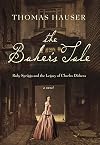
Ruby Spriggs lives a precarious life in Dicken’s London with her uncle, Christopher until they encounter Antonio, a baker and Octavius Joy, a man of considerable wealth and even more considerable heart. Octavius had helped Antonio open the bakery and now Antonio finds Christopher a job at another bakery run by Marie Wells who recently lost her son. Eventually, Ruby meets Edwin Chatfield and the two fall hopelessly in love. Unfortunately, Edwin’s employer Alexander Murd and his snobbish show more and cruel daughter, Isabella have other plans for Edwin and hatch a plan to break the two up.
If Thomas Hauser didn’t say that he based his novel The Baker’s Tale on a comment by Charles Dickens, his admiration for the great writer would still shine through in this, his latest novel. He does a marvelous job of recreating not only Dicken’s style of writing but his use of caricature and subject matter. Like in any good Dickens novel, Ruby Spriggs is a beautiful and innocent orphan, Edwin Chatfield is handsome, kind, and good, Octavius has a heart of gold and Murd et fille are unrelentingly and wonderfully smarmy and underhanded. And, of course, there are the same unlikely coincidences and lucky happenstances that fill Dickens’ pages and which will eventually lead to the undoing of the evildoers after much suffering from our hero and heroine.
The one thing, though, that is missing is the humour and endearing eccentricities that marked Dickens’ books and helped to make his criticisms of 19th c. society less biting and, thus, more easily acceptable to the upper classes while satisfying his huge audience among the working class. Fortunately, The Baker’s Tale also lacks Dickens’ verbosity so that this lack didn’t interfere too much with my enjoyment of the novel. This is a fun story, well-written and with interesting characters. If you are a fan of Charles Dickens, this one’s definitely for you. show less
If Thomas Hauser didn’t say that he based his novel The Baker’s Tale on a comment by Charles Dickens, his admiration for the great writer would still shine through in this, his latest novel. He does a marvelous job of recreating not only Dicken’s style of writing but his use of caricature and subject matter. Like in any good Dickens novel, Ruby Spriggs is a beautiful and innocent orphan, Edwin Chatfield is handsome, kind, and good, Octavius has a heart of gold and Murd et fille are unrelentingly and wonderfully smarmy and underhanded. And, of course, there are the same unlikely coincidences and lucky happenstances that fill Dickens’ pages and which will eventually lead to the undoing of the evildoers after much suffering from our hero and heroine.
The one thing, though, that is missing is the humour and endearing eccentricities that marked Dickens’ books and helped to make his criticisms of 19th c. society less biting and, thus, more easily acceptable to the upper classes while satisfying his huge audience among the working class. Fortunately, The Baker’s Tale also lacks Dickens’ verbosity so that this lack didn’t interfere too much with my enjoyment of the novel. This is a fun story, well-written and with interesting characters. If you are a fan of Charles Dickens, this one’s definitely for you. show less
Lists
Awards


You May Also Like


Associated Authors
Statistics
- Works
- 60
- Members
- 842
- Popularity
- #30,363
- Rating
- 3.8
- Reviews
- 15
- ISBNs
- 143
- Languages
- 7
- Favorited
- 1