

Heather Lende
Author of If You Lived Here, I'd Know Your Name: News from Small-Town Alaska
About the Author
Heather Lende has contributed to NPR's Morning Edition, the New York Times, the Christian Science Monitor, and the Washington Post, as well as National Geographic Traveler and Country Living magazines. She is a columnist for Woman's Day magazine and also writes an online column for the Alaska show more Dispatch. Her Web site is www.heatherlende.com. show less
Image credit: Photo by Phil Lende
Works by Heather Lende
Find the Good: Unexpected Life Lessons from a Small-Town Obituary Writer (2015) 233 copies, 22 reviews
Take Good Care of the Garden and the Dogs: A True Story of Bad Breaks and Small Miracles (2010) 190 copies, 12 reviews
Tagged
Common Knowledge
Members
Reviews
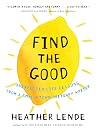
It's so easy to focus on the negative. I can stew for a long time about someone cutting me off in traffic. I walk off the tennis court replaying my errors. I let unkind comments fester. And I know I'm not alone in this. But what if we chose to focus on happiness and the gifts that everyone in our lives brings to the table instead of dwelling on the negative? What if, as the title of Heather Lende's lovely new book suggests, we Find the Good? It won't change my traffic situation or improve my show more tennis game, but it sure might make me a more positive, contented person.
Life is lived in the dash between the dates on our headstone and until that last date is engraved, we can always change the story in between. Lende is the obituary writer in her small Alaskan fishing village. Often she knows the people she's writing about very well so it's heartbreakingly easy for her to find the good in someone's life as she goes about the business of distilling a life to the space allotted in the paper. Each short chapter is packed with wisdom gleaned from the life of someone who has died. And the brief slice of their life that Lende captures is wonderful, giving a real sense of the person. There is humor here and there are unexpected revelations. Lende shares a bit of her own family's challenges and the life-affirming way that she decided to face them. And as she does, she reminds us all that how we face each thing in our life is in fact a decision. We can dwell or we can celebrate and celebrating is infinitely more fun. It is a quick and welcoming read, one that is easy to dip in and out of when you need to be reminded about all the positives in life thanks to its vignette style essays. Heartwarming, simple, and direct, this is a gorgeous little book with a beautiful message that will leave you smiling as you close the cover. If you're looking for the good, you'll certainly find a lot of it here. show less
Life is lived in the dash between the dates on our headstone and until that last date is engraved, we can always change the story in between. Lende is the obituary writer in her small Alaskan fishing village. Often she knows the people she's writing about very well so it's heartbreakingly easy for her to find the good in someone's life as she goes about the business of distilling a life to the space allotted in the paper. Each short chapter is packed with wisdom gleaned from the life of someone who has died. And the brief slice of their life that Lende captures is wonderful, giving a real sense of the person. There is humor here and there are unexpected revelations. Lende shares a bit of her own family's challenges and the life-affirming way that she decided to face them. And as she does, she reminds us all that how we face each thing in our life is in fact a decision. We can dwell or we can celebrate and celebrating is infinitely more fun. It is a quick and welcoming read, one that is easy to dip in and out of when you need to be reminded about all the positives in life thanks to its vignette style essays. Heartwarming, simple, and direct, this is a gorgeous little book with a beautiful message that will leave you smiling as you close the cover. If you're looking for the good, you'll certainly find a lot of it here. show less
How does one describe a book about the writing of obituaries without becoming maudlin? It is easy when describing this book, written by an obituary writer. It is simply not depressing, rather it is absolutely inspiring. The author’s approach to life moved me to rethink about my own approach.
This brief book is about a subject few people talk about, because obits, by their very purpose and nature, instigate thoughts of death. Now who really wants to think about their own expiration date? show more Yet, this author has written a somewhat humorous and heartwarming message for the reader, as she relates her own effort to always try to find something good to record in her obituaries; she always tries to find something that is personal and heartwarming to say. In this way, she can send a message to the mourners that will lift them up and enable them to celebrate the life of the deceased, to alleviate their sorrow rather than break them down emotionally. When describing a man who failed repeatedly to repair his fishing nets, she made it sound positive and amusing since it was the holes in the net that enabled some fish to escape to live another day. The irony is that she brought life into the very place of death and eased their pain.
As I read her descriptions of the people she has written about and learned about the basic facts of her own life, I found that her simple message and lifestyle encouraged me to stop thinking about what I might not have, but instead to choose to look for and appreciate the good things that I do have in my life and all the good things I have had as well. Is my glass half full or half empty? It is definitely half full. The joy of finding whatever “good” news there is in a situation instead of looking for and dwelling on the “bad”, improves one’s life markedly. So let’s all find the good, shall we? show less
This brief book is about a subject few people talk about, because obits, by their very purpose and nature, instigate thoughts of death. Now who really wants to think about their own expiration date? show more Yet, this author has written a somewhat humorous and heartwarming message for the reader, as she relates her own effort to always try to find something good to record in her obituaries; she always tries to find something that is personal and heartwarming to say. In this way, she can send a message to the mourners that will lift them up and enable them to celebrate the life of the deceased, to alleviate their sorrow rather than break them down emotionally. When describing a man who failed repeatedly to repair his fishing nets, she made it sound positive and amusing since it was the holes in the net that enabled some fish to escape to live another day. The irony is that she brought life into the very place of death and eased their pain.
As I read her descriptions of the people she has written about and learned about the basic facts of her own life, I found that her simple message and lifestyle encouraged me to stop thinking about what I might not have, but instead to choose to look for and appreciate the good things that I do have in my life and all the good things I have had as well. Is my glass half full or half empty? It is definitely half full. The joy of finding whatever “good” news there is in a situation instead of looking for and dwelling on the “bad”, improves one’s life markedly. So let’s all find the good, shall we? show less

Heather Lende lives in one of those little towns where it seems like sooner or later just about everyone who wants to will eventually hold some kind of political office. For Lende, that would turn out to be a position on the Haines, Alaska, town assembly. Haines sits in the extreme southeast part of Alaska, and is a place pretty much only accessible by plane, boat or ferry since the only road out of town goes northward toward the Yukon and terminates in Haines. Because of that, everyone in show more Haines knows everyone else in Haines…and pretty much everything about them and their families. But as Heather Lende would find out, politics in such a small, insulated community can be a little tricky. And in Of Bears and Ballots: An Alaskan Adventure in Small-Town Politics, she tells us all about it.
Haines may be small, but its citizens take politics very seriously, and as in the rest of the country these days, political disagreements are all too often allowed to end old friendships and affect family relationships. Lende, who rather easily wins election to the Haines assembly, barely settles into her new chair before she and two other of the more liberal representatives on the assembly become the targets of a recall petition and election. Much of Of Bears and Ballots recounts the emotional rollercoaster the author rides during that long, drawn out process, a process during which she feels betrayed by some of her closest and oldest friends and their families. That none of the three officeholders are successfully recalled is small compensation for the emotional scars Lende is left with and everything she suffers along the way.
While the portion of the book dedicated to the recall election is interesting, the real fun in Of Bears and Ballots comes from Lende’s description of daily life in a place like Haines, Alaska. What she has to say about the day-to-day goings-on that make a little town like Haines click is so intriguing that now I want to take a look at two of her earlier books in which she does the same in much more detail: 2011’s Take Care of the Garden and the Dogs (which was her mother’s dying wish) and 2006’s If You Lived Here, I’d Know Your Name.
All in all, and despite her rough start in local politics, Lende comes away from the experience feeling better about and more proud of her community than ever. I do have to admit, however, that I was a little surprised that despite everything she says about being openminded, considering all sides of an argument, and simply listening during assembly meetings, Lende manages to fall into the same old trap that so many of us fall into these days when it comes to dissenting political views. On numerous occasions, she makes sweeping generalizations about her more conservative constituents and their national counterparts that are so naive that they made me smile (despite the fact that I know I often do the same to those who disagree with me).
For instance, apparently even in a town as isolated as Haines, Alaska, it is possible to exist in a bubble so tightly sealed that a reaction like this one is possible:
“When I admitted to the Unitarians that at least two of my dear friends and many people I know and have hosted in my home voted for Trump, they gasped.”
I know I’m not supposed to find that funny, but it makes me smile…and this is one of the kindest generalizations that Lende makes about “Trump voters.” I won’t point out the more strongly worded ones, but there are something approaching a dozen of them that jumped out at me. Still, that lack of self-awareness is so especially common these days that it is easily forgiven in a book that was as much fun as Of Bears and Ballots. show less
Haines may be small, but its citizens take politics very seriously, and as in the rest of the country these days, political disagreements are all too often allowed to end old friendships and affect family relationships. Lende, who rather easily wins election to the Haines assembly, barely settles into her new chair before she and two other of the more liberal representatives on the assembly become the targets of a recall petition and election. Much of Of Bears and Ballots recounts the emotional rollercoaster the author rides during that long, drawn out process, a process during which she feels betrayed by some of her closest and oldest friends and their families. That none of the three officeholders are successfully recalled is small compensation for the emotional scars Lende is left with and everything she suffers along the way.
While the portion of the book dedicated to the recall election is interesting, the real fun in Of Bears and Ballots comes from Lende’s description of daily life in a place like Haines, Alaska. What she has to say about the day-to-day goings-on that make a little town like Haines click is so intriguing that now I want to take a look at two of her earlier books in which she does the same in much more detail: 2011’s Take Care of the Garden and the Dogs (which was her mother’s dying wish) and 2006’s If You Lived Here, I’d Know Your Name.
All in all, and despite her rough start in local politics, Lende comes away from the experience feeling better about and more proud of her community than ever. I do have to admit, however, that I was a little surprised that despite everything she says about being openminded, considering all sides of an argument, and simply listening during assembly meetings, Lende manages to fall into the same old trap that so many of us fall into these days when it comes to dissenting political views. On numerous occasions, she makes sweeping generalizations about her more conservative constituents and their national counterparts that are so naive that they made me smile (despite the fact that I know I often do the same to those who disagree with me).
For instance, apparently even in a town as isolated as Haines, Alaska, it is possible to exist in a bubble so tightly sealed that a reaction like this one is possible:
“When I admitted to the Unitarians that at least two of my dear friends and many people I know and have hosted in my home voted for Trump, they gasped.”
I know I’m not supposed to find that funny, but it makes me smile…and this is one of the kindest generalizations that Lende makes about “Trump voters.” I won’t point out the more strongly worded ones, but there are something approaching a dozen of them that jumped out at me. Still, that lack of self-awareness is so especially common these days that it is easily forgiven in a book that was as much fun as Of Bears and Ballots. show less
Take Good Care of the Garden and the Dogs: Family, Friendships, and Faith in Small-Town Alaska by Heather Lende
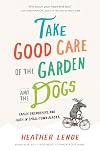
The Alaskan landscape—so vast, dramatic, and unbelievable—may be the reason the people in Haines, Alaska (population 2,400), so often discuss the meaning of life. Heather Lende thinks it helps make life mean more. Since her bestselling first book, If You Lived Here, I’d Know Your Name, a near-fatal bicycle accident has given Lende a few more reasons to consider matters both spiritual and temporal. Her idea of spirituality is rooted in community, and here she explores faith and show more forgiveness, loss and devotion—as well as raising totem poles, canning salmon, and other distinctly Alaskan adventures. Lende’s irrepressible spirit, her wry humor, and her commitment to living a life on the edge of the world resonate on every page. Like her own mother’s last wish—take good care of the garden and dogs—Lende’s writing, so honest and unadorned, deepens our understanding of what links all humanity. show less
Lists
Awards


You May Also Like


Statistics
- Works
- 4
- Members
- 1,223
- Popularity
- #20,998
- Rating
- 3.6
- Reviews
- 71
- ISBNs
- 17
- Favorited
- 5