
Wynton Marsalis
Author of Squeak, Rumble, Whomp! Whomp! Whomp!: A Sonic Adventure
About the Author
Image credit: feinsteinphotos, 2004-01-01
Series
Works by Wynton Marsalis
Sweet Swing Blues on the Road: A Year with Wynton Marsalis and His Septet (1994) 60 copies, 1 review
Wynton Marsalis And Eric Clapton Play The Blues-Live From Jazz At Lincoln Center (CD/DVD) (2011) — Artist — 18 copies
Think Of One 5 copies
Sousa to Satchmo (VHS) 3 copies
Gold Collection 3 copies
Tomasi: Concerto For Trumpet & Orchestra/Jolivet: Concertino For Trumpet, String Orchestra & Piano/Concerto No.2 For Trumpet (1986) 2 copies
Blues & Swing 1 copy
Big Band Holidays — Artist — 1 copy
MUSIC CHRISTMAS BIG BAND CD - Jazz at Lincoln Center - Big Band Holidays II (2019) — Artist — 1 copy
Black, Brown & Beige — Artist — 1 copy
My Jelly Lord 1 copy
Sherman Irby’s Inferno — Artist — 1 copy
Art Blakey Is Jazz 1 copy
One By One 1 copy
A Life in Jazz 1 copy
Wynton Marsalis: Making The Music; A Teachers' Guide To Jazz, 2 Audio Cassettes And 1Booklet Kit And 1Poster (1996) 1 copy
All that Jazz 1 copy
(Unknown Album) 1 copy
這就是爵士樂:溫頓馬沙利斯的爵士樂與人生自述 1 copy
Jazz and Art — Artist — 1 copy
Wynton Marsalis Trumpet Star 1 copy
My Funny Valentine 1 copy
Associated Works
Listen to the Storyteller: A Trio of Tales from Around the World (1999) — Introduction — 28 copies, 5 reviews
Tagged
Common Knowledge
- Canonical name
- Marsalis, Wynton
- Legal name
- Marsalis, Wynton Learson
- Birthdate
- 1961-10-18
- Gender
- male
- Education
- Juilliard School of Music
- Occupations
- trumpeter
musician
composer - Organizations
- Jazz at Lincoln Center Orchestra
English Chamber Orchestra
Fairview Baptist Church Marching Band - Awards and honors
- National Medal of Arts (2005)
Pulitzer Prize (1997)
Grammy Award - Relationships
- Marsalis, Ellis (father)
Marsalis, Branford (brother)
Marsalis, Delfeayo (brother)
Marsalis, Jason (brother)
Wynton Marsalis Septet (group) - Nationality
- USA
- Birthplace
- New Orleans, Louisiana, USA
- Places of residence
- New Orleans, Louisiana, USA
- Associated Place (for map)
- New Orleans, Louisiana, USA
Members
Reviews

Over two decades ago and fairly late at night, my local classical music radio station announcer mentioned that he was going to play a track from a new CD (I vaguely remember that it was more than one track that was played that night). I believe he mentioned Wynton Marsalis and Kathleen Battle, by name, but the names meant nothing to me then. When it was ended I was agog to know who was responsible, and what the name of that divine music was.
It wasn’t long before I owned a couple of copies show more for home and car, which I’ve played it countless times. When frazzled this music picks me up, when I need to bask in beautiful sounds it fills my soul. This is the CD that I would take with me to the proverbial desert island.
The program notes for the disc say that during the Baroque, trumpet signified military, religious and regal music. It says that a higher, sweeter style of playing was created for indoor playing during the seventeenth and eighteenth centuries called ‘clarino’. It was matched with high voiced instruments such as the recorder, such as to be found in the Brandenburg Concerto, the voice was also well suited to composers.
“The voice was deemed an especially good match for the trumpet. In particular, the sound of the castrated male voice (castrato) was often compared to the brilliance and strength of the trumpet and all that it symbolized. Throughout the Baroque era, heroic male operatic roles, such as Julius Caesar and Alexander the Great, were typically sung by castrati. If we find the association of the castrato and a high (soprano or alto) singing range with male virility surprising today, it is partly because we fail to make a connection with the sound of the trumpet.”
The music is from some of the greats of the Baroque period: George Frideric Handel, Alessandro Scarlatti, Alessandro Stradella and Johann Sebastian Bach. The notes point out that the three Handel selections “specifically represent the trumpet’s three symbolic uses: military, regal and religious”. Straddella’s piece, is in the form of a “typical chamber sonata with a succession of four dance movements ([Allemande; Corrente; Canzone; [Gigue]) in which the solo trumpet is contrasted with a string orchestra.”
Bach’s Jauchzet Gott, a serious favorite of mine, is also to be found on this CD. This is not a surprise since it is a famous piece for voice and trumpet. “The work calls for extraordinary virtuosity from both the singer and trumpeter; the singer’s part not only demands agility and speed, but the range extends up to high c’’’. “
I have read critiques on this CD that were unfavorable. But the critics most have a far more sophisticated ear than I, because I hear nothing but beauty and passion and skill, and I suspect that I will love this disc until the day that I die. show less
It wasn’t long before I owned a couple of copies show more for home and car, which I’ve played it countless times. When frazzled this music picks me up, when I need to bask in beautiful sounds it fills my soul. This is the CD that I would take with me to the proverbial desert island.
The program notes for the disc say that during the Baroque, trumpet signified military, religious and regal music. It says that a higher, sweeter style of playing was created for indoor playing during the seventeenth and eighteenth centuries called ‘clarino’. It was matched with high voiced instruments such as the recorder, such as to be found in the Brandenburg Concerto, the voice was also well suited to composers.
“The voice was deemed an especially good match for the trumpet. In particular, the sound of the castrated male voice (castrato) was often compared to the brilliance and strength of the trumpet and all that it symbolized. Throughout the Baroque era, heroic male operatic roles, such as Julius Caesar and Alexander the Great, were typically sung by castrati. If we find the association of the castrato and a high (soprano or alto) singing range with male virility surprising today, it is partly because we fail to make a connection with the sound of the trumpet.”
The music is from some of the greats of the Baroque period: George Frideric Handel, Alessandro Scarlatti, Alessandro Stradella and Johann Sebastian Bach. The notes point out that the three Handel selections “specifically represent the trumpet’s three symbolic uses: military, regal and religious”. Straddella’s piece, is in the form of a “typical chamber sonata with a succession of four dance movements ([Allemande; Corrente; Canzone; [Gigue]) in which the solo trumpet is contrasted with a string orchestra.”
Bach’s Jauchzet Gott, a serious favorite of mine, is also to be found on this CD. This is not a surprise since it is a famous piece for voice and trumpet. “The work calls for extraordinary virtuosity from both the singer and trumpeter; the singer’s part not only demands agility and speed, but the range extends up to high c’’’. “
I have read critiques on this CD that were unfavorable. But the critics most have a far more sophisticated ear than I, because I hear nothing but beauty and passion and skill, and I suspect that I will love this disc until the day that I die. show less
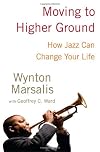
This book deserves to be one of the 'standards' among jazz books. I consider myself lucky to be in conversation with Marsalis through this book. Even though nothing can take the place of the direct communication using music, this book is packed with enough energy, quality, personality and honesty to bring a fresh perspective on whatever I have listened until now.
On the other hand, I'm not sure if this would be the best choice as an introductory text. It may look like light reading but it may show more be very dense in terms of referring to a long musical legacy. show less
On the other hand, I'm not sure if this would be the best choice as an introductory text. It may look like light reading but it may show more be very dense in terms of referring to a long musical legacy. show less
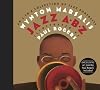
Part children’s book, part poetry collection, this alphabetized introduction to jazz artists is a must for all parents who value artistic learning! The author and illustrator picked 26 major figures in jazz and then provided a poem and portrait of each one. The combination creates a beautiful effect, a book that flows just like jazz itself, through the history of the musical movement.
The poetic book combines dozens of different writing styles. At the end there are biographies of each jazz show more artist and a page recommending albums from each performer. There’s also a section describing the various poetic styles used throughout the text (ode, haiku, calligram, sonnet, free verse, etc.) This gives kids a chance to learn about jazz and poetry at the same time. What an excellent pairing!
“A songwriter, a sonneteer, a sorcerer of sorghum sonatas, so sweetly sung.”
“My bass drum can blacken a big man’s eyes and injure a hero’s pride.” show less
The poetic book combines dozens of different writing styles. At the end there are biographies of each jazz show more artist and a page recommending albums from each performer. There’s also a section describing the various poetic styles used throughout the text (ode, haiku, calligram, sonnet, free verse, etc.) This gives kids a chance to learn about jazz and poetry at the same time. What an excellent pairing!
“A songwriter, a sonneteer, a sorcerer of sorghum sonatas, so sweetly sung.”
“My bass drum can blacken a big man’s eyes and injure a hero’s pride.” show less
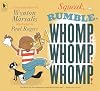
How do you convey the idea of sounds through only words? Marsalis, the renowned jazz musician and composer, makes a terrific effort here with an astounding collection of onomatopoeic verses describing the output of musical instruments and everyday sounds.
[Onomatopoeic things sound like or suggest just what they mean. Common onomatopoeias include animal noises such as oink, meow, roar, and chirp.]
Two-page spreads contain large colorful fonts for the sounds depicted:
“Big trucks on the show more highway RRRRUMBLE.
Hunger makes my tummy GRrruMBle.”
The narrator, a young boy of color living in New Orleans, describes a typical day:
“Chrrrick chrrrick chrrrick chrrrick — buttering my toast. Krrrick krrick krrrick krrrick - quick where it itches the most."
The final spread features a veritable symphony of sounds in an implied loud and noisy crescendo.
Illustrator Paul Rogers uses joyful images to fill in some background for us and to add some jazz references for afficionados. In an interview about the book, Rogers said:
“The drawings are hugely influenced by the great Cliff Roberts, especially his illustrations for Langston Hughes’ First Book of Jazz from 1955. One of the early decisions I made was to have the story take place in New Orleans, Wynton’s hometown and a city we both love. This setting made it believable to have music on the street and all around the neighborhood.”
Evaluation: Kids aged 3 and up and/or their parents reading to them will have a blast sounding out the words in the book. They will also learn there is music everywhere - not just from instruments. Additionally, they will add to their vocabularies and word recognition skills. show less
[Onomatopoeic things sound like or suggest just what they mean. Common onomatopoeias include animal noises such as oink, meow, roar, and chirp.]
Two-page spreads contain large colorful fonts for the sounds depicted:
“Big trucks on the show more highway RRRRUMBLE.
Hunger makes my tummy GRrruMBle.”
The narrator, a young boy of color living in New Orleans, describes a typical day:
“Chrrrick chrrrick chrrrick chrrrick — buttering my toast. Krrrick krrick krrrick krrrick - quick where it itches the most."
The final spread features a veritable symphony of sounds in an implied loud and noisy crescendo.
Illustrator Paul Rogers uses joyful images to fill in some background for us and to add some jazz references for afficionados. In an interview about the book, Rogers said:
“The drawings are hugely influenced by the great Cliff Roberts, especially his illustrations for Langston Hughes’ First Book of Jazz from 1955. One of the early decisions I made was to have the story take place in New Orleans, Wynton’s hometown and a city we both love. This setting made it believable to have music on the street and all around the neighborhood.”
Evaluation: Kids aged 3 and up and/or their parents reading to them will have a blast sounding out the words in the book. They will also learn there is music everywhere - not just from instruments. Additionally, they will add to their vocabularies and word recognition skills. show less
Lists
Awards


You May Also Like


Associated Authors
Statistics
- Works
- 112
- Also by
- 6
- Members
- 1,533
- Popularity
- #16,782
- Rating
- 3.9
- Reviews
- 33
- ISBNs
- 75
- Languages
- 8
