
Stacey Swann
Author of Olympus, Texas
Works by Stacey Swann
Tagged
Common Knowledge
- Birthdate
- 20th Century
- Gender
- female
- Education
- University of Texas, Austin (English)
Texas State University (M.F.A) - Occupations
- editor (American Short Fiction Magazine)
- Organizations
- American Short Fiction Magazine
- Nationality
- USA
- Places of residence
- Austin, Texas, USA
- Associated Place (for map)
- Texas, USA
Members
Reviews
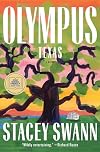
If you've ever done any reading about the Greek gods and goddesses and the messy, immortal family dynamic that they've got going on, you'll have a head start with Stacey Swann's novel Olympus, Texas. Although her novel is about human beings, it's not hard to see the parallels, starting with the very title of the novel. This is not gods behaving badly but rather mortals behaving badly, though no less interesting for the change. For those who don't have a close knowledge of the gods, that is show more actually no impediment here; the story will still be a captivating wreck without the mythological backstory.
The Briscoe clan in Olympus, Texas is as close to the town's first family as it gets. They have money and influence and scandals galore. March Briscoe is returning home from a two year self-imposed exile after he was very publicly discovered sleeping with his brother Hap's wife, Vera. Neither Hap nor June, the boys' mother, has forgiven March for the damage he's done to their family and they'd prefer if he had stayed away. His arrival not only reopens old wounds but it plays a part in a new and terrible tragedy. Taking place over just six days, with sections of the novel labeled by the day of the week and with short chapters within the section labeled for the origin stories of the characters, their feelings, and their relationships, the novel is epic in scope.
The major characters here are Peter, the powerful patriarch of the family (Zeus), who has strayed often over the years and fathered several children outside his marriage; June, the matriarch (Hera), who has tolerated, forgiven, or ignored her husband's foibles but has a spine of steel of her own; Hap, their oldest son (Vulcan), who is a hard worker and always felt over shadowed by his younger brother despite being the one who manages to marry the beautiful Vera (Venus); March, the younger brother (Mars), who has an explosive temper and riles everyone up; and twins Arlo (Apollo) and Artie (Artemis) who are Peter's children by another woman but have been welcomed into the Briscoe clan by June and who are trying to figure out their respective futures. The secrets and shifting alliances between these complicated characters and the convoluted family dynamics come together in great shows of destruction and demolition. There is much wrath and ruin, love and death, cheating and vengeance, and sound and fury as all of the hallmarks of the mythological gods' worst (and rarely the best) natures are placed on show. Even March's dogs are named Romulus and Remus. If you ever needed proof that the gods on Olympus were just bigger, more over the top reflections of the human family, this novel highlights this truth in ways you can't miss.
The novel is as sprawling as the Briscoe family tree. The characters are not necessarily likeable, and without the cache or divine gifts of the Greek gods and goddesses, they come off as selfish and terribly, humanly flawed. The messes they make and then leave in their wake are outsized and probably unredeemable even with the glimmer of hope in the end. As Peter says on the second to last page, "It seems like we're all armed with sharp knives we can barely control." But those readers who enjoy a good family dysfunction tale will likely find this satisfying. show less
The Briscoe clan in Olympus, Texas is as close to the town's first family as it gets. They have money and influence and scandals galore. March Briscoe is returning home from a two year self-imposed exile after he was very publicly discovered sleeping with his brother Hap's wife, Vera. Neither Hap nor June, the boys' mother, has forgiven March for the damage he's done to their family and they'd prefer if he had stayed away. His arrival not only reopens old wounds but it plays a part in a new and terrible tragedy. Taking place over just six days, with sections of the novel labeled by the day of the week and with short chapters within the section labeled for the origin stories of the characters, their feelings, and their relationships, the novel is epic in scope.
The major characters here are Peter, the powerful patriarch of the family (Zeus), who has strayed often over the years and fathered several children outside his marriage; June, the matriarch (Hera), who has tolerated, forgiven, or ignored her husband's foibles but has a spine of steel of her own; Hap, their oldest son (Vulcan), who is a hard worker and always felt over shadowed by his younger brother despite being the one who manages to marry the beautiful Vera (Venus); March, the younger brother (Mars), who has an explosive temper and riles everyone up; and twins Arlo (Apollo) and Artie (Artemis) who are Peter's children by another woman but have been welcomed into the Briscoe clan by June and who are trying to figure out their respective futures. The secrets and shifting alliances between these complicated characters and the convoluted family dynamics come together in great shows of destruction and demolition. There is much wrath and ruin, love and death, cheating and vengeance, and sound and fury as all of the hallmarks of the mythological gods' worst (and rarely the best) natures are placed on show. Even March's dogs are named Romulus and Remus. If you ever needed proof that the gods on Olympus were just bigger, more over the top reflections of the human family, this novel highlights this truth in ways you can't miss.
The novel is as sprawling as the Briscoe family tree. The characters are not necessarily likeable, and without the cache or divine gifts of the Greek gods and goddesses, they come off as selfish and terribly, humanly flawed. The messes they make and then leave in their wake are outsized and probably unredeemable even with the glimmer of hope in the end. As Peter says on the second to last page, "It seems like we're all armed with sharp knives we can barely control." But those readers who enjoy a good family dysfunction tale will likely find this satisfying. show less
There's not a god in sight in this small Texas town, but there's plenty of hubris. A very large contingent of characters does not diminish the impact of difficult sibling and marital conflicts. Let's start with patriarch Peter, father to twins Artie (female, poorly named) and Arlo by Lee; and, with his wife Jane, father to Hap and March (men) and Thea. Got that? March has a temporary violence derangement syndrome that seems to kick in mostly when his brother Hap is around, oh yeah, and he show more also has a fling with Hap's wife Vera. Arlo is a fairly successful singer and his twin Artie manages his career until she falls in love with Ryan, who works for Hap. Ryan's family, formerly prominent in Olympus, had a string of financial setbacks and is usurped by Peter, leaving bad blood that could doom Artie and Ryan's romance. On the surface, wife Jane has forgiven husband Peter his infidelities, but her boiling long-term resentment has a terrible impact on each child. And then: a "hunting accident". In the tradition of Edna Ferber and Larry McMurtry's Texas novels, this one sounds complicated, IS complicated, but will probably be the best damn family saga you'll read this year. The writing is glorious, upping the ante with every chapter, as each character's inner compass (or lack thereof) is revealed and the reader's sympathies move fluidly towards a satisfying ending.
Quotes: "The women she knows split between those that pity her, those that judge her, and those that pity and judge her." show less
Quotes: "The women she knows split between those that pity her, those that judge her, and those that pity and judge her." show less
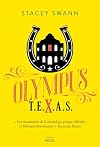
In “Olympus, Texas,” Swann cleverly reimagines the gods of Greek mythology as a relatively powerful family in small-town Texas. As a family rife with internal rivalries, conflict, and bad behavior, it seems as if the family’s bonds will be forever broken; however, sometimes breaking old habits—family mythologies—may be the path to fixing relationships. Beyond being clever, Swann has created a group of difficult, complex characters who mostly defy being put in a box.
The small town setting of this novel provides the backdrop for several generations of dysfunction in a prominent family. As the title announces, this is a reimagining of Mt Olympus and its infamous gods who have nothing but complex relationships. I honestly didn’t find one likable character. Each had one or more redeeming qualities that almost made them sympathetic, emphasis on almost! I think this book needs to be read with a broader understanding of the mythological framework and of the show more family hisotry which is slowly revealed. Knowing the mythology is not essential but could add another dimension for the reader. There is very little plot and only some introspection on the part of a couple of the characters. Most though are willing to limp along in the mire feeling hopeless in their current setting or trying to escape to a new one. I see this mostly as a morality tale. The author nods to mythology as she asks the question: Is the resulting behavior from Peter’s actions all justifiable because of his role as patriarch of the family/community? show less
Lists
Awards


You May Also Like


Statistics
- Works
- 3
- Members
- 350
- Popularity
- #68,328
- Rating
- 3.8
- Reviews
- 13
- ISBNs
- 13
- Languages
- 2