
Angelina Jolie
Author of Notes from My Travels
About the Author
Image credit: Cropped from a photo of Jolie with U.S. Senator Dick Lugar.
Works by Angelina Jolie
Lara Croft: Tomb Raider / Lara Croft: Tomb Raider: The Cradle of Life {Double Feature Video} (2007) — Director — 95 copies
First They Killed My Father: A Daughter of Cambodia Remembers [2017 film] — Director — 4 copies, 1 review
Associated Works
Out of Iraq: Refugees' Stories in Words, Paintings and Music (2010) — Foreword — 31 copies, 2 reviews
Come Away (DVD) — Actor — 1 copy
2-Movie Collection: Maleficent [and] Maleficent: Mistress of Evil — Actor — 1 copy
Tagged
Common Knowledge
- Canonical name
- Jolie, Angelina
- Birthdate
- 1975-06-04
- Gender
- female
- Occupations
- actor
film director
model - Organizations
- UNHCR
- Relationships
- Pitt, Brad (husband)
Voight, Jon (father)
Thornton, Billy Bob (husband|divorced)
Miller, Jonny Lee (husband|divorced) - Nationality
- USA
- Birthplace
- Los Angeles, California, USA
- Associated Place (for map)
- California, USA
Members
Reviews

My lord, was this horrific! I somehow confused myself into thinking it was taken from some very literary novella, but no -- written from a standing start by AJ herself, and not only bad but more than a bit irresponsible, presenting the oddball stance that barrenness makes one pathetic and useless.
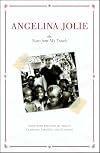
Notes from My Travels: Visits with Refugees in Africa, Cambodia, Pakistan and Ecuador by Angelina Jolie
Disclaimer - I like Angelina Jolie. I think that she's an amazing woman, a great actress and classier than certain people who feel the need to name-drop her in every other interview. That's partly why I read this and the other was that it gave me a significant push into Asia that I needed for my challenge.
Anyway, before Brangelina and all the kids Angelina Jolie was recruited as a UN Goodwill Ambassador for Refugees and as part of her duties she went travelling around the world to different show more areas to talk to displaced people. This book is her diaries during those trips and her thoughts and experiences. Almost from the start you warm to her, even if you didn't like her. The book is written such as we would write - chronicling little things and snippets of conversation as she discovers how different life is. There are little points, barely mentioned, where she realises that a boy she had spoken to was killed, or where she watches children pick litter in the street to earn money, or sees children being sold into the sex trade at the age of 5 or 6 because they can't afford not to or where she's told how gangs would come in and make family members amputate each others limbs, or sees children carrying guns where you can feel how it affects her. It's not done in a gratuitous 'oh woe is me' way, but in a way where, no matter how brief the image is, it sticks with you.
At one point in Cambodia she mentions how she and her friend went to a museum and in it they show pictures of some of the atrocities committed and she lists some of them and explains how she had to leave such was the effect it had on her.
In another account she went to Pakistan to speak with Afghan refugees. This is before 9/11 and she says that afterwards she donated money to the Afgahn refugees and as a result she received death-threats because people couldn't differentiate between Afghanistan and the Taliban. That stuck with me because even now I still think that some people fail to make those distinctions.
I know a lot of people don't like her, but I think reading this you can understand her stance on life and why she adopted the kids that she did. I just think it's something people should think about. show less
Anyway, before Brangelina and all the kids Angelina Jolie was recruited as a UN Goodwill Ambassador for Refugees and as part of her duties she went travelling around the world to different show more areas to talk to displaced people. This book is her diaries during those trips and her thoughts and experiences. Almost from the start you warm to her, even if you didn't like her. The book is written such as we would write - chronicling little things and snippets of conversation as she discovers how different life is. There are little points, barely mentioned, where she realises that a boy she had spoken to was killed, or where she watches children pick litter in the street to earn money, or sees children being sold into the sex trade at the age of 5 or 6 because they can't afford not to or where she's told how gangs would come in and make family members amputate each others limbs, or sees children carrying guns where you can feel how it affects her. It's not done in a gratuitous 'oh woe is me' way, but in a way where, no matter how brief the image is, it sticks with you.
At one point in Cambodia she mentions how she and her friend went to a museum and in it they show pictures of some of the atrocities committed and she lists some of them and explains how she had to leave such was the effect it had on her.
In another account she went to Pakistan to speak with Afghan refugees. This is before 9/11 and she says that afterwards she donated money to the Afgahn refugees and as a result she received death-threats because people couldn't differentiate between Afghanistan and the Taliban. That stuck with me because even now I still think that some people fail to make those distinctions.
I know a lot of people don't like her, but I think reading this you can understand her stance on life and why she adopted the kids that she did. I just think it's something people should think about. show less
This book surprised me. It's obviously meant to be exactly as the title suggests: Notes--there's very little in depth information or discussion of specific situations, though there is enough here to give you a base of background and larger conflicts/situations. As someone who's been reading quite a bit about relief work in the last year, I expected to move through this book quickly. I thought the lack of in depth explanation and personal detail (of those she talked to) would make this show more somewhat easier to take than some of the other memoir type books I"ve been reading. Simply, I was apparently wrong. About half-way through, I realized that each time I sat down with the book, I was reading fewer and fewer pages. It turns out, the lack of detail means that she covers SO many people, the scope of the situations comes across even more clearly than if she were to bombard us with statistics and names. Moving from paragraph to paragraph with new people and places in each ended up being very affecting for this reader. I'm not sure how much this would have been affected by my previous reading. I think that this book could be read and understood, as well as worthwhile, for readers who don't have the same knowledge I do--but I'm not positive. I will say, though, that one of the most interesting sections here was the journal from Ecuador dealing with Columbians; this was the area I was least familiar with going into the book.
In general, I recommend this as a relatively easy read for what it is--the material is far from easy to take, but it is not overly or needlessly graphic, and the journal-type layout makes the book move quickly, at least at first. As I said before though, the farther I got into it, the less I could take in one sitting. Jolie does work at focusing on the positive though, as much as the negative, where she can find it, and this was refreshing, though it may have made the book harder to take simply by the attention to the simple pleasures which are, essentially, the only positives. Regardless, I do recommend it for someone interested in a layman's look into contemporary refugee situations. show less
In general, I recommend this as a relatively easy read for what it is--the material is far from easy to take, but it is not overly or needlessly graphic, and the journal-type layout makes the book move quickly, at least at first. As I said before though, the farther I got into it, the less I could take in one sitting. Jolie does work at focusing on the positive though, as much as the negative, where she can find it, and this was refreshing, though it may have made the book harder to take simply by the attention to the simple pleasures which are, essentially, the only positives. Regardless, I do recommend it for someone interested in a layman's look into contemporary refugee situations. show less
This book is a personal chronicle of Angelina Jolie's initial trips to visit refugees around the world from 2001 to 2002. It is a fantastically easy and honest introduction to the refugee situations in Sierra Leone, Tanzania, Cambodia, Pakistan, and Ecuador. I say "honest" mostly because the book reads as the title implies it should be: this is a journal, with several hour conversations passing from one sentence to the next, with reactions, emotions, and passing observations and speculations show more tossed out in short sentences. Especially at the beginning, many of her reactions, I think, are just how the average American would react: shock, anger, pity, surprise, respect. The book also provides a healthy balance of raw numbers (millions of refugees, millions of children dying, etc.) and personal stories of survivors. The section on Afghan refugees in Pakistan was especially interesting from a historical perspective, given that it was written in August 2001. show less
Awards


You May Also Like


Associated Authors
Statistics
- Works
- 12
- Also by
- 41
- Members
- 741
- Popularity
- #34,275
- Rating
- 3.6
- Reviews
- 17
- ISBNs
- 27
- Languages
- 4