
Paul Morley
Author of Words and Music: A History of Pop in the Shape of a City
About the Author
Writer, broadcaster, and cultural critic Paul Morley has written about music, art, and entertainment since the 1970s. A founding member of the electronic collective Art of Noise and a member of staff at the Royal Academy of Music, he is the author of Ask: The Chatter of Pop; Words and Music: A show more History of Pop in the Shape of a City; Joy Division: Piece by Piece; Earthbound; The North; and Nothing. show less
Image credit: Anton Corbijn
Works by Paul Morley
A Sound Mind: How I Fell in Love With Classical Music (and Decided to Rewrite its Entire History) (2020) 53 copies, 1 review
Associated Works
Tagged
Common Knowledge
- Canonical name
- Morley, Paul
- Birthdate
- 1957-03-26
- Gender
- male
- Education
- Stockport Grammar School
Royal Academy of Music - Occupations
- music journalist
- Nationality
- England
UK - Birthplace
- Farnham, Surrey, England, UK
- Places of residence
- Eccles, Lancashire, England, UK
- Map Location
- England, UK
Members
Reviews
A Sound Mind: How I Fell in Love With Classical Music (and Decided to Rewrite its Entire History) by Paul Morley
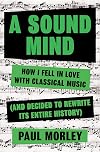
I've been flirting with tackling this brick for awhile, and almost tossed it aside again when I realized who the author actually was. This is as I have distant memories of Morley acting out when he was a leading gadfly in the British music press, before attaching himself to the semi-fiasco that was ZTT Music; after which I lost track of him.
Flash forward a generation or so, and Morley is well past his mid-life crisis, and has reinvented himself as a commentator on classical music for the show more aging hipsters of the world. In as much as I resemble that remark, I actually got a good bit out of this book. Morley's adventures in trying to get a clue, his overview of a lot of music I might not otherwise have heard of, and some astute comments on the rise and fall of a certain type of music environment and economy, were all well appreciated. However, there is no denying that this work probably could have been about 150 pages shorter, and is more of a memoir of Morley's career, than a left-field history of classical music. show less
Flash forward a generation or so, and Morley is well past his mid-life crisis, and has reinvented himself as a commentator on classical music for the show more aging hipsters of the world. In as much as I resemble that remark, I actually got a good bit out of this book. Morley's adventures in trying to get a clue, his overview of a lot of music I might not otherwise have heard of, and some astute comments on the rise and fall of a certain type of music environment and economy, were all well appreciated. However, there is no denying that this work probably could have been about 150 pages shorter, and is more of a memoir of Morley's career, than a left-field history of classical music. show less
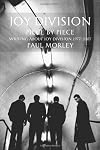
In a sense this is the book about Joy Division that everyone was waiting for. Paul Morley had been their chronicler since the earliest of early days, back up North in wet, miserable mid-70's Manchester when they had almost been called Stiff Kittens but ended up being Warsaw before they became Joy Division. He was there at the Lesser Free Trade Hall in 1976 when the Sex Pistols played there and set in motion the chain of events that would lead various members of that audience to bend the show more world around them into new shapes. Buzzcocks, Magazine, The Fall and Joy Division all came into being directly because of that concert.
Morley saw something, some spark, some unearthly light in these four young men and the fierce, deeply emotional music they made. As the proto-punk Warsaw morphed into the post-punk Joy Division, as lead singer Ian Curtis found his true voice, as Hooky's bass shook the very foundations of Manchester, Morley was there to write about it. In a way he fell in love with the group or at least with the idea of what the group could become, given the right opportunities.
In the space of two years they created two extraordinary albums and a handful of truly inspired singles. They found a home at Factory records and a svengali father-figure in the mercurial Tony Wilson. And Morley was there to document it all.
He experimented with his journalism, trying to find a way to communicate the greatness of the group and their music with imagery and symbolism instead of the dry track by track analysis of conventional music journalism. This lead to accusations of pretentiousness, and yes his work can be obtuse but it can also be diamond sharp and poetic and tragic. It took him almost 30 years to write the definitive book on Joy Division, the book that Tony Wilson always thought he would/could write. Piece by Piece is that book and what it reveals is the complex relationship that Morley had not only with Joy Division but also with death. His own father had committed suicide in the late 70's as Curtis would do in 1980, as Joy Division stood on the cusp of stardom.
Baffled by these events Morley retreated but always there ran through his work, even the wild, chaotic, absurdist world of ZTT, that he helped create in imitation of Factory. The works here are not presented chronologically, but rather each piece tells the story as the story unfolded. Morley took 30 years to work out what he had to say and how he had to say it and why he had to say it and in what way he had to say it. There are live reviews here, record reviews, interviews, essays, not all of them about Joy Division, but all of them linked in some way to that dark, dramatic, passionate group and their dark, dramatic passionate music.
Slowly, over many years, as Joy Division were repackaged and resold and the story was spun by others into Myth, Morley wrote about them again and again and each time more pieces of the puzzle fell into place. Eventually he would write a book called Nothing that dealt with his father's suicide (even if it opens with him being shown, by Wilson, the dead body of Ian Curtis). With that done he then, it seems, had no choice but to write the book he had been waiting 30 years to write.
As Joy Division rose again in the public consciousness, with films and documentaries and the death of Tony Wilson (latterly Anthony H. Wilson) the time seemed perfect for this book. It is the definitive book on one of the greatest rock bands of all time. Because he was there. Because he understood what it meant even if it took him years to work it out. Because death couldn't stop them. Because to so many people Joy Division mattered. And still matter.
This is the way, step inside.... show less
Morley saw something, some spark, some unearthly light in these four young men and the fierce, deeply emotional music they made. As the proto-punk Warsaw morphed into the post-punk Joy Division, as lead singer Ian Curtis found his true voice, as Hooky's bass shook the very foundations of Manchester, Morley was there to write about it. In a way he fell in love with the group or at least with the idea of what the group could become, given the right opportunities.
In the space of two years they created two extraordinary albums and a handful of truly inspired singles. They found a home at Factory records and a svengali father-figure in the mercurial Tony Wilson. And Morley was there to document it all.
He experimented with his journalism, trying to find a way to communicate the greatness of the group and their music with imagery and symbolism instead of the dry track by track analysis of conventional music journalism. This lead to accusations of pretentiousness, and yes his work can be obtuse but it can also be diamond sharp and poetic and tragic. It took him almost 30 years to write the definitive book on Joy Division, the book that Tony Wilson always thought he would/could write. Piece by Piece is that book and what it reveals is the complex relationship that Morley had not only with Joy Division but also with death. His own father had committed suicide in the late 70's as Curtis would do in 1980, as Joy Division stood on the cusp of stardom.
Baffled by these events Morley retreated but always there ran through his work, even the wild, chaotic, absurdist world of ZTT, that he helped create in imitation of Factory. The works here are not presented chronologically, but rather each piece tells the story as the story unfolded. Morley took 30 years to work out what he had to say and how he had to say it and why he had to say it and in what way he had to say it. There are live reviews here, record reviews, interviews, essays, not all of them about Joy Division, but all of them linked in some way to that dark, dramatic, passionate group and their dark, dramatic passionate music.
Slowly, over many years, as Joy Division were repackaged and resold and the story was spun by others into Myth, Morley wrote about them again and again and each time more pieces of the puzzle fell into place. Eventually he would write a book called Nothing that dealt with his father's suicide (even if it opens with him being shown, by Wilson, the dead body of Ian Curtis). With that done he then, it seems, had no choice but to write the book he had been waiting 30 years to write.
As Joy Division rose again in the public consciousness, with films and documentaries and the death of Tony Wilson (latterly Anthony H. Wilson) the time seemed perfect for this book. It is the definitive book on one of the greatest rock bands of all time. Because he was there. Because he understood what it meant even if it took him years to work it out. Because death couldn't stop them. Because to so many people Joy Division mattered. And still matter.
This is the way, step inside.... show less
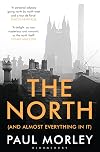
Well, not quite what I was expecting. I thought it would be more in the mode of Maconie. Nevertheless, a fascinating dialogue of Morley making sense of his place in the world - and finding a sense of place. Also interspersed with fascinating historical detail.
But it should really be called the North West!
But it should really be called the North West!
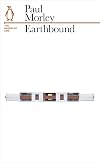
I’m continuing on my journey of reading the books celebrating 150 years of the London Underground. Earthbound is set on the Bakerloo line, which is an unfortunate shade of brown on the famous Tube map. It’s something that Paul Morley makes frequent reference to in this story about music, the 1970s and London in general in that time. He portrays the Bakerloo line as something that has been left behind and is unfashionable but still comfortable.
The novella starts in a promising way – how show more to find your way around the Tube when it seems you’re the only one who doesn’t have a clue what to do. It then moves on to the history of the line before discussing what the author was doing during that time, which was writing for NME. He talks about being the first person to own a Walkman in London (note: not verified) and being able to tune out the sounds of the Tube for the first time. In this day and age, where it’s unusual to be listening to the normal background noises of the Tube (or anything really) this hit a chord with me. Imagine not having portable music! Being forced to listen to life! Morley then goes on to discuss more about music and in particular the band Can. Can were an experimental rock band hailing from Germany, who Morley seems to be a big fan of. I tended to tune out during these passages as I’m not much of an electronic music fan and scan the words for something a bit more rock based.
I enjoyed this read more when it was directly connected with the Tube, although I did like reading about the early Walkman that had two headphone jacks for sharing (better than one ear each) and the John Peel sessions at the BBC. It’s adventurous without being overly whimsical. If you’re a fan of Can, you will adore this. If not, it’s an interesting read tying together music and the Tube.
http://samstillreading.wordpress.com show less
The novella starts in a promising way – how show more to find your way around the Tube when it seems you’re the only one who doesn’t have a clue what to do. It then moves on to the history of the line before discussing what the author was doing during that time, which was writing for NME. He talks about being the first person to own a Walkman in London (note: not verified) and being able to tune out the sounds of the Tube for the first time. In this day and age, where it’s unusual to be listening to the normal background noises of the Tube (or anything really) this hit a chord with me. Imagine not having portable music! Being forced to listen to life! Morley then goes on to discuss more about music and in particular the band Can. Can were an experimental rock band hailing from Germany, who Morley seems to be a big fan of. I tended to tune out during these passages as I’m not much of an electronic music fan and scan the words for something a bit more rock based.
I enjoyed this read more when it was directly connected with the Tube, although I did like reading about the early Walkman that had two headphone jacks for sharing (better than one ear each) and the John Peel sessions at the BBC. It’s adventurous without being overly whimsical. If you’re a fan of Can, you will adore this. If not, it’s an interesting read tying together music and the Tube.
http://samstillreading.wordpress.com show less
Lists
Awards


You May Also Like


Associated Authors
Statistics
- Works
- 20
- Also by
- 3
- Members
- 701
- Popularity
- #36,119
- Rating
- 3.6
- Reviews
- 14
- ISBNs
- 44
- Languages
- 1
- Favorited
- 3