
About the Author
Bob Berman, one of America's top astronomy writers, contributed the popular "Night Watchman" column to Discover for seventeen years. He is currently a columnist for Astronomy, a host on NPR's Northeast Public Radio, and the science editor of The Old Farmer's Almanac. He lives in Willow, New York.
Image credit: By Benjamin Thomas - Bob Berman - IdeaFestival 2009Uploaded by Edward, CC BY 2.0, https://commons.wikimedia.org/w/index.php?curid=9781910
Works by Bob Berman
Secrets of the Night Sky: Most Amazing Things in the Universe You Can See with the Naked Eye, The (1995) 166 copies
The Sun's Heartbeat: And Other Stories from the Life of the Star That Powers Our Planet (2011) 150 copies, 9 reviews
Zoom: How Everything Moves: From Atoms and Galaxies to Blizzards and Bees (2014) 141 copies, 9 reviews
Earth-Shattering: Violent Supernovas, Galactic Explosions, Biological Mayhem, Nuclear Meltdowns, and Other Hazards to Life in Our Universe (2019) 47 copies, 3 reviews
Boom!: The Violent Supernovas, Galactic Explosions, and Earthly Mayhem that Shook our Universe (2019) 6 copies, 1 review
Tagged
Common Knowledge
- Birthdate
- 1946
- Gender
- male
- Short biography
- Bob Berman is one of the best-known and most widely-read astronomers in the world. He is perhaps uniquely able to translate complex scientific concepts into language that is understandable to the casual observer yet meaningful to the most advanced. His dry, edgy wit engages readers of such diverse publications as Discover Magazine, Astronomy Magazine, and The Old Farmers Almanac. From http://www.skymanbob.com/?q=about
- Nationality
- USA
- Associated Place (for map)
- USA
Members
Reviews
The Sun's Heartbeat: And Other Stories from the Life of the Star That Powers Our Planet by Bob Berman
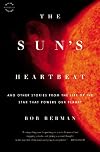
This is a highly readable account of the science of our nearest and most important star, and the stories behind how we have learned all that we know about it. Berman starts with such basics as how we tracked the Sun's movement through our sky and how it governs our agricultural year, to figuring out that it was Earth, not the Sun, that moved, to the latest very startling and disquieting observations of changes in the Sun and how those changes affect us.
And he does it all with stories, show more stories of the people making the discoveries and creating the new theories, and stories of the events that affected them. He also does it with humor, and had me chuckling, or snickering, or smiling, every few pages.
Granted, his humor won't do that for everyone. It's both irreverent and bone-dry. Some examples:
Nothing outside of a birth or an IRS audit can produce such sobbing or reverential silence like a total solar eclipse or the fabled northern lights.
And:
Every rainbow is an arc, meaning part of a circle. And every circle has a center. Well, what occupies the center of every rainbow? Think about it, and don't say a pot of gold. (That's located at the end of the rainbow.)
Concerning what to do if you see the beginnings of an aurora borealis appearing:
If you see this, phone everyone you know no matter the hour--a 2:00 AM aurora call may even be appreciated by your ex and her new spouse. (Then again, maybe not.)
Regarding the pervasiveness of neutrinos, and how long it took to detect them:
Neutrinos from the Sun are far and away the most prevalent things in our lives; nothing else even comes close. And yet they remained undetected until 1968, the year the Beatles went to India (although the two events are generally regarded as unrelated.)
If these don't get even a hint of a smile from you, you might not enjoy this book as much as I did. Nevertheless, it would be a fascinating and enjoyable read even without that.
Berman doesn't just cover the science of the Sun itself, in isolation. He covers the medical implications (why we worry too much about sunlight exposure, use "sunscreen" that's useless, and need to take more vitamin D), why seeing a total eclipse of the Sun will change your life (and why the fact that they happen is one of the freaky strange coincidences of the universe), and the complicated relationship between the Sun, the current shape of Earth's orbit, and climate change (the Sun's behavior doesn't explain our current global warming, but it has helped to mask the effect and make it harder to convince people there's a problem.)
This is an altogether excellent book, that covers an enormous subject--the Sun and our relationship with it--in clear, readable, enjoyable terms.
Highly recommended. show less
And he does it all with stories, show more stories of the people making the discoveries and creating the new theories, and stories of the events that affected them. He also does it with humor, and had me chuckling, or snickering, or smiling, every few pages.
Granted, his humor won't do that for everyone. It's both irreverent and bone-dry. Some examples:
Nothing outside of a birth or an IRS audit can produce such sobbing or reverential silence like a total solar eclipse or the fabled northern lights.
And:
Every rainbow is an arc, meaning part of a circle. And every circle has a center. Well, what occupies the center of every rainbow? Think about it, and don't say a pot of gold. (That's located at the end of the rainbow.)
Concerning what to do if you see the beginnings of an aurora borealis appearing:
If you see this, phone everyone you know no matter the hour--a 2:00 AM aurora call may even be appreciated by your ex and her new spouse. (Then again, maybe not.)
Regarding the pervasiveness of neutrinos, and how long it took to detect them:
Neutrinos from the Sun are far and away the most prevalent things in our lives; nothing else even comes close. And yet they remained undetected until 1968, the year the Beatles went to India (although the two events are generally regarded as unrelated.)
If these don't get even a hint of a smile from you, you might not enjoy this book as much as I did. Nevertheless, it would be a fascinating and enjoyable read even without that.
Berman doesn't just cover the science of the Sun itself, in isolation. He covers the medical implications (why we worry too much about sunlight exposure, use "sunscreen" that's useless, and need to take more vitamin D), why seeing a total eclipse of the Sun will change your life (and why the fact that they happen is one of the freaky strange coincidences of the universe), and the complicated relationship between the Sun, the current shape of Earth's orbit, and climate change (the Sun's behavior doesn't explain our current global warming, but it has helped to mask the effect and make it harder to convince people there's a problem.)
This is an altogether excellent book, that covers an enormous subject--the Sun and our relationship with it--in clear, readable, enjoyable terms.
Highly recommended. show less
Earth-Shattering: Violent Supernovas, Galactic Explosions, Biological Mayhem, Nuclear Meltdowns, and Other Hazards to Life in Our Universe by Bob Berman
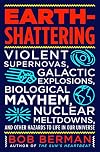
Mind-boggling science, mostly astronomy, with enough witty comments to keep me chuckling. The book was written for the layperson. Much of the science was over my head, but I still learned a lot.
The author seems to be a big fan of "clean" nuclear energy to combat climate change without mentioning the nuclear waste that will need "safe" storage and will be dangerous for 250,000 years. Still, he did applaud the budding transition to renewable energy at the end of the chapter.
Overall, it was a show more fascinating read about amazing cataclysms in space, with a few earthly pandemics and extinctions thrown in.
Here are a few tidbits:
Page 111: "Remove all the unoccupied space within each atom, and a gathering of the entire human race would take up the volume of ... [a] mere sugar cube."
Page 158: "... the constant stream of disintegrating micro-meteors ... are ... estimated to add forty thousand tons of mass to Earth annually..."
Page 251: Re. a type 2 supernova that ends as a neutron star: "The star is now just twelve miles wide, and its material is so packed together that a speck the size of a poppy seed would outweigh an aircraft carrier." And the star shrinks further till not even light can escape when it becomes a black hole, yet it keeps collapsing smaller and smaller.
Huh? Okay. If you say so.
One way I judge a good book is, does it change the way I see the world? Though I barely understood the astronomy part, and remembered less, it did change my perspective of our planet in the cosmos. For that, I give it four solid stars. show less
The author seems to be a big fan of "clean" nuclear energy to combat climate change without mentioning the nuclear waste that will need "safe" storage and will be dangerous for 250,000 years. Still, he did applaud the budding transition to renewable energy at the end of the chapter.
Overall, it was a show more fascinating read about amazing cataclysms in space, with a few earthly pandemics and extinctions thrown in.
Here are a few tidbits:
Page 111: "Remove all the unoccupied space within each atom, and a gathering of the entire human race would take up the volume of ... [a] mere sugar cube."
Page 158: "... the constant stream of disintegrating micro-meteors ... are ... estimated to add forty thousand tons of mass to Earth annually..."
Page 251: Re. a type 2 supernova that ends as a neutron star: "The star is now just twelve miles wide, and its material is so packed together that a speck the size of a poppy seed would outweigh an aircraft carrier." And the star shrinks further till not even light can escape when it becomes a black hole, yet it keeps collapsing smaller and smaller.
Huh? Okay. If you say so.
One way I judge a good book is, does it change the way I see the world? Though I barely understood the astronomy part, and remembered less, it did change my perspective of our planet in the cosmos. For that, I give it four solid stars. show less
Earth-Shattering: Violent Supernovas, Galactic Explosions, Biological Mayhem, Nuclear Meltdowns, and Other Hazards to Life in Our Universe by Bob Berman
Earth-Shattering by Bob Berman is a witty look at the cataclysms of our planet's past and future, many of which were (or are likely to be) seen as the Apocalypse by religious type folks. This book is divided into three main parts. The first gives an intro to the universe at large, exploring how it came to be, and how our own humble little planet was formed. The second part looks at the disasters that have plagued earth itself, from the Chicxulub asteroid impact likely responsible for the show more dinosaur extinction, to the great slate-wiper virii that decimated large swathes of the world population, to the last Ice age, and the probability of a greenhouse or snowball earth. The final section looks at cataclysm of the future, as in billions of years from now. How the sun will eventually turn to a red giant and render earth a lifeless planet.
Chapter 30 was especially interesting to me as it discussed things humans wanted to turn into cataclysm, but that never actually were. Things like Y2K, and 2012. The things that make me want to scream at people's ignorance, and humanity's desire to have the apocalypse happen. Doom-sayers with nothing better to do. But dude… there were several references to things hitting eyes that left me cringing. Aahhhhh! Overall, it's stuffed full of neat trivia, and is written in an engaging tone. Recommended for those with science interest.
***Many thanks to Netgalley/ Little, Brown, and Co for providing an ecopy in exchange for a fair and honest review. show less
Chapter 30 was especially interesting to me as it discussed things humans wanted to turn into cataclysm, but that never actually were. Things like Y2K, and 2012. The things that make me want to scream at people's ignorance, and humanity's desire to have the apocalypse happen. Doom-sayers with nothing better to do. But dude… there were several references to things hitting eyes that left me cringing. Aahhhhh! Overall, it's stuffed full of neat trivia, and is written in an engaging tone. Recommended for those with science interest.
***Many thanks to Netgalley/ Little, Brown, and Co for providing an ecopy in exchange for a fair and honest review. show less
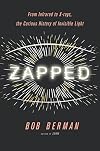
Disclaimer: I received this book from the GoodReads First Reads program.
Zapped is a history and description of invisible light from the beginning with infrared to the most recent cosmic rays. Along the way, the discoverers are given short biographical introductions. While I had been familiar with most of the scientists mentioned, many were new to me. Even the ones I though I knew sometimes had surprising details of their lives revealed. For instance, while I had been well aware of William show more Herschel's contributions to science and astronomy, I had no idea that he had been a trained musician and was a composer before indulging his interests in science. I also hadn't known that Marie and Pierre Curie were avid bicyclists who took a bicycle tour honeymoon.
The author also presents quite a bit of interesting information about how different forms of light work, some quite surprising. For instance, you can live across the street from a nuclear power plant for a year, and receive less radiation than from eating one banana. For those interested in colonizing Mars, the author points out that you'd probably encounter more than a lethal dose of radiation on the trip out there.
This book is very well written, very interesting for the lay person to read and highly recommended. show less
Zapped is a history and description of invisible light from the beginning with infrared to the most recent cosmic rays. Along the way, the discoverers are given short biographical introductions. While I had been familiar with most of the scientists mentioned, many were new to me. Even the ones I though I knew sometimes had surprising details of their lives revealed. For instance, while I had been well aware of William show more Herschel's contributions to science and astronomy, I had no idea that he had been a trained musician and was a composer before indulging his interests in science. I also hadn't known that Marie and Pierre Curie were avid bicyclists who took a bicycle tour honeymoon.
The author also presents quite a bit of interesting information about how different forms of light work, some quite surprising. For instance, you can live across the street from a nuclear power plant for a year, and receive less radiation than from eating one banana. For those interested in colonizing Mars, the author points out that you'd probably encounter more than a lethal dose of radiation on the trip out there.
This book is very well written, very interesting for the lay person to read and highly recommended. show less
Awards


You May Also Like


Associated Authors
Statistics
- Works
- 14
- Members
- 782
- Popularity
- #32,554
- Rating
- 3.8
- Reviews
- 26
- ISBNs
- 42
- Languages
- 3
- Favorited
- 1