
Carolyn Burke
Author of Lee Miller: A Life
About the Author
Image credit: Elena Seibert
Works by Carolyn Burke
Foursome: Alfred Stieglitz, Georgia O'Keeffe, Paul Strand, Rebecca Salsbury (2019) 92 copies, 3 reviews
Associated Works
HOW(ever), Vol. 3, No. 3, October 1986 — Contributor — 1 copy
Tagged
Common Knowledge
- Birthdate
- 1940
- Gender
- female
- Education
- Swarthmore College
Columbia University - Nationality
- USA
- Birthplace
- Sydney, Australia
- Map Location
- USA
Members
Reviews
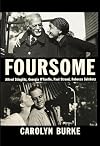
Reading about those one admires can, at times, be dangerous to the pedestal you have placed them on. Paul Strand and Alfred Stieglitz have long been two of my favorite photographers, although to be honest, I frequently confuse their work, especially their depictions of New York. Georgia O'Keeffe is one of the brightest stars in America's artistic firmament. Rebecca Salsbury, the fourth member of the cast, was entirely unknown to me before reading Foursome, Carolyn Burke's account of the show more lives of the quartet. Burke's recounting of their work and lives together is engaging, warm, and works hard to look at each of the individual artist's perspective. But life is a messy adventure that is rarely concluded unmussed.
Paul Strand's embrace of communism, even after the world saw the Lenin, Stalin, Mao totalitarian waltz, is troubling and head-scratching but does not change the majesty of his work.
Dr. Phil might be willing to offer a diagnostic guess to the behavior of someone he has not met. I don't feel comfortable doing so, especially if that someone I've never met died before my parents graduated kindergarten. That being said, the life of Alfred Stieglitz could easily be an early snapshot of sex addiction. Although to be fair, he could be your garden variety, misogynistic cad.
But for me, the bloom has been slapped off the Georgia O'Keeffe flower by her own hand. After Alfred and Georgia were married, some of his family came for a summertime visit. One young girl skipped up excitedly and said hello to her, "Aunt Georgia." O'Keeffe slapped the child and told the girl, "Never call me "Aunt Georgia" again." Obviously, this doesn't change a single brilliant brushstroke of her work. However, it creates such darkness around her that her art becomes very hard to see. show less
Paul Strand's embrace of communism, even after the world saw the Lenin, Stalin, Mao totalitarian waltz, is troubling and head-scratching but does not change the majesty of his work.
Dr. Phil might be willing to offer a diagnostic guess to the behavior of someone he has not met. I don't feel comfortable doing so, especially if that someone I've never met died before my parents graduated kindergarten. That being said, the life of Alfred Stieglitz could easily be an early snapshot of sex addiction. Although to be fair, he could be your garden variety, misogynistic cad.
But for me, the bloom has been slapped off the Georgia O'Keeffe flower by her own hand. After Alfred and Georgia were married, some of his family came for a summertime visit. One young girl skipped up excitedly and said hello to her, "Aunt Georgia." O'Keeffe slapped the child and told the girl, "Never call me "Aunt Georgia" again." Obviously, this doesn't change a single brilliant brushstroke of her work. However, it creates such darkness around her that her art becomes very hard to see. show less
I was provided a review copy of this from the publisher through First to Read. I admit unfamiliarity with three of the foursome, though I recognize Strand and of course, O’Keeffe (I got to see an exhibition of some if her works in Oklahoma some 30 years ago, too young to truly appreciate them) and I didn’t make many notes in this reading... just absorbed. There are intimate stories here. I do not know how much is known already to students of these four, but I suspect - obviously, as the show more book had to be written - that having them all together is new, and perhaps unknown.
More than a telling of their stories, Ms. Burke also frames the times that shaped them, shaped their arts. New arts to the world, new visions, self discovery and explorations. One of the things I appreciate about Ms. Burke’s exposition and sometime dramatization is that she qualifies any speculation; if she found no evidence to support suspected relationships, interactions, she doesn’t embellish. Or at least those parts of her narrative where she caveats “tempting to think ... but impossible to know" would indicate.
We tend to think in two dimensions, and might think of a "foursome" as a rectangle/quadrangle, but they were rather a tetrahedron, with Steiglitz at the apex for most of their relationships. O'Keeffe eclipsed him in fame and ascended to that apex, but his ... seniority ... tended to prevail. This is not to say that any of the other three were not their own people, individual and distinct. Clearly, they were, but he was the progenitor of that foursome. They fed off of each other. Built. And also held each other at bay. To preserve their individuality.
This is about the people, and much less their arts, which serve to support here but not stand center. So what do I take away? Well, I looked up Salsbury's reverse oils on glass, and Stieglitz's and Strand's photographs. And I revisited O'Keeffe. And I have things to think about.
show less
More than a telling of their stories, Ms. Burke also frames the times that shaped them, shaped their arts. New arts to the world, new visions, self discovery and explorations. One of the things I appreciate about Ms. Burke’s exposition and sometime dramatization is that she qualifies any speculation; if she found no evidence to support suspected relationships, interactions, she doesn’t embellish. Or at least those parts of her narrative where she caveats “tempting to think ... but impossible to know" would indicate.
We tend to think in two dimensions, and might think of a "foursome" as a rectangle/quadrangle, but they were rather a tetrahedron, with Steiglitz at the apex for most of their relationships. O'Keeffe eclipsed him in fame and ascended to that apex, but his ... seniority ... tended to prevail. This is not to say that any of the other three were not their own people, individual and distinct. Clearly, they were, but he was the progenitor of that foursome. They fed off of each other. Built. And also held each other at bay. To preserve their individuality.
This is about the people, and much less their arts, which serve to support here but not stand center. So what do I take away? Well, I looked up Salsbury's reverse oils on glass, and Stieglitz's and Strand's photographs. And I revisited O'Keeffe. And I have things to think about.
show less
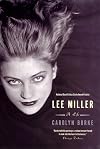
This is an exhaustive biography, and I can totally understand why some readers would feel bogged down by it; a good editor could have pruned some of the content and eliminated the names of people who are only referred to a few times but who the reader has to look up in the index as a reminder when they recur many pages later. I do admire Carolyn Burke's dedication to painting a full portrait of Miller, a woman with a great lust for life who, like many women who participated on the frontlines show more of World War II, had difficulty adjusting to civilian life after the war ended. Miller was often overshadowed by her husband, Roland Penrose, and Burke doesn't shy away from probing into the reasons for that while also honoring the love they shared over several decades. And I like that Burke delves into Miller's passion for cooking, which sustained her throughout the postwar years and probably served as a form of therapy for what she had endured as one of the first war correspondents to photograph the liberation of the death camps (at one point, Miller had 2,000 cookbooks--I hope these were given to an archive!). Although Miller's subsequent disavowal of her past as a photographer and her difficulty with completing magazine assignments in the 1950s and '60s is a sad postscript to a freeform and inspiring career, Burke's careful writing illuminates the reasons for this and corrects the notion that Miller's postwar life and marriage to Penrose were complete repudiations of her promise. show less
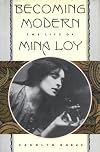
I found Becoming Modern: The Life of Mina Loy an utterly absorbing biography not only of a fascinating woman but also of the emergence and evolution of the Modern in the first half of the 20th Century. Although not well known today, Loy was at the center of Modernism's experimentation and social life as a painter, poet, Futurist, Dadaist, and designer.
Born Mina Gertrude Löwry in London in 1882 to a Hungarian Jewish tailor and a Methodist "English Rose," Mina was, even as a child, at odds show more with her bourgeois, religious mother. At 17, she began her art studies in Munich and London, eventually moving to Paris where she met her first husband, Stephen Haweis. It was a disastrous marriage, probably only embarked upon because Mina was pregnant, and her father would supply the married couple with a living allowance. The couple moved to Florence where living was cheaper and where Mina became involved with the Futurists having an affair with Marinetti, proclaimer of The Futurist Manifesto. In response to Marinetti's and the Futurists' general misogyny, Loy drafted her Feminist Manifesto: http://literarymovementsmanifesto.wordpress.com/text-2/mina-loy-feminist-manifes....
Migrating from Paris to Florence to New York and back to Paris, Loy became friends with Gertrude Stein, Djuna Barnes, Ezra Pound, William Carlos Williams, Duchamp, Carl Van Vechten, Mabel Dodge, Luhan, Man Ray and the other luminaries of the teens and twenties. She was accepted into the Salon d'Automne, acted with Williams at the Provincetown Players, was published in the little magazines of the period, and participated in the bohemian life as a great beauty and wit. She became the lover of Arthur Cravan aka Fabian Lloyd, a boxer-poet and nephew of Oscar Wilde. When she became pregnant in 1918, the couple fled to Mexico as Cravan was avoiding the draft. He was drowned in a sailing accident, and their daughter was born in 1919.
Burke's biography of Loy draws on thousands of letters and works, published and unpublished, from the period as well as many interviews with surviving Dadaists (Burke's research went on for years, and the book was published in 1996). She is sympathetic to, but objectively balanced in her portrait of Loy, who was a complex, rather narcissitic, highly creative artist. Her reputation was eclipsed with the rise of the Modern formalists and the New Critics in the 30s and 40s, but many have championed her work including Ezra Pound; the Black Mountain poets, Kenneth Rexroth; her son-in-law, Julien Levy; and the poet Jonathan Williams, who interviewed her in Aspen in 1965 shortly before her death. An edition of her poetry The Lost Lunar Baedeker edited by Roger Conover is still in print as are some other collections of her writings.
I had run across Loy's name here and there in my readings of the Moderns, but knew nothing about her until I encountered some of her poems and "The Feminist Manifesto" in the latest edition of the Norton Anthology of English Lit -- it was the first time she had been included. I read Burke's biography because I was curious about who she was. It led me into a whole new understanding of the Modern scene than I had encountered before. Highly recommended.
An interesting interview of Carolyn Burke about the book is here: http://jacketmagazine.com/05/mina-iv.html show less
Born Mina Gertrude Löwry in London in 1882 to a Hungarian Jewish tailor and a Methodist "English Rose," Mina was, even as a child, at odds show more with her bourgeois, religious mother. At 17, she began her art studies in Munich and London, eventually moving to Paris where she met her first husband, Stephen Haweis. It was a disastrous marriage, probably only embarked upon because Mina was pregnant, and her father would supply the married couple with a living allowance. The couple moved to Florence where living was cheaper and where Mina became involved with the Futurists having an affair with Marinetti, proclaimer of The Futurist Manifesto. In response to Marinetti's and the Futurists' general misogyny, Loy drafted her Feminist Manifesto: http://literarymovementsmanifesto.wordpress.com/text-2/mina-loy-feminist-manifes....
Migrating from Paris to Florence to New York and back to Paris, Loy became friends with Gertrude Stein, Djuna Barnes, Ezra Pound, William Carlos Williams, Duchamp, Carl Van Vechten, Mabel Dodge, Luhan, Man Ray and the other luminaries of the teens and twenties. She was accepted into the Salon d'Automne, acted with Williams at the Provincetown Players, was published in the little magazines of the period, and participated in the bohemian life as a great beauty and wit. She became the lover of Arthur Cravan aka Fabian Lloyd, a boxer-poet and nephew of Oscar Wilde. When she became pregnant in 1918, the couple fled to Mexico as Cravan was avoiding the draft. He was drowned in a sailing accident, and their daughter was born in 1919.
Burke's biography of Loy draws on thousands of letters and works, published and unpublished, from the period as well as many interviews with surviving Dadaists (Burke's research went on for years, and the book was published in 1996). She is sympathetic to, but objectively balanced in her portrait of Loy, who was a complex, rather narcissitic, highly creative artist. Her reputation was eclipsed with the rise of the Modern formalists and the New Critics in the 30s and 40s, but many have championed her work including Ezra Pound; the Black Mountain poets, Kenneth Rexroth; her son-in-law, Julien Levy; and the poet Jonathan Williams, who interviewed her in Aspen in 1965 shortly before her death. An edition of her poetry The Lost Lunar Baedeker edited by Roger Conover is still in print as are some other collections of her writings.
I had run across Loy's name here and there in my readings of the Moderns, but knew nothing about her until I encountered some of her poems and "The Feminist Manifesto" in the latest edition of the Norton Anthology of English Lit -- it was the first time she had been included. I read Burke's biography because I was curious about who she was. It led me into a whole new understanding of the Modern scene than I had encountered before. Highly recommended.
An interesting interview of Carolyn Burke about the book is here: http://jacketmagazine.com/05/mina-iv.html show less
Lists
Awards


You May Also Like


Associated Authors
Statistics
- Works
- 7
- Also by
- 2
- Members
- 597
- Popularity
- #42,084
- Rating
- 3.8
- Reviews
- 13
- ISBNs
- 32
- Languages
- 3