
Thad Carhart
Author of The Piano Shop on the Left Bank: Discovering a Forgotten Passion in a Paris Atelier
About the Author
Thad Carhart has lived in France for much of his life. He was educated at Yale and Stanford, and worked in northern California as a consultant in the entertainment business before returning to Europe twelve years ago
Image credit: Photo by Simon Neri at ThadCarhart.com
Works by Thad Carhart
The Piano Shop on the Left Bank: Discovering a Forgotten Passion in a Paris Atelier (2000) 1,449 copies, 42 reviews
Tagged
Common Knowledge
- Canonical name
- Carhart, Thad
- Legal name
- Carhart, Thaddeus E.
- Birthdate
- 1950-02-16
- Gender
- male
- Education
- Yale University
Stanford University - Occupations
- events coordinator
communications executive
freelance writer
consultant - Organizations
- Apple Computer
- Nationality
- USA
- Birthplace
- USA
- Places of residence
- Paris, France
San Francisco, California, USA - Associated Place (for map)
- USA
Members
Reviews
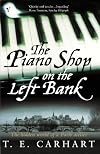
To call this lovely book lyrical just seems so, well, twee. Yet, try as I might, nothing else seems as apropos. So, lyrical it is. Tad Carhart has woven threads of love of music, theories of learning, personal history, Parisian oddities, technical background and interesting eccentrics into a delightful little story that was fun and quick to read. I'm so happy to have found this book and benefitted from our authors obsession.
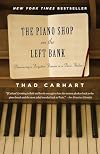
It works. It's a memoir that actually works. In fact it works so well that it reads like a story and I'm still having trouble figuring out if large swatches of it were made up. But that's not the most impressive part of this book. It does not focus on the author. Let me rephrase that because these days it's important: I typically don't read memoirs because I appear to be allergic to texts that are designed to elevate the author's ego instead of telling an authentic story. This is not one of show more those, even though it is all about the author. He is not the subject. So what is this memoir about?
Here we have a memoir that explores humanity through acute observations of culture and human behavior. But it's not a text book or a dry summing up. Neither is it a novel or an autobiography.
The central core of the book is an old piano workshop in Paris. It is inhabited by either typical Parisians or eccentrics, depending on if you're European or not. Being from Europe these people seemed just regular folk. Living in the US I can see them being seen as eccentric or even crazy.
We learn about the personal history of the author with pianos and piano playing. We learn about the obsessions and fascinations of others and pianos and we mostly learn about how music gets us to a place that can't be obtained through logic or pure reasoning. And it's all told in a way that allows anyone access to those experiences, be it second hand, through this book.
Do I sound overly excited about this book? Having read dozens of non-fiction books that are all thinly veiled ego pumps I have to say: yes I am very excited about this work. show less
Here we have a memoir that explores humanity through acute observations of culture and human behavior. But it's not a text book or a dry summing up. Neither is it a novel or an autobiography.
The central core of the book is an old piano workshop in Paris. It is inhabited by either typical Parisians or eccentrics, depending on if you're European or not. Being from Europe these people seemed just regular folk. Living in the US I can see them being seen as eccentric or even crazy.
We learn about the personal history of the author with pianos and piano playing. We learn about the obsessions and fascinations of others and pianos and we mostly learn about how music gets us to a place that can't be obtained through logic or pure reasoning. And it's all told in a way that allows anyone access to those experiences, be it second hand, through this book.
Do I sound overly excited about this book? Having read dozens of non-fiction books that are all thinly veiled ego pumps I have to say: yes I am very excited about this work. show less
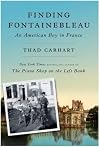
There's something incredibly appealing about moving overseas for a time, isn't there? I have friends who have done it and my husband and I have discussed the possibility of us doing it as well, especially now that our kids are older. Moving with small children, which we've done, is a challenge and I can't imagine all of the logistics involved in doing it with a house full of young children. I can see how those children would have wonderful memories of having lived abroad and would show more potentially want to revisit the sites of their childhood in adulthood though. Thad Carhart's wonderful new memoir, Finding Fontainebleu, recalls the three years not long after WWII when he and his family moved to France for his father's job as a military attache at NATO headquarters as well as interesting tidbits of French history centered around the chateau of Fontainebleau, and his own visit, after moving back to France with his wife and young children, to the chateau as it underwent restoration.
Carhart's family moved to Fontainebleau, France in the 1950s when he was just starting school. He was the fourth of five children and he recounts his memories of the family's move and everyday life abroad. Even as a young child, he notices the differences between post-war France and the post-war US they've moved from. He details his daily life, his schooling, and what it was like to live in France as an American child. Woven in with these reminiscences, he recounts his visits to Fontainebleau as an adult where he is privileged to be taken inside the chateau beyond the areas open to tourists in order to see the restorations going on in this venerable once royal residence. He speaks with the chief of restorations and comes to appreciate the exactitude of the decisions made and the dilemmas presented by a chateau added to and changed by many different monarchs throughout the ages. As he describes the work on the chateau for the reader, he also has the opportunity to pass on fascinating pieces of French history and the royals, including several Louises and two Napoleons, who inhabited this wonderful, eccentric place.
The tone of the memoir is accessible and pleasing. Carhart pokes fun at the French and at his family in equal measure, with a fondness for both that definitely shines through. The three different pieces of the narrative weave together comfortably and without a hitch, each adding depth to the others. Carhart's memories are surprisingly full given his age when he lived in France but certainly some of the more unusual happenings were probably seared into his memory. This charming memoir is a warm and appealing read, especially for those who have a thing for France but it will be equally engaging for readers who enjoy reading a portrait of a different time and place. Wouldn't we all love to visit Carhart's Paris and his Fontainebleau? show less
Carhart's family moved to Fontainebleau, France in the 1950s when he was just starting school. He was the fourth of five children and he recounts his memories of the family's move and everyday life abroad. Even as a young child, he notices the differences between post-war France and the post-war US they've moved from. He details his daily life, his schooling, and what it was like to live in France as an American child. Woven in with these reminiscences, he recounts his visits to Fontainebleau as an adult where he is privileged to be taken inside the chateau beyond the areas open to tourists in order to see the restorations going on in this venerable once royal residence. He speaks with the chief of restorations and comes to appreciate the exactitude of the decisions made and the dilemmas presented by a chateau added to and changed by many different monarchs throughout the ages. As he describes the work on the chateau for the reader, he also has the opportunity to pass on fascinating pieces of French history and the royals, including several Louises and two Napoleons, who inhabited this wonderful, eccentric place.
The tone of the memoir is accessible and pleasing. Carhart pokes fun at the French and at his family in equal measure, with a fondness for both that definitely shines through. The three different pieces of the narrative weave together comfortably and without a hitch, each adding depth to the others. Carhart's memories are surprisingly full given his age when he lived in France but certainly some of the more unusual happenings were probably seared into his memory. This charming memoir is a warm and appealing read, especially for those who have a thing for France but it will be equally engaging for readers who enjoy reading a portrait of a different time and place. Wouldn't we all love to visit Carhart's Paris and his Fontainebleau? show less
The piano shop on the Left Bank : discovering a forgotten passion in a Paris Atelier by Thad Carhart
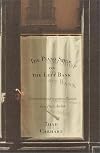
As an amateur pianist from age 4 (thanks to a piano teacher mother), this memoir about pianos resonated with me. Like the author, I mostly play for my own pleasure, although I also enjoy accompanying choirs, soloists, and playing for church. At the time this book was written, Carhart was an expat living in Paris. His daily route took him past a piano repair shop. Eventually his curiosity got the best of him, and it resulted in a friendship with the shop’s owner, Luc, a newly restored piano show more for his home, and renewal of piano lessons to improve his skill. Carhart incorporates information about the history of the piano, piano manufacturers (mostly European), and great pianists. This is one of those books I know I’ll be recommending to all of my music-loving friends for years to come. show less
Lists
Awards


You May Also Like


Statistics
- Works
- 3
- Members
- 1,605
- Popularity
- #16,055
- Rating
- 3.9
- Reviews
- 62
- ISBNs
- 32
- Languages
- 4
- Favorited
- 1
