
Vanitha Sankaran
Author of Watermark: A Novel of the Middle Ages
About the Author
Works by Vanitha Sankaran
Tagged
Common Knowledge
- Gender
- female
Members
Reviews

Watermark is the story of a young woman, Auda, who is different than others because she is albino and mute, and her struggle to survive in the middle ages. Ignorance and superstition are common place in Auda's time; she must combat these enemies, along with the Inquisition and society's senseless fear of anything that's different. I found the map of France, included in the front of the book, to be quite helpful.
I love the way this story unfolds, starting with the drama attendant upon Auda's show more birth and then, what seemingly passes for a normal life, until Auda has become a young adult. The true details of history and paper making included in the story as well as the carefully developed characters and their actions make this novel a page turner. There are both kinds of characters in this story; those you love and those you love to hate... still, I wasn't entirely prepared for the shocking ending... and, no, I'm not gonna tell... well, okay I'll just say this: it wasn't completely unexpected, but I did wish someone else had turned out to be Auda's betrayer.
In some books, the supporting addenda are almost as interesting as the main story. This is especially true of Watermark. In addition to the great story, and the aforementioned map, my copy of Watermark contains:
* An author's note that I recommend to readers finishing the book,
* A glossary of words originating in five other languages which were used in the book and which may be unfamiliar to many readers,
* A chronology of important events in the middle ages, and
* A selected bibliography for readers who may wish to read more about the historical events and influences behind the novel...
and that's not all, but I'll leave the rest for you to discover on your own.
I highly recommend this intriguing novel to lovers of historical fiction, and to those looking for something different to read. This review has been simultaneously published on Amazon.com, Dragon Views and LibraryThing. show less
I love the way this story unfolds, starting with the drama attendant upon Auda's show more birth and then, what seemingly passes for a normal life, until Auda has become a young adult. The true details of history and paper making included in the story as well as the carefully developed characters and their actions make this novel a page turner. There are both kinds of characters in this story; those you love and those you love to hate... still, I wasn't entirely prepared for the shocking ending... and, no, I'm not gonna tell... well, okay I'll just say this: it wasn't completely unexpected, but I did wish someone else had turned out to be Auda's betrayer.
In some books, the supporting addenda are almost as interesting as the main story. This is especially true of Watermark. In addition to the great story, and the aforementioned map, my copy of Watermark contains:
* An author's note that I recommend to readers finishing the book,
* A glossary of words originating in five other languages which were used in the book and which may be unfamiliar to many readers,
* A chronology of important events in the middle ages, and
* A selected bibliography for readers who may wish to read more about the historical events and influences behind the novel...
and that's not all, but I'll leave the rest for you to discover on your own.
I highly recommend this intriguing novel to lovers of historical fiction, and to those looking for something different to read. This review has been simultaneously published on Amazon.com, Dragon Views and LibraryThing. show less

Love, betrayal, fear and suspicion are some of the themes that populate this historical novel, a superb debut for Vanitha Sankaran. Set in early 14th century France, Watermark begins with the birth of Auda, the novel’s protagonist. Her mother, Elena, sacrifices herself so that her infant may live. But it’s obvious from the beginning that Auda will face many challenges:
Onors, the healer’s apprentice, dropped her muddy clump of roots and leaves and rushed to Elena’s side. Seeing a show more child kick beside its mother’s eviscerated body, she crossed herself…She looked more closely at the infant and gasped. This thing was no child at all but a sickly creature, ivory-colored in skin and hair, whate as bone. Even its eyes were so light, the translucent pink of a worm.
It had come too soon, undercooked, with no color yet baked into its skin and hair, so silent that she wondered for a moment if it still lived. But then it blinked.
“Demon,” she said in a whisper and crossed herself again. (page 6)
In a time and place when anyone out of the ordinary is suspected of being a heretic or of the devil, a mute albino girl - sometimes called the White Witch – might be blamed for the weather, for crop failures or livestock deaths. Auda has the protection of her father, Martin, a paper maker, but he is not invincible. Her older sister Poncia is a pious, fearful woman and thinks Auda would be safe if she were married to the old miller, so she makes the arrangements. However, Auda wants no part of it and prefers to stay with her father to help him with the paper making business. She has dreams of becoming a scribe – unheard of for a woman – and even more extraordinary, contemplates writing her own books.
Sakaran does an admirable job of keeping the story moving. Several times I thought I knew what was going to happen and was pleasantly surprised at the turns the story took. I was fascinated to learn about the paper making process: fermenting old rags into a pulp and pressing the pulp into paper. The title of the book, Watermark, refers to the technique invented in the 13th century to identify paper by pressing a unique symbol into the paper as it’s made. In this story, the watermark was also used to indicate a secret religious sect.
I’m always interested in stories involving witch hunts and the Inquisition. Medieval Europe is not a place I’d like to visit in reality, but I enjoy reading good historical fiction based on the time period. While reading Watermark, I was aware of the similarities to some of today's extreme religious fanatacism, resulting in polarities within our own culture, and I was reminded how dangerous intolerance can become.
Sankaran has written a compelling novel with interesting characters and has done some good research of the era. She even includes a glossary, a bibliography and a chronology of papermaking and other pertinent events of the time. I'm looking forward to reading her next book about printmaking in Italy. show less
Onors, the healer’s apprentice, dropped her muddy clump of roots and leaves and rushed to Elena’s side. Seeing a show more child kick beside its mother’s eviscerated body, she crossed herself…She looked more closely at the infant and gasped. This thing was no child at all but a sickly creature, ivory-colored in skin and hair, whate as bone. Even its eyes were so light, the translucent pink of a worm.
It had come too soon, undercooked, with no color yet baked into its skin and hair, so silent that she wondered for a moment if it still lived. But then it blinked.
“Demon,” she said in a whisper and crossed herself again. (page 6)
In a time and place when anyone out of the ordinary is suspected of being a heretic or of the devil, a mute albino girl - sometimes called the White Witch – might be blamed for the weather, for crop failures or livestock deaths. Auda has the protection of her father, Martin, a paper maker, but he is not invincible. Her older sister Poncia is a pious, fearful woman and thinks Auda would be safe if she were married to the old miller, so she makes the arrangements. However, Auda wants no part of it and prefers to stay with her father to help him with the paper making business. She has dreams of becoming a scribe – unheard of for a woman – and even more extraordinary, contemplates writing her own books.
Sakaran does an admirable job of keeping the story moving. Several times I thought I knew what was going to happen and was pleasantly surprised at the turns the story took. I was fascinated to learn about the paper making process: fermenting old rags into a pulp and pressing the pulp into paper. The title of the book, Watermark, refers to the technique invented in the 13th century to identify paper by pressing a unique symbol into the paper as it’s made. In this story, the watermark was also used to indicate a secret religious sect.
I’m always interested in stories involving witch hunts and the Inquisition. Medieval Europe is not a place I’d like to visit in reality, but I enjoy reading good historical fiction based on the time period. While reading Watermark, I was aware of the similarities to some of today's extreme religious fanatacism, resulting in polarities within our own culture, and I was reminded how dangerous intolerance can become.
Sankaran has written a compelling novel with interesting characters and has done some good research of the era. She even includes a glossary, a bibliography and a chronology of papermaking and other pertinent events of the time. I'm looking forward to reading her next book about printmaking in Italy. show less
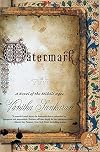
Auda’s arrival into this world was tragic; during child birth her mother had to make the tough choice- save her own life or that of her newborn child. Now an adult, how did Auda’s mother’s decision to save her life put her in harm’s way?
Auda is raised by her father, a papermaker by profession, a somewhat new trade for the time. She spends her days away from the glaring eye of the public; Auda is mute and in an age of Inquisition, when superstition and ignorance overshadowed reason, show more her differences were seen as a threat. Now that she is a woman, her sister Poncia tries to arrange a marriage for Auda in an attempt to save her from the small mindedness, but it sets into motion a series of events that spiral out of control. Auda’s attempts to be a good sister and daughter only make matters worse. Will she find love or will she lose everything near and dear to her?
Great book about the Middle Ages! Religion, the Inquisition and the spread of the written word was a scary yet vital time in our history. The book centers on Auda but gives a good picture of expectations and assumptions during this time: class standing, the church and love. I found the book riveting and it kept me turning the page, it did feel a bit rushed at the end but the story is still solid. I would recommend to historical fiction fans, especially those interested in the medieval period. show less
Auda is raised by her father, a papermaker by profession, a somewhat new trade for the time. She spends her days away from the glaring eye of the public; Auda is mute and in an age of Inquisition, when superstition and ignorance overshadowed reason, show more her differences were seen as a threat. Now that she is a woman, her sister Poncia tries to arrange a marriage for Auda in an attempt to save her from the small mindedness, but it sets into motion a series of events that spiral out of control. Auda’s attempts to be a good sister and daughter only make matters worse. Will she find love or will she lose everything near and dear to her?
Great book about the Middle Ages! Religion, the Inquisition and the spread of the written word was a scary yet vital time in our history. The book centers on Auda but gives a good picture of expectations and assumptions during this time: class standing, the church and love. I found the book riveting and it kept me turning the page, it did feel a bit rushed at the end but the story is still solid. I would recommend to historical fiction fans, especially those interested in the medieval period. show less
I loved this book. The story opens with the birth of the main character, who is an albino and whose tongue is cut out by a midwife's assistant. The church viewed people who were different like her, her name is Auda, as heretics so her family kept her sheltered. The 3rd chapter and the rest of the book take place when Auda is 20. Auda's father is a paper maker and she assists him behind the scenes with the business. As Inquisitors make their way to her hometown of Narbonne, Auda is forced to show more leave town. Being on her own, she finds love and takes risks that could land her in the Inquisitor's hands and ultimately need to fight for her life.
I read Watermark in one sitting. The characters were sympathetic, especially Auda. You can't help but feel sympathy for someone who could be burned at the stake for having a disability. The plot was fast paced and the history of the era was well represented. I am glad I did not live during this time period. Too scary. I highly recommend Watermark to historical fiction fans. Fans of Ariana Franklin and Brenda Rickman Vantrease will especially want to read it. show less
I read Watermark in one sitting. The characters were sympathetic, especially Auda. You can't help but feel sympathy for someone who could be burned at the stake for having a disability. The plot was fast paced and the history of the era was well represented. I am glad I did not live during this time period. Too scary. I highly recommend Watermark to historical fiction fans. Fans of Ariana Franklin and Brenda Rickman Vantrease will especially want to read it. show less
Lists
Awards

You May Also Like


Statistics
- Works
- 1
- Members
- 290
- Popularity
- #80,655
- Rating
- 3.8
- Reviews
- 26
- ISBNs
- 4
- Languages
- 1