
Toni Hill
Author of The Summer of Dead Toys
About the Author
Image credit: By Esteban Navarro Soriano
Series
Works by Toni Hill
Szkoła aniołów 1 copy
Ciudad satelite 1 copy
VARA JUCARIILOR MOARTE 1 copy
Associated Works
Tagged
Common Knowledge
- Canonical name
- Hill, Antonio
- Legal name
- Hill, Antonio
- Other names
- Hill, Toni
- Birthdate
- 1966
- Gender
- male
- Occupations
- translator
author - Nationality
- Spain
- Birthplace
- Barcelona, Spain
- Associated Place (for map)
- Barcelona, Spain
Members
Reviews
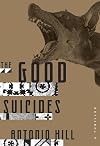
The Good Suicides, Antonio Hill
Crown Publishers
978-0-770-43590-5
$26, 352 pgs
“He’d always found it strange that the Church condemned them irrevocably. There was no justification that might absolve those who killed themselves. There were no good or bad suicides. The same punishment was inflicted on them all, without exception and without taking their previous path into account. Taking one’s life was the ultimate sin. But if we don’t even have that, what is left to us? Héctor said to show more himself…”
SPOILER ALERT - continue at your own risk. So everyone’s read my review of The Summer of Dead Toys which was posted Saturday, July 5th, yes? Excellent. If you haven’t read that one yet then you really should because there will be a couple of spoilers in this review of the sequel, or more precisely the second in a series.
Okay, The Good Suicides by Antonio Hill, translated from the Spanish by Laura McGloughlin, picks up the story of Inspector Héctor Salgado of the Mossos, Catalonia’s police force, approximately five months later. Ruth is still missing and there have been no clues as to what has happened to her so it seems as if she has simply vanished, ceased to exist in this dimension. Salgado is trying to function as a single father to Guillermo, still seeing his therapist, and attempting to adjust to his new partner, Agent Roger Fort. But don’t worry – Agent Castro is still here, just on maternity leave. See? I told you there were spoilers – go read the first book. Please and thank you.
The Good Suicides opens with just that, except probably not good: the suicide of a young woman on the tracks of the Barcelona underground metro. Agent Fort calls Inspector Salgado to the scene in the middle of the night and Salgado doesn’t understand why he’s there. It’s quite obviously a simple suicide. Right? Maybe not, some details nag, such as: Why does CCTV show the woman looking behind her as if she’s being pursued? And why is the woman’s cell phone reset to factory specs? In fact, there’s only one email containing a single line of text – NEVER FORGET. Curious, yes, but beyond frightening when the attachment turns out to be a photo of a tree festooned with the rigid bodies of three dead dogs. This suicide turns out not to be the first suicide and is quickly followed by a third and a fourth. All four have one thing in common – they all worked for the same company.
One of the things I appreciate about this new series is that it’s really rather old-fashioned. The stories are contemporary but the narrative structure and style recall Agatha Christie. In this age of no-detail-spared slasher flicks and derivative crime fiction that depends on the salacious misogynistic porn of abused and murdered women, it is a relief, and I am grateful, to have the gore merely implied. For example, the only reference to what must have happened to a body when run over by a train: “…he tried not to see the black plastic bags scattered over the track.” Very effective without shoving blood and guts in your face, yes?
The ensemble cast is back and they stay firmly and believably in character. This is the second thing I appreciate about Antonio Hill’s novels: his characters. This man writes very good women, which is regrettably rare, and every supporting player, protagonists and antagonists alike, is fully-fledged and complete, even the nut jobs. Unhealthy personalities interact in unpredictable ways but never in unrealistic ways.
In my review of The Summer of Dead Toys I told y’all that the subplot was unusual in that it wasn’t superfluous but actually necessary. That same subplot, tied to Ruth’s disappearance, continues throughout The Good Suicides. Agent Castro is bored to tears on maternity leave, waiting on the child to decide it’s time to say hello, so she begins to investigate Ruth’s case, to start over with fresh eyes. The bomb of a plot twist dropped on the last page, in fact the LAST SENTENCE, assures us that there will be a third Inspector Héctor Salgado novel. And Mr. Hill should be scribbling just as fast as he can. show less
Crown Publishers
978-0-770-43590-5
$26, 352 pgs
“He’d always found it strange that the Church condemned them irrevocably. There was no justification that might absolve those who killed themselves. There were no good or bad suicides. The same punishment was inflicted on them all, without exception and without taking their previous path into account. Taking one’s life was the ultimate sin. But if we don’t even have that, what is left to us? Héctor said to show more himself…”
SPOILER ALERT - continue at your own risk. So everyone’s read my review of The Summer of Dead Toys which was posted Saturday, July 5th, yes? Excellent. If you haven’t read that one yet then you really should because there will be a couple of spoilers in this review of the sequel, or more precisely the second in a series.
Okay, The Good Suicides by Antonio Hill, translated from the Spanish by Laura McGloughlin, picks up the story of Inspector Héctor Salgado of the Mossos, Catalonia’s police force, approximately five months later. Ruth is still missing and there have been no clues as to what has happened to her so it seems as if she has simply vanished, ceased to exist in this dimension. Salgado is trying to function as a single father to Guillermo, still seeing his therapist, and attempting to adjust to his new partner, Agent Roger Fort. But don’t worry – Agent Castro is still here, just on maternity leave. See? I told you there were spoilers – go read the first book. Please and thank you.
The Good Suicides opens with just that, except probably not good: the suicide of a young woman on the tracks of the Barcelona underground metro. Agent Fort calls Inspector Salgado to the scene in the middle of the night and Salgado doesn’t understand why he’s there. It’s quite obviously a simple suicide. Right? Maybe not, some details nag, such as: Why does CCTV show the woman looking behind her as if she’s being pursued? And why is the woman’s cell phone reset to factory specs? In fact, there’s only one email containing a single line of text – NEVER FORGET. Curious, yes, but beyond frightening when the attachment turns out to be a photo of a tree festooned with the rigid bodies of three dead dogs. This suicide turns out not to be the first suicide and is quickly followed by a third and a fourth. All four have one thing in common – they all worked for the same company.
One of the things I appreciate about this new series is that it’s really rather old-fashioned. The stories are contemporary but the narrative structure and style recall Agatha Christie. In this age of no-detail-spared slasher flicks and derivative crime fiction that depends on the salacious misogynistic porn of abused and murdered women, it is a relief, and I am grateful, to have the gore merely implied. For example, the only reference to what must have happened to a body when run over by a train: “…he tried not to see the black plastic bags scattered over the track.” Very effective without shoving blood and guts in your face, yes?
The ensemble cast is back and they stay firmly and believably in character. This is the second thing I appreciate about Antonio Hill’s novels: his characters. This man writes very good women, which is regrettably rare, and every supporting player, protagonists and antagonists alike, is fully-fledged and complete, even the nut jobs. Unhealthy personalities interact in unpredictable ways but never in unrealistic ways.
In my review of The Summer of Dead Toys I told y’all that the subplot was unusual in that it wasn’t superfluous but actually necessary. That same subplot, tied to Ruth’s disappearance, continues throughout The Good Suicides. Agent Castro is bored to tears on maternity leave, waiting on the child to decide it’s time to say hello, so she begins to investigate Ruth’s case, to start over with fresh eyes. The bomb of a plot twist dropped on the last page, in fact the LAST SENTENCE, assures us that there will be a third Inspector Héctor Salgado novel. And Mr. Hill should be scribbling just as fast as he can. show less
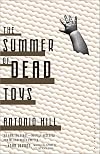
The Summer of Dead Toys, Antonio Hill
Broadway Books
978-0-7704-3589-9
$15, 362 pgs
“No one has ever been killed out of love; that’s a fallacy from tango.” - Héctor Salgado
This story grabs you on page one and refuses to relinquish its grip. From the first page: “It’s been a long time since I thought of Iris or the summer she died. I suppose I tried to forget it all, in the same way I overcame nightmares and childhood fears. … I’m six years old, I’m at camp and I can’t sleep show more because I’m scared. No, I lie. That very early morning I behaved like a brave boy. I disobeyed my uncle’s rules and faced the darkness just to see Iris. But I found her drowned, floating in the pool, surrounded by a cortège of dead dolls.” Yeah, try to shake that image. Good luck to you.
Today I am genuinely excited to introduce y’all to a major new talent in the American literary market. The Summer of Dead Toys by Antonio Hill, translated from the Spanish by LauraMcGloughlin, is the American debut of a bestselling thriller from Spain. Inspector Héctor Salgado, Argentine by birth, is a veteran of the Mossos, Barcelona’s police force. An intelligent man with a dry wit, he carries a sense of melancholy and bewilderment – his wife Ruth has left him for another woman and taken their son Guillermo with her, though they have maintained goodwill, even love, for each other. Salgado has been on leave from the force due to a rare violent incident in which a brutality complaint was lodged against him by a suspect in a Nigerian sex-trafficking ring. Hey – who can blame him? You handle the case of a particularly nasty suicide by one of the underage victims and then you can argue with the inspector.
Salgado’s first case when he returns appears at first cursory glance to be a simple matter of an accidental death: 19-year-old Marc Castells’ body was found on the paving stones below his attic window, where he’d been known to enjoy a last cigarette before bed, following a night of partying on the eve of San Juan. From the beginning something about this case tweaks Salgado’s radar and that was before everyone in Marc Castells’ orbit begins receiving mysterious emails from someone who signs his- or herself “alwaysiris.” In order to get to the truth of what happened to Marc Castells, Salgado will have to travel back in time to solve Iris’s death and sort fact from fiction, supposition, and prejudice involving issues of economic privilege, right-wing politics, the Catholic church, and a cult of personality inspired by a particularly charismatic classmate of the victim.
One of the many delights of The Summer of Dead Toys is the depth of its characters. Inspector Salgado is our main protagonist but the supporting characters are so well-developed that this is really an ensemble cast. Leire Castro, Salgado’s new partner, is particularly intriguing – young and new to the force, she is a thoroughly contemporary woman working in a hidebound, traditionally male career. In less-skillful hands Agent Castro might be a trope but Antonio Hill has breathed real life into her. Hill’s plotting is intricate but never convoluted, his pacing relentless, the clues expertly and precisely placed. And you know how the inevitable subplot is so often a trifle, a mere distraction, but somehow assumed to be necessary? Not so here. The subplot here is necessary.
Go immediately to your local indie bookshop and start reading The Summer of Dead Toys today. Why? Because the sequel, The Good Suicides, was released in June AND I’ve got it right here in my hot little hands. I know! I was delighted, when I liked this one so much, to know that I didn’t have to wait to dive back into Salgado’s Barcelona and hang out with Agent Castro again. By the time you finish the first installment, I’ll have the review for the sequel ready for you. Look for the review of The Good Suicides in a few days right here! show less
Broadway Books
978-0-7704-3589-9
$15, 362 pgs
“No one has ever been killed out of love; that’s a fallacy from tango.” - Héctor Salgado
This story grabs you on page one and refuses to relinquish its grip. From the first page: “It’s been a long time since I thought of Iris or the summer she died. I suppose I tried to forget it all, in the same way I overcame nightmares and childhood fears. … I’m six years old, I’m at camp and I can’t sleep show more because I’m scared. No, I lie. That very early morning I behaved like a brave boy. I disobeyed my uncle’s rules and faced the darkness just to see Iris. But I found her drowned, floating in the pool, surrounded by a cortège of dead dolls.” Yeah, try to shake that image. Good luck to you.
Today I am genuinely excited to introduce y’all to a major new talent in the American literary market. The Summer of Dead Toys by Antonio Hill, translated from the Spanish by LauraMcGloughlin, is the American debut of a bestselling thriller from Spain. Inspector Héctor Salgado, Argentine by birth, is a veteran of the Mossos, Barcelona’s police force. An intelligent man with a dry wit, he carries a sense of melancholy and bewilderment – his wife Ruth has left him for another woman and taken their son Guillermo with her, though they have maintained goodwill, even love, for each other. Salgado has been on leave from the force due to a rare violent incident in which a brutality complaint was lodged against him by a suspect in a Nigerian sex-trafficking ring. Hey – who can blame him? You handle the case of a particularly nasty suicide by one of the underage victims and then you can argue with the inspector.
Salgado’s first case when he returns appears at first cursory glance to be a simple matter of an accidental death: 19-year-old Marc Castells’ body was found on the paving stones below his attic window, where he’d been known to enjoy a last cigarette before bed, following a night of partying on the eve of San Juan. From the beginning something about this case tweaks Salgado’s radar and that was before everyone in Marc Castells’ orbit begins receiving mysterious emails from someone who signs his- or herself “alwaysiris.” In order to get to the truth of what happened to Marc Castells, Salgado will have to travel back in time to solve Iris’s death and sort fact from fiction, supposition, and prejudice involving issues of economic privilege, right-wing politics, the Catholic church, and a cult of personality inspired by a particularly charismatic classmate of the victim.
One of the many delights of The Summer of Dead Toys is the depth of its characters. Inspector Salgado is our main protagonist but the supporting characters are so well-developed that this is really an ensemble cast. Leire Castro, Salgado’s new partner, is particularly intriguing – young and new to the force, she is a thoroughly contemporary woman working in a hidebound, traditionally male career. In less-skillful hands Agent Castro might be a trope but Antonio Hill has breathed real life into her. Hill’s plotting is intricate but never convoluted, his pacing relentless, the clues expertly and precisely placed. And you know how the inevitable subplot is so often a trifle, a mere distraction, but somehow assumed to be necessary? Not so here. The subplot here is necessary.
Go immediately to your local indie bookshop and start reading The Summer of Dead Toys today. Why? Because the sequel, The Good Suicides, was released in June AND I’ve got it right here in my hot little hands. I know! I was delighted, when I liked this one so much, to know that I didn’t have to wait to dive back into Salgado’s Barcelona and hang out with Agent Castro again. By the time you finish the first installment, I’ll have the review for the sequel ready for you. Look for the review of The Good Suicides in a few days right here! show less
Suicides are not uncommon. Suicide by throwing yourself in front of a train is not that uncommon either. But this time something is off - there is no reason for that particular young woman to do that; there had been no indications. And when Selgado is called to the scene, he does not understand why he is there - a suicide is a suicide after all. Except when it is not.
This is how this novel starts - and if you had not read the first book in the series (as I had not) you need to play catch up show more fast - the backstory is mentioned but in a way that hints of expectation of knowing it. The seemingly easy crime turns into a big mess very fast and things take off.
As much as I enjoyed the mystery part of the story (for it is done in the old fashioned way that only European authors seem to risk anymore and I love), it is the setting of Barcelona and Spain that makes the book a pleasure to read. In some series even if they are set in a new place, the place remains generic. Here Spain shines.
I suspect I will pick up some more of the series - I enjoyed it enough for that. show less
This is how this novel starts - and if you had not read the first book in the series (as I had not) you need to play catch up show more fast - the backstory is mentioned but in a way that hints of expectation of knowing it. The seemingly easy crime turns into a big mess very fast and things take off.
As much as I enjoyed the mystery part of the story (for it is done in the old fashioned way that only European authors seem to risk anymore and I love), it is the setting of Barcelona and Spain that makes the book a pleasure to read. In some series even if they are set in a new place, the place remains generic. Here Spain shines.
I suspect I will pick up some more of the series - I enjoyed it enough for that. show less
 This review was written for LibraryThing Early Reviewers.
This is the second book about Inspector Hector Salgado and I think it was better than the first. You do need to read the first book or this one won't make any sense as the happenings in the first book are mentioned often in this book. I think I had a better understanding of Inspector Salgado as well.
Inspector Salgado is called in when a young woman commits suicide. Coincidentally another man in the company has also committed suicide just a few months before. A picture with these two people show more along with several others is found and the only thing they have in common is that they work for the same company. The Inspector does not believe these two deaths are coincides and begins an investigation into both. Parallel to this story is the continuing investigation of Inspector Salgado's ex-wife. There is a cliffhanger in this story, a big one. Normally I hate cliffhangers but in this case I think it fits since the one storyline is so neatly tied up. However I really hope Mr. Hill does not make us wait too long for the next book. show less
Inspector Salgado is called in when a young woman commits suicide. Coincidentally another man in the company has also committed suicide just a few months before. A picture with these two people show more along with several others is found and the only thing they have in common is that they work for the same company. The Inspector does not believe these two deaths are coincides and begins an investigation into both. Parallel to this story is the continuing investigation of Inspector Salgado's ex-wife. There is a cliffhanger in this story, a big one. Normally I hate cliffhangers but in this case I think it fits since the one storyline is so neatly tied up. However I really hope Mr. Hill does not make us wait too long for the next book. show less
Awards


You May Also Like


Associated Authors
Statistics
- Works
- 17
- Also by
- 4
- Members
- 700
- Popularity
- #36,172
- Rating
- 3.9
- Reviews
- 72
- ISBNs
- 101
- Languages
- 12
