

Philippe Sands
Author of East West Street
About the Author
Philippe Sands was born in 1960 in London. He is a graduate of Corpus Christi College, Cambridge, receiving his B.A. in 1982 and his LLM, first class honours in 1983. He finished his postgraduate studies at Cambridge and was a visiting scholar at Harvard Law School. He has held positions at show more numerous distinguished universities around the world. He was called to the Bar of England and Wales in 1985. He has written numerous academic and general nonfiction books, newspaper articles, book reviews, and more. His books include Lawless World, and Torture Team. In 2016, he won the Baillie Gifford Prize for nonfiction, for East West Street: On the Origins of Genocide and Crimes against Humanity. (Bowker Author Biography) show less
Works by Philippe Sands
38 Londres Street: On Impunity, Pinochet in England and a Nazi in Patagonia (2025) 148 copies, 4 reviews
The Last Colony: A Tale of Exile, Justice and Britain's Colonial Legacy (2022) 136 copies, 3 reviews
De verdwijningen van Londres 38: Over Pinochet in Engeland en een nazi in Patagonië (Dutch Edition) 2 copies
Chernobyl, law and communication : transboundary nuclear air pollution, the legal materials (1988) 1 copy
Associated Works
Tagged
Common Knowledge
- Legal name
- Sands, Philippe Joseph
- Birthdate
- 1960-10-17
- Gender
- male
- Education
- University of Cambridge (Corpus Christi College)
Harvard Law School - Occupations
- Professor of Laws
Director of the Centre on International Courts and Tribunals
author - Organizations
- University College London
- Awards and honors
- Elizabeth Haub Prize for contribution to environmental law (2005)
Henri Rolin medal for contribution to international law (1999)
University of Lincoln (Docteur honois causa, 2015)
Katholieke Universiteit Leuven (Docteur honois causa, 2019)
Université d'East Anglia (Docteur honois causa, 2017)
Université de Liège (Docteur honois causa, 2022) (show all 8)
Université Lyon-III (Docteur honois causa, 2022)
Royal Society of Literature (Fellow, 2020) - Short biography
- Sands was born in London on 17 October 1960 to a British Jewish family. He read law at Corpus Christi College, Cambridge attaining an LLB B.A. in 1982 and going on to achieve a first class honours in the LLM M.A. course a year later. After completing his postgraduate studies at Cambridge, Sands spent a year as a visiting scholar at the Harvard Law School.
- Nationality
- England
UK - Birthplace
- London, England, UK
- Places of residence
- London, England, UK
- Associated Place (for map)
- London, England, UK
Members
Reviews
Rückkehr nach Lemberg: Über die Ursprünge von Genozid und Verbrechen gegen die Menschlichkeit by Philippe Sands

In his novel, published in English in 2016 and translated into German in 2018: ‘Rückkehr nach Lemberg. On the Origins of Genocide and Crimes against Humanity. A Personal History’, Phillipe Sands tells of the erasure and rebirth of international criminal law after the Second World War. The author is a lawyer and Professor of International Law at University College London. When Sands is invited by the University of Lviv to give a lecture on the origins of international criminal law, he show more learns that the city itself is linked to its origins. And he discovers roots of his own family history in Lviv that were previously unknown to him. Sands weaves both stories, his personal and that of the law, into a captivating narrative.
The first narrative level deals with the fate of his Jewish grandparents during the Nazi era. Only his grandfather survived, while his grandmother was murdered in Theresienstadt. A second narrative level focusses on the Nuremberg Trials, in which Nazi figures were called to account for the crimes against humanity committed during the Holocaust. In these trials, elementary principles of today's international criminal law were applied. The origin of these foundations of international law forms the actual centre of the novel.
Until then, the right of nations to self-determination applied. It meant that, in extreme cases, the ruling national powers could do as they pleased with their subjects. The Nuremberg war crimes trials therefore had to create the law they wanted to apply in the first place. And this is where two Jewish lawyers from Lviv came into play: Raphael Lemkin and Hersch Lauterpracht. Both had studied in Lviv, in some cases with the same academic teachers, before they had to go into exile in Great Britain and the USA. There, in uncertainty about the fate of their families, they independently formulated two central offences with which international law would later punish the deaths of their parents and siblings: ‘crimes against humanity’ and ‘genocide’.
Philippe Sands shows that these categories competed with each other from the outset. While Lemkin considered the introduction of the term genocide into international law to be indispensable in order to prevent the Holocaust forever in the future, the legal positivist Lauterpracht feared that the orientation towards a group would override the legal claim of the individual. ‘Does it matter whether the law wants to protect you because you are an individual or because you happen to belong to a group? This was a question that has stayed with me ever since,’ Sands recalls in the prologue to his book. In fact, both of the Lviv jurists' arguments were incorporated into international law after 1946.
The current political debates about whether the state-organised crimes against the civilian population of Ukraine and the Palestinians should be described as genocide remind us that the fundamental legal work of Lemkin and Lauterbracht is one of the great intellectual achievements of 20th century European legal history and legal culture - it led to the conviction of Hermann Göring and Hans Frank, the punishment of Pol Pot and Slobodan Milošević and, last but not least, made the international arrest warrant against Vladimir Putin possible. However, without the liberation of the Eastern European states and the regaining of their political self-determination after the collapse of communist tyranny, Philippe Sands would not have been able to compile this diverse range of source material. However, in this magnificent book, Sands was able to recall a time in which those ideas emerged in Lviv that have become ominously topical again since 24 February 2022 at the latest. show less
The first narrative level deals with the fate of his Jewish grandparents during the Nazi era. Only his grandfather survived, while his grandmother was murdered in Theresienstadt. A second narrative level focusses on the Nuremberg Trials, in which Nazi figures were called to account for the crimes against humanity committed during the Holocaust. In these trials, elementary principles of today's international criminal law were applied. The origin of these foundations of international law forms the actual centre of the novel.
Until then, the right of nations to self-determination applied. It meant that, in extreme cases, the ruling national powers could do as they pleased with their subjects. The Nuremberg war crimes trials therefore had to create the law they wanted to apply in the first place. And this is where two Jewish lawyers from Lviv came into play: Raphael Lemkin and Hersch Lauterpracht. Both had studied in Lviv, in some cases with the same academic teachers, before they had to go into exile in Great Britain and the USA. There, in uncertainty about the fate of their families, they independently formulated two central offences with which international law would later punish the deaths of their parents and siblings: ‘crimes against humanity’ and ‘genocide’.
Philippe Sands shows that these categories competed with each other from the outset. While Lemkin considered the introduction of the term genocide into international law to be indispensable in order to prevent the Holocaust forever in the future, the legal positivist Lauterpracht feared that the orientation towards a group would override the legal claim of the individual. ‘Does it matter whether the law wants to protect you because you are an individual or because you happen to belong to a group? This was a question that has stayed with me ever since,’ Sands recalls in the prologue to his book. In fact, both of the Lviv jurists' arguments were incorporated into international law after 1946.
The current political debates about whether the state-organised crimes against the civilian population of Ukraine and the Palestinians should be described as genocide remind us that the fundamental legal work of Lemkin and Lauterbracht is one of the great intellectual achievements of 20th century European legal history and legal culture - it led to the conviction of Hermann Göring and Hans Frank, the punishment of Pol Pot and Slobodan Milošević and, last but not least, made the international arrest warrant against Vladimir Putin possible. However, without the liberation of the Eastern European states and the regaining of their political self-determination after the collapse of communist tyranny, Philippe Sands would not have been able to compile this diverse range of source material. However, in this magnificent book, Sands was able to recall a time in which those ideas emerged in Lviv that have become ominously topical again since 24 February 2022 at the latest. show less
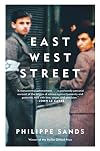
Beautifully crafted reconstruction of the lives and roles of three main characters whose families shared a home at the East West street of Zolkiew, a small place North of Lemberg, Lwow, Lviv, the city that changed nationality many times in a short span of time between 1914-1944 (Austria-Hungary; Soviet Union, independent Western Ukraine, Poland, Soviet Union, Nazi Germany, Ukraine). All three characters play an (in)direct role in the Nuremberg trials.
Leon Buchholz, Phillippe Sands maternal show more granddad, who fled to Vienna and then Paris in the wake of ww2, survived the war, but lost all 70 Jewish relatives of his from Lemberg/Zolkiew. Secondly there is Hersch Lauterpacht, Jewish lawyer, who also flees, ends up in Cambridge, England, and coins the term ‘crimes against humanity’ a key indictment at the Nuremberg trials. Hersch is a member of the British prosecution delegation at Nuremberg. His legal contribution emphasizes the existence of State orchestrated crimes against individual citizens. This concept contrasts with Rafael Lemkin’s legal contribution to Nuremberg – genocide (a contraction of the Greek term for people (genos) and the Latin term for murder). While genocide was part of the original Nuremberg indictment, it was not part of the verdict. And yet if we compare ‘crimes against humanity’ and genocide in legal practice ever since, genocide with its emphasis on the prosecution of groups in society is much more commonly used than the individually oriented crimes against humanity.
Lemkin and Lauterpacht both studied at the same law faculty of the University of Lvov, to which Phillippe Sands is invited for a lecture in 2010, putting the genesis of this wonderful book into motion. It starts with a simple question – how come the legacy of two Jewish lawyers who stood at the cradle of the human rights movement is not remembered in the city where they were both raised and studied? Well, Sands’ first audience suggests, perhaps because they were Jewish and anti-semitism has always been rife in a city that was once a battleground of three groups (Poles, Jews and Ukrainians). And perhaps the latter turbulent history of violence against groups and individuals explains why two inhabitants of Lvov crafted the legal ideas which came to dominate the international human right movement after the war. show less
Leon Buchholz, Phillippe Sands maternal show more granddad, who fled to Vienna and then Paris in the wake of ww2, survived the war, but lost all 70 Jewish relatives of his from Lemberg/Zolkiew. Secondly there is Hersch Lauterpacht, Jewish lawyer, who also flees, ends up in Cambridge, England, and coins the term ‘crimes against humanity’ a key indictment at the Nuremberg trials. Hersch is a member of the British prosecution delegation at Nuremberg. His legal contribution emphasizes the existence of State orchestrated crimes against individual citizens. This concept contrasts with Rafael Lemkin’s legal contribution to Nuremberg – genocide (a contraction of the Greek term for people (genos) and the Latin term for murder). While genocide was part of the original Nuremberg indictment, it was not part of the verdict. And yet if we compare ‘crimes against humanity’ and genocide in legal practice ever since, genocide with its emphasis on the prosecution of groups in society is much more commonly used than the individually oriented crimes against humanity.
Lemkin and Lauterpacht both studied at the same law faculty of the University of Lvov, to which Phillippe Sands is invited for a lecture in 2010, putting the genesis of this wonderful book into motion. It starts with a simple question – how come the legacy of two Jewish lawyers who stood at the cradle of the human rights movement is not remembered in the city where they were both raised and studied? Well, Sands’ first audience suggests, perhaps because they were Jewish and anti-semitism has always been rife in a city that was once a battleground of three groups (Poles, Jews and Ukrainians). And perhaps the latter turbulent history of violence against groups and individuals explains why two inhabitants of Lvov crafted the legal ideas which came to dominate the international human right movement after the war. show less
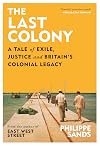
I stumbled across this recently and am very glad I did.
The blurb states:
After the Second World War, new international rules heralded an age of human rights and self-determination. Supported by Britain, these unprecedented changes sought to end the scourge of colonialism. But how committed was Britain?
The little known Chagos Archipelago was, at that time considered a dependency of Mauritius which itself had been ruled by the British, it having been ceded by France under the Treaty of Paris of show more 1814, which ended the Napoleonic Wars (which France had earlier taken from the Dutch and before that claimed by Portugal).
Britain, like other colonial powers increasingly come under pressure to cede independence to its dependencies, and took steps to do so for Mauritius.
But in the 1960s at the request of the USA, Britain looked to 'detach' the Chagos Archipelago from Mauritius before granting the later independence in order that Britain grant a lease or similar over Diego Garcia, the largest island in the Archipelago to the USA so it could construct and operate a military base, as part of similar bases in The Philippines, Australia, Guam etc.
Britain had be bend itself into knots to try and argue that the detachment was within international law and conventions. It forcibly removed some 1500 residents, asserting that there were merely temporary and had not ongoing attachment to the islands, notwithstanding many of them having been born on the islands to parents who themselves had been born there and having spent their whole lives there. No compensation was initially offered or paid, with derisory compensation being paid years later.
As a result, Britain claimed to have formed what it called the beautifully named British Indian Ocean Territory!
Over the next 40 years, culminating in a successful 2018 World Court (The Hague) challenge against Britain's actions, the Government of Mauritius, as well as the displaced residents, sought a remedy that would see this farcical situation being rectified.
The rules of the Court were such that any ruling would be non binding on the parties but, particularly given the very heavy majority against the British contentions, Britain was met with a lot of anger when it announced it would not accept Court decision nor its order to take steps to cede control of the Chagos Archipelago to Mauritius and remove the military base to allow the displaced residents to return.
There are suggestions that Britain's position was racially influenced given Britain had consistently maintained that it would not give any consideration to ceding control of the Falklands Islands to Argentina unless and until the (white) residents of the Falklands favored that, and yet Britain did not consult with Mauritius (or the residents of the Chagos Archipelago) before 'detaching' the Archipelago and/or granting the USA rights to build and maintain its military base there. Perhaps it is explicable if the USA had no interest in the Falklands, but was it made 'easier' by reason that the displaced residents were not white?
The author was one of the lead lawyers who lead that court challenge on behalf of Mauritius, and who interacted with many of the displaced residents. He provides (in an easy 150 or so pages) a clear picture not only of the legal basis of the shenanigans and legal challenges, but also of the personalities involved. Indeed the decision concluded that '[the detachment] was not based on the free and genuine expression of the will of the people concerned' (p 133, which is it is understood quoting from the Court decision).
In an epilogue, it is told that a number of the displaced residents travelled to the Chagos Archipelago in 2022 for a short visit. I understand, but am happy to be corrected, that Britain has not formally withdrawn from its position and it seems that the world and (more importantly) the displaced residents awaits resolution.
This is a story I was not familiar, with though I was vaguely aware that the USA had a military base on Diego Garcia, though I was not aware of how that came to be not of Britain's role in that.
It is a salutary lesson as to how much I am not aware of, even as to matters within my own life time.
Big Ship
29 November 2022 show less
The blurb states:
After the Second World War, new international rules heralded an age of human rights and self-determination. Supported by Britain, these unprecedented changes sought to end the scourge of colonialism. But how committed was Britain?
The little known Chagos Archipelago was, at that time considered a dependency of Mauritius which itself had been ruled by the British, it having been ceded by France under the Treaty of Paris of show more 1814, which ended the Napoleonic Wars (which France had earlier taken from the Dutch and before that claimed by Portugal).
Britain, like other colonial powers increasingly come under pressure to cede independence to its dependencies, and took steps to do so for Mauritius.
But in the 1960s at the request of the USA, Britain looked to 'detach' the Chagos Archipelago from Mauritius before granting the later independence in order that Britain grant a lease or similar over Diego Garcia, the largest island in the Archipelago to the USA so it could construct and operate a military base, as part of similar bases in The Philippines, Australia, Guam etc.
Britain had be bend itself into knots to try and argue that the detachment was within international law and conventions. It forcibly removed some 1500 residents, asserting that there were merely temporary and had not ongoing attachment to the islands, notwithstanding many of them having been born on the islands to parents who themselves had been born there and having spent their whole lives there. No compensation was initially offered or paid, with derisory compensation being paid years later.
As a result, Britain claimed to have formed what it called the beautifully named British Indian Ocean Territory!
Over the next 40 years, culminating in a successful 2018 World Court (The Hague) challenge against Britain's actions, the Government of Mauritius, as well as the displaced residents, sought a remedy that would see this farcical situation being rectified.
The rules of the Court were such that any ruling would be non binding on the parties but, particularly given the very heavy majority against the British contentions, Britain was met with a lot of anger when it announced it would not accept Court decision nor its order to take steps to cede control of the Chagos Archipelago to Mauritius and remove the military base to allow the displaced residents to return.
There are suggestions that Britain's position was racially influenced given Britain had consistently maintained that it would not give any consideration to ceding control of the Falklands Islands to Argentina unless and until the (white) residents of the Falklands favored that, and yet Britain did not consult with Mauritius (or the residents of the Chagos Archipelago) before 'detaching' the Archipelago and/or granting the USA rights to build and maintain its military base there. Perhaps it is explicable if the USA had no interest in the Falklands, but was it made 'easier' by reason that the displaced residents were not white?
The author was one of the lead lawyers who lead that court challenge on behalf of Mauritius, and who interacted with many of the displaced residents. He provides (in an easy 150 or so pages) a clear picture not only of the legal basis of the shenanigans and legal challenges, but also of the personalities involved. Indeed the decision concluded that '[the detachment] was not based on the free and genuine expression of the will of the people concerned' (p 133, which is it is understood quoting from the Court decision).
In an epilogue, it is told that a number of the displaced residents travelled to the Chagos Archipelago in 2022 for a short visit. I understand, but am happy to be corrected, that Britain has not formally withdrawn from its position and it seems that the world and (more importantly) the displaced residents awaits resolution.
This is a story I was not familiar, with though I was vaguely aware that the USA had a military base on Diego Garcia, though I was not aware of how that came to be not of Britain's role in that.
It is a salutary lesson as to how much I am not aware of, even as to matters within my own life time.
Big Ship
29 November 2022 show less
East West Street: On the Origins of "Genocide" and "Crimes Against Humanity" (Deckle Edge) by Philippe Sands
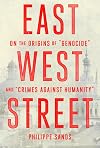
It was a fascinating read for me and I loved every page turned in this memorable book. Philippe Sands traces the tragic secret history of his own family and we feel as if we are alongside him in his journey.
A personal family history painstainkilly researched and beautifully written by the author and a history of the legal concepts that were devised to deal with the historically unprecedented horrors of the Holocaust. East West Street weaves together a collective narrative which is focused show more on the interrelated lives of four men, Hersch Lauterpacht, Raphael Lemkin, Hans Frank and Leon Bucholz, the latter, Sands’ maternal grandfather. Two remarkable men from the city of Lviv who's tirelessly worked to have the terms "Crimes against humanity" and "genocide" in the judgement at Nuremberg.
The Author opens this novel with a Note to the Reader. The City of Lviv occupies an important place in this story........ and as we read we learn that The city has changed hands no fewer than eight times between 1914 and 1945 and has been known as Lemberg, Lviv. Lavov, and Lwow. After the Red Army vanquished the Nazis in the summer of 1944 it became part of the Ukraine and was called Lviv, the name that is generally used today. This is a city with a remarkable history, a city that has lost so much to history and war and yet given so much to the world.
If you have an interest in WWII, Family History stories, or The Nuremberg trials then beg, borrow or steal a copy of this book as it is fascinating family history and such an education in War and research and the process of the Nuremberg trials.
I initally bought an audio copy of this book but thankfully a friend advised me to buy a hard copy of the book as it is packed full of photos, maps and illustrations which they assured me were very important to the story and I quickly purchased a used hardcopy on Amazon (which was signed by the author) and so glad I did as this is a book I will proudly display on my book shelf and already plan on re-reading it. The hard copy did contain so many photos, maps and illustrations that really inhanced this story and brought the characters and places to life.
Philippe Sands is a master at weaving family history with legal history and knowing how to keep the reader interested without the content becoming dry or too complex I had never read a book that that looked at this angle of the War and this was Fresh and rewarding.
This is a book I just loved every minute I spent reading it, I got so much from this book, I was shocked, saddened and above all I was educated which is why this is a 5 star read for me.
I am not going to recommend this to everyone but I do think readers who enjoy Non Fiction books , books about WW II/ Holocaust may be enjoy this book. show less
A personal family history painstainkilly researched and beautifully written by the author and a history of the legal concepts that were devised to deal with the historically unprecedented horrors of the Holocaust. East West Street weaves together a collective narrative which is focused show more on the interrelated lives of four men, Hersch Lauterpacht, Raphael Lemkin, Hans Frank and Leon Bucholz, the latter, Sands’ maternal grandfather. Two remarkable men from the city of Lviv who's tirelessly worked to have the terms "Crimes against humanity" and "genocide" in the judgement at Nuremberg.
The Author opens this novel with a Note to the Reader. The City of Lviv occupies an important place in this story........ and as we read we learn that The city has changed hands no fewer than eight times between 1914 and 1945 and has been known as Lemberg, Lviv. Lavov, and Lwow. After the Red Army vanquished the Nazis in the summer of 1944 it became part of the Ukraine and was called Lviv, the name that is generally used today. This is a city with a remarkable history, a city that has lost so much to history and war and yet given so much to the world.
If you have an interest in WWII, Family History stories, or The Nuremberg trials then beg, borrow or steal a copy of this book as it is fascinating family history and such an education in War and research and the process of the Nuremberg trials.
I initally bought an audio copy of this book but thankfully a friend advised me to buy a hard copy of the book as it is packed full of photos, maps and illustrations which they assured me were very important to the story and I quickly purchased a used hardcopy on Amazon (which was signed by the author) and so glad I did as this is a book I will proudly display on my book shelf and already plan on re-reading it. The hard copy did contain so many photos, maps and illustrations that really inhanced this story and brought the characters and places to life.
Philippe Sands is a master at weaving family history with legal history and knowing how to keep the reader interested without the content becoming dry or too complex I had never read a book that that looked at this angle of the War and this was Fresh and rewarding.
This is a book I just loved every minute I spent reading it, I got so much from this book, I was shocked, saddened and above all I was educated which is why this is a 5 star read for me.
I am not going to recommend this to everyone but I do think readers who enjoy Non Fiction books , books about WW II/ Holocaust may be enjoy this book. show less
Lists
Awards


You May Also Like


Associated Authors
Statistics
- Works
- 17
- Also by
- 2
- Members
- 2,343
- Popularity
- #10,942
- Rating
- 4.1
- Reviews
- 57
- ISBNs
- 148
- Languages
- 14
- Favorited
- 3

