

Wallace Thurman (1902–1934)
Author of The Blacker the Berry
About the Author
Works by Wallace Thurman
“Grist in the Mill” 1 copy
Associated Works
The Norton Anthology of African American Literature {2nd edition} (2003) — Contributor, some editions — 282 copies, 2 reviews
Black Like Us: A Century of Lesbian, Gay, and Bisexual African American Fiction (2002) — Contributor — 127 copies, 1 review
Go the Way Your Blood Beats: An Anthology of Lesbian and Gay Fiction by African-American Writers (1996) — Contributor — 91 copies
Harlem Renaissance Novels: the Library of America Collection: (Two-volume boxed set) (2011) — Contributor — 55 copies, 1 review
Tagged
Common Knowledge
- Birthdate
- 1902-08-16
- Date of death
- 1934-12-22
- Gender
- male
- Occupations
- magazine editor
novelist
playwright - Nationality
- USA
- Birthplace
- Salt Lake City, Utah, USA
- Place of death
- New York, New York, USA
- Associated Place (for map)
- USA
Members
Reviews
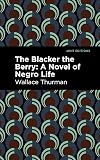
A product of the Harlem Renaissance, “The Blacker the Berry: A Novel of Negro Life” by Wallace Thurman is the story a young woman who sets out on a quest to “find herself” and “the right sort of people.” The trouble is, she doesn’t have any of her own thoughts, but rather relies on those that were impressed upon her from an early age. Emma Lou was born with very dark skin into a family of lighter skinned people. As a result, her mother and grandmother make sure she is very show more conscious of the stereotype that dark girls rarely find husbands because dark skin on a woman is undesirable. It is equally undesirable for men to be darker skinned, but it is not as problematic as it is for women. In a world where lightness/whiteness is preferred, Emma Lou must work diligently to become a respectable member of society despite her skin tone.
Moving from Idaho where she was the only black student in her school, to Los Angeles to attend college, she hopes to meet other black students and create relationships with “negroes who really matter,” that is, educated, intelligent, well-spoken, and proper – she desires “to escape the social and economic inferiority” of darker skinned people. What she discovers is that even the light skinned students see her as too black and exclude her from their groups, clubs, and societies. The ones who do accept her are what Emma Lou considers trash with their “circus-like appearance,” and she therefore avoids their association despite her loneliness. It is interesting to see discrimination within a racial group, in this case based on skin tone. This is ostensibly the over-arching theme of the novel, as illustrated even by the title, but it is quite a blatantly superficial theme. Color and skin tone are omnipresent throughout the novel, but all they illustrate is a world we already know - even 100 years since the publication of this book, we still judge others based on skin color.
An underlying theme, however, seems to be that of agency – this can be applied to several different groups based on one’s interpretation, but it certainly highlights that there are certain people in this world who do not have or are not allowed to have their own opinions and thoughts. Unfortunately, many of these groups of people are not aware of this hindrance. Throughout the novel Emma Lou is told what to do, what is appropriate, and is generally led throughout her own life as if she is not the main character in her own story. Emma Lou merely exists in Boise by doing what is appropriate based on the societal norms of her community and forming no opinions of her own. She moves to Los Angeles per her uncle’s suggestion, where “people in large cities…are broad. They do not have time to think of petty things.” But ultimately, it is what she is “supposed” to do. Once in Los Angeles, she “is being shown” the city, not discovering it for herself. Furthermore, she sees herself through the eyes of others without any definition of her own: “She wanted the white people who were listening to know that she knew her grammar if this other person didn’t.”
After growing weary of the people of Los Angeles, “She was now determined to go East where life was more cosmopolitan and people were more civilized. To this end she begged her mother and uncle to send her East to school.” Even her own decision required approval and permission from others, as if she were incapable of getting there on her own. But why did she decide to leave? It is likely that the people she hoped to meet did not fit exactly into the ideals set forth by her community back in Boise; she did not fit in with these “right sort[s] of people.” Once in New York, however, she works for someone else, is told where to go to find housing, and meets a young woman named Gwendolyn whom she “mechanically follows about.” Emma Lou takes on a number of lovers, but the relationships are always on the man’s terms. Before New York, Jasper was passing through and presumably chose Emma Lou because dark girls are more “desperate” for companionship; in Harlem, Benson was not “the right sort of people” because he was uneducated – her family’s assertion plays out once more; and Alva, who rarely took her around his friends and only took her to places that were dark like movie theatres and cabaret clubs lest her be seen with “dark meat.
In one of the cabaret clubs, we hear the song lyrics:
A yellow gal rides in a limousine,
A brown-skin rides a Ford,
A black girl rides an old jackass
But she gets there, yes my Lord.
These seem to suggest that it is commonly understood that black girls are somehow “lesser” than other skin toned women, but they still get where they are going. These lyrics present a sort of foreshadowing, as Emma Lou finally begins to develop her own sense of self. The first evidence of a developing agency presents itself when Emma Lou has two separate opportunities to return home after deciding she hates New York: the first time, her uncle offers to send her back home; and the second time she considers it herself but ultimately decides against it. She is aware that the return home would be to admit defeat and therefore remain within the confines of her family’s narrow worldview. But her own decision to stay in Harlem demonstrates that she is learning to take control of her own life, that she does not have to define herself by others.
The story ends with an introspective train of thought in which Emma Lou is finally learning to discern for herself following a conscious decision to leave Alva who had been treating her poorly for months. It does not seem clear where she is going or what she will do, but she decides on a new outlook – “find – not seek.” She leaves everyone in disarray, suggesting that she was the one holding everything together. She may not have been the main character in her own story, but she was an integral supporting character in many others’. But that is not what Emma Lou wanted for herself: ultimately, she makes the willful decision to take control of her own story, and as such recall the cabaret lyrics: “But she gets there, yes my Lord.” show less
Moving from Idaho where she was the only black student in her school, to Los Angeles to attend college, she hopes to meet other black students and create relationships with “negroes who really matter,” that is, educated, intelligent, well-spoken, and proper – she desires “to escape the social and economic inferiority” of darker skinned people. What she discovers is that even the light skinned students see her as too black and exclude her from their groups, clubs, and societies. The ones who do accept her are what Emma Lou considers trash with their “circus-like appearance,” and she therefore avoids their association despite her loneliness. It is interesting to see discrimination within a racial group, in this case based on skin tone. This is ostensibly the over-arching theme of the novel, as illustrated even by the title, but it is quite a blatantly superficial theme. Color and skin tone are omnipresent throughout the novel, but all they illustrate is a world we already know - even 100 years since the publication of this book, we still judge others based on skin color.
An underlying theme, however, seems to be that of agency – this can be applied to several different groups based on one’s interpretation, but it certainly highlights that there are certain people in this world who do not have or are not allowed to have their own opinions and thoughts. Unfortunately, many of these groups of people are not aware of this hindrance. Throughout the novel Emma Lou is told what to do, what is appropriate, and is generally led throughout her own life as if she is not the main character in her own story. Emma Lou merely exists in Boise by doing what is appropriate based on the societal norms of her community and forming no opinions of her own. She moves to Los Angeles per her uncle’s suggestion, where “people in large cities…are broad. They do not have time to think of petty things.” But ultimately, it is what she is “supposed” to do. Once in Los Angeles, she “is being shown” the city, not discovering it for herself. Furthermore, she sees herself through the eyes of others without any definition of her own: “She wanted the white people who were listening to know that she knew her grammar if this other person didn’t.”
After growing weary of the people of Los Angeles, “She was now determined to go East where life was more cosmopolitan and people were more civilized. To this end she begged her mother and uncle to send her East to school.” Even her own decision required approval and permission from others, as if she were incapable of getting there on her own. But why did she decide to leave? It is likely that the people she hoped to meet did not fit exactly into the ideals set forth by her community back in Boise; she did not fit in with these “right sort[s] of people.” Once in New York, however, she works for someone else, is told where to go to find housing, and meets a young woman named Gwendolyn whom she “mechanically follows about.” Emma Lou takes on a number of lovers, but the relationships are always on the man’s terms. Before New York, Jasper was passing through and presumably chose Emma Lou because dark girls are more “desperate” for companionship; in Harlem, Benson was not “the right sort of people” because he was uneducated – her family’s assertion plays out once more; and Alva, who rarely took her around his friends and only took her to places that were dark like movie theatres and cabaret clubs lest her be seen with “dark meat.
In one of the cabaret clubs, we hear the song lyrics:
A yellow gal rides in a limousine,
A brown-skin rides a Ford,
A black girl rides an old jackass
But she gets there, yes my Lord.
These seem to suggest that it is commonly understood that black girls are somehow “lesser” than other skin toned women, but they still get where they are going. These lyrics present a sort of foreshadowing, as Emma Lou finally begins to develop her own sense of self. The first evidence of a developing agency presents itself when Emma Lou has two separate opportunities to return home after deciding she hates New York: the first time, her uncle offers to send her back home; and the second time she considers it herself but ultimately decides against it. She is aware that the return home would be to admit defeat and therefore remain within the confines of her family’s narrow worldview. But her own decision to stay in Harlem demonstrates that she is learning to take control of her own life, that she does not have to define herself by others.
The story ends with an introspective train of thought in which Emma Lou is finally learning to discern for herself following a conscious decision to leave Alva who had been treating her poorly for months. It does not seem clear where she is going or what she will do, but she decides on a new outlook – “find – not seek.” She leaves everyone in disarray, suggesting that she was the one holding everything together. She may not have been the main character in her own story, but she was an integral supporting character in many others’. But that is not what Emma Lou wanted for herself: ultimately, she makes the willful decision to take control of her own story, and as such recall the cabaret lyrics: “But she gets there, yes my Lord.” show less
 This review was written for LibraryThing Early Reviewers.
For me the most interesting thing about this novel is its publication date. Nella Larsen's Passing was also published in 1929, and George Schuyler's Black No More came out in 1931. (Maybe that interests me primarily because I prefer the writing in those two novels. I've remembered characters from Passing longer than I'll remember any of these characters, and it's hardly surprising I'd enjoy a satire like Black No More more than a book that isn't meant to be fun for its readers or its main show more character.) They were concerned with Black characters who choose to "pass" as white, or who opt not to. As its title suggests, The Blacker the Berry is about darker skin.
The novel isn't subtle. Its protagonist, Emma Lou Morgan, is explicitly only skin-deep. The darkness of her skin is what defines her, inside and out. She's treated badly because she's so dark, but it's strongly implied that she's so self-conscious she doesn't understand that her treatment isn't always as bad as she imagines, and we're shown that she in turn values others according to the lightness or darkness of their skins. Though we're told that she was raised in a way that made it almost inevitable she'd internalize such an attitude, there's never any suggestion that anyone other than Emma Lou needs to or can do better. And that leaves a bad taste in my mouth. Most of the characters in this novel need to do better. Almost a century later, Emma Lou's whole country still needs to do better. show less
The novel isn't subtle. Its protagonist, Emma Lou Morgan, is explicitly only skin-deep. The darkness of her skin is what defines her, inside and out. She's treated badly because she's so dark, but it's strongly implied that she's so self-conscious she doesn't understand that her treatment isn't always as bad as she imagines, and we're shown that she in turn values others according to the lightness or darkness of their skins. Though we're told that she was raised in a way that made it almost inevitable she'd internalize such an attitude, there's never any suggestion that anyone other than Emma Lou needs to or can do better. And that leaves a bad taste in my mouth. Most of the characters in this novel need to do better. Almost a century later, Emma Lou's whole country still needs to do better. show less
This review was written for LibraryThing Early Reviewers.
WARNING: I DO CURSE IN THIS AND GO ON A BIT OF A RANT...YOU HAVE BEEN WARNED!
4.5/5 stars
The only reason this book got a 4.5/5 stars was because there were some moments I got bored...but other than that, it was a wonderful book that had me ticked off so many times throughout this book.
Why you may ask?
Well, because even during the 1920's when this book took place, the hatred for yourself because of your skin tone, especially if you were a dark skin woman or man, was just frustrating...And to show more see that same mess happening in 2015. The fact that people still harp on that light skin dark skin bull shit grates on me. I mean, come on...When the hell are we going to get the hell over it?!?! I mean really? Yes, we as people have our preferences, that's fine, but to down someone because they're "too dark" and praise for someone who is "high yella" or brown skin?!?! Or even down someone who is light/high yella just for the sake of the old mentality of times that date back to slavery.
When will this damn mentality leave? When will parents stop teaching their kids that its a bad thing to be dark? Or that being High Yella is a good thing? Or that high yella women are stuck up and all about themselves? Not all of us, regardless of skin tone are the same!
I, as a "high yella" woman was and still can be very self conscious of my skin tone because people always made a big deal out of it..and I never saw what the damn big deal was...and I still don't. But I don't want you making me feel less than either because Im light and you are attracted to darker tone women. Just like I do my best to not make anyone else feel less than because I dont see the big damn deal and "high yella" men and women. Yes, I have my preferences when it comes to dating men, but my preferences are so far stretched that it can't really be a big deal.
In a nut shell, as wonderful as this book is, it helped to fuel how pissed off I get with the stupid skin tone bull shit! Let that shit go! I see beauty in all shades...And I personally do find darker skin tones beautiful...Forget what society teaches you and learn to accept and love you for who the hell you are...From the lightest to the darkest! We need to figure out how to let that mess go and move the hell forward! Stop with the Dumb Shit!
Now, what I can say is, I am glad to see Emma Lou's growth by the end of this book and willing to start working on loving who she is and accepting her skin tone. And finally just letting go and just start allowing things to take its course in life....I am proud she got her back bone when it came to handling some things by the end of the book...
#Done show less
4.5/5 stars
The only reason this book got a 4.5/5 stars was because there were some moments I got bored...but other than that, it was a wonderful book that had me ticked off so many times throughout this book.
Why you may ask?
Well, because even during the 1920's when this book took place, the hatred for yourself because of your skin tone, especially if you were a dark skin woman or man, was just frustrating...And to show more see that same mess happening in 2015. The fact that people still harp on that light skin dark skin bull shit grates on me. I mean, come on...When the hell are we going to get the hell over it?!?! I mean really? Yes, we as people have our preferences, that's fine, but to down someone because they're "too dark" and praise for someone who is "high yella" or brown skin?!?! Or even down someone who is light/high yella just for the sake of the old mentality of times that date back to slavery.
When will this damn mentality leave? When will parents stop teaching their kids that its a bad thing to be dark? Or that being High Yella is a good thing? Or that high yella women are stuck up and all about themselves? Not all of us, regardless of skin tone are the same!
I, as a "high yella" woman was and still can be very self conscious of my skin tone because people always made a big deal out of it..and I never saw what the damn big deal was...and I still don't. But I don't want you making me feel less than either because Im light and you are attracted to darker tone women. Just like I do my best to not make anyone else feel less than because I dont see the big damn deal and "high yella" men and women. Yes, I have my preferences when it comes to dating men, but my preferences are so far stretched that it can't really be a big deal.
In a nut shell, as wonderful as this book is, it helped to fuel how pissed off I get with the stupid skin tone bull shit! Let that shit go! I see beauty in all shades...And I personally do find darker skin tones beautiful...Forget what society teaches you and learn to accept and love you for who the hell you are...From the lightest to the darkest! We need to figure out how to let that mess go and move the hell forward! Stop with the Dumb Shit!
Now, what I can say is, I am glad to see Emma Lou's growth by the end of this book and willing to start working on loving who she is and accepting her skin tone. And finally just letting go and just start allowing things to take its course in life....I am proud she got her back bone when it came to handling some things by the end of the book...
#Done show less
This book is classic black America, written in 1929 -- well-written for its time and subject. Emma Lou was educated and had lived in Idaho. Her problem was her skin color, not just black but dark. It mattered then and I suspect it still matters today. The book is still timely because of the unexplainable prejudices people have against each other for preposterous reasons. Emma Lou tried to escape the pettiness of her small town at college and in big cities but her color mattered everywhere. show more This is also a lesson to parents and others -- how a child perceives herself is shaped a good deal by how the child has been treated at home and by all she comes into contact with. show less
Lists
Awards


You May Also Like


Associated Authors
Statistics
- Works
- 6
- Also by
- 10
- Members
- 749
- Popularity
- #33,950
- Rating
- 4.0
- Reviews
- 16
- ISBNs
- 46
- Languages
- 4
- Favorited
- 1
