
Nahum N. Glatzer (1903–1990)
Author of The Passover Haggadah
About the Author
Works by Nahum N. Glatzer
Texts and responses: Studies presented to Nahum N. Glatzer on the occasion of his seventieth birthday by his students (1975) 4 copies
Leopold and Adelheid Zunz: An account in letters, 1815-1885 (Publications of the Leo Baeck Institute of Jews from Germany) (1989) 3 copies
In the Judaic Tradition: The Rest is Commentary, Faith and Knowledge, and The Dynamics of Emancipation (1965) 2 copies
The Language of Faith 1 copy
I am a memory come alive 1 copy
The Complete Short Stories 1 copy
Associated Works
Tagged
Common Knowledge
- Canonical name
- Glatzer, Nahum N.
- Birthdate
- 1903-03-25
- Date of death
- 1990-02-27
- Gender
- male
- Education
- Goethe University Frankfurt (PhD|Jewish Studies and Philosophy)
- Occupations
- scholar
lecturer
editor-in-chief - Organizations
- Goethe University Frankfurt (until the Law for the Restoration of the Professional Civil Service act of 1933)
Beit Sefer Reali
Hebrew College, Chicago
Schocken Books
Brandeis University
Boston University (show all 7)
American Academy of Arts and Sciences - Awards and honors
- Guggenheim Fellow
- Relationships
- Buber, Martin (mentor, doctoral advisor)
Tillich, Paul (doctoral advisor) - Nationality
- Austria-Hungary (birth)
USA (immigrated, 1937) - Birthplace
- Lemberg, Galicia, Austro-Hungarian Empire (now Lviv, Ukraine)
- Places of residence
- Frankfurt, Germany
Haifa, Israel
London, England, UK
Chicago, Illinois, USA
Watertown, Massachusetts, USA - Place of death
- Tuscon, Arizona, USA
- Burial location
- Sharon Memorial Park, Sharon, Massachusetts, USA
Members
Reviews

The Pharisees are negative figures in the New Testament. In the Gospels, they serve largely to place Jesus by contrast in a positive light. Tradition in the past two thousand years, both within and without the church, has been even less kind. To counteract this tendency, and the unconscious influence it can exercise, it is useful to study the self-perception of adherents of this movement.
This slim monograph is a useful introduction to the towering figure of Hillel the Elder, the influential show more Pharisee teacher. He stands at the dawn of the formation of classical Judaism, a movement largely defined by successors of the Pharisees. It focused on the study of the Torah, personal holiness, and acts of mercy, and provided a viable substitute for temple-based worship after Jerusalem's destruction. It became the Judaism that survived the catastrophic events of the first and second centuries of the common era.
Glatzer acknowledges that any scholar approaching Hillel must deal with a mixture of historical reminiscence and legend, yet in the course of his narrative, it is clear that he belongs to those confident that a reliable portrait can nevertheless be delineated. Other scholars are not as sanguine.
Still, I was fascinated by Glatzer's reconstruction of Hillel's life. He posits that Hillel first arrived in Jerusalem from Babylon to study with the acknowledged masters, then withdrew and spent decades among the sectarians in the wilderness. In describing this, Glatzer is careful to differentiate between the Essenes, known from Josephus and Philo, and the Community of the Covenant, to whom he attributes the Dead Sea Scrolls that had recently been discovered and only partially published when this book appeared. As Glatzer tells it, “early Hasidism” (a term he uses for the common antecedents of Pharisaism and Essenism) bifurcated: the Pharisees, who remained centered on Jerusalem, became more rigid and—though Glatzer does not use the word—casuistic; meanwhile the sectarians retained a lively spirit of intense scrutiny of the Torah but in a withdrawn setting. In this telling, Hillel absorbed the best of what the sectarians had to offer but rejected their separatism and dualism. He returned to Jerusalem and acceptance by the Pharisees as their leading teacher, in effect reuniting the two traditions.
In keeping with Hillel's rejection of sectarian isolation, Glatzer differentiates between “community,” which Hillel strove to promote, and “state,” with which Hillel sought to have as little to do as possible.
Another tantalizing feature of this book is the author’s speculation that Judaism would have continued to interact with Greek philosophy and adapt more of its tenets in fruitful appropriation if Greece had not been replaced by Rome as the dominant power in the eastern Mediterranean. For Jews, Rome represented subjugation, not dialogue.
Glatzer admires Hillel and all that he stood for. While his book helps counteract the negative portrait of the Pharisees, I wonder if some of the terms he uses to describe the movement (progressive, liberal, democratic) are not anachronistic. It is evident, though, that in using them, Glatzer shows that he shares the humane, forbearing, humble qualities he finds exemplified in Hillel. show less
This slim monograph is a useful introduction to the towering figure of Hillel the Elder, the influential show more Pharisee teacher. He stands at the dawn of the formation of classical Judaism, a movement largely defined by successors of the Pharisees. It focused on the study of the Torah, personal holiness, and acts of mercy, and provided a viable substitute for temple-based worship after Jerusalem's destruction. It became the Judaism that survived the catastrophic events of the first and second centuries of the common era.
Glatzer acknowledges that any scholar approaching Hillel must deal with a mixture of historical reminiscence and legend, yet in the course of his narrative, it is clear that he belongs to those confident that a reliable portrait can nevertheless be delineated. Other scholars are not as sanguine.
Still, I was fascinated by Glatzer's reconstruction of Hillel's life. He posits that Hillel first arrived in Jerusalem from Babylon to study with the acknowledged masters, then withdrew and spent decades among the sectarians in the wilderness. In describing this, Glatzer is careful to differentiate between the Essenes, known from Josephus and Philo, and the Community of the Covenant, to whom he attributes the Dead Sea Scrolls that had recently been discovered and only partially published when this book appeared. As Glatzer tells it, “early Hasidism” (a term he uses for the common antecedents of Pharisaism and Essenism) bifurcated: the Pharisees, who remained centered on Jerusalem, became more rigid and—though Glatzer does not use the word—casuistic; meanwhile the sectarians retained a lively spirit of intense scrutiny of the Torah but in a withdrawn setting. In this telling, Hillel absorbed the best of what the sectarians had to offer but rejected their separatism and dualism. He returned to Jerusalem and acceptance by the Pharisees as their leading teacher, in effect reuniting the two traditions.
In keeping with Hillel's rejection of sectarian isolation, Glatzer differentiates between “community,” which Hillel strove to promote, and “state,” with which Hillel sought to have as little to do as possible.
Another tantalizing feature of this book is the author’s speculation that Judaism would have continued to interact with Greek philosophy and adapt more of its tenets in fruitful appropriation if Greece had not been replaced by Rome as the dominant power in the eastern Mediterranean. For Jews, Rome represented subjugation, not dialogue.
Glatzer admires Hillel and all that he stood for. While his book helps counteract the negative portrait of the Pharisees, I wonder if some of the terms he uses to describe the movement (progressive, liberal, democratic) are not anachronistic. It is evident, though, that in using them, Glatzer shows that he shares the humane, forbearing, humble qualities he finds exemplified in Hillel. show less
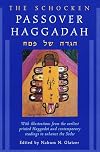
This is one of my favorite haggadahs, and the one I use at my pesach seder every year. People who are used to bare-bones haggadahs (no commentary, and no or minimal pictures), are sometimes a little surprised by the size of the hagaddah, but it is very usable for a seder. It hits all the things I want in a seder haggadah:
1 - The classic Hebrew text
2 - An honest translation which sticks to the pshat (literal meaning of the words) for those who don't know Hebrew as well
3 - Illustrations show more (mostly reproductions of woodcut images from European Haggadahs from the medieval period), for the kids
4 - A running English commentary at the bottom of the page for those who want more in depth insights
The commentary is an academic in content but not in style. It tries to analyze the text (and occasionally the images) from a historical perspective and explain them that way. For example when the afikoman is mentioned in the passage about the four sons, the commentary explains that afikoman is derived from a greek word meaning "festival procession" (which sometimes occurred after meals) and explains the passage based on that. When the haggadah comes to the passage that begins with "in the beginning our ancestors were idol worshipers", the commentary explains the debate in the talmud that led to the two interpretations of how the seder should "go from humiliation to glory", one of which is being represented by this passage which otherwise seems to be starting the telling over again for no particular reason.
I can also assure anyone who is worried about this being a dense and dry haggadah that you needn't worry - it is still easy to read (even after a few cups of wine), and you won't feel like you're in a college library poring over academic journals.
In the back of the haggadah there are also several appendices with additional readings and quotes from a variety of sources on issues like freedom, the holocause, and other seder thoughts. If you want to have more wide ranging Passover based discussions that aren't as closely tied to the text, these are probably a good place to start.
As I said, I love this haggadah and it's the one I bought to use at my seder every year. show less
1 - The classic Hebrew text
2 - An honest translation which sticks to the pshat (literal meaning of the words) for those who don't know Hebrew as well
3 - Illustrations show more (mostly reproductions of woodcut images from European Haggadahs from the medieval period), for the kids
4 - A running English commentary at the bottom of the page for those who want more in depth insights
The commentary is an academic in content but not in style. It tries to analyze the text (and occasionally the images) from a historical perspective and explain them that way. For example when the afikoman is mentioned in the passage about the four sons, the commentary explains that afikoman is derived from a greek word meaning "festival procession" (which sometimes occurred after meals) and explains the passage based on that. When the haggadah comes to the passage that begins with "in the beginning our ancestors were idol worshipers", the commentary explains the debate in the talmud that led to the two interpretations of how the seder should "go from humiliation to glory", one of which is being represented by this passage which otherwise seems to be starting the telling over again for no particular reason.
I can also assure anyone who is worried about this being a dense and dry haggadah that you needn't worry - it is still easy to read (even after a few cups of wine), and you won't feel like you're in a college library poring over academic journals.
In the back of the haggadah there are also several appendices with additional readings and quotes from a variety of sources on issues like freedom, the holocause, and other seder thoughts. If you want to have more wide ranging Passover based discussions that aren't as closely tied to the text, these are probably a good place to start.
As I said, I love this haggadah and it's the one I bought to use at my seder every year. show less

Loves of Franz Kafka is a short book that describes the women Franz Kafka loved and had relationships with. Nahum Norbert Glatzer was an Austrian / American scholar who made great contributions to the popularization of the works of Kafka to English-speaking readership, editing and publishing various books by Franz Kafka. Loves of Franz Kafka is a short work that was his last publication, published in 1985.
Besides the novels, short stories and diaries, there are several volumes of letters by show more Kafka to women he loved, notably Briefe an Milena, Briefe an Felice and Briefe an Ottla und die Familie. Glatzer describes eight women who were important in Kafka's love life: Flora Klug, Mania Tschissik, Felice Bauer, Grete Bloch, Julie Wohryzek, Milena Jesenska, Minze Eissner and Dora Dymant. Chapters are all rather short. Often more is known about the biography of Kafka than the women.
On the first page, Glatzer writes that Kafka strongly troubled by filth (Schmutz) Kafka had a troubled, uneasy relation with women and was revulsed by the idea of having sex with them. THe shrank back from sexual activity which he saw as dirty and revulsive. To Kafka the filth of sex originated with the women. So many of the relationships ended, as Kafka could not bear them to full fruition.
Another characteristic of Kafka's relation with women is that he preferred young women. The succession of the relationships with these eight women all took place within about 10 years, between 1912 and 1923. show less
Besides the novels, short stories and diaries, there are several volumes of letters by show more Kafka to women he loved, notably Briefe an Milena, Briefe an Felice and Briefe an Ottla und die Familie. Glatzer describes eight women who were important in Kafka's love life: Flora Klug, Mania Tschissik, Felice Bauer, Grete Bloch, Julie Wohryzek, Milena Jesenska, Minze Eissner and Dora Dymant. Chapters are all rather short. Often more is known about the biography of Kafka than the women.
On the first page, Glatzer writes that Kafka strongly troubled by filth (Schmutz) Kafka had a troubled, uneasy relation with women and was revulsed by the idea of having sex with them. THe shrank back from sexual activity which he saw as dirty and revulsive. To Kafka the filth of sex originated with the women. So many of the relationships ended, as Kafka could not bear them to full fruition.
Another characteristic of Kafka's relation with women is that he preferred young women. The succession of the relationships with these eight women all took place within about 10 years, between 1912 and 1923. show less
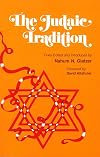
Compilation of texts, edited and introduced by Professor Glatzer, Brandeis University. Provides original sources -- from Judaic antiquity, European literature, and commentaries reflecting modern concerns.
You May Also Like


Associated Authors
Statistics
- Works
- 39
- Also by
- 5
- Members
- 1,425
- Popularity
- #18,051
- Rating
- 4.3
- Reviews
- 8
- ISBNs
- 37
- Languages
- 4
- Favorited
- 1