

Aurobindo (1872–1950)
Author of The Life Divine
About the Author
Image credit: Photo from around 1900, India
Series
Works by Aurobindo
A Greater Psychology: An Introduction to the Psychological Thought of Sri Aurobindo (2001) 46 copies, 1 review
A Practical Guide To Integral Yoga : (Extracts Compiled from the Writings of Sri Aurobindo and The Mother) (1985) 10 copies
L synthèse des Yoga. Le Yoga de la connaissance intégrale, le Yoga de l'amour divin, tome 2 (1969) 9 copies, 3 reviews
Indias rebirth: Out of the ruins of the West : a selection from Sri Aurobindos writings, talks and speeches (1994) 7 copies
A Vida Divina uma Visao da Evolucao Espiritual da Humanidade (Em Portugues do Brasil) (2000) 5 copies, 1 review
Sri Aurobindo on himself and on The Mother (Sri Aurobindo international university centre collection) (1953) 4 copies
La Vida Divina Libro II la Conciencia Infinita y la Ignoranca (Spanish Edition) (2004) 4 copies, 1 review
The Hierarchy of Minds 4 copies
Lyrical Poems (1930-1950) 4 copies
Eric : a dramatic romance 3 copies
Inspired Talks 3 copies
The Upanishads 3 copies
Last poems 3 copies
Living Words: Soul-kindlers for the New Millennium - Gleanings from the Works of Sri Aurobindo and the Mother (2000) 3 copies
On Yoga II, Tome Two 3 copies
Self-Determination 3 copies
Savitri : Tomes 4 & 5, Le livre de la naissance et de la quête, Le livre de l'amour (1998) 2 copies, 1 review
The destiny of man 2 copies
Integral Yoga: Sri Aurobindo's Teaching and Method of Practice, Slected Letters of Sri Aurobindo (2015) 2 copies
How to Cultivate Concentration 2 copies
The Significance of Indian Art 2 copies
On Women 1 copy
CIRHU Papers 1 copy
A Mensagem do Gītā: O Bhagavad Gītā Traduzido, Interpretado e Comentado por Sri Aurobindo 1 copy
More Poems 1 copy
The life divine. Vol. 1-2 1 copy
The Message of Gita 1 copy
Sri Aurobindo- Archives and Research (FromVol. 10, April 1986 to Vol. 18, Dec. 1984) (21 books) 1 copy
What is Faith 1 copy
What is Yoga 1 copy
The Supreme Divine 1 copy
The Divine Body 1 copy
New Lamps for Old 1 copy
Sri Aurobindo on India 1 copy
L'Idéal de l'Unité Humaine 1 copy
Bengali Writings 1 copy
Sri Aurobindo: A Life Sketch 1 copy
La Poésie Future 1 copy
Poems: Past and Present 1 copy
The Truth to be realised now / La Vérité qu'il faut réaliser maintenant (a letter of November 1928) 1 copy
Views and Reviews 1 copy
Elements of Yoga 1 copy
Letters on Yoga - III 1 copy
Letters on Yoga - II 1 copy
La Valeur nationale de l'Art 1 copy
Ilion ou La Chute de Troie 1 copy
La Révolution française 1 copy
The World Game 1 copy
Aperçus et Pensées 1 copy
Le Karmayogin - Volume 1 1 copy
Lumières sur le Yoga 1 copy
Sri Aurobindo. L'Évolution future de l'humanité : La vie divine sur la terre (1962) 1 copy, 1 review
Meditations of Mandavya 1 copy
O Love (various excerpts) 1 copy
La Mère 1 copy
Lettres - Volume III 1 copy
Il denaro 1 copy
Che cos'è lo yoga 1 copy
Meditazione 1 copy
Krishna 1 copy
La Madre 1 copy
Aiutare l'umanità 1 copy
Unità umana 1 copy
Il cibo 1 copy
Lavoro 1 copy
Dono di sé e grazia 1 copy
Riposo e rilassamento 1 copy
Arte (II) 1 copy
Arte (I) 1 copy
L'ora di Dio 1 copy
The LIfe Divine Volume 2 1 copy
The Mother on Sri Aurobindo 1 copy
The Mother on Education 1 copy
The Spirit and The Soul 1 copy
Letters on Yoga Volume 3 1 copy
Letters on Yoga Volume 2 1 copy
La paura 1 copy
Social and political thought 1 copy
Lettere sullo yoga 1 copy
The life divine 1 copy
Introduction to the Gita 1 copy
lo Yoga della Bhagavad Gita 1 copy
Le Donne 1 copy
The Life Divine Pt 1 1 copy
La madre 1 copy
The Veda, the Upanishads, the Tantra: Compiled by Vijay from writings of Sri Aurobindo and The Mother (1972) 1 copy
Sri Aurobindo on India 1 copy
Vyasa and Valmiki 1 copy
On yoga II: letters on yoga 1 copy
Speeches 1 copy
Yogic sadhan 1 copy
Key to Vedic symbolism 1 copy
The Upanishads 1 copy
Collected Poems and Plays 1 copy
Meditations on Savitri 1 copy
Essays on the Gita II series 1 copy
Eight Upanishads 1 copy
On Yoga 1 copy
How to Sleep Well 1 copy
Ideas and Ideals: Extracts from Sri Aurobindo's Writings with His Ideas on Life-problems and Ideals Involved Therein (2000) 1 copy
the immortal fire 1 copy
La vie divine III 1 copy
La vie divine II 1 copy
La vie divine I 1 copy
Gods and the divine 1 copy
Letters On Yoga: Vol. IV 1 copy
Letters On Yoga: Vol. 2 & 3 1 copy
Letters On Yoga: Vol. 1 1 copy
Money-Power and Prosperity 1 copy
Sri Aurobindo and his Ashram 1 copy
The Essential Gita/With Selected Text,English Translation,and commentary in the Words of Sri Aurobindo (2010) 1 copy
Quiet Mind 1 copy
Sri Aurobindo on Humanities 1 copy
Yoga / Religie 1 copy
Der integrade Yoga 1 copy
ON YOGA II Two Volumes 1 copy
Les Bases du Yoga 1 copy
Associated Works
Sources of Indian Tradition, Volume II: Modern India and Pakistan (1958) — Contributor — 185 copies, 1 review
Tagged
Common Knowledge
- Legal name
- শ্রী অরবিন্দ
- Birthdate
- 1872-08-15
- Date of death
- 1950-12-05
- Gender
- male
- Education
- King's College, Cambridge
- Occupations
- civil servant
philosopher - Organizations
- Indian National Congress
Sri Aurobindo Ashram - Nationality
- India
- Birthplace
- Calcutta, Bengal Presidency, British India
- Places of residence
- Pondicherry, India
- Associated Place (for map)
- India
Members
Reviews
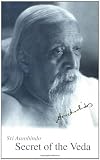
The Vedas, until I read this book, were mysterious, superficial and materialistic to the point of being nonsensical. The verses didn't make scientific or even rational sense.
However, having read the book, I now understand the mystical nature of the knowledge that ancient Indian seers wanted to hand down to generations. I see why so many things in Hinduism are so twisted, so ritualistic and incorrect. The hidden meaning of the words and passages become clear upon reading the book and every show more chapter is another experience in thinking, "wow! that was a surprise!"
The book is not an easy read, just as Sri Aurobindo's other works. Written in English that most of us long stopped speaking or reading, it takes effort and a generous help from a dictionary. But all the effort is, in the end, worth it. show less
However, having read the book, I now understand the mystical nature of the knowledge that ancient Indian seers wanted to hand down to generations. I see why so many things in Hinduism are so twisted, so ritualistic and incorrect. The hidden meaning of the words and passages become clear upon reading the book and every show more chapter is another experience in thinking, "wow! that was a surprise!"
The book is not an easy read, just as Sri Aurobindo's other works. Written in English that most of us long stopped speaking or reading, it takes effort and a generous help from a dictionary. But all the effort is, in the end, worth it. show less
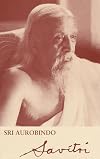
Sri Aurobindo had intended to write a lengthy introduction to Savitri, which never occurred. He did, however, write an author's note acting as an effective summary that appears at the beginning of the poem in all its published versions:
The tale of Satyavan and Savitri is recited in the Mahabharata as a story of conjugal love conquering death. But this legend is, as shown by many features of the human tale, one of the many symbolic myths of the Vedic cycle. Satyavan is the soul carrying the show more divine truth of being within itself but descended into the grip of death and ignorance; Savitri is the Divine Word, daughter of the Sun, goddess of the supreme Truth who comes down and is born to save; Aswapati, the Lord of the Horse, her human father, is the Lord of Tapasya, the concentrated energy of spiritual endeavour that helps us to rise from the mortal to the immortal planes; Dyumatsena, Lord of the Shining Hosts, father of Satyavan, is the Divine Mind here fallen blind, losing its celestial kingdom of vision, and through that loss its kingdom of glory. Still this is not a mere allegory, the characters are not personified qualities, but incarnations or emanations of living and conscious Forces with whom we can enter into concrete touch and they take human bodies in order to help man and show him the way from his mortal state to a divine consciousness and immortal life. show less
The tale of Satyavan and Savitri is recited in the Mahabharata as a story of conjugal love conquering death. But this legend is, as shown by many features of the human tale, one of the many symbolic myths of the Vedic cycle. Satyavan is the soul carrying the show more divine truth of being within itself but descended into the grip of death and ignorance; Savitri is the Divine Word, daughter of the Sun, goddess of the supreme Truth who comes down and is born to save; Aswapati, the Lord of the Horse, her human father, is the Lord of Tapasya, the concentrated energy of spiritual endeavour that helps us to rise from the mortal to the immortal planes; Dyumatsena, Lord of the Shining Hosts, father of Satyavan, is the Divine Mind here fallen blind, losing its celestial kingdom of vision, and through that loss its kingdom of glory. Still this is not a mere allegory, the characters are not personified qualities, but incarnations or emanations of living and conscious Forces with whom we can enter into concrete touch and they take human bodies in order to help man and show him the way from his mortal state to a divine consciousness and immortal life. show less
Light For Students - Towards Higher And Deeper Values - Compilation From The Writings Of Sri Aurobindo And The Mother by Sri Aurobindo

Light For Students is a compilation from the writings of Sri Aurobindo and The Mother from Sri Aurobindo Ashram, Pondicherry, Towards Higher and Deeper Values.
This soft cover book of 126 pages, addresses the many realms of knowledge that are never taught to young students. The parents tell their children to concentrate on their studies without giving them any clue as to how exactly one concentrates. Similarly, they are never told of so many whys and hows of things: why they become ill, get show more angry or feel afraid; or the reasons for their boredom, depression, frustration and how to overcome all these.
"The finest present one can give to a child would be to teach him to know himself and to master himself," said The Mother. The selections of this book will give students a new insight into life and help open up new horizons of knowledge. show less
This soft cover book of 126 pages, addresses the many realms of knowledge that are never taught to young students. The parents tell their children to concentrate on their studies without giving them any clue as to how exactly one concentrates. Similarly, they are never told of so many whys and hows of things: why they become ill, get show more angry or feel afraid; or the reasons for their boredom, depression, frustration and how to overcome all these.
"The finest present one can give to a child would be to teach him to know himself and to master himself," said The Mother. The selections of this book will give students a new insight into life and help open up new horizons of knowledge. show less

As far as I understand, this little book was written in Bengali. The English translation was first published in August 1974.
I had no previous knowledge of the author, Sri Aurobindo, before reading the book, though I had heard of him.
As the translator, Sisirkumar Ghose, points out, the book has an importance as a historical document “showing the evils of the prison system under the British Raj”.
He also states “rarely --- has Sri Aurobindo --- written with such irony, sarcasm, show more invective and humour”.
In 1908 two European ladies were killed in a “bomb outrage” and Aurobindo eventually found out that he himself was the main target of suspicion and regarded by the police as the “”chief killer”, ”the instigator and secret leader of the young terrorists and revolutionaries”.
He was arrested in the middle of the night by armed policemen, he was handcuffed and a rope tied round his middle.
The book is an account of the author’s imprisonment in Alipore jail in India, which imprisonment lasted a year.
The author had long wanted to have “a direct vision of the Lord of my Heart”, of ”knowing the Preserver of the World, the Supreme Person” but had not succeeded in that effort.
The British Government had wanted to do him “an ill turn” but the only result of its “wrath” was that he found God.
The police had searched his house but found no bombs or explosives and he had been arrested “in the absence of a body warrant”, whatever that might be, which was apparently mandatory.
A month and a half before Aurobindo’s arrest he had been visited by an unknown gentleman who had warned him that some wicked people were conspiring against him and his brother.
He informed the person “I have complete faith in God. He will always protect me.”
It is ironic, or rather, ridiculous, that Aurobindo was arrested for being a terrorist and murderer when in fact he was a highly spiritual person. However, he tells us that his imprisonment actually helped him in his endeavour to find God.
At least in part, he lived in solitary confinement. He was grateful for it.
He talks of an Italian who had been sentenced to seven years’ solitary imprisonment; within a year he had gone mad.
He had two prison blankets as a bed.
He says his diet was unfit for animals. The rice was spiked with pebbles, insects, hair, dirt, etc. The lentil soup was heavily watered. He never before knew how food could be so tasteless and with no nutritional value.
He tells us that he and the other inmates, rich and poor, all slept and ate together with a ”wonderful feeling of brotherhood”.
He states that he lived for a year like an animal in a cage.
He comments on the English people (I expect he meant “British”) that having studied their history he had already found out their “strange and mysterious character”, so he was not at all “astonished or unhappy” at their behaviour towards him.
Prisoners were not even allowed to sleep properly since every time sentries were changed the former were noisily disturbed with no respite until they responded.
I did not find the book to be easy reading. There were pages and pages with no chapters, nor even paragraphs.
I was completely unfamiliar with the many (Indian) personages referred to by the author, which didn’t help matters.
The book will have a limited appeal, but has a certain interest, particularly for those interested in spirituality.
It ends with a poem written by the author in Alipore Jail, 1908-09. show less
I had no previous knowledge of the author, Sri Aurobindo, before reading the book, though I had heard of him.
As the translator, Sisirkumar Ghose, points out, the book has an importance as a historical document “showing the evils of the prison system under the British Raj”.
He also states “rarely --- has Sri Aurobindo --- written with such irony, sarcasm, show more invective and humour”.
In 1908 two European ladies were killed in a “bomb outrage” and Aurobindo eventually found out that he himself was the main target of suspicion and regarded by the police as the “”chief killer”, ”the instigator and secret leader of the young terrorists and revolutionaries”.
He was arrested in the middle of the night by armed policemen, he was handcuffed and a rope tied round his middle.
The book is an account of the author’s imprisonment in Alipore jail in India, which imprisonment lasted a year.
The author had long wanted to have “a direct vision of the Lord of my Heart”, of ”knowing the Preserver of the World, the Supreme Person” but had not succeeded in that effort.
The British Government had wanted to do him “an ill turn” but the only result of its “wrath” was that he found God.
The police had searched his house but found no bombs or explosives and he had been arrested “in the absence of a body warrant”, whatever that might be, which was apparently mandatory.
A month and a half before Aurobindo’s arrest he had been visited by an unknown gentleman who had warned him that some wicked people were conspiring against him and his brother.
He informed the person “I have complete faith in God. He will always protect me.”
It is ironic, or rather, ridiculous, that Aurobindo was arrested for being a terrorist and murderer when in fact he was a highly spiritual person. However, he tells us that his imprisonment actually helped him in his endeavour to find God.
At least in part, he lived in solitary confinement. He was grateful for it.
He talks of an Italian who had been sentenced to seven years’ solitary imprisonment; within a year he had gone mad.
He had two prison blankets as a bed.
He says his diet was unfit for animals. The rice was spiked with pebbles, insects, hair, dirt, etc. The lentil soup was heavily watered. He never before knew how food could be so tasteless and with no nutritional value.
He tells us that he and the other inmates, rich and poor, all slept and ate together with a ”wonderful feeling of brotherhood”.
He states that he lived for a year like an animal in a cage.
He comments on the English people (I expect he meant “British”) that having studied their history he had already found out their “strange and mysterious character”, so he was not at all “astonished or unhappy” at their behaviour towards him.
Prisoners were not even allowed to sleep properly since every time sentries were changed the former were noisily disturbed with no respite until they responded.
I did not find the book to be easy reading. There were pages and pages with no chapters, nor even paragraphs.
I was completely unfamiliar with the many (Indian) personages referred to by the author, which didn’t help matters.
The book will have a limited appeal, but has a certain interest, particularly for those interested in spirituality.
It ends with a poem written by the author in Alipore Jail, 1908-09. show less
Lists
Seeking the Soul (3)
Awards


You May Also Like


Associated Authors
Statistics
- Works
- 505
- Also by
- 2
- Members
- 2,646
- Popularity
- #9,705
- Rating
- 4.2
- Reviews
- 95
- ISBNs
- 469
- Languages
- 10
- Favorited
- 7