

Roy F. Baumeister
Author of Willpower: Rediscovering the Greatest Human Strength
About the Author
Roy F. Baumeister is the Eppes Eminent Professor of Psychology and head of the social psychology graduate program at Florida State University. He received his Ph.D. in social psychology from Princeton in 1978 and did a postdoctoral fellowship in sociology at the University of California at show more Berkeley. Baumeister has worked at Case Western Reserve University, as well as the University of Texas, University of Virginia, Max-Planck-Institute, and the Center for Advanced Study in the Behavioral Sciences. Baumeister's has received research grants from the National Institutes of Health and from the Templeton Foundation. His research spans the areas of self and identity, self-regulation, interpersonal rejection and the need to belong, sexuality and gender, aggression, self-esteem, meaning, and self-presentation. He is the author of nearly 400 publications. His books include Evil: Inside Human Violence and Cruelty , The Cultural Animal , Meanings of Life and Willpower: Rediscovering the Greatest Human Strength. (Bowker Author Biography) show less
Works by Roy F. Baumeister
The Power of Bad: How the Negativity Effect Rules Us and How We Can Rule It (2019) 118 copies, 3 reviews
Is There Anything Good About Men? How Cultures Flourish by Exploiting Men (2010) 71 copies, 1 review
Escaping the Self: Alcoholism, Spirituality, Masochism, and Other Flights from the Burden of Selfhood (1991) 35 copies
Handbook of Self-Regulation, 2nd Edition: Research, Theory, and Applications (2004) — Editor — 34 copies
Handbook of Self-Regulation, 3rd Edition: Research, Theory, and Applications (2016) — Editor — 18 copies
Time and Decision: Economic and Psychological Perspectives on Intertemporal Choice (2003) — Editor — 13 copies
Self-Esteem: The Puzzle of Low Self-Regard (The Plenum Series in Social/Clinical Psychology) (1993) 9 copies
Knowing Yourself: How to Understand Personality, Harness Willpower & Manage Self-Esteem (2020) 7 copies
Handbook of Self-Regulation, 1st Edition: Research, Theory, and Applications (2007) — Editor — 7 copies
Social Psychology and Human Sexuality: Essential Readings (Key Readings in Social Psychology) (2001) 3 copies
The Science of Free Will: Bridging Theory and Positive Psychology (Cornerstones in Positive Psychology) (2024) 1 copy
Wozu sind Männer eigentlich überhaupt noch gut?: Wie Kulturen davon profitieren, Männer auszubeuten (2012) 1 copy
Sensuri ale vietii 1 copy
Associated Works
Self and Relationships: Connecting Intrapersonal and Interpersonal Processes (2006) — Contributor — 6 copies
Tagged
Common Knowledge
- Birthdate
- 1953-05-16
- Gender
- male
- Education
- Princeton University (PhD, social psychology, 1978)
Duke University - Occupations
- professor
psychologist - Organizations
- Florida State University
- Awards and honors
- William James Fellow (2013)
- Short biography
- Roy F. Baumeister is currently the Eppes Eminent Scholar and Professor of Psychology at Florida State University. He received his Ph.D. in social psychology from Princeton in 1978 and did a postdoctoral fellowship in sociology at the University of California at Berkeley. He spent over two decades at Case Western Reserve University. He has also worked at the University of Texas, the University of Virginia, the Max-Planck-Institute, the VU Free University of Amsterdam, the University of California at Santa Barbara, and Stanford’s Center for Advanced Study in the Behavioral Sciences. Baumeister’s research spans multiple topics, including self and identity, self-regulation, interpersonal rejection and the need to belong, sexuality and gender, aggression, self-esteem, meaning, and self-presentation. He has received research grants from the National Institutes of Health and from the Templeton Foundation. He has over 500 publications, and his 31 books include Evil: Inside Human Violence and Cruelty, The Cultural Animal, Meanings of Life, and the New York Times bestseller Willpower: Rediscovering the Greatest Human Strength. The Institute for Scientific Information lists him among the handful of most cited (most influential) psychologists in the world. He has received lifetime achievement awards from the Society for Personality and Social Psychology, from the International Society for Self and Identity, and most recently the Association for Psychological Science’s highest honor, the William James Award.
http://www.prospectivepsych.org/conte... - Nationality
- USA
- Birthplace
- Cleveland, Ohio, USA
- Places of residence
- Florida, USA
- Associated Place (for map)
- USA
Members
Reviews
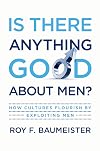
Here was a book which truly had a potential. Yet it fails, and fails miserably.
It's not that the premise of the author is wrong (culture DO exploits men, who are indeed expendable). What is appalling here are the reasons given as to why culture is how it is; the solutions proposed; and, where to take us all from there. Let's call a spade a spade: Roy F. Baumeister might claim the contrary pages after pages, nevertheless, here's a sexist and prejudiced book, lazy in its argumentation, and show more poor in its biased and chauvinistic conclusions.
But, first of all, let's give him some credit and start by recognising where he is right.
At its core, what is it all about? Well, a powerful argument: yes, we live in a man's made world. Yet, such man made world always has been a double-edge sword for men themselves. It's been allowing them to thrive, take charge, suit their ambition and drive. It also entails a culture which exploits them and make them expendable. He, in fact, bashes against the feminists as he imagines them (more on that later...) who, according to him, are so brainwashed into reducing everything to a battle of gender that they delude themselves into believing there is such a thing as a patriarchy:
'How can you say men are exploited, if they run everything?... The mistake in that way of thinking is to look at the top of society and draw conclusions about society as a whole. Yes, there are mostly men at the top. But if you look at the bottom, really at the bottom, you'll find mostly men too. These are the worst outcomes society has to confer. And in each case, men far outnumber women... Look at the prisons... the homeless... death on the job... being killed in battle.'
Indeed. And, had he stays onto that line of thinking and argumentation the author would have made a powerful impact: the so-called patriarchy is not a system to deliberately excludes women (such exclusion was a by-product); it's a competitive system let loose, which has thrived only through toxic masculinity. Men as a group surely reached the top, but it came as a price -them being expendable as individuals. And here we could have gone: in a society where feminism has been triumphing and women got empowered, women, thankfully, gained access to the culture made by men. They influence it. The patriarchy is receding. Yet, if things have positively changed a great deal for them, have they changed for men? Not much. Toxic masculinity is still pretty much prevalent, with all its nasty consequences for men themselves (again: culture exploits men). In fact, I had picked up this book believing it would be a reflection of such... It's not.
The author doesn't go into that line of thinking and argumentation. Instead, where does he go? He attacks feminism as he perceives it, and, doing so, demeans women. It starts:
'the idea that all men think of themselves as powerful beings is one of the most absurd and unfounded assertions in the gender studies arena. The Imaginary Feminist often starts her analyses by thinking of the male role as one of power. Few actual men think that way. Most men know there is a hierarchy of power and that they are far from the top.'
'the conventional view of men enjoying lives of ease and privilege while women toil and suffer is not correct.'
Well, yes! But, then, who would entertain such views about men? From my experience, no one. I have yet to come across a feminist who truly believes that there is a conspiracy of men to keep women down! The funny thing is... so is the author! The whole book is in fact an argument against who he calls (as in the first quote above) the 'Imaginary Feminist'. Oh boy! I understand he means 'imaginary' as a pretend person, but, sadly, it quickly turns out that his 'imaginary' is actually an embodiment of opinions that are not representative of feminism as a whole! Don't get me wrong: I loathe the victim culture and indulging in misandry of a certain trend of radical feminists as much as the author does. But, this trend is just that: a loosie bunch of radicals. Maybe such looneys are successful on American campuses? I don't know; I don't see them around. Thing is, such misandry is NOT what feminism is about, and, so, his is a straw man argument through and through.
It gets worse.
The author mostly tries to explain how the culture men-made came about, or, at least (since women have been empowered and welcomed in what were once all-male institutions) how it came to be shaped by men. Wow! It's so sexist, you'll be hard pressed to don't see it as plain misogynistic!
In fact, he advances outdated arguments. For instance, he admits that men and women are biologically different, and, so, have different drive (men and women are social in different ways'): where women prefer intimate and close relationships, men prefer big groups. The patriarchy, then, according to him, is a by-product of these differences:
'The men formed armies, churches, corporations, unions and governments. The women did not. Much later, the women did begin to form a few large groups, but mostly these were aimed at protesting against what the men did... Men created groups that were proactive.'
'The fact that culture emerged from the men's sphere is the key reason for the increase in gender inequality. Crucially, the difference did not arise because women were pushed down, as the Imaginary Feminist argues. Rather, it arose because men went up.'
In other words: culture has been shaped by successful men because men, gathering in large groups, battled against each other for success. Women never were in charge of anything, because they never created anything and took no part in such battles -not because they were deliberately excluded.
Mind you, he doesn't claim women are inferior in any way to men. Contradicting himself, he doesn't even claim that women are not motivated enough to create and evolve within big groups of their own! What he claims (brace yourself!) is that when women create big groups, it's mostly as a drum to nag and whinge:
'Women mostly do not do things in big groups. Indeed, the main thing women have done in large groups is to protest and complain about the men and the men's activities. On this, women have been useful and successful in collective work. I refer here not only to the feminist movements from the suffragists onward, but also to various campaigns to protest men's drunkenness, to reduce vice such as by getting men to stop using prostitutes, and the like.
Is he serious?! Is he sarcastic?! Lost among so much sexist prejudices I admit I can't tell. At least he had the decency to add, in a separate sentence of course:
'Women's groups were also active in campaigning against slavery.'
Ha! Sweet. At last.
Jokes asides, here we go again: debunking such bias.
There is no scientific evidence that women do indeed prefer close and intimate relationships over the competition within big groups. The author seems to rely on socio-biology to claim so, yet he cites no evidence from the field to support the argument (and I am not aware of any). Here then are just, as the terminology goes, 'just-so stories'. More: following the success of feminism and the integration of women in such big groups (politics, businesses...) women have proven themselves perfectly capable to succeed within such social environments, at times even better than men themselves. The biological argument, then, doesn't stand.
It doesn't stand, yet the author relies entirely on it to explain the reason why, despite decades of feminism, positions of power are still in majority into the hands of men and not women.
'there are real, innate differences between men and women, including in capabilities and inclinations... they are rooted in biology... people are born with these differences (at least as tendencies)'
Let's emphasise 'capabilities and inclinations'. I emphasise because it shows how deeply ingrained his bias are.
The issue is that, talking about 'capabilities and inclinations' as he does, he wrongly uses biology to explain and justify women being in subservient positions when they are. To him indeed, it's all about motivation only. Do women really want to work the top jobs in sciences? Politics? Corporate businesses? Do they really want managerial positions in various fields of work? Or, do they prefer to focus on 'close and intimate relationships' that is, stay home to care for their families? According to this line of thinking, there is no glass ceiling; just women not willing to make the sacrifices necessary to reach the top. Women are, biologically (supposedly) not tough enough, ambitious enough, driven enough. He actually is very candid (making this even more shocking coming from a University Professor): when men shaped the culture by taking risks and competing against each others, women, on the other hand, were busy otherwise:
'they competed to get a better versus less desirable mate. And they did this not by besting other women at physical tasks, but by being more beautiful and sweet and lovable than the others.'
Yep! You've read that right! This book smacks of such sexist prejudices. You want another one? Here's another one:
'For the females, being attractive, healthy, and yes, loving and lovable were the traits that were passed along to the offspring. For the males, the vital traits were strength, aggressiveness, and ambition.'
Obviously, as a result:
'striving for greatness has often demanded (and still demands) a dedication to work and career that is difficult to reconcile with having a large brood of children. Hence, that passion for greatness may not be as deeply ingrained in the psychology of today's women.'
I wanted to laugh. It could be funny. It's not. I will pass over the poor understanding (if at all) of the nature-nurture interplay in evolutionary biology. I will point instead to something way more alarming: explaining the fate and position within society of whole groups of people (here, women) by blaming it on their sole biology. It's appalling. Historically, such way of thinking even had terrible consequences. If anything, I am flagger basted that such cr@p has been published by Oxford University Press! There, I said it: cr@p.
I don't like cheap insults, so to illustrate my point I will pick on one, just one, of his examples: women giving up on successful career when they become mothers, to leave it instead to their male partner to be the breadwinner. I choose this example because it strikes me as him missing even the whole point of the core argument he is supposedly making in this book that is, our culture exploits men.
He is right to point at women absent from top positions despite societal incentives to put them there, and he is right to link it to motherhood. Where he misses the point by a long shot, is when he claims that this is so because women are biologically geared to have less motivation than men -they ultimately settle for the cosy housewife lifestyle instead of working their arse off to climb a career ladder. Having babies is their excuse to give up, and, then, they dare complain top shot positions at work are filled by men! Oh so wrong! It has nothing to do with motivation (let alone innate). It has to do with men having been let down.
As I say earlier, a lot has been done to empower women and give them incentives to succeed at school first, on the marketplace then. It worked. Sadly, nothing has been done to balance this by supporting men to participate in their household. Why? Well, here's another field where men are being expendable: in societies that are more GDP-friendly than family-friendly, men keep being perceived and valued as paycheques over being fathers and husbands. This is why paternity leaves are ridiculously short compared to maternity leaves (I don't know in the USA where the author is from, but, in the UK where I live paternity leaves are two weeks only...). This is why, as a result, women end up staying at home: not by choice, but by necessity.
Roy F. Baumeister had here the floor to make a compelling argument had he wished to: here's the evidence that culture, indeed, exploits men by reducing them as sole producers, providers and paycheques. He could have pointed out that, ironically, women pay the price. He could have make a compelling argument for measures to be implemented in order to reach a compromise between gender -measures which, like the ones that had allowed women to step up onto the marketplace, would allow men to step up into their household. After all, in countries where paternity leaves matches maternity leaves, women DO have successful careers, and men's careers are not affected. But he doesn't.
Instead, sexist as he is, he just sees women not motivated enough to work themselves to the top, and, so, not being worthy of being at the top in the first place. His dismissal is blunt. Were he to be taken seriously, women would see decades of hard fought battles and progress for social justice snatched away from them. To him indeed, they are biologically geared to compete only to breed:
'Female motivational resources are more suited toward quality reproduction'
And, so, we should question our trying to empower them to do and be otherwise:
'to take privileged places and resources like education, and then not use them, has some cost to society also. I cannot defend the decision of those parents who refused to pay for a Cornell education for their daughter, nor would I refuse to work with female students simply because they might be more likely than males to drop out of the field after years of training. Still, I can understand why a culture might produce people who have that policy. From the unfeeling perspective of the system, it could be worth it to restrict female access to education.'
What's the point of educating women indeed, if, as soon as they get pregnant (their natural inclination) they will leave it to the men to do the dirty jobs and bring in the money while they enjoy a life of comfort at home? I am not caricaturing his view. As far as he is concerned, women don't even contribute much to progress and innovation anyway! For example:
'some of the longevity enjoyed by today's women is a result of the scientific work by men... not least in the improvements in the rates of surviving childbirth. It would be nice if women, collectively, could do something equally beneficial for men, something that would extend men's lives, but don't bet on it.'
I could go on, from women supposedly not being tough enough to take the rough talks and attitude of an all male workplace (in other words: harassment and putdowns are just misunderstanding, no need to sue) to men being driven, brave and ambitious thanks to their innate sex drives (sorry wives, but cheating is in our genes...). I could go on but I won't.
This was bad. Plain bad. show less
It's not that the premise of the author is wrong (culture DO exploits men, who are indeed expendable). What is appalling here are the reasons given as to why culture is how it is; the solutions proposed; and, where to take us all from there. Let's call a spade a spade: Roy F. Baumeister might claim the contrary pages after pages, nevertheless, here's a sexist and prejudiced book, lazy in its argumentation, and show more poor in its biased and chauvinistic conclusions.
But, first of all, let's give him some credit and start by recognising where he is right.
At its core, what is it all about? Well, a powerful argument: yes, we live in a man's made world. Yet, such man made world always has been a double-edge sword for men themselves. It's been allowing them to thrive, take charge, suit their ambition and drive. It also entails a culture which exploits them and make them expendable. He, in fact, bashes against the feminists as he imagines them (more on that later...) who, according to him, are so brainwashed into reducing everything to a battle of gender that they delude themselves into believing there is such a thing as a patriarchy:
'How can you say men are exploited, if they run everything?... The mistake in that way of thinking is to look at the top of society and draw conclusions about society as a whole. Yes, there are mostly men at the top. But if you look at the bottom, really at the bottom, you'll find mostly men too. These are the worst outcomes society has to confer. And in each case, men far outnumber women... Look at the prisons... the homeless... death on the job... being killed in battle.'
Indeed. And, had he stays onto that line of thinking and argumentation the author would have made a powerful impact: the so-called patriarchy is not a system to deliberately excludes women (such exclusion was a by-product); it's a competitive system let loose, which has thrived only through toxic masculinity. Men as a group surely reached the top, but it came as a price -them being expendable as individuals. And here we could have gone: in a society where feminism has been triumphing and women got empowered, women, thankfully, gained access to the culture made by men. They influence it. The patriarchy is receding. Yet, if things have positively changed a great deal for them, have they changed for men? Not much. Toxic masculinity is still pretty much prevalent, with all its nasty consequences for men themselves (again: culture exploits men). In fact, I had picked up this book believing it would be a reflection of such... It's not.
The author doesn't go into that line of thinking and argumentation. Instead, where does he go? He attacks feminism as he perceives it, and, doing so, demeans women. It starts:
'the idea that all men think of themselves as powerful beings is one of the most absurd and unfounded assertions in the gender studies arena. The Imaginary Feminist often starts her analyses by thinking of the male role as one of power. Few actual men think that way. Most men know there is a hierarchy of power and that they are far from the top.'
'the conventional view of men enjoying lives of ease and privilege while women toil and suffer is not correct.'
Well, yes! But, then, who would entertain such views about men? From my experience, no one. I have yet to come across a feminist who truly believes that there is a conspiracy of men to keep women down! The funny thing is... so is the author! The whole book is in fact an argument against who he calls (as in the first quote above) the 'Imaginary Feminist'. Oh boy! I understand he means 'imaginary' as a pretend person, but, sadly, it quickly turns out that his 'imaginary' is actually an embodiment of opinions that are not representative of feminism as a whole! Don't get me wrong: I loathe the victim culture and indulging in misandry of a certain trend of radical feminists as much as the author does. But, this trend is just that: a loosie bunch of radicals. Maybe such looneys are successful on American campuses? I don't know; I don't see them around. Thing is, such misandry is NOT what feminism is about, and, so, his is a straw man argument through and through.
It gets worse.
The author mostly tries to explain how the culture men-made came about, or, at least (since women have been empowered and welcomed in what were once all-male institutions) how it came to be shaped by men. Wow! It's so sexist, you'll be hard pressed to don't see it as plain misogynistic!
In fact, he advances outdated arguments. For instance, he admits that men and women are biologically different, and, so, have different drive (men and women are social in different ways'): where women prefer intimate and close relationships, men prefer big groups. The patriarchy, then, according to him, is a by-product of these differences:
'The men formed armies, churches, corporations, unions and governments. The women did not. Much later, the women did begin to form a few large groups, but mostly these were aimed at protesting against what the men did... Men created groups that were proactive.'
'The fact that culture emerged from the men's sphere is the key reason for the increase in gender inequality. Crucially, the difference did not arise because women were pushed down, as the Imaginary Feminist argues. Rather, it arose because men went up.'
In other words: culture has been shaped by successful men because men, gathering in large groups, battled against each other for success. Women never were in charge of anything, because they never created anything and took no part in such battles -not because they were deliberately excluded.
Mind you, he doesn't claim women are inferior in any way to men. Contradicting himself, he doesn't even claim that women are not motivated enough to create and evolve within big groups of their own! What he claims (brace yourself!) is that when women create big groups, it's mostly as a drum to nag and whinge:
'Women mostly do not do things in big groups. Indeed, the main thing women have done in large groups is to protest and complain about the men and the men's activities. On this, women have been useful and successful in collective work. I refer here not only to the feminist movements from the suffragists onward, but also to various campaigns to protest men's drunkenness, to reduce vice such as by getting men to stop using prostitutes, and the like.
Is he serious?! Is he sarcastic?! Lost among so much sexist prejudices I admit I can't tell. At least he had the decency to add, in a separate sentence of course:
'Women's groups were also active in campaigning against slavery.'
Ha! Sweet. At last.
Jokes asides, here we go again: debunking such bias.
There is no scientific evidence that women do indeed prefer close and intimate relationships over the competition within big groups. The author seems to rely on socio-biology to claim so, yet he cites no evidence from the field to support the argument (and I am not aware of any). Here then are just, as the terminology goes, 'just-so stories'. More: following the success of feminism and the integration of women in such big groups (politics, businesses...) women have proven themselves perfectly capable to succeed within such social environments, at times even better than men themselves. The biological argument, then, doesn't stand.
It doesn't stand, yet the author relies entirely on it to explain the reason why, despite decades of feminism, positions of power are still in majority into the hands of men and not women.
'there are real, innate differences between men and women, including in capabilities and inclinations... they are rooted in biology... people are born with these differences (at least as tendencies)'
Let's emphasise 'capabilities and inclinations'. I emphasise because it shows how deeply ingrained his bias are.
The issue is that, talking about 'capabilities and inclinations' as he does, he wrongly uses biology to explain and justify women being in subservient positions when they are. To him indeed, it's all about motivation only. Do women really want to work the top jobs in sciences? Politics? Corporate businesses? Do they really want managerial positions in various fields of work? Or, do they prefer to focus on 'close and intimate relationships' that is, stay home to care for their families? According to this line of thinking, there is no glass ceiling; just women not willing to make the sacrifices necessary to reach the top. Women are, biologically (supposedly) not tough enough, ambitious enough, driven enough. He actually is very candid (making this even more shocking coming from a University Professor): when men shaped the culture by taking risks and competing against each others, women, on the other hand, were busy otherwise:
'they competed to get a better versus less desirable mate. And they did this not by besting other women at physical tasks, but by being more beautiful and sweet and lovable than the others.'
Yep! You've read that right! This book smacks of such sexist prejudices. You want another one? Here's another one:
'For the females, being attractive, healthy, and yes, loving and lovable were the traits that were passed along to the offspring. For the males, the vital traits were strength, aggressiveness, and ambition.'
Obviously, as a result:
'striving for greatness has often demanded (and still demands) a dedication to work and career that is difficult to reconcile with having a large brood of children. Hence, that passion for greatness may not be as deeply ingrained in the psychology of today's women.'
I wanted to laugh. It could be funny. It's not. I will pass over the poor understanding (if at all) of the nature-nurture interplay in evolutionary biology. I will point instead to something way more alarming: explaining the fate and position within society of whole groups of people (here, women) by blaming it on their sole biology. It's appalling. Historically, such way of thinking even had terrible consequences. If anything, I am flagger basted that such cr@p has been published by Oxford University Press! There, I said it: cr@p.
I don't like cheap insults, so to illustrate my point I will pick on one, just one, of his examples: women giving up on successful career when they become mothers, to leave it instead to their male partner to be the breadwinner. I choose this example because it strikes me as him missing even the whole point of the core argument he is supposedly making in this book that is, our culture exploits men.
He is right to point at women absent from top positions despite societal incentives to put them there, and he is right to link it to motherhood. Where he misses the point by a long shot, is when he claims that this is so because women are biologically geared to have less motivation than men -they ultimately settle for the cosy housewife lifestyle instead of working their arse off to climb a career ladder. Having babies is their excuse to give up, and, then, they dare complain top shot positions at work are filled by men! Oh so wrong! It has nothing to do with motivation (let alone innate). It has to do with men having been let down.
As I say earlier, a lot has been done to empower women and give them incentives to succeed at school first, on the marketplace then. It worked. Sadly, nothing has been done to balance this by supporting men to participate in their household. Why? Well, here's another field where men are being expendable: in societies that are more GDP-friendly than family-friendly, men keep being perceived and valued as paycheques over being fathers and husbands. This is why paternity leaves are ridiculously short compared to maternity leaves (I don't know in the USA where the author is from, but, in the UK where I live paternity leaves are two weeks only...). This is why, as a result, women end up staying at home: not by choice, but by necessity.
Roy F. Baumeister had here the floor to make a compelling argument had he wished to: here's the evidence that culture, indeed, exploits men by reducing them as sole producers, providers and paycheques. He could have pointed out that, ironically, women pay the price. He could have make a compelling argument for measures to be implemented in order to reach a compromise between gender -measures which, like the ones that had allowed women to step up onto the marketplace, would allow men to step up into their household. After all, in countries where paternity leaves matches maternity leaves, women DO have successful careers, and men's careers are not affected. But he doesn't.
Instead, sexist as he is, he just sees women not motivated enough to work themselves to the top, and, so, not being worthy of being at the top in the first place. His dismissal is blunt. Were he to be taken seriously, women would see decades of hard fought battles and progress for social justice snatched away from them. To him indeed, they are biologically geared to compete only to breed:
'Female motivational resources are more suited toward quality reproduction'
And, so, we should question our trying to empower them to do and be otherwise:
'to take privileged places and resources like education, and then not use them, has some cost to society also. I cannot defend the decision of those parents who refused to pay for a Cornell education for their daughter, nor would I refuse to work with female students simply because they might be more likely than males to drop out of the field after years of training. Still, I can understand why a culture might produce people who have that policy. From the unfeeling perspective of the system, it could be worth it to restrict female access to education.'
What's the point of educating women indeed, if, as soon as they get pregnant (their natural inclination) they will leave it to the men to do the dirty jobs and bring in the money while they enjoy a life of comfort at home? I am not caricaturing his view. As far as he is concerned, women don't even contribute much to progress and innovation anyway! For example:
'some of the longevity enjoyed by today's women is a result of the scientific work by men... not least in the improvements in the rates of surviving childbirth. It would be nice if women, collectively, could do something equally beneficial for men, something that would extend men's lives, but don't bet on it.'
I could go on, from women supposedly not being tough enough to take the rough talks and attitude of an all male workplace (in other words: harassment and putdowns are just misunderstanding, no need to sue) to men being driven, brave and ambitious thanks to their innate sex drives (sorry wives, but cheating is in our genes...). I could go on but I won't.
This was bad. Plain bad. show less
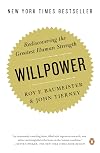
“Willpower” by Roy Baumeister and John Tierney is a sharp, research-based look at why self-control matters more than raw intelligence or talent. It removes the motivational fluff and focuses on the psychology of how discipline works, how it fails, and how to strengthen it like a muscle. The real-world studies on dieting, decision fatigue, and daily habits make it practical instead of preachy. Some sections drag with repetitive examples, but the insights about managing energy and avoiding show more decision overload are worth it. A smart and useful read for anyone serious about gaining better control over their life. show less

Much more of a pop-science slant than I would have preferred, but otherwise this book does a great job of digesting the field of self-regulation (the "willpower" of the title) into an easily-understood narrative and readily applicable tools to exploit the knowledge.
The essence of Roy Baumeister's research is that, contrary to beliefs that prevailed through much of the 20th century, willpower -- which is variously described as the ability to focus, apply one's cognitive abilities, and show more restrain emotional impulses -- actually is a finite resource. This view, once popular until mainstream psychology discarded it in the early 1900s, has made a recent resurgence largely thanks to Baumeister's findings.
The self, or the "will" as you might call it, is the essential core of human behavior. It's your ability to read a book without distraction, or stick to a diet, or keep working in spite of temptations to goof off. As Baumeister discovered, the self is also a transient thing, subservient to the inner workings of the brain which creates it. Key to this discovery is that the brain's function, dependent on a supply of circulating glucose in the blood, actually changes when we're forced to make decisions, resist temptations, or even think too hard on a math problem. This altered behavior manifests itself as a decreased ability to self-regulate. Willpower, then, is not a "thing we have" but is contingent on what we've been doing and how much energy we've got to fuel the brain.
Tierney and Baumeister make for a good combination, my pop-science complaint aside. The book is easily read, despite what could have quickly become a confusing jargon-festival. Being reasonably familiar with the primary literature on this subject, I can say that the book is faithful in spirit and letter. Best of all there are useful strategies that can be applied to your life straight from the text.
Overall, I found this a good read, balanced between science writing and self-help. show less
The essence of Roy Baumeister's research is that, contrary to beliefs that prevailed through much of the 20th century, willpower -- which is variously described as the ability to focus, apply one's cognitive abilities, and show more restrain emotional impulses -- actually is a finite resource. This view, once popular until mainstream psychology discarded it in the early 1900s, has made a recent resurgence largely thanks to Baumeister's findings.
The self, or the "will" as you might call it, is the essential core of human behavior. It's your ability to read a book without distraction, or stick to a diet, or keep working in spite of temptations to goof off. As Baumeister discovered, the self is also a transient thing, subservient to the inner workings of the brain which creates it. Key to this discovery is that the brain's function, dependent on a supply of circulating glucose in the blood, actually changes when we're forced to make decisions, resist temptations, or even think too hard on a math problem. This altered behavior manifests itself as a decreased ability to self-regulate. Willpower, then, is not a "thing we have" but is contingent on what we've been doing and how much energy we've got to fuel the brain.
Tierney and Baumeister make for a good combination, my pop-science complaint aside. The book is easily read, despite what could have quickly become a confusing jargon-festival. Being reasonably familiar with the primary literature on this subject, I can say that the book is faithful in spirit and letter. Best of all there are useful strategies that can be applied to your life straight from the text.
Overall, I found this a good read, balanced between science writing and self-help. show less
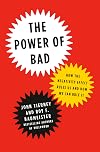
A lot of good stuff in the book, but I tired of the writing style, sort of punchy-rollicking-journalism rather than a more thoughtful science writing that I prefer. The dumb title and garish front cover gave me a “bad” impression to start with, but as I read the book I ended up liking it more as I went along.
One part I really had a problem with, though, was a long highly approving section about a chain of charter schools in NY:
“The Success Academy schools are publicly funded and open show more to anyone, with acceptance determined by lottery, so they’re educating a representative sample of the students in their neighborhoods.”
Well, this bit is plainly false, about them having a “representative” sample of kids. Number 1, only certain types of parents bother to enter a charter school lottery, and number two, the schools demand a huge time/energy commitment from the parents as well as the students, so this affects who chooses to go and who continues to go. Clearly they end up with a non-representative sample of students, so a portion of their ‘success’ (graduation rates, college admissions) has to do with what students they accept and retain, compared to the local public schools.
Anyway, I liked a lot of the book, but not the style so much. show less
One part I really had a problem with, though, was a long highly approving section about a chain of charter schools in NY:
“The Success Academy schools are publicly funded and open show more to anyone, with acceptance determined by lottery, so they’re educating a representative sample of the students in their neighborhoods.”
Well, this bit is plainly false, about them having a “representative” sample of kids. Number 1, only certain types of parents bother to enter a charter school lottery, and number two, the schools demand a huge time/energy commitment from the parents as well as the students, so this affects who chooses to go and who continues to go. Clearly they end up with a non-representative sample of students, so a portion of their ‘success’ (graduation rates, college admissions) has to do with what students they accept and retain, compared to the local public schools.
Anyway, I liked a lot of the book, but not the style so much. show less
Lists
Awards


You May Also Like


Associated Authors
Statistics
- Works
- 41
- Also by
- 3
- Members
- 2,234
- Popularity
- #11,484
- Rating
- 3.8
- Reviews
- 47
- ISBNs
- 148
- Languages
- 9
- Favorited
- 1


