
K. Eason
Author of How Rory Thorne Destroyed the Multiverse
About the Author
Series
Works by K. Eason
Associated Works
Shapers of Worlds Volume III: Science fiction and fantasy by authors featured on The Worldshapers podcast (2022) — Contributor — 5 copies
Tagged
Common Knowledge
- Birthdate
- 20th century
- Gender
- female
- Occupations
- university lecturer
fiction writer - Organizations
- University of California, Irvine
- Agent
- Lisa Rodgers (JABberwocky Literary)
- Short biography
- K. Eason is a lecturer at the University of California, Irvine, where she and her composition students tackle important subjects like the zombie apocalypse, the humanity of cyborgs, and whether or not Beowulf is a brave man. She has had short fiction published in Cabinet des Fees, Jabberwocky 4, Crossed Genres and Kaleidescope. When she is not teaching or writing, Eason can be found knitting, drinking coffee, or gaming, Sometimes all at the same time.
- Nationality
- USA
- Associated Place (for map)
- USA
Members
Reviews
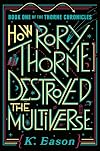
From the moment of Rory Thorne's Naming Day ceremony when thirteen fairies arrived to bestow their blessings (and one curse) her life never quite followed the path of a typical princess. Her father's assassination and the outbreak of war between the Thorne Consortium and another interplanetary alliance are the causes for some of the major changes in her life plans. As part of the peace treaty to end the war she is engaged to the prince of the opposing side. However, when she arrives on the show more station that is destined to be her new home she finds things are far from what they should be and her efforts to right them will destroy the multiverse as everyone knows it.
I have big heart eyes for this book. It combines so many things I love including a clever riff on a fairy tale trope, a well-developed sci fi universe, a narrative that has several feminist touches, and characters who leap off the page they feel so real. It did take me a bit to sink into the writing style of this one as the way Rory's fairy curse works involves her perceiving a speaker's true meaning when they dissemble and how that's depicted on the page takes a bit of getting used to. The author also throws the reader into the deep end with how the science (which feels like magic more often than not despite the narrator repeatedly reminding us it is a science) works in this multiverse, which makes a fun learning curve for the reader. However, it doesn't take long to be sucked into Rory's life and the political intrigue she must deal with for most of her life. The cast of supporting characters are just as compelling and I finished the book pleased with how the plot arc of this book was tied up while also eager to read the next book. Highly recommended. show less
I have big heart eyes for this book. It combines so many things I love including a clever riff on a fairy tale trope, a well-developed sci fi universe, a narrative that has several feminist touches, and characters who leap off the page they feel so real. It did take me a bit to sink into the writing style of this one as the way Rory's fairy curse works involves her perceiving a speaker's true meaning when they dissemble and how that's depicted on the page takes a bit of getting used to. The author also throws the reader into the deep end with how the science (which feels like magic more often than not despite the narrator repeatedly reminding us it is a science) works in this multiverse, which makes a fun learning curve for the reader. However, it doesn't take long to be sucked into Rory's life and the political intrigue she must deal with for most of her life. The cast of supporting characters are just as compelling and I finished the book pleased with how the plot arc of this book was tied up while also eager to read the next book. Highly recommended. show less
Rory Thorne was born a princess, the first in two hundred years for the monarchs of the Thorne Consortium. The Vizier, keeper of history and custom, invited the fairies to her christening, where she was given the gift of playing the harp (among other princessly gifts that are ridiculously unnecessary in a future with space travel and arithmancy), the curse of knowing what people actually mean when their speaking, and the gift of courage. When her father and the king of the Free Worlds of show more Tadesh are assassinated, plunging them into war, Rory grows up knowing that her marriage may one day win them peace - but she'll need all her wits about her to stay alive.
This is a really fun ride, blending fantasy and science fiction elements, all wrapped up in a humorous narrative voice that kept me smiling throughout the read. I enjoyed the play on fairy tales and Rory's ingenuity. It's a satisfying story on its own, but also the first in a planned series, and I can't wait to read the rest. show less
This is a really fun ride, blending fantasy and science fiction elements, all wrapped up in a humorous narrative voice that kept me smiling throughout the read. I enjoyed the play on fairy tales and Rory's ingenuity. It's a satisfying story on its own, but also the first in a planned series, and I can't wait to read the rest. show less
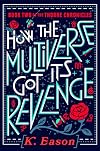
The green fairy turns up and gives a cryptic message that gets Messer Rupert and Grytt on a spaceship with previously unknown xenos to try to help Rory Thorne once again save the multiverse. Rory and her friends, salvaging now that she has renounced her title as Princess, come across a gutted ship with a mysterious passenger: a sentient plant that's meant for huge destruction, a liability in a world where not just humans are ready to go to war.
These books are so much fun, blending humor in show more the form of a snarky narrator who already knows how everything turned out and is giving us a much-needed clear-eyed history and serious reflections on what it means to work together and make alliances and just do the best you can with the incomplete information you have. It was so much fun to return to this mutliverse and characters. show less
These books are so much fun, blending humor in show more the form of a snarky narrator who already knows how everything turned out and is giving us a much-needed clear-eyed history and serious reflections on what it means to work together and make alliances and just do the best you can with the incomplete information you have. It was so much fun to return to this mutliverse and characters. show less

Young Adult is a marketing category, not a genre; Rory Thorne is marketed as an adult SF/F book, so it is, ipso facto, not YA. I understand that. What I don't understand is why it wasn't, in fact, marketed as YA. It really seems like the marketing copy and professional reviews have to put a lot of spin on it--and carefully omit the fact that the protagonist is sixteen--to make it seem like it's aimed at adults, and surely it would be easier to just be up-front about the content and sell it show more to the group of teenaged girls who have an insatiable thirst for narratives about teenaged girls who are Incredibly Special and Unique coming of age and coming into their own. I was one of those once, and I would probably have loved this then, but I have a lot less patience for those tropes now.
You could argue that factors like the protagonist’s age and the fact that swearing almost exclusively happens in indirect dialogue (e.g. “she said some words her mother wouldn’t approve of”) doesn’t necessarily make it not an adult book, but my question is, what does make it an adult book? There’s nothing here that seems inappropriate for teens, in terms of either content or reading level. The politics aren’t any more complicated than those of, say, The Hunger Games--there are technically more factions, sure, but for most of the book only two of them are relevant, and then a third one becomes important about ¾ of the way in. Every other political entity that’s mentioned can be immediately forgotten about without any negative effect on your ability to understand the plot. (Especially the aliens. The aliens were terribly underutilized and I’m not really sure why they were in this book at all.) I think I would call both the politics and the rest of the worldbuilding not so much complex as busy--there’s a whole lot of stuff thrown in, but most of it doesn’t actually matter, so the number of things that it’s actually important to keep track of is small.
My other main issue with the book was that Rory is so good at everything that it robs the book of any real tension. Sure, she’s a bit impulsive and a bit short-tempered, but any trouble this might cause her is more than offset by the fact that she’s brilliant, charming, and insanely good at magic space hacking. And I think her magical ability to “hear” what people are really thinking when they lie was detrimental to the political intrigue aspect of the plot--she never has to wonder whether she can trust someone or not, and it’s very easy for her to get information out of people. This kind of Being Really Powerful and The Best At Everything isn’t uncommon for YA protagonists, and when I was younger this worked for me as a sort of power fantasy. But as an adult I find it hard to project onto a sixteen-year-old for wish-fulfillment purposes, and if you’re not relating to this kind of protagonist in that way, they’re just not very interesting.
All of this also made the romantic subplot of “we have to pretend we’re dating so people don’t realize we’re actually plotting treason” fall flat for me--the external pressure doesn’t seem real, and the usual “oh no, I have Real Feelings now, but does the other person, or are they still just pretending?” conflict is completely absent. I will admit that m/f romance doesn’t usually hold my interest, but this felt especially lukewarm.
I’m being very hard on this book; overall it’s pretty harmless, and I do think that circa age fourteen, I might have loved it. But it’s like getting an oatmeal raisin cookie when you were expecting chocolate chip. Even if you don’t mind oatmeal raisin, even if you’ll sometimes eat them willingly, it’s not what you thought you were going to get, and now you’re just annoyed and disappointed. show less
You could argue that factors like the protagonist’s age and the fact that swearing almost exclusively happens in indirect dialogue (e.g. “she said some words her mother wouldn’t approve of”) doesn’t necessarily make it not an adult book, but my question is, what does make it an adult book? There’s nothing here that seems inappropriate for teens, in terms of either content or reading level. The politics aren’t any more complicated than those of, say, The Hunger Games--there are technically more factions, sure, but for most of the book only two of them are relevant, and then a third one becomes important about ¾ of the way in. Every other political entity that’s mentioned can be immediately forgotten about without any negative effect on your ability to understand the plot. (Especially the aliens. The aliens were terribly underutilized and I’m not really sure why they were in this book at all.) I think I would call both the politics and the rest of the worldbuilding not so much complex as busy--there’s a whole lot of stuff thrown in, but most of it doesn’t actually matter, so the number of things that it’s actually important to keep track of is small.
My other main issue with the book was that Rory is so good at everything that it robs the book of any real tension. Sure, she’s a bit impulsive and a bit short-tempered, but any trouble this might cause her is more than offset by the fact that she’s brilliant, charming, and insanely good at magic space hacking. And I think her magical ability to “hear” what people are really thinking when they lie was detrimental to the political intrigue aspect of the plot--she never has to wonder whether she can trust someone or not, and it’s very easy for her to get information out of people. This kind of Being Really Powerful and The Best At Everything isn’t uncommon for YA protagonists, and when I was younger this worked for me as a sort of power fantasy. But as an adult I find it hard to project onto a sixteen-year-old for wish-fulfillment purposes, and if you’re not relating to this kind of protagonist in that way, they’re just not very interesting.
All of this also made the romantic subplot of “we have to pretend we’re dating so people don’t realize we’re actually plotting treason” fall flat for me--the external pressure doesn’t seem real, and the usual “oh no, I have Real Feelings now, but does the other person, or are they still just pretending?” conflict is completely absent. I will admit that m/f romance doesn’t usually hold my interest, but this felt especially lukewarm.
I’m being very hard on this book; overall it’s pretty harmless, and I do think that circa age fourteen, I might have loved it. But it’s like getting an oatmeal raisin cookie when you were expecting chocolate chip. Even if you don’t mind oatmeal raisin, even if you’ll sometimes eat them willingly, it’s not what you thought you were going to get, and now you’re just annoyed and disappointed. show less
Lists
Awards


You May Also Like


Associated Authors
Statistics
- Works
- 7
- Also by
- 2
- Members
- 1,001
- Popularity
- #25,757
- Rating
- 3.8
- Reviews
- 34
- ISBNs
- 36