
Mary Brave Bird (1954–2013)
Author of Lakota Woman
About the Author
Works by Mary Brave Bird
Associated Works
Reinventing the Enemy's Language: Contemporary Native Women's Writings of North America (1997) — Contributor — 183 copies, 1 review
Writing Women's Lives: An Anthology of Autobiographical Narratives by Twentieth-Century American Women Writers (1994) — Contributor — 128 copies, 3 reviews
The Sweet Breathing of Plants: Women Writing on the Green World (2001) — Contributor — 101 copies, 1 review
Tagged
Common Knowledge
- Canonical name
- Brave Bird, Mary
- Other names
- Moore-Richard, Mary Ellen
Crow Dog, Mary
Brave Woman Olguin, Mary
Ohitaki Win
Brave Woman - Birthdate
- 1954-09-26
- Date of death
- 2013-02-14
- Gender
- female
- Education
- St. Francis Boarding School
- Occupations
- indigenous rights activist
education activist
memoirist - Organizations
- American Indian Movement
Native American Church - Relationships
- Crow Dog, Leonard (former spouse)
- Nationality
- Sicangu Lakota Nation
- Birthplace
- Pine Ridge, South Dakota, USA
- Places of residence
- Rosebud Sioux Reservation
Pine Ridge Indian Reservation - Place of death
- Crystal Lake, Nevada, USA
- Burial location
- Clear Water Cemetery, Sicangu Lakota Nation
- Map Location
- USA
Members
Reviews
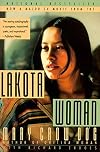
Excellent read! An inspiring story of one woman who found the way to rise above what exists around her to create something somewhat better. This is not a sunshine & roses happy ending kind of story. But what she accomplishes with the means she has is much to be admired! Mirrors much of what I learned from a young friend among the Sioux people at the beginning of the '70s & saw unfold through those troubling years. A compelling read as well. Sheds clear light on some ugly, unwelcome truths show more along the way. show less
This book made me cry. It also brought dreams--good, powerful dreams. Furthermore, it inspired me to think about miscommunication in English. "I understood how mom was feeling. She was wrapped up in a different culture altogether. We spoke a different language. Words did not mean to her what they meant to us" (57). I think barriers within a language are especially pertinent in regards to conversations about ethnicity. Certain words can bring about white guilt, which can end a dialogue in show more defensiveness. However, Mary Crow Dog does a wonderful job of speaking truth. show less
Iam a woman of the Red Nation, a Sioux woman,"" writes Mary Crow Dog. ""That is not easy."" With the help of Erdoes (coeditor, American Indian Myths and Legends, 1984, etc.), Crow Dog uses her life as an example of the humiliations and hardships of modern Indian life--but in her case, a life vindicated by the brave defiance of the American Indian Movement (AIM). She was born Mary Brave Bird, in 1953, on South Dakota's bleak Rosebud Reservation. A half-blood abandoned by her white father, she show more became a rebel by her teens, leaving a cruelly repressive Catholic school and an overburdened mother in order to roam the western highways with other young Indian rebels, drinking and ripping-off stores. She was 18 and pregnant when her life was changed by the rebellion at Wounded Knee. Site of a historic massacre of Indian women and children, the tiny town became an Indian fortress, defended by the modern warriors of AIM against heavily armed federal forces. Mary watched friends die at Wounded Knee, but she also gave birth there--a symbolic rebirth for her embattled people. And there she met Leonard Crow Dog, a leader and medicine man who knew the ancient ways and instilled the young warriors with pride. Leonard was arrested soon after Wounded Knee, however, and Mary had to endure a two-year legal battle to free her new husband while living in New York with her son, Pedro, and meeting famous radical lawyers like William Kunstler. Leonard is now out of prison and back at the Rosebud Reservation, devoting himself to helping his people and Mary--through the rites of the sweat lodge, the Sun Dance, and the peyote ceremony--to discover what it means to be a real Indian. A gritty, convincing document of one woman's struggle to overcome poverty and oppression in order to live in dignity as an American Indian.
-Kirkus Review show less
-Kirkus Review show less

If anyone thinks the US has descended only recently into fascism, this is a heartbreaking and infuriating account making clear the seeds have been there all along.
Lists
Awards


You May Also Like


Associated Authors
Statistics
- Works
- 3
- Also by
- 5
- Members
- 1,598
- Popularity
- #16,136
- Rating
- 3.8
- Reviews
- 16
- ISBNs
- 23
- Languages
- 4
- Favorited
- 2