
Fred Lerner
Author of Silverlock
About the Author
Fred Lerner holds degrees in history and library science from Columbia University, where he received his doctorate. He has also written widely on contemporary science fiction and lives in Vermont with his wife, an elementary school teacher, and teenage daughter.
Image credit: Uncredited photo from author page at Amazon.com.
Series
Works by Fred Lerner
Rosetta Stone 1 copy
Associated Works
Tagged
Common Knowledge
- Canonical name
- Lerner, Fred
- Legal name
- Lerner, Frederick Andrew
- Birthdate
- 1946
- Gender
- male
- Education
- Columbia University (AB|History, MS|Library Science, DLS|Library Science)
- Occupations
- historian
bibliographer
librarian - Organizations
- National Center for Post-Traumatic Stress Disorder
Dartmouth Medical School (Research Associate) - Nationality
- USA
- Places of residence
- Vermont, USA
- Associated Place (for map)
- Vermont, USA
Members
Reviews

Silverlock is not so much a lost book as one that is constantly being rediscovered. John Meyers Meyers wrote it back in 1949, so this is a fantasy untouched by JRR Tolkien’s genre-redefining work. But it’s been touched by everything else. Like Robinson Crusoe, Silverlock opens with a shipwreck. The wrecked ship is the Naglafar–named for the ship Loki has made of dead men’s nails in Norse mythology. Certainly an ill-omened ship, and A. Clarence Shandon is an ill-omened man. A cynical show more opportunist and fatalist (his opening line is: “If I had cared to live, I would have died.”), he is thoroughly “modern,” “rational,” and unlikable.
Instead of dying (which would have made for a short book), Shandon finds himself cast ashore Gulliver-style in an unknown land, the Commonwealth. It soon becomes apparent the “Commonwealth” is the Commonwealth of Letters–the realm of all of western literature. Here Shandon–dubbed Silverlock by his traveling companion–meets such characters as Circe, Robin Hood, Don Quixote, and many, many more, finds himself swept along on many an adventure, and in the process, becomes a much better man. Being a modern rationalist, Silverlock had no patience for fancy and fable growing up, so he recognizes none of the characters he meets.
Of course the reader does, and that is half the fun. The other half is the story itself–John Meyers Meyers knew how to write–and you’ll find yourself grinning till it hurts, chuckling over page after page, and reveling in Meyer’s prose and poetry. Did I mention he was a poet? My favorite Silverlock poem is Taliesin’s rendition of The Death of Bowie Gizzardsbane (an epic poem of the last stand at the Alamo, in the style of Beowulf).
Each generation rediscovers Silverlock; in my childhood it was found and lauded by Poul Anderson, Larry Niven, and Jerry Pournelle–three of science-fiction’s Great Masters. Today it is available on Amazon.com, in hardback, paperback, and finally on ebook. Now it’s our turn, so if you love stories and want to revisit the wellsprings of our common literary inheritance, come journey with Silverlock. You will be richer for it. show less
Instead of dying (which would have made for a short book), Shandon finds himself cast ashore Gulliver-style in an unknown land, the Commonwealth. It soon becomes apparent the “Commonwealth” is the Commonwealth of Letters–the realm of all of western literature. Here Shandon–dubbed Silverlock by his traveling companion–meets such characters as Circe, Robin Hood, Don Quixote, and many, many more, finds himself swept along on many an adventure, and in the process, becomes a much better man. Being a modern rationalist, Silverlock had no patience for fancy and fable growing up, so he recognizes none of the characters he meets.
Of course the reader does, and that is half the fun. The other half is the story itself–John Meyers Meyers knew how to write–and you’ll find yourself grinning till it hurts, chuckling over page after page, and reveling in Meyer’s prose and poetry. Did I mention he was a poet? My favorite Silverlock poem is Taliesin’s rendition of The Death of Bowie Gizzardsbane (an epic poem of the last stand at the Alamo, in the style of Beowulf).
Each generation rediscovers Silverlock; in my childhood it was found and lauded by Poul Anderson, Larry Niven, and Jerry Pournelle–three of science-fiction’s Great Masters. Today it is available on Amazon.com, in hardback, paperback, and finally on ebook. Now it’s our turn, so if you love stories and want to revisit the wellsprings of our common literary inheritance, come journey with Silverlock. You will be richer for it. show less
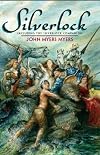
Outrageous fantasy in which the protagonist nearly gets killed about a hundred times in about a hundred different scrapes, assisted or antagonized by every hero or every villain of every fantastic yarn that ever blew your mind or knocked you out of your chair or set your house on fire or killed your dog and ate your cat. Pack a sword or a bazooka with you whenever you have to get up to eat or use the john. You never know who or what is going to jump you when you leave the safety of your show more favorite chair. Duck! you sucker! You're going to like this book. You might even read it twice or maybe seven times! Everybody else does. NOBODY doesn't read Silverlock! show less
Silverlock is one of my desert island books.
My elder brother introduced me to a banged up paperback copy of this novel years ago, and although I didn't recognize a tenth of the literary references, I fell for the book hard. A new hardcover edition by NESFA press proved irresistable, especially since this edition includes a guide to the Commonwealth--a concordance.
Shandon Silverlock, on a ship out of Baltimore, falls overboard, and washes up in the Commonwealth, a realm of literary show more characters, locations and situations. He runs into a bard with many names and identities, gets transformed (briefly) by Circe, participates in a viking invasion, and meets Robin Hood. He encounters Puck, sups with the Mad Hatter, visits Heorot Hall after Beowulf's victory, and after all that, only then really starts his adventures...
The book is a seminal one in F/SF circles, since it helped inspire filking. The book, like the Hobbit, has songs in it. And these songs are literary and allusional, too...when Golias tells the story of the battle of the Alamo, for instance, to the thanes in Heorot, Sam Houston becomes 'Houston the Raven' and Jim Bowie becomes 'Bowie Gizzardbane'. There are even plenty of throwaway references and tags to literary characters, places and things from Gilgamesh to Huck Finn's raft.
Anyone who loves literature and fiction owes it to themselves to read Silverlock. show less
My elder brother introduced me to a banged up paperback copy of this novel years ago, and although I didn't recognize a tenth of the literary references, I fell for the book hard. A new hardcover edition by NESFA press proved irresistable, especially since this edition includes a guide to the Commonwealth--a concordance.
Shandon Silverlock, on a ship out of Baltimore, falls overboard, and washes up in the Commonwealth, a realm of literary show more characters, locations and situations. He runs into a bard with many names and identities, gets transformed (briefly) by Circe, participates in a viking invasion, and meets Robin Hood. He encounters Puck, sups with the Mad Hatter, visits Heorot Hall after Beowulf's victory, and after all that, only then really starts his adventures...
The book is a seminal one in F/SF circles, since it helped inspire filking. The book, like the Hobbit, has songs in it. And these songs are literary and allusional, too...when Golias tells the story of the battle of the Alamo, for instance, to the thanes in Heorot, Sam Houston becomes 'Houston the Raven' and Jim Bowie becomes 'Bowie Gizzardbane'. There are even plenty of throwaway references and tags to literary characters, places and things from Gilgamesh to Huck Finn's raft.
Anyone who loves literature and fiction owes it to themselves to read Silverlock. show less
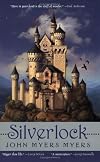
An odd novel. Published first in 1949, it was one of the first fantasy novels of the 20th century. It came out after [b:The Hobbit|5907|The Hobbit|J.R.R. Tolkien|http://photo.goodreads.com/books/1328953407s/5907.jpg|1540236] but before [b:The Lord of the Rings|33|The Lord of the Rings|J.R.R. Tolkien|http://photo.goodreads.com/books/1298411336s/33.jpg|3462456], and [a:J.R.R. Tolkien|656983|J.R.R. Tolkien|http://photo.goodreads.com/authors/1329694935p2/656983.jpg] wasn’t well known in show more America yet. So Silverlock doesn’t include any of the Tolkien’s influence that so many later American fantasy novelists displayed. In a way, it is a quintessential American fantasy.
The plot revolves around Shandon, a cynical, educated American, who is shipwrecked and thrust into the land of Commonwealth. This strange country doesn’t exist on any map, and it’s populated by stories. The stories intermingle without any regard for the times and ethnicity of origin: Greek myths and Arthurian legends, Cervantes and Shakespeare.
Shandon’s only companion is Golias, a native of Commonwealth and a bard, who for some inexplicable reason takes pity on Shandon and accepts the helpless stranger under his wing. Golias rescues Shandon from tough spots again and again, for no cause I could discern.
Romping through the literary mish-mash, sometimes alone, sometimes with Golias, Shandon brushes against most of the stories but doesn’t really become part of any. He dines with Robin Hood, gets under Circe’s spell, and is attacked by Don Quixote. But no story touches his heart. Even more surprising: despite his university degree, he doesn’t recognize any of the stories, as if American education didn’t include world literature. He doesn't wonder at the marvel of Commonwealth. He is not afraid of being without skills or money or home. He doesn’t try to find his place in the unfamiliar milieu. He doesn’t seem to have any emotions at all.
I can’t say that I liked this novel. It’s built as a quest, with the purpose to show Shandon that his cynicism is misplaced, but the novel never quite succeeds in its goal. Obviously, cynicism is not easy to shake off. Shandon manages to become only a slightly better person by the end. And he almost loses his new-found humanity again, would’ve lost it, if Golias didn’t rush to his rescue one last time.
The writer is as detached as his hero, so even bloody battles come out distant, with no emotional involvement, no fear, and no pain. Another similarity between the writer and his hero: their disdain for women. The female characters in the novel are either bitches or sobbing damsels in distress. The entire novel is very mucho, where the hero mostly thinks about his next meal and always enjoys drinking with his buddies. After drinking usually comes some stupidity, like in real life, and the action starts galloping in a new direction.
To give credit where it’s due, sometimes, the writing surprised a laugh out of me. Some phrases stood out as witty or wise. And there is lots of poetry in this book, songs for every occasion.
Overall, I’d recommend it to sophisticated readers, interested in the history of literature.
show less
The plot revolves around Shandon, a cynical, educated American, who is shipwrecked and thrust into the land of Commonwealth. This strange country doesn’t exist on any map, and it’s populated by stories. The stories intermingle without any regard for the times and ethnicity of origin: Greek myths and Arthurian legends, Cervantes and Shakespeare.
Shandon’s only companion is Golias, a native of Commonwealth and a bard, who for some inexplicable reason takes pity on Shandon and accepts the helpless stranger under his wing. Golias rescues Shandon from tough spots again and again, for no cause I could discern.
Romping through the literary mish-mash, sometimes alone, sometimes with Golias, Shandon brushes against most of the stories but doesn’t really become part of any. He dines with Robin Hood, gets under Circe’s spell, and is attacked by Don Quixote. But no story touches his heart. Even more surprising: despite his university degree, he doesn’t recognize any of the stories, as if American education didn’t include world literature. He doesn't wonder at the marvel of Commonwealth. He is not afraid of being without skills or money or home. He doesn’t try to find his place in the unfamiliar milieu. He doesn’t seem to have any emotions at all.
I can’t say that I liked this novel. It’s built as a quest, with the purpose to show Shandon that his cynicism is misplaced, but the novel never quite succeeds in its goal. Obviously, cynicism is not easy to shake off. Shandon manages to become only a slightly better person by the end. And he almost loses his new-found humanity again, would’ve lost it, if Golias didn’t rush to his rescue one last time.
The writer is as detached as his hero, so even bloody battles come out distant, with no emotional involvement, no fear, and no pain. Another similarity between the writer and his hero: their disdain for women. The female characters in the novel are either bitches or sobbing damsels in distress. The entire novel is very mucho, where the hero mostly thinks about his next meal and always enjoys drinking with his buddies. After drinking usually comes some stupidity, like in real life, and the action starts galloping in a new direction.
To give credit where it’s due, sometimes, the writing surprised a laugh out of me. Some phrases stood out as witty or wise. And there is lots of poetry in this book, songs for every occasion.
Overall, I’d recommend it to sophisticated readers, interested in the history of literature.
show less
Lists
1940s (1)
Awards


You May Also Like


Associated Authors
Statistics
- Works
- 8
- Also by
- 1
- Members
- 1,476
- Popularity
- #17,398
- Rating
- 3.8
- Reviews
- 30
- ISBNs
- 25
- Languages
- 2
- Favorited
- 1