
Douglas Palmer
Author of Atlas of the Prehistoric World
About the Author
Douglas Palmer is a Lecturer for the University of Cambridge Institute of Continuing Education and Supervisor in Natural Sciences (Geology) for Robinson College.
Works by Douglas Palmer
Associated Works
Tagged
Common Knowledge
- Gender
- male
- Education
- University of London
University of Dublin, Ireland - Occupations
- science writer
lecturer for the University of Cambridge Institute of Continuing Education - Organizations
- New Scientist
Science
BBC Wildlife Magazine
University of Cambridge
Palaeontological Association - Nationality
- UK
- Places of residence
- Cambridge, Cambridgeshire, England, UK
- Map Location
- England, UK
Members
Reviews
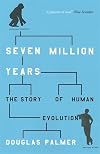
Finally a solid, comprehensible and above all scientifically correct survey of the earliest human history. Douglas Palmer writes very vulgarising, but based on excellent documentation. He presents the successive steps of the transition from mammals to our homo sapiens species, not a linear movement as formerly molded into the simple model of a family tree, but an ever more erratic shrub: “Every now and then large bunches of twigs develop (species), with most coming to nothing and dying show more out. But every now and then there is a twig that manages to hold on and then diverges into new forms (…); the entire grove eventually becomes a shrub-like three-dimensional shape with countless twigs, which will continue to grow over time”.
What particularly pleased me is Palmer's continued emphasis on the preliminary nature of the findings. Because if there is one scientific sector where views are constantly changing, it is that of palaeontology: with almost every new discovery and with almost every new technique that is applied, the picture of human origin has to be adjusted (and unfortunately this is partly due to the widespread unscientific approach by many palaeontologists themselves, see my review in my History-account on Goodreads: https://www.goodreads.com/review/show/3490430895). And Palmer explains that very well. In the end, he also zooms in on the revolutionary new insights that advances in genetic research are yielding. The only downside is that this book was published in 2005, already 15 years ago, and thus in the early stage of that genetic research. Fortunately, Palmer also warns against exaggerated expectations in this field, because even that genetic research has its limitations. Engaging and Fascinating. show less
What particularly pleased me is Palmer's continued emphasis on the preliminary nature of the findings. Because if there is one scientific sector where views are constantly changing, it is that of palaeontology: with almost every new discovery and with almost every new technique that is applied, the picture of human origin has to be adjusted (and unfortunately this is partly due to the widespread unscientific approach by many palaeontologists themselves, see my review in my History-account on Goodreads: https://www.goodreads.com/review/show/3490430895). And Palmer explains that very well. In the end, he also zooms in on the revolutionary new insights that advances in genetic research are yielding. The only downside is that this book was published in 2005, already 15 years ago, and thus in the early stage of that genetic research. Fortunately, Palmer also warns against exaggerated expectations in this field, because even that genetic research has its limitations. Engaging and Fascinating. show less
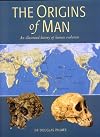
This book is very well done but it's awfully slim for the subject. It really only offers a cursory summation of the state of knowledge on the origins of man at the time it was published. I think this would be a very good book to get someone interested in the topic but it's certainly not for anyone who wants to explore it in any depth.
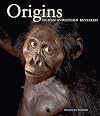
This paleoanthropology book has two things going for it: it boasts the latest information & discoveries (as 0f 2010) and it has stunning artistic reconstructions of hominids, Neanderthals, and Cro-Magnon humans. (courtesy of John Gurche).
The only noticeable issue is with the unusual amount of typos in the text. Maybe the book was rushed to press or the editor had a headache that day, but the errors are multiple and in a few cases rather glaring. Still, a good coffee table book and a decent show more introduction to our early kin. show less
The only noticeable issue is with the unusual amount of typos in the text. Maybe the book was rushed to press or the editor had a headache that day, but the errors are multiple and in a few cases rather glaring. Still, a good coffee table book and a decent show more introduction to our early kin. show less
Great reference book with structured layout for building connections from a foundation. Includes headings, subtitles, necessary vocabulary, and summaries of background knowledge. High level scientific learning is broken down for easier understanding. Good reference book, so I recommend the printed version for your real life bookshelf.
Lists
Awards


You May Also Like


Associated Authors
Statistics
- Works
- 40
- Also by
- 3
- Members
- 1,019
- Popularity
- #25,281
- Rating
- 4.0
- Reviews
- 9
- ISBNs
- 88
- Languages
- 12