
Dorothee Sölle (1929–2003)
Author of Thinking About God: An Introduction to Theology
About the Author
Dorothee Soelle is one of the most widely read theologians of our time. She was Professor of Theology at Union Theological Seminary in New York City from 1975 to 1987. Among her numerous publications are Suffering (1975) and her magnum opus, The Silent Cry, which joins deep religious knowledge and show more wisdom with passion for social justice in a work destined to be a classic of religious literature. show less
Image credit: Gaebler Info und Genealogie
Series
Works by Dorothee Sölle
Und ist noch nicht erschienen, was wir sein werden : Stationen feministischer Theologie (1987) 5 copies
Gesammelte Werke: Und ist noch nicht erschienen, was wir sein werden (Sölle Werkausgabe) (2006) 4 copies
Politiek avondgebed : In opdracht van de oecumenische werkgroep 'Politisches Nachtgebet' te Keulen uitgegeven (1969) 2 copies
Teología Política 1 copy
Teología política 1 copy
Die Wahrheit ist konkret atheistisch an Gott glauben — Author — 1 copy
Political Theology 1 copy
Fürchte dich nicht, der Widerstand wächst. Gespräche in Holland - Begegnungen mit Helder Camara - Dorothy Day und USA. (1982) 1 copy
The truth is concrete; 1 copy
Die revolutionäre Geduld 1 copy
De moeder van Eva 1 copy
Associated Works
Watch for the Light: Readings for Advent and Christmas (2004) — Contributor — 903 copies, 10 reviews
Cries of the Spirit: A Celebration of Women's Spirituality (2000) — Contributor — 404 copies, 2 reviews
Wise Women: Over Two Thousand Years of Spiritual Writing by Women (1996) — Contributor — 231 copies, 1 review
Tagged
Common Knowledge
- Canonical name
- Sölle, Dorothee
- Legal name
- Sölle, Dorothee
- Birthdate
- 1929
- Date of death
- 2003
- Gender
- female
- Nationality
- Germany
- Associated Place (for map)
- Germany
Members
Reviews

This book of poetry will engage those readers who search for a dollar, a tranquilizer, a crusade, a predictably manipulable instrument of social control, or a mask of respectability in Christianity. The book is blunt, uncompromising, prophetic, and consistently disturbing. The authors prayer poems search out the meaning of incarnation and reflect it.

In this seamless translation by David L. Scheidt, Dorothee Soelle asks "Is religion a matter of how I treat other people, or is it a private and subjective thing?" How does it involve the "mystical inward journey to the center of my own being?"
Dr Soelle shares the insights of the Psalms, Dietrich Bonhoeffer, and the Golden Bird of Grimm's Fairy Tales, to illuminate an original interpretation of these questions.
My impression is that Soelle repeatedly liberates Religion from itself. She links show more the religious experience of Jesus and psychology--finding the wholeness of both. Religion is for her an essential key to relationship, from the personal identity to external reality.
This deep work fits among her many works, and reflects her "alternative" return-journey of the radical Christian tradition, "which stands in irreconcilable contradiction to the given system". She clearly hopes to "help us make our exodus out of Egypt". show less
Dr Soelle shares the insights of the Psalms, Dietrich Bonhoeffer, and the Golden Bird of Grimm's Fairy Tales, to illuminate an original interpretation of these questions.
My impression is that Soelle repeatedly liberates Religion from itself. She links show more the religious experience of Jesus and psychology--finding the wholeness of both. Religion is for her an essential key to relationship, from the personal identity to external reality.
This deep work fits among her many works, and reflects her "alternative" return-journey of the radical Christian tradition, "which stands in irreconcilable contradiction to the given system". She clearly hopes to "help us make our exodus out of Egypt". show less
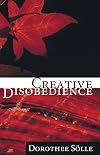
The main thesis of Sölle’s book is that the long-standing approach to theology has been based on an authoritarian obedience model that leads to dangerous outcomes. If our service to God and our obedience to the church and the Bible remains heavily steeped in an unthinking authoritarianism, it not only leads to an unfulfilling Christian life and the practice of oppression in the church, this mindset can be hijacked by the secular powers as well. Sölle sees unquestioning obedience to show more “proper” authority as having lead to the Nazi regime and the holocaust in Germany, and it continues to drive the oppression of individuals in society, whether they be women, racial minorities or the poor.
Sölle suggests that an alternative way of approaching the Christian life is from a position of self-awareness or self-fulfillment, the justification for this being that before a person can truly decide to work toward the betterment of others they must know themselves. Simply being obedient to a set of rules out of a traditional sense of obligation is not only less fulfilling, it also leads to a much less creative approach to living out God’s love in the world. Sölle asserts that the reason Jesus could so confidently work toward the betterment of others while breaking the rules laid down by tradition was that he knew who he was—He was self-actualized (my word choice, not Sölle’s).
Jesus repeatedly shattered the expectations of the Jewish leaders of His day, openly breaking many of the rules considered obligatory for all believers, whenever doing so lead to more effective ways of bettering the lives of those around Him or of teaching a lesson on creative engagement with the world. Sölle chooses the word “phantasy” to represent Jesus’ approach to living out who He was. Jesus’ phantasy was to establish His kingdom by creatively and lovingly engaging humanity:
“Of all humans who ever lived I consider Jesus of Nazareth the person most conscious of his own identity. And I am of the opinion that the strength of his phantasy must be understood as rising out of this joyous self-realization. Phantasy has always been in love with fulfillment. It conceives of some new possibility and repeatedly bursts the boundaries which limit people, setting free those who have submitted themselves to these boundaries which thereby have been endlessly maintained. In the portrayal of the Gospels Jesus appears as a man who infected his surroundings with happiness and hope, who passed on his power, who gave away everything that was his.”
In a similar manner, we are to follow Jesus example:
“When one attempts to describe this relationship in terms of traditional theology, one must speak of grace, of the justification of the sinner, and of the sanctification of the world. In that grace which appears in such a way that a person's life is fulfilled, a new self, an "I," comes into being which is removed from the realm of one's own fears, which is freed or redeemed. And precisely this new self can no longer see its task as carrying out given rules or regulations, can no longer establish a Christian ethic on the basis of obedience since the task now is to transform the world, a task which requires the virtue of phantasy.”
The upshot of this approach is that those who have long been oppressed by strict adherence to the traditional Christian virtue of obedience are now free. Jesus and Paul often refer to the freedom conferred by the Gospel. To Sölle this freedom is what she refers to as phantasy, which I interpret to mean the license to use a principle-based approach to living. Decisions about self-sacrifice flow from a place of self-fulfillment and self-awareness with the motivating principle being whether the act furthers the improvement of the earth or others, ultimately furthering of the Kingdom of Heaven. This is a much more creative and fruitful approach toward Christian service. Instead of following a strict set of rules of what to do and not do we act from basic principles of goodness, compassion and love.
This approach should be especially good news to those, like women, who have long been oppressed by the obedience model. The traditional Church model of the self-sacrificing wife and mother, who suppresses her own needs and desires to those of her family so that her husband and children can seek their own self-fulfillment is swept away. In its place is a system where each member in the system participates in a more nuanced give-and-take. In such a system room is made for the woman to also seek self-fulfillment. Although Sölle does not develop the results of this in detail, she does recognize that such an approach is not only better for women, but also for men. Men no longer get to selfishly seek self-fulfillment at the expense of the woman, something which ultimately damages both partners, but instead participate as equals in creatively making the family a better place.
I find Sölle’s approach very refreshing and liberating. One of the longstanding problems within the church has been authoritarianism, which has often been assumed to be the correct approach because so much of the Bible gives the appearance that God is a top-down dictator. Recognizing that Jesus routinely fought against this viewpoint and emphasized a more creative approach toward discipleship is helpful. To truly follow Jesus’ example, we need first learn who we are, that as the result of the Gospel we are God’s children and partners with Him in His work. Once we recognize our place in God’s kingdom, then we can accept the freedom this gives us to act out our “phantasy” to make the Kingdom of Heaven a reality. show less
Sölle suggests that an alternative way of approaching the Christian life is from a position of self-awareness or self-fulfillment, the justification for this being that before a person can truly decide to work toward the betterment of others they must know themselves. Simply being obedient to a set of rules out of a traditional sense of obligation is not only less fulfilling, it also leads to a much less creative approach to living out God’s love in the world. Sölle asserts that the reason Jesus could so confidently work toward the betterment of others while breaking the rules laid down by tradition was that he knew who he was—He was self-actualized (my word choice, not Sölle’s).
Jesus repeatedly shattered the expectations of the Jewish leaders of His day, openly breaking many of the rules considered obligatory for all believers, whenever doing so lead to more effective ways of bettering the lives of those around Him or of teaching a lesson on creative engagement with the world. Sölle chooses the word “phantasy” to represent Jesus’ approach to living out who He was. Jesus’ phantasy was to establish His kingdom by creatively and lovingly engaging humanity:
“Of all humans who ever lived I consider Jesus of Nazareth the person most conscious of his own identity. And I am of the opinion that the strength of his phantasy must be understood as rising out of this joyous self-realization. Phantasy has always been in love with fulfillment. It conceives of some new possibility and repeatedly bursts the boundaries which limit people, setting free those who have submitted themselves to these boundaries which thereby have been endlessly maintained. In the portrayal of the Gospels Jesus appears as a man who infected his surroundings with happiness and hope, who passed on his power, who gave away everything that was his.”
In a similar manner, we are to follow Jesus example:
“When one attempts to describe this relationship in terms of traditional theology, one must speak of grace, of the justification of the sinner, and of the sanctification of the world. In that grace which appears in such a way that a person's life is fulfilled, a new self, an "I," comes into being which is removed from the realm of one's own fears, which is freed or redeemed. And precisely this new self can no longer see its task as carrying out given rules or regulations, can no longer establish a Christian ethic on the basis of obedience since the task now is to transform the world, a task which requires the virtue of phantasy.”
The upshot of this approach is that those who have long been oppressed by strict adherence to the traditional Christian virtue of obedience are now free. Jesus and Paul often refer to the freedom conferred by the Gospel. To Sölle this freedom is what she refers to as phantasy, which I interpret to mean the license to use a principle-based approach to living. Decisions about self-sacrifice flow from a place of self-fulfillment and self-awareness with the motivating principle being whether the act furthers the improvement of the earth or others, ultimately furthering of the Kingdom of Heaven. This is a much more creative and fruitful approach toward Christian service. Instead of following a strict set of rules of what to do and not do we act from basic principles of goodness, compassion and love.
This approach should be especially good news to those, like women, who have long been oppressed by the obedience model. The traditional Church model of the self-sacrificing wife and mother, who suppresses her own needs and desires to those of her family so that her husband and children can seek their own self-fulfillment is swept away. In its place is a system where each member in the system participates in a more nuanced give-and-take. In such a system room is made for the woman to also seek self-fulfillment. Although Sölle does not develop the results of this in detail, she does recognize that such an approach is not only better for women, but also for men. Men no longer get to selfishly seek self-fulfillment at the expense of the woman, something which ultimately damages both partners, but instead participate as equals in creatively making the family a better place.
I find Sölle’s approach very refreshing and liberating. One of the longstanding problems within the church has been authoritarianism, which has often been assumed to be the correct approach because so much of the Bible gives the appearance that God is a top-down dictator. Recognizing that Jesus routinely fought against this viewpoint and emphasized a more creative approach toward discipleship is helpful. To truly follow Jesus’ example, we need first learn who we are, that as the result of the Gospel we are God’s children and partners with Him in His work. Once we recognize our place in God’s kingdom, then we can accept the freedom this gives us to act out our “phantasy” to make the Kingdom of Heaven a reality. show less

The work focuses heavily on the nuclear arms race and political events that were a reality then but not so much now. Soelle also is somewhat blinded by her own genuine respect for Karl Marx and seems to naively view certain historical events like China's cultural revolution in a way that is too positive. However, it is also surprisingly insightful in certain aspects, especially concerning sexuality and society (Dawna Richardson)
Lists
You May Also Like


Associated Authors
Statistics
- Works
- 86
- Also by
- 7
- Members
- 1,790
- Popularity
- #14,377
- Rating
- 4.0
- Reviews
- 11
- ISBNs
- 172
- Languages
- 11
- Favorited
- 2