

Bartolomé de las Casas (1484–1566)
Author of A Short Account of the Destruction of the Indies
About the Author
Image credit: from Wikipedia
Series
Works by Bartolomé de las Casas
Apologia, o, Declaracion y defensa universal de los derechos del hombre y de los pueblos (Estudios de historia) (Spanish Edition) (1989) 6 copies
La controverse entre Las Casas et Sepulveda. Précédé de Impérialisme, empire et destruction (2007) 5 copies
مذابح الهنود الحمر 3 copies
Tratados I 2 copies
History of the Indies 1 copy
Tyrannies et cruautez des Espagnols, perpetrees e's Indes Occidentales, qu'on dit le Nouueau Monde 1 copy
História geral das Índias 1 copy
Bartolomé de las Casas 1 copy
We will not forget 1 copy
Historia de las Indias. 1 copy
The Spanish Colonie 1 copy
... Doctrina. 1 copy
Associated Works
First Voyage to America: From the Log of the "Santa Maria" (Dover Children's Classics) (1991) — Abstracted by — 923 copies, 8 reviews
The Four Voyages: Being His Own Log-Book, Letters and Dispatches with Connecting Narratives.. (Penguin Classics) (1986) — Contributor, some editions — 519 copies, 1 review
Introducción a la literatura hispanoamericana : de la conquista al siglo XX (1997) — Contributor — 23 copies
Tagged
Common Knowledge
- Birthdate
- 1484-08-24
- Date of death
- 1566-05-17
- Gender
- male
- Occupations
- historian
Bishop of Chiapas - Organizations
- Catholic Church
Order of Preachers (Dominicans) - Nationality
- Spain
- Birthplace
- Seville, Crown of Castille, Andalucía, Spain
- Place of death
- Madrid, Spain
- Burial location
- Basilica of Nuestra Señora de Atocha, Madrid, Spain
- Map Location
- Spain
Members
Reviews

On the list of humanity's infliction of cruelty upon itself, the Spanish conquest ranks not far behind the Holocaust. The Aztecs and Incans are most frequently cited, but many other peoples were vanquished as well by gold-mongering conquistadors who didn't give a moment's thought to the inhumanity they were perpetrating on these "savages". It's only thanks to the regret of missionaries who lost conversion opportunities to these opportunists that we have this eyewitness account. The author show more frequently says he cannot bring himself to catalog in full the atrocities, only listing a few highlighted examples. He does not identify the Spaniards he charges by name, whether by choice or perhaps these were removed from the public account. It is a difficult, uncomfortable litany, and even the postscript adds little in the way of restitution, indicating that although the Spanish king responded to this account by enacting new measures, these were largely disregarded as they could not well be enforced. For posterity's sake I'm glad to have read this. For a more personal illumination of one part of the story, I'd recommend Gary Jenning's well-researched historical fiction novel "Aztec" which was my personal impetus for reading this non-fiction work. show less

Exagerado o no (cuestión sobre la cual siglos después se sigue discutiendo) es la crónica histórica contemporánea de mayor impacto, al menos que yo haya leído, en la revelación y denuncia de los abusos de los conquistadores españoles en América.
Si se aborda sin pedirle peras al olmo (como pretender el reconocimiento de la injusticia intrínseca de la conquista en sí) y si se hace una lectura crítica, es un valioso testimonio que revela abusos en el ejercicio de un poder show more hegemónico pero también las primeras voces de resistencia de una lucha que aún no ha terminado. show less
Si se aborda sin pedirle peras al olmo (como pretender el reconocimiento de la injusticia intrínseca de la conquista en sí) y si se hace una lectura crítica, es un valioso testimonio que revela abusos en el ejercicio de un poder show more hegemónico pero también las primeras voces de resistencia de una lucha que aún no ha terminado. show less
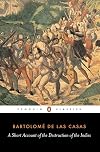
Casas wrote this partly out of a very human concern for the lives of others, and partly from his own convictions and his sense of faith - he was convinced that God would punish the Kingdom of Spain for its sins unless something was done.
A retelling of wars, atrocities, tortures, exterminations, enslavement, and so forth in the 16th century in Cuba, Hispaniola, Mexico, Colombia. With contemporary illustrations! The main motives seem to be covered by greed for gold, deception with religion, or show more just cruelty.
This is also an early modern instance of atrocity being used as political propaganda, with Protestant nations such as England circulating this document as proof of Catholic depravity and corruption, and later historians attempting to white-wash (pardon the hideous pun) Spain's history, especially under the Franco regime. I recall another edition of the book being republished just in time for the Spanish-American War.
Although the majority of the Native American depopulation was likely carried out by disease, and some events appear to be exaggerated, this does not detract too much from de las Casas' frightening message. He saw terrible things happening and wanted to do something about it. It is this reason, and his being a lone voice in the wilderness, are why he endures. show less
A retelling of wars, atrocities, tortures, exterminations, enslavement, and so forth in the 16th century in Cuba, Hispaniola, Mexico, Colombia. With contemporary illustrations! The main motives seem to be covered by greed for gold, deception with religion, or show more just cruelty.
This is also an early modern instance of atrocity being used as political propaganda, with Protestant nations such as England circulating this document as proof of Catholic depravity and corruption, and later historians attempting to white-wash (pardon the hideous pun) Spain's history, especially under the Franco regime. I recall another edition of the book being republished just in time for the Spanish-American War.
Although the majority of the Native American depopulation was likely carried out by disease, and some events appear to be exaggerated, this does not detract too much from de las Casas' frightening message. He saw terrible things happening and wanted to do something about it. It is this reason, and his being a lone voice in the wilderness, are why he endures. show less
A must read only because it's a classic and an important historical document. de las Casas intended to write a legal and moral argument, 16th century style, detailing the murder and mayhem perpetrated by the Spanish Conquistadors in the Antilles (Caribbean islands, coastal Mexico, Central and South America)from Columbus's landfall in 1492 until the middle of the next century. But I knew that already. I didn't need to read this book to find that out. De las Casas's prose style is repetitive show more and numbingly dull(the following quote is something of an exception) while at the same time what he documents is still shocking, 500 years after the fact ("the Spaniards have a number of wild and ferocious dogs which they have trained especially to kill the people and tear them to bits . . . . they run a kind of human abattoir or flesh market, where a dog-owner can casually ask, not for a quarter of pork or mutton, but for 'a quarter of one of those likely lads over there for my dog'"). His account moves from one "peaceful" and "innocent" indigenous group to another (the inhabitants of Cuba, Mexico, Venezuela, Nicaragua, Jamaica, Florida,etc.)describing their encounters with the Europeans who arrived ostensibly to bring them "civilization" and Christianity. de las Casas wanted to draw the Prince of Spain's attention to the brigands and butchers operating in the name of Spain and the Church, hoping that "if he only knew," the Spanish Crown would put a stop to the genocide. Not much success there, I'm afraid. The inhabitants of the islands were particularly unlucky. Nowhere to hide when the real estate is circumscribed by water on all sides . . . the particularly dire fate of the Arawak. I was reading this book while following the recent World Cup. Irrational as it sounds, A Short Account . . . didn't make me feel like cheering for Spain. show less
Lists
Awards


You May Also Like


Associated Authors
Statistics
- Works
- 112
- Also by
- 9
- Members
- 1,935
- Popularity
- #13,309
- Rating
- 3.7
- Reviews
- 24
- ISBNs
- 214
- Languages
- 10
- Favorited
- 2