
Matthew Plampin
Author of The Street Philosopher
Works by Matthew Plampin
Tagged
Common Knowledge
- Birthdate
- 1975
- Gender
- male
- Nationality
- UK
- Places of residence
- London, England, UK
- Associated Place (for map)
- England, UK
Members
Reviews
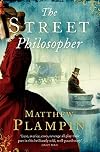
Thomas Kitson is a journalist, sent out the Crimea in 1854 to be the junior correspondent for the London Courier. The Courier team includes the senior correspondent, Richard Cracknell, a loose cannon who has an affair with the commanding officer’s wife and pens scurrilous pieces for the newspaper; and Robert Styles, a young illustrator who quickly becomes disillusioned by the war. The war, culminating with the battle of Sebastopol, is interchanged with a second story line, in Manchester show more two years later, when Kitson is a social commentator for a local paper (a “street philosopher”), and trying desperately to run from the past. What, exactly, happened out in the Crimea?
This is one of those “unputdownable” books. I read it nearly in one sitting, on an airplane ride back to the States after vacation. I needed a distraction from the 300-pound gorilla groping his girlfriend in the seat next to me, and this book was perfect towards that end. I was glued to this book from start to finish, reading on and on to find out what would happen next.
At first, I thought I wasn’t going to like the shifts in time—usually they don’t work so well, but here they’re done subtly. There are quite a lot of battle scenes, but the author’s descriptions of them are particularly well-done. The author clearly knows his mid-nineteenth century history, but he doesn’t overburden the reader with his knowledge, instead allowing the reader to take things in gradually. At the same time, the mid-nineteenth century, both in the Crimea and in Manchester, comes alive for the reader.
The story, too, is very well-written, and the plot unfolds gradually. There are hints of the unspeakable things that happened in the Crimea, but they aren’t revealed until much later. The plot is complicated, and sometimes leaves the reader with more questions than answers, but not overly so. It looks as though rights for this book haven’t sold in the US (at least not yet), which is a shame, because this is a truly entertaining novel. show less
This is one of those “unputdownable” books. I read it nearly in one sitting, on an airplane ride back to the States after vacation. I needed a distraction from the 300-pound gorilla groping his girlfriend in the seat next to me, and this book was perfect towards that end. I was glued to this book from start to finish, reading on and on to find out what would happen next.
At first, I thought I wasn’t going to like the shifts in time—usually they don’t work so well, but here they’re done subtly. There are quite a lot of battle scenes, but the author’s descriptions of them are particularly well-done. The author clearly knows his mid-nineteenth century history, but he doesn’t overburden the reader with his knowledge, instead allowing the reader to take things in gradually. At the same time, the mid-nineteenth century, both in the Crimea and in Manchester, comes alive for the reader.
The story, too, is very well-written, and the plot unfolds gradually. There are hints of the unspeakable things that happened in the Crimea, but they aren’t revealed until much later. The plot is complicated, and sometimes leaves the reader with more questions than answers, but not overly so. It looks as though rights for this book haven’t sold in the US (at least not yet), which is a shame, because this is a truly entertaining novel. show less
A highly imagined story based on some true facts.
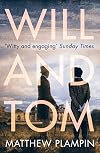
Young Will (JMW) Turner arrives at Harewood House in 1797, invited to paint the estate by Edward "Beau" Lascelles. Also invited- to his surprise- is fellow artist acquaintance Tom Girtin (whom I'd never heard of, but who was a serious rival to Turner.)
The life in an 18th century aristocrat's house is well drawn- the swagger and contempt.
Turner- of humble origins and with a sense of resetment- must swallow the insults and cultivate influential show more patrons.
But why does Girtin seem to be so "in" with the family?
It's pretty implausible, with dodgy servants, a younger Lascelles sister who has fallen from grace, and midnight adventures.
The final section, after Girtin's death (his magnum opus, a panoramic art work of London, was lost long ago) provided a touching finale. show less
Young Will (JMW) Turner arrives at Harewood House in 1797, invited to paint the estate by Edward "Beau" Lascelles. Also invited- to his surprise- is fellow artist acquaintance Tom Girtin (whom I'd never heard of, but who was a serious rival to Turner.)
The life in an 18th century aristocrat's house is well drawn- the swagger and contempt.
Turner- of humble origins and with a sense of resetment- must swallow the insults and cultivate influential show more patrons.
But why does Girtin seem to be so "in" with the family?
It's pretty implausible, with dodgy servants, a younger Lascelles sister who has fallen from grace, and midnight adventures.
The final section, after Girtin's death (his magnum opus, a panoramic art work of London, was lost long ago) provided a touching finale. show less
These Wicked Devices: An extraordinary literary historical novel, perfect for fans of Hilary Mantel or Sarah Perry by Matthew Plampin
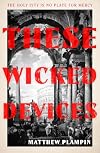
Pope Innocent is being manipulated on all sides. His sister-in-law has long held sway but now his advisors are taking more responsibility and pushing her aside. Donna Olympia is not going to take this lightly. Arriving in Roma are Sister Serafina and her protector, Orsola. They have escaped from tragedy and Serafina preaches and has visions. She is discovered by her long-lost sister. Fiamina is at the heart of a conspiracy involving the Spanish in the form of artist Don Diego which could show more bring down the papacy. Across a hot Roman summer the wheel of fortune will turn.
This is a complex novel with many different storylines so following the nuances is quite difficult. However, it pays the investment back! There is plotting, murder, cruelty and redemption for some. It was good to see the poorer characters developed rather than place emphasis on the known and the art becomes central. show less
This is a complex novel with many different storylines so following the nuances is quite difficult. However, it pays the investment back! There is plotting, murder, cruelty and redemption for some. It was good to see the poorer characters developed rather than place emphasis on the known and the art becomes central. show less
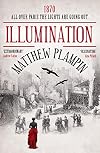
This novel is set during the Siege of Paris in 1870, ending just after the French surrender prior to the advent of the Commune. I had rather hoped that it would cover the period of the Commune, which I find fascinating. (That reminds me, I must read [b:La Débâcle|28419|La Débâcle (Les Rougon-Macquart, #19)|Émile Zola|https://images.gr-assets.com/books/1167946518s/28419.jpg|3522286].) The narrative follows an unconventional English family who end up trapped in Paris and dragged into the show more politics and danger of the city’s defense. I can’t quite put my finger on what exactly, but something about the family of Elizabeth, Hannah, and Clement did not ring 19th century to me. I found them fairly interesting as characters, they just did not seem plausible in an 1870 context. It is a subtle and difficult art to immerse a reader in historical events and unfortunately ‘Illumination’ did not quite manage to drag me into the Siege of Paris. It was rather frustrating, really, because I wanted to enjoy this novel more than I was able to. On the one hand, there were occasional great character interactions; on the other, the pacing was odd and could have benefited from division into more chapters. Actually, it occurs to me that the French characters seemed much more convincing than the English. Maybe this novel simply wasn’t quite French enough in its outlook? Or perhaps I am just especially particular about historical fiction. show less
Awards


You May Also Like


Statistics
- Works
- 6
- Members
- 377
- Popularity
- #64,010
- Rating
- 3.5
- Reviews
- 15
- ISBNs
- 34
- Languages
- 1